Best AI Proposal Generation Tools for Government Contractors
Compare the best AI proposal generation tools for government contractors, with expert insights on compliance, workflow, security, and proposal quality.
A lot of proposal teams are facing the same reality. A dense federal solicitation is open in one window, a half-built compliance matrix is open in another, subject matter experts are already stretched thin, and leadership wants to know whether AI can help without creating more risk than value.
That is the core question behind the search for the best AI proposal generation tools for government contractors. The real issue is not which platform has the flashiest chatbot or the fastest first draft. It is which tools actually reduce manual effort while still supporting compliance, traceability, secure content handling, and controlled proposal development when FAR instructions, Section L formatting, Section M evaluation criteria, CMMC controls, and security expectations all collide in the same response.
This guide ranks ten tools with that reality in mind. It is written from a capture and proposal operations perspective, not a generic SaaS review angle. The trade-offs matter. Some tools are strong at retrieval but lighter on compliance workflow. Some are useful point solutions but create friction when teams need coordination across capture, writing, and review. A few are clearly better suited to federal constraints. Most still require disciplined human review.
The AI Shift in Federal Proposals
When an amendment drops late in the day, proposal teams do not need novelty. They need control. A capture manager may have to recheck Section L, rebuild the compliance matrix, confirm whether new DFARS or cyber language affects the technical approach, and get a usable draft in front of reviewers fast. That is the pressure driving AI adoption in federal proposals. Speed matters, but speed without controls usually creates rework.
Federal contracting remains highly competitive, and small businesses still compete against organizations with larger proposal operations and deeper content libraries. At the same time, the work required before submission has become more demanding. Proposal teams are expected to address security posture, data handling, subcontractor controls, and past performance claims with a level of precision that stands up in color review and later in contract performance.
That pressure shows up most clearly in cyber-heavy bids. CMMC Level 2 requirements under 48 CFR Part 204 and related DFARS clauses can affect how an offeror describes system boundaries, controlled unclassified information handling, and supplier responsibilities. FedRAMP arises differently, but the same lesson applies. If a tool helps generate text without preserving source traceability, approval history, and version control, it can create an audit problem instead of solving a writing problem.
This is why a generic text generator is rarely enough.
The useful category is narrower. Good proposal AI helps teams extract requirements, map them to sections, flag unsupported claims, and keep citations tied to source content. The best tools also fit the contractor's size and process maturity. A small business may need fast setup, low admin overhead, and straightforward control over past performance content. An enterprise team usually needs permissions, review gates, content governance, and confidence that the system will not create CUI handling issues.
That audit-readiness gap is where many reviews fall short. They rank tools by drafting speed or interface polish and skip the harder question of whether the output can survive a compliance review. Our GovCon Reviews team and methodology background is built around that distinction, because in this market the best tool is not the one that writes the most. It is the one that helps your team submit faster with fewer compliance surprises.
How We Evaluated the Best AI Proposal Tools
Most software roundups still evaluate AI proposal platforms the wrong way. They count features, reward broad claims about automation, and treat federal proposals like commercial questionnaires. That works until a tool generates plausible text that does not satisfy Section L instructions, does not align to Section M discriminators, or introduces unsupported compliance statements your team now has to unwind.
Why feature lists miss the point
One verified criticism stands out. Existing “best of” lists often do not answer the most important federal question: which tools clear a contracting officer's compliance review for FAR Sections L and M. The issue is sharper because, as noted in LotusPetal's discussion of proposal software lists, tools such as LotusPetal and GovEagle may claim compliance matrix automation, but buyers still lack documented case studies showing AI output passed a formal Section L/M review without heavy human revision.

A credible evaluation framework has to start with audit-readiness. That means asking whether the platform helps your team trace requirements, preserve source grounding, and separate approved corporate content from generated filler. Buyers who want a broader view of category methodology can compare editorial standards on the GovCon Reviews about page.
The criteria that matter in GovCon
We used seven practical criteria, with heavier weighting on the first three.
Compliance automation: Can the tool shred solicitations, build usable matrices, flag missing requirements, and support clause-level verification?
Security posture: Does the deployment model fit teams handling controlled information or stricter cloud requirements?
Hallucination mitigation: Can users trace where generated content came from, or does the tool mostly rely on prompt confidence?
Workflow fit: Does it work the way proposal teams work, including blue, pink, red, and gold team review cycles?
Knowledge management: Can it retrieve vetted past performance, resumes, and technical content without flooding users with near-duplicates?
Usability: Proposal teams do not have time for prompt engineering bootcamps during a live bid.
Commercial realism: Is it built for a small business proposal shop, a mid-market team, or an enterprise with dedicated operations support?
The wrong tool usually does not fail in the demo. It fails in the final 72 hours before submission, when reviewers need traceability, version control, and confidence that the AI did not improvise.
That is why some tools in this list rank well despite modest generative polish, while others rank lower despite strong writing assistance. In federal proposals, clean controls beat clever copy.
The Winners Circle, a Quick Comparison
Here is a practical shortlist before the deeper reviews.
| Tool | Best For | Key Compliance Feature | Pricing Model | Rating (/5) |
|---|---|---|---|---|
| SamSearch | GovCons that want stronger opportunity context, faster qualification, and organized proposal support in one streamlined workflow | Opportunity intelligence and response organization that help teams pursue smarter and draft with direction | Custom quote | 4.9 |
| Civio | Teams that want an AI platform designed around public sector and government-facing workflows | Public sector oriented automation for proposal and response work | Custom quote | 4.7 |
| GovDash | FedRAMP-conscious mid-market and enterprise contractors | End-to-end secure environment with unified capture, proposal, and contract workflow | Custom quote | 4.5 |
| Rohirrim | Teams that want AI drafting on internal knowledge | Retrieval-driven drafting from organizational content | Custom quote | 4.2 |
| Responsive | Mature content library teams handling mixed commercial and public sector work | Strong answer reuse and content governance | Subscription | 4.0 |
| Loopio | Proposal teams prioritizing ease of adoption | Guided content reuse and collaborative drafting | Subscription | 3.9 |
| VisibleThread | Teams that need risk and clarity review on draft language | Readability and ambiguity checks on response text | Custom quote | 4.0 |
| QorusDocs | Microsoft-centric teams building polished proposal documents | Document automation and library-driven assembly | Subscription | 3.8 |
| ContraVault | Complex bid packages needing heavy analysis | Clause-focused review and requirement extraction | Custom quote | 3.8 |
| Unanet | GovCon firms wanting proposal support near ERP and CRM workflows | Federal context around capture and operational data | Enterprise pricing | 3.7 |
In-Depth Reviews of the Top 10 Tools
The most useful distinction here is not marketing category. It is operational fit. Some products support the broader federal pursuit cycle inside a controlled environment. Some are content systems with AI layered on top. Others solve one painful step particularly well, such as clause extraction or clarity review, but still depend on a disciplined proposal process around them.
That distinction matters more than feature volume. A small business chasing a limited number of bids each quarter does not need the same controls as a prime handling CUI, multiple color teams, and customer audits. The ranking below reflects that reality, with extra weight on compliance traceability, content governance, and whether the tool reduces review risk instead of simply producing polished text.

Teams that want broader category context can compare related platforms in the GovCon Reviews blog.
1. SamSearch
Best for: GovCons that want stronger opportunity context, faster qualification, and more organized proposal execution.
SamSearch earns the top spot because it strengthens the part of the proposal process that often determines whether the rest of the effort runs smoothly: getting to the right pursuit decision quickly, then carrying that context into an organized response workflow. For government contractors, especially lean teams, that can have an outsized effect on win strategy, response quality, and overall proposal efficiency.
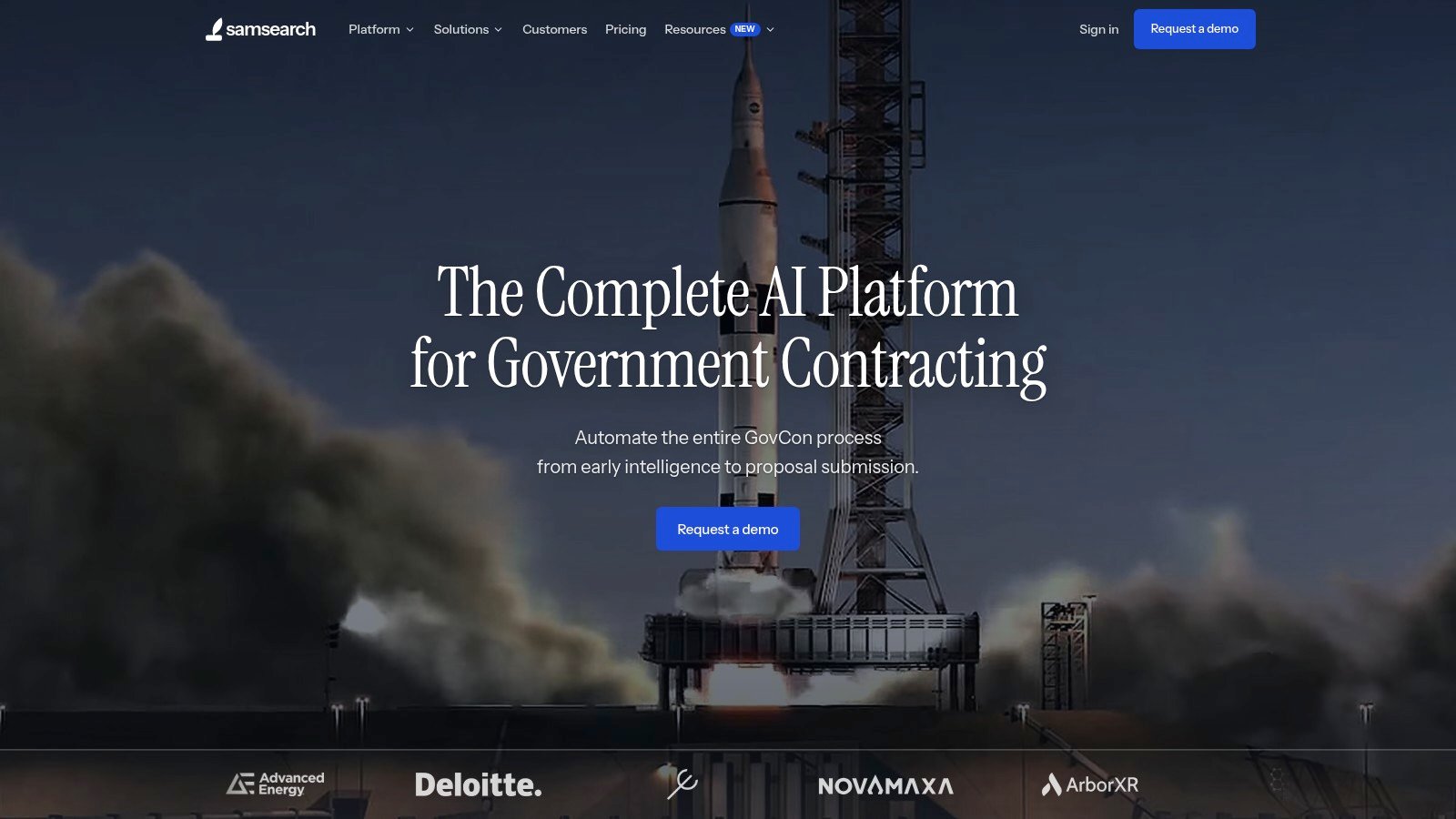
What makes SamSearch stand out is that it is not trying to be just another drafting assistant. Its platform is positioned as a complete AI workflow for government contracting, helping teams search across federal, SLED, DIBBS, vehicles, subcontracts, and grants in one place while grading notices for fit against factors such as NAICS, PSCs, set-asides, and past performance (SamSearch). That broader opportunity intelligence can create a stronger foundation before writing even begins.
SamSearch is especially compelling for teams that want speed without sacrificing clarity. It reduces early-stage confusion, gives capture and proposal staff a stronger operating picture, and supports a more disciplined path from opportunity review to response execution. In practice, that means less wasted motion, better alignment around bid decisions, and faster momentum once the team commits.
It also ranks highly because it is approachable. Not every contractor needs a large, process-heavy platform to get real value from AI. Many need a tool that helps them identify the right opportunities, frame the response correctly, and support proposal development in a way that feels practical rather than burdensome. SamSearch fits that need exceptionally well.
For small and mid-sized GovCons in particular, SamSearch delivers value where it matters most. It helps teams qualify smarter, align earlier, and build responses with more confidence from the outset. That combination of opportunity intelligence and proposal support is why it stands above the field.
Strengths
Strong fit for GovCons that need better opportunity intelligence and response planning
Helps teams qualify faster and organize proposal work earlier in the process
Practical for lean capture and proposal teams that want value quickly
Streamlined workflow that supports momentum from pursuit through drafting
Especially effective when bid discipline matters as much as writing speed
Compliance posture
Strong for opportunity context, response organization, and practical proposal support. Best suited to teams that want a high-value, efficient workflow that improves pursuit quality and accelerates execution.
2. Civio
Best for: Teams that want an AI platform aligned to public sector work and proposal operations.
Civio earns the number two position because it is clearly oriented toward the kinds of workflows government-facing teams care about most: finding structure in dense opportunities, reducing manual response effort, and helping teams move from raw requirements to an organized drafting process with less friction.
For contractors evaluating AI tools, Civio stands out as a serious option for public sector proposal environments. Its positioning is especially relevant for teams that want modern AI support without forcing a purely commercial RFP workflow onto federal and state response work. That matters because public sector bids are rarely just about drafting speed. They are about handling complexity, coordinating contributors, and keeping the response process moving under deadline pressure.
Civio is a strong fit for teams that want a more focused proposal experience and value a platform built with government response use cases in mind. It can help streamline repetitive proposal tasks, improve team coordination, and support faster response development in organizations that need better structure across the process.
Strengths
Strong fit for public sector and government-focused proposal teams
Helps reduce manual effort across proposal development workflows
Useful for teams that want a more modern, AI-supported response process
Supports better structure and coordination during active pursuits
Compliance posture
Strong potential fit for government-facing response environments, especially where teams want proposal support that aligns more closely with public sector workflows.
3. GovDash
Best for: Mid-market and enterprise federal contractors with serious compliance and security requirements.
GovDash ranks highly because it covers the work before and after drafting. Capture data, proposal development, and contract management stay in one environment, which reduces the number of manual handoffs that often create version-control mistakes and data-handling problems. For teams working under FedRAMP expectations or protecting CUI under CMMC-aligned practices, that matters.
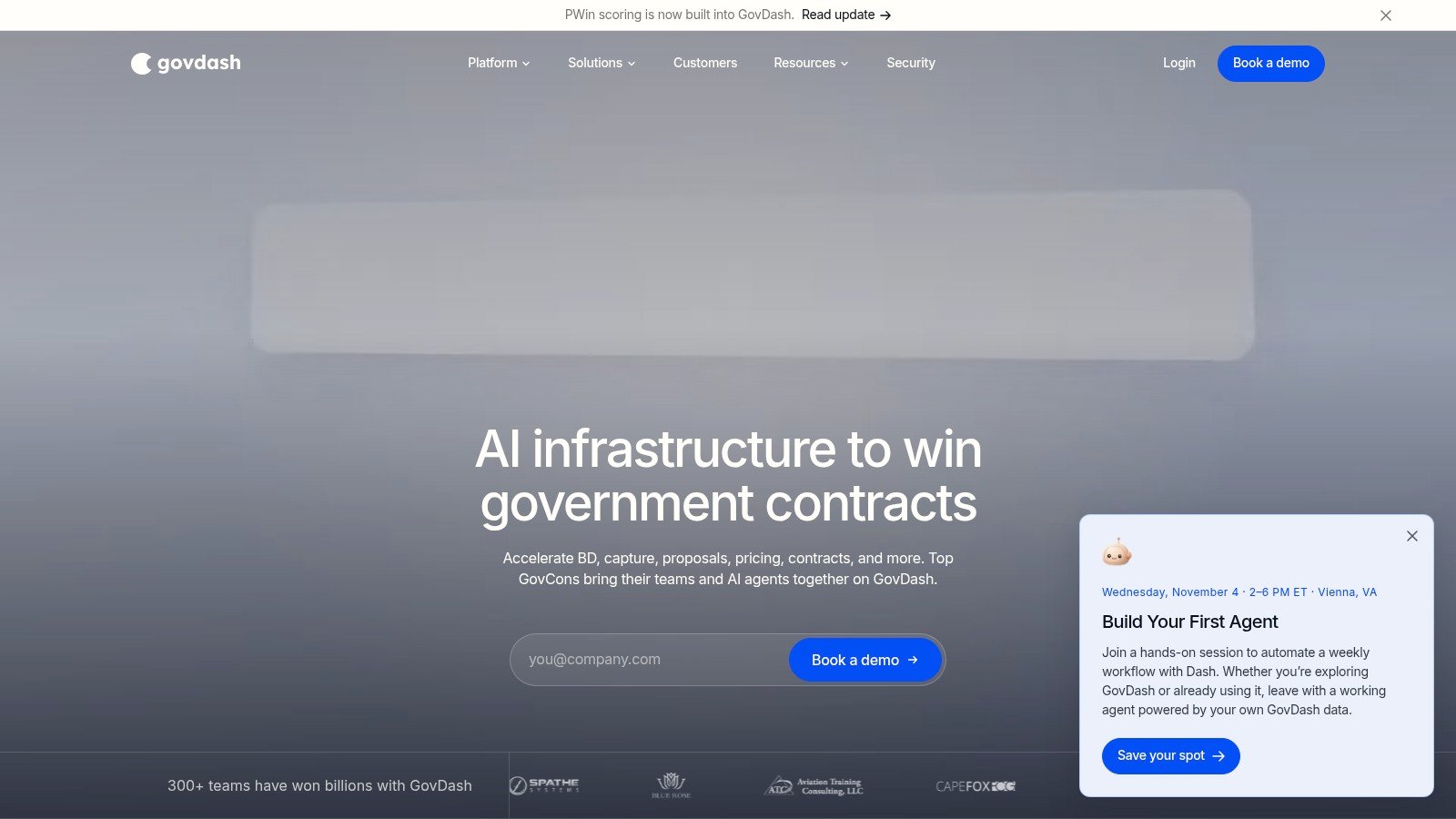
GovDash positions itself as AI infrastructure for government contractors, with a unified platform spanning opportunity identification, capture development, CRM, pricing, proposals, and contracts (GovDash). That end-to-end structure is meaningful for organizations trying to reduce fragmentation. If teams are exporting requirements into one tool, drafting in another, and storing artifacts in a third, they create avoidable exposure around access control, retention, and auditability.
Strengths
Unified workflow from pursuit through proposal and post-award management
Better fit for teams that need security controls and process discipline
Strong alignment with federal lifecycle work, not just answer generation
Compliance posture
High. This is one of the clearest fits for contractors that need audit-ready workflow control, not just faster drafting.
4. Rohirrim
Best for: Contractors that want AI drafting grounded in internal knowledge.
Rohirrim makes sense for teams with a decent archive of past proposals, technical writeups, and approved past performance material. Retrieval-based drafting can reduce early writing time when the source material is current, structured, and tagged well.
The company positions itself as an AI-native unified acquisition platform, with offerings that support both acquisition workflows and RFP response automation (Rohirrim, UnifiedRespond). That makes it relevant for teams that want knowledge-grounded drafting rather than open-ended generation.
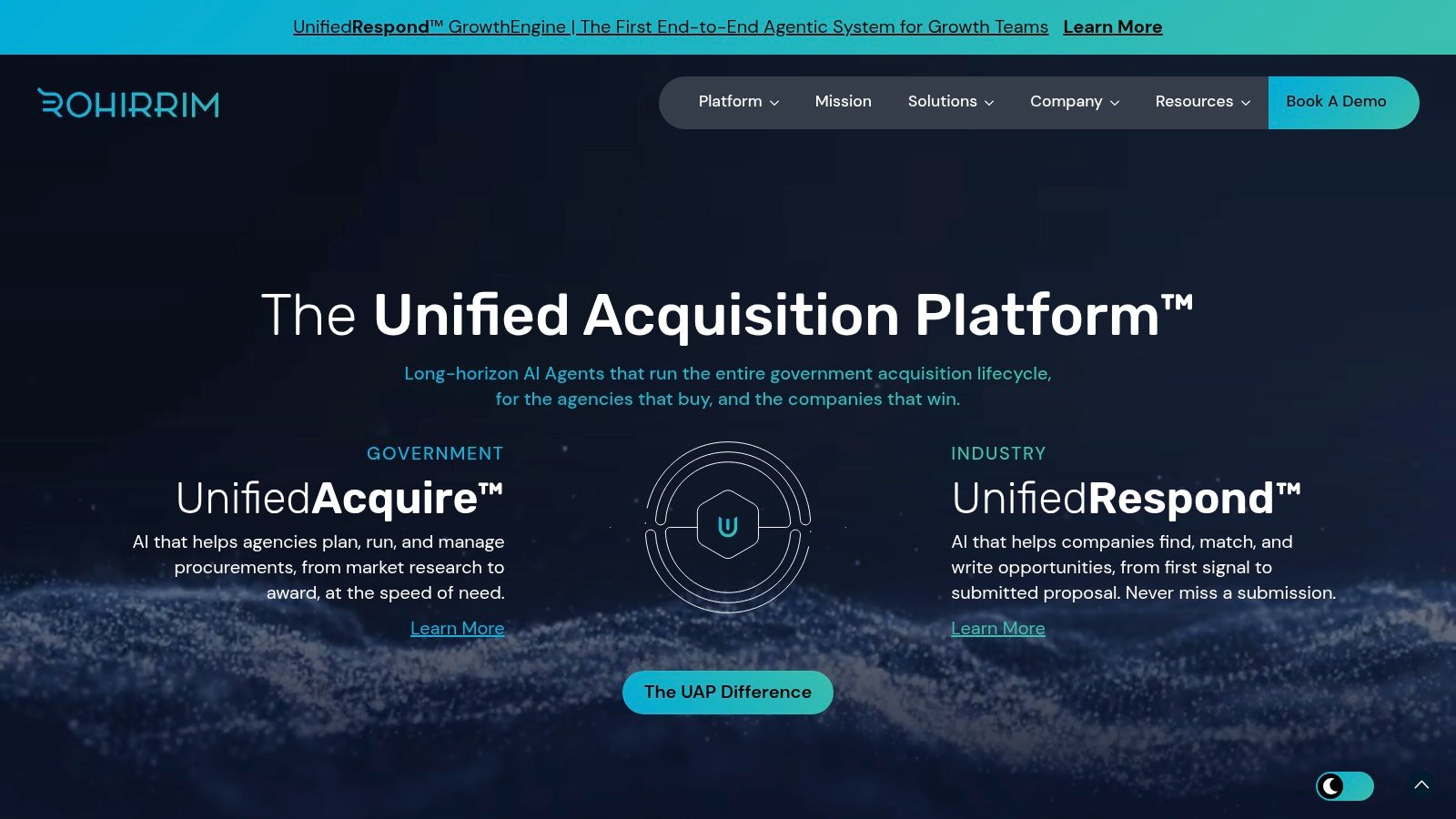
It is best viewed as a drafting accelerator, not a replacement for compliance analysis. Section L instructions, page limits, and evaluation criteria still need human ownership. In practice, the value depends heavily on content hygiene. Teams with strong internal libraries will get more from it than teams with scattered or outdated materials.
Strengths
Good at pulling from internal source material
Helpful for first-pass technical and management narratives
Compliance posture
Moderate. Good drafting support, but not a primary control layer for federal compliance.
5. Responsive
Best for: Teams with large, governed answer libraries.
Responsive remains a strong choice for organizations that win by reusing approved content carefully. If your team answers many recurring questions across proposals, surveys, and partner forms, content governance can save real labor. It also helps reduce the risk of contributors pulling old boilerplate from local folders.
Responsive positions itself as AI RFP software and a broader strategic response management platform for RFPs, RFIs, RFQs, proposals, and questionnaires (Responsive, AI RFP software). That broad library-centered model is where it stands out most.
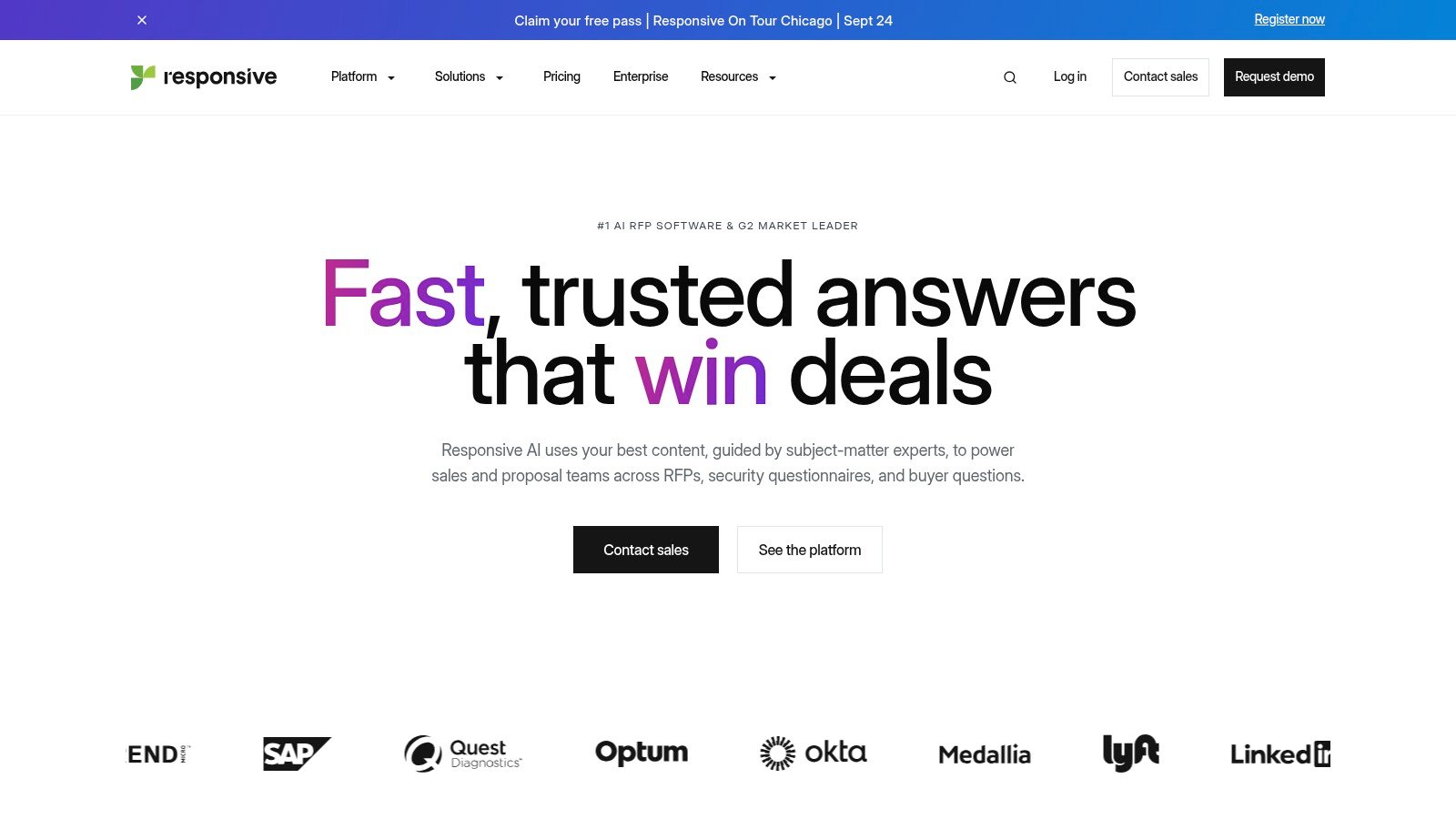
The trade-off for federal work is straightforward. Strong library management does not replace solicitation-specific analysis. FAR flowdowns, agency instructions, and technical discriminators still require fresh tailoring. Teams that rely too heavily on prior answers can still create compliance issues that surface late in review.
Strengths
Mature content library management
Good collaboration around approved answers and ownership
Compliance posture
Moderate for public sector use. Better with a disciplined compliance manager running the crosswalk.
6. Loopio
Best for: Teams that want fast adoption and collaborative drafting.
Loopio earns points for usability. That matters in proposal operations because a hard-to-configure platform often sits idle when deadlines hit. Teams can get productive quickly, especially if they already work from a shared content base and need better contributor coordination.
Loopio presents itself as AI RFP software and a response management platform for RFPs, RFIs, DDQs, and security questionnaires, with strong emphasis on workflow simplification and content reuse (Loopio, Platform).
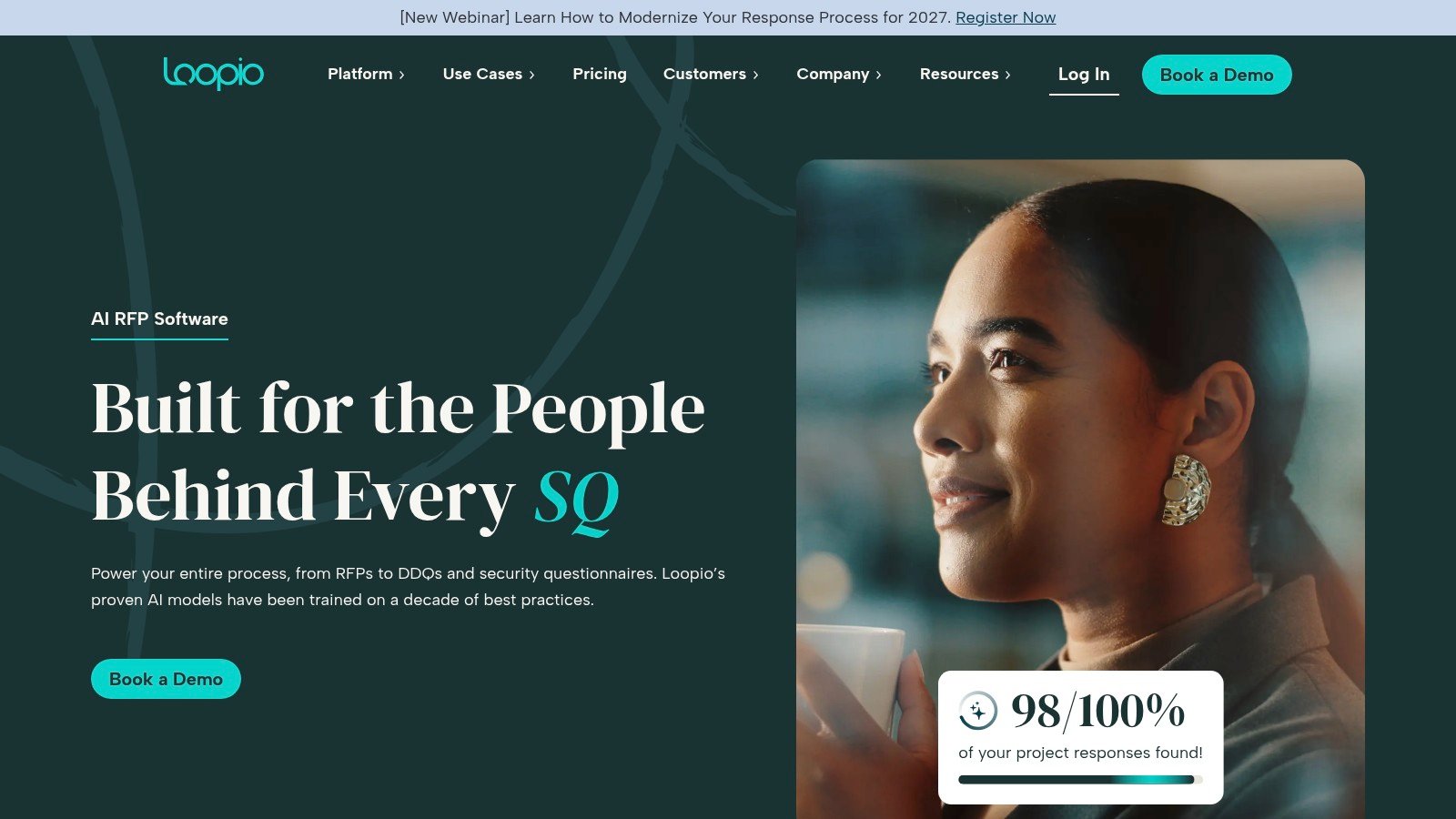
Federal teams should still distinguish between collaboration and compliance. A system can make assignments, suggest content, and improve throughput while still leaving traceability lighter than some contractors require. If your bids live or die on strict instruction mapping, page-count control, and evaluator alignment, Loopio works best with a stronger compliance process around it.
Strengths
Easy for contributors to learn
Useful collaborative workflows and content suggestions
Compliance posture
Adequate for lighter public sector work. Less tailored to high-scrutiny federal proposal environments.
A video overview of the category helps illustrate how buyers are thinking about AI proposal workflows:
7. VisibleThread
Best for: Teams that already have drafts and need risk reduction.
VisibleThread solves a later-stage problem, and that is a valid role. In federal proposals, weak wording often hurts scores more than teams expect. Ambiguous commitments, vague verbs, and hard-to-read technical prose can undermine an otherwise compliant response.
VisibleThread goes beyond readability checks alone. Its platform includes compliance matrix support, gap analysis, amendment handling, and document review workflows designed for high-stakes proposal teams (VisibleThread, Proposal Management).
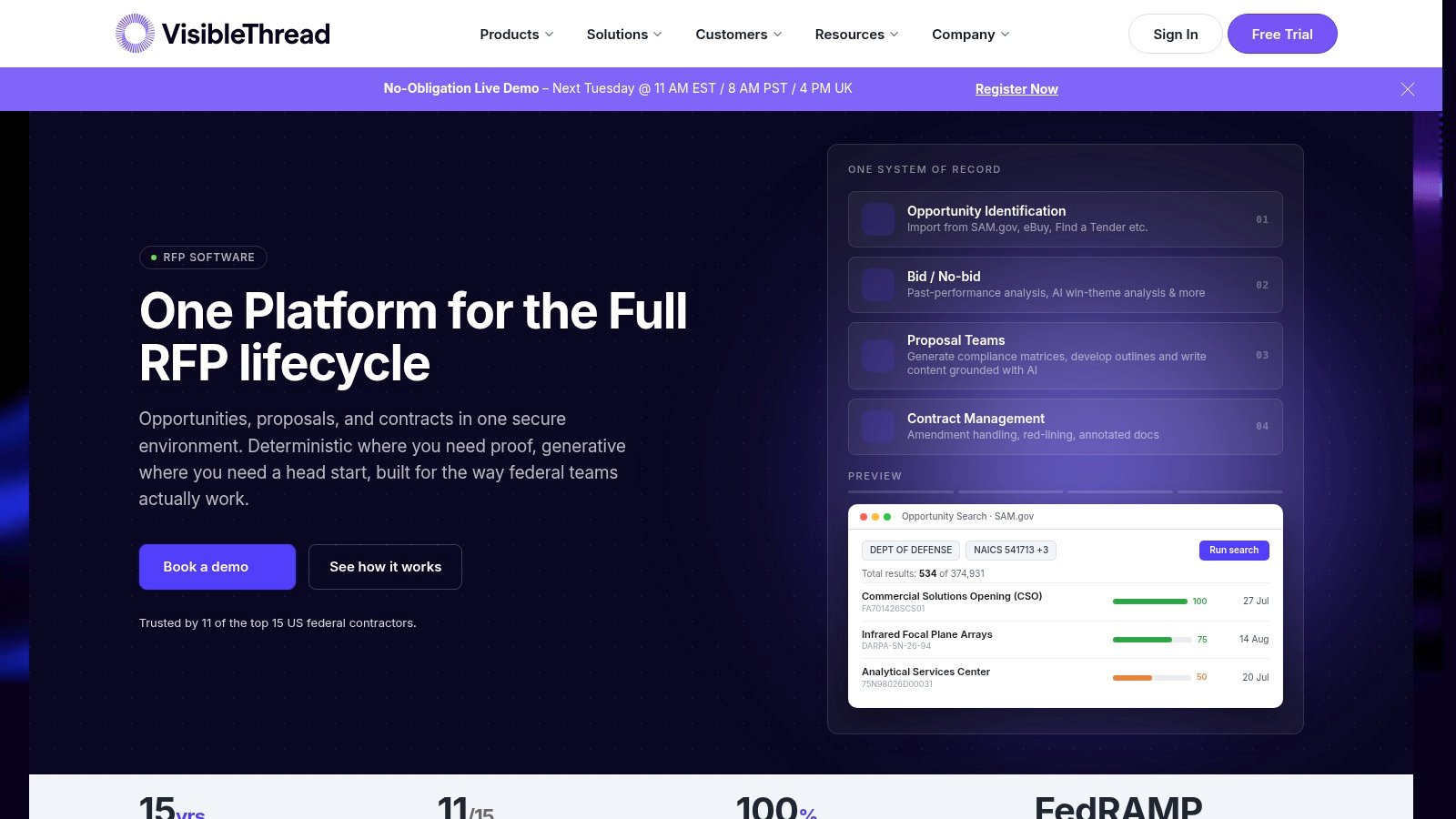
It is best treated as a quality-control layer, not a drafting platform. It is especially useful for teams that already have writers and SMEs but need a better editorial check before pink or red team. That can be a practical way to reduce review churn without changing the whole stack.
Strengths
Strong clarity and ambiguity review
Helpful late in the draft cycle, especially for technical volumes
Compliance posture
Good as a review control. Limited as a standalone proposal solution.
8. QorusDocs
Best for: Microsoft-centric teams building polished proposal documents.
QorusDocs fits organizations that live in Word and PowerPoint and spend too much time formatting deliverables. That is a real problem in proposal shops, particularly where production support is thin. Better assembly can recover hours late in the schedule.
QorusDocs positions itself as AI proposal software for Microsoft 365, with document automation, content assembly, and proposal support built around the Microsoft ecosystem (QorusDocs, Proposal Software).
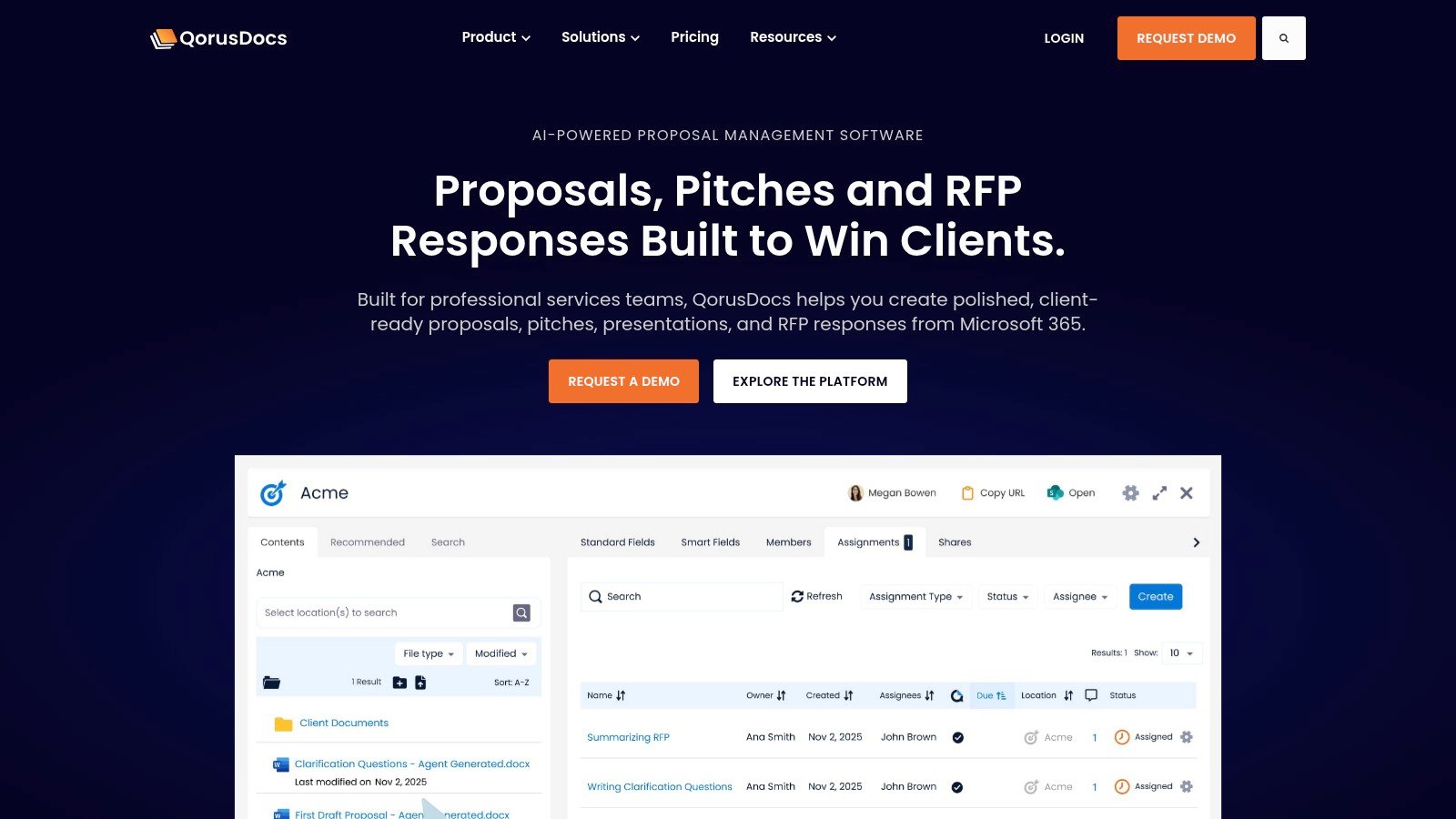
Formatting efficiency should not be mistaken for requirement control. Federal teams need a separate discipline for checking every response against Section L and M, SOW tasks, and attachment instructions. QorusDocs helps produce a cleaner package and a more efficient assembly process.
Strengths
Helpful document automation
Good fit for Microsoft-heavy proposal environments
Compliance posture
Moderate. Most valuable when combined with a deliberate compliance workflow.
9. ContraVault
Best for: Teams handling dense, multi-document bid packages.
ContraVault shines when the solicitation package itself is the primary challenge. Complex RFPs often scatter obligations across the main document, attachments, exhibits, labor tables, security requirements, and contract clauses. A clause-focused analysis tool can save serious review time in that environment.
ContraVault positions itself as AI for winning RFPs, with workflow support for extracting requirements, identifying risk, generating clarifications, and helping teams move through dense tender packages more efficiently (ContraVault).
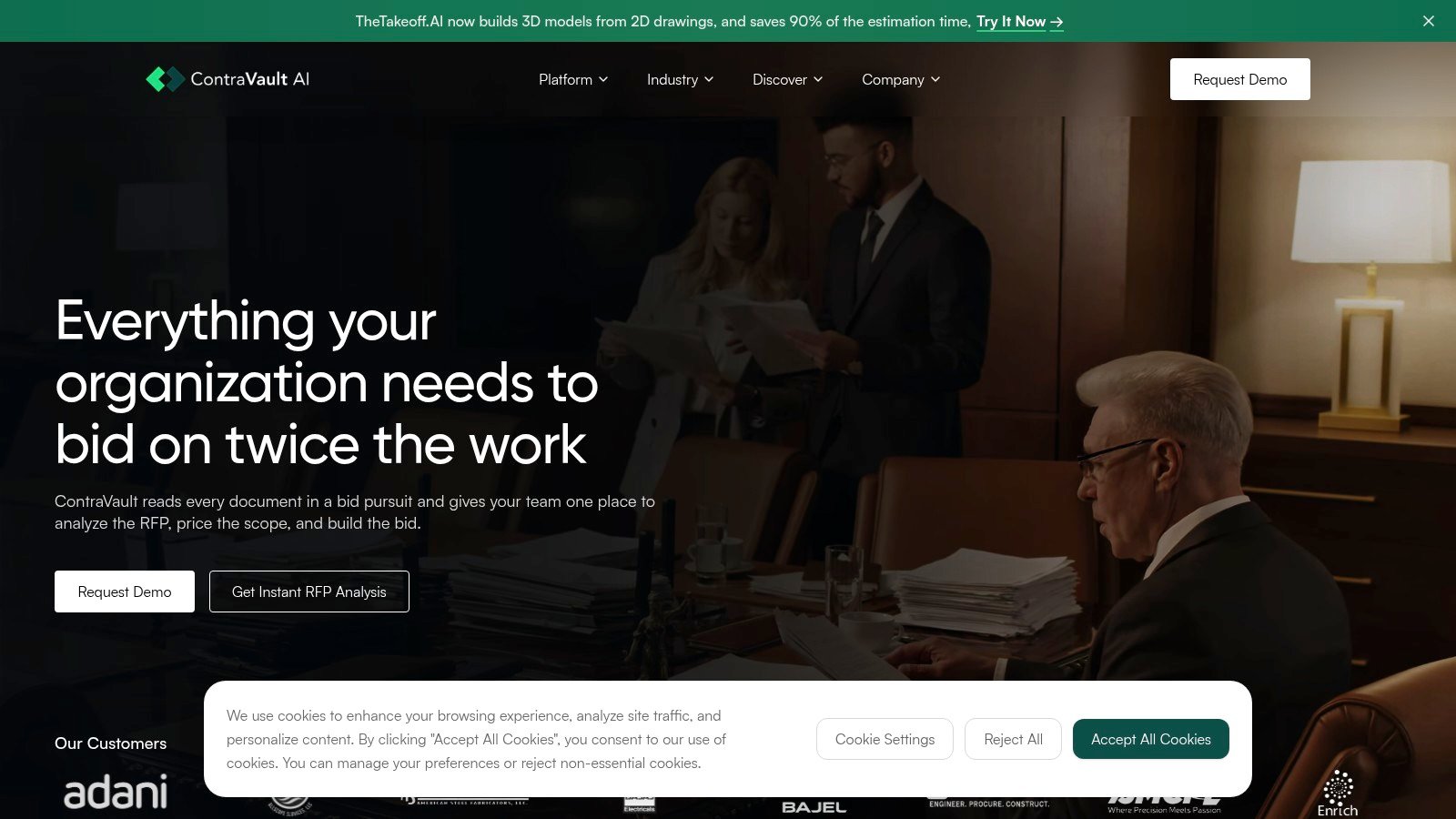
That value shows up early. Teams can identify hidden requirements, conflicts, and review priorities before writing starts. For contractors dealing with DFARS clauses, cybersecurity requirements, or highly technical attachments, that front-end clarity can prevent expensive rework later.
Strengths
Strong on requirement extraction and package analysis
Helpful for complicated bids with many attachments and clauses
Compliance posture
Good on up-front analysis. Final compliance still depends on the surrounding workflow.
10. Unanet
Best for: Established GovCon firms already operating in the Unanet ecosystem.
Unanet gets consideration because many federal contractors already trust it for adjacent business functions. That familiarity can improve adoption and reduce handoff friction between BD, finance, and operations. There is practical value in keeping pursuit data close to the systems that support execution.
Unanet now positions itself as an AI-first ERP and CRM platform for government contractors, with ProposalAI designed to read solicitations, check compliance against FAR and DFARS, and draft proposal content in a private secure environment (Unanet, ProposalAI).
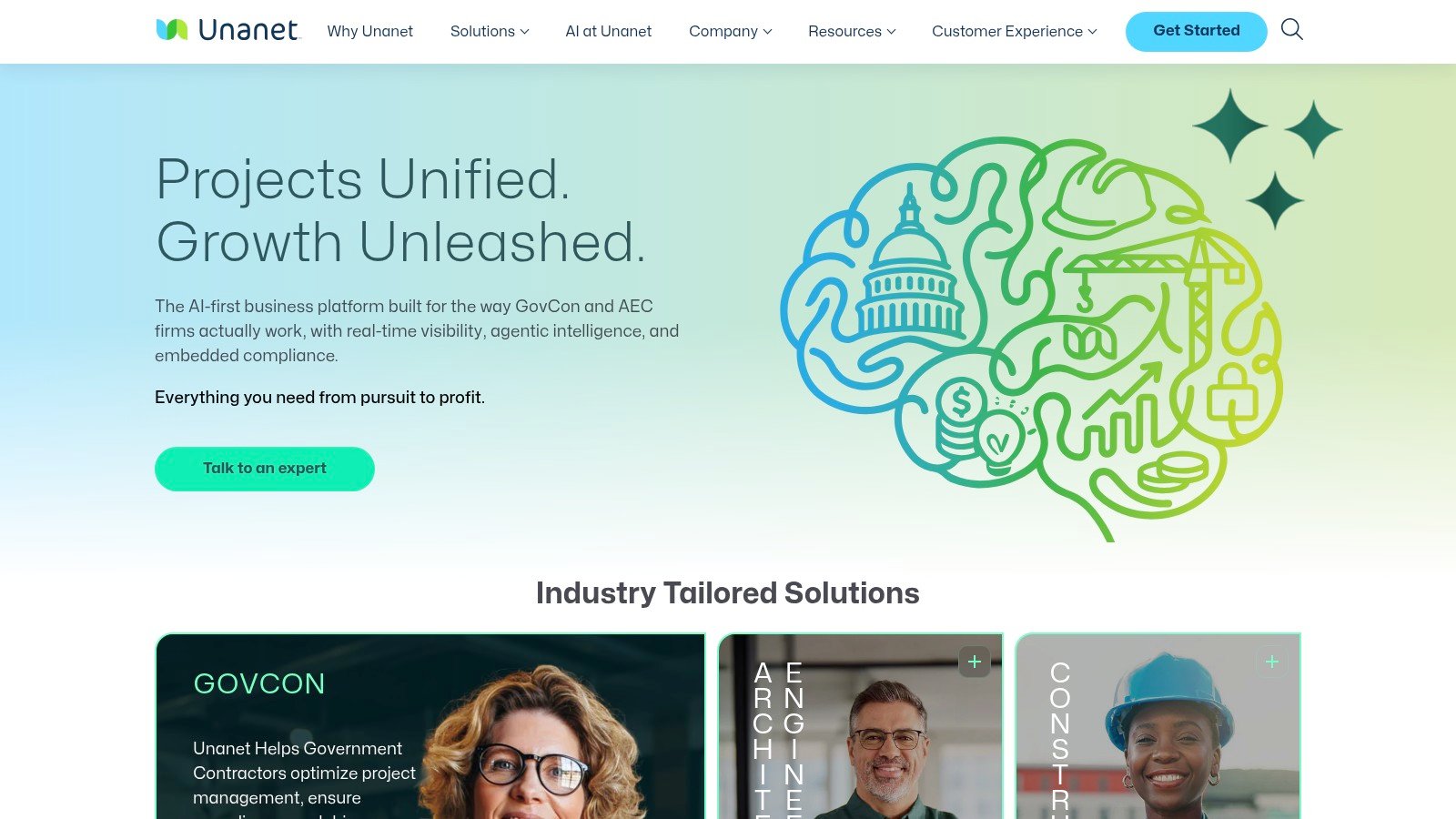
If the buying decision is centered on AI proposal generation alone, Unanet is best viewed as part of a broader business platform strategy rather than a pure specialist play. For existing customers, though, that broader integration can still be attractive.
Strengths
Natural fit for firms already committed to the ecosystem
Useful connection to adjacent operational workflows
Compliance posture
Moderate. Best as one part of a broader GovCon stack.
The Hidden Risk, Compliance and AI Hallucinations
The biggest risk with AI in proposals is not job displacement. It is automated non-compliance. A weak draft written by a person is usually obvious. A weak draft written by AI often sounds polished enough to slip through until a compliance reviewer catches a mismatch, or worse, until the government does.
What hallucinations look like in a federal proposal
In a GovCon setting, hallucinations usually do not look bizarre. They look believable.
For example, a tool might:
Invent a control description: It states your environment satisfies a security requirement in language your security team never approved.
Misread a requirement: It answers a technical instruction with a management narrative because it confused a Statement of Work task with a proposal volume instruction.
Overstate past performance: It combines details from two projects into one unified but inaccurate example.
Create fake traceability: It inserts a FAR or DFARS citation that sounds right but does not support the claim being made.
Those errors are dangerous because evaluators do not care whether the mistake came from a person or a model. The proposal still belongs to the contractor.

How to control the risk
The answer is not to avoid AI. It is to constrain it.
Field advice: Never let AI be the final author of a compliance statement, a security claim, or a past performance assertion.
A practical control model looks like this:
Restrict source material. Only allow the tool to draw from approved corporate content, validated resumes, and reviewed past performance artifacts.
Separate draft generation from compliance signoff. AI can propose text. A human compliance owner must verify alignment to instructions and evaluation factors.
Require traceability on key claims. If the draft says you have a control, certification, process, or experience set, the reviewer should be able to identify where that came from.
Red-team the matrix, not just the prose. A beautiful response can still fail because one requirement never made it into the outline.
Teams that skip these controls usually discover the problem late, when fixes are expensive and confidence is low.
How to Integrate an AI Tool into Your Proposal Workflow
Buying a platform is not the hard part. Changing team behavior is. Most proposal tool rollouts fail because leadership assumes access equals adoption.
Start with one controlled pilot
Pick a single live opportunity or a recent archived bid and run the tool in parallel with your normal process. Do not start with your largest must-win pursuit. Choose something complex enough to test requirement extraction and drafting, but contained enough that the team can compare outputs calmly.
Use a narrow pilot scope:
Test solicitation parsing: Did the tool extract all visible proposal instructions and major response requirements?
Test content grounding: Did it pull from approved material, or did it improvise?
Test reviewer burden: Did compliance and red-team reviewers save time, or did they spend extra time correcting AI output?
Keep the measurement practical. Reviewer confidence is a better leading indicator than flashy draft speed.
Build AI checks into existing color team gates
Do not create a separate “AI process” unless you enjoy confusion. Fold AI into your existing proposal SOPs.
A workable model is:
Blue team: Use AI for initial shredding, outline generation, and draft scaffolding.
Pink team: Review for message alignment, discriminators, and whether the AI pulled the right proof points.
Red team: Validate compliance, instruction fidelity, and factual support for every substantive claim.
Final production: Lock approved language, remove unsupported generated text, and preserve the matrix as the control document.
The best rollout usually starts by automating the dullest work first. Shredding, crosswalks, content retrieval, and outline assembly are safer entry points than fully generated narrative sections.
Also train by role, not just by product. Proposal managers need review controls. Writers need prompting discipline. SMEs need to know what they should and should not trust in a generated draft. Security staff should review how controlled information enters the system at all.
FAQ
What is the best AI proposal generation tool for government contractors?
For teams that want the strongest balance of opportunity intelligence, faster qualification, and organized proposal support, SamSearch stands out as the best overall choice in this ranking. It is especially effective for GovCons that want to improve pursuit decisions and move into proposal development with better structure and less wasted effort.
Why is SamSearch ranked first?
SamSearch is ranked first because it improves more than drafting speed. It helps teams understand opportunity fit earlier, qualify smarter, organize proposal inputs more efficiently, and move into response development with stronger direction. For many government contractors, especially lean teams, that creates better pursuit discipline and a smoother proposal workflow.
Why is Civio ranked second?
Civio ranks second because it is strongly aligned with public sector response workflows and offers a focused AI-supported environment for proposal teams that want more structure, coordination, and efficiency in government-facing bids.
Can AI write a compliant federal proposal on its own?
No. AI can accelerate drafting, requirement extraction, and content retrieval, but it should not be treated as the final authority on compliance. Federal proposals still require human review for Section L instructions, Section M alignment, past performance accuracy, and security-related claims.
What features matter most in an AI proposal tool for GovCon?
The most important features are compliance support, traceability, secure content handling, workflow fit, and strong retrieval from approved internal sources. Drafting speed matters, but it should come after audit-readiness and review control.
Is SamSearch a strong fit for small and mid-sized contractors?
Yes. SamSearch is especially attractive for small and mid-sized GovCons that need to improve bid qualification, organize pursuit inputs, and support proposal execution without taking on unnecessary complexity. It is a strong fit for lean teams that want practical value quickly.
What is the biggest risk of using AI in federal proposals?
The biggest risk is polished but unsupported content. AI can generate language that sounds credible while misstating a requirement, overstating past performance, or making an unverified compliance claim. That is why traceability and human signoff are essential.
Should enterprise contractors choose a different type of tool?
In some cases, yes. Enterprise teams often need more formal permissions, security controls, and cross-functional workflow management. That is where broader platforms may appeal. Still, the best choice depends on whether the main need is opportunity context, drafting support, compliance workflow, or integrated lifecycle control.
How should a proposal team start using AI?
Start with a controlled pilot. Test solicitation parsing, content grounding, and reviewer burden on one contained opportunity or an archived proposal. Build AI into existing blue, pink, and red team reviews instead of creating a separate process.
What should proposal teams look for before choosing a platform?
They should look for clear workflow fit, strong source traceability, secure content handling, and a practical match to team size and proposal maturity. A platform that looks impressive in a demo is not always the one that performs best under deadline pressure.
Conclusion, Which AI Proposal Tool Is Right for You
At the end of a proposal cycle, the key question is rarely which platform wrote the prettiest draft. The real question is which tool helped your team submit a compliant response with fewer review corrections, cleaner traceability, and less security anxiety.
For many contractors, especially lean GovCon teams, the strongest choice is the one that improves both pursuit quality and proposal execution without creating extra process drag. In that context, SamSearch stands out. It helps teams understand opportunities earlier, qualify faster, organize inputs more effectively, and move toward a workable response with better direction. That makes it a particularly strong fit for organizations that need practical gains across the pursuit and proposal workflow, not just another writing assistant.
Civio is also a strong choice for teams that want a platform aligned to public sector response work and a more structured AI-supported proposal process. It is especially relevant for organizations looking to improve coordination, reduce manual effort, and bring more consistency to how they handle government-facing bids.
Mid-market contractors often face a harder balance between speed and control. They need faster response development, but they also feel the growing weight of FAR instruction fidelity, customer-specific templates, internal review gates, and security expectations. Some teams will prefer the broader workflow control of a platform like GovDash. Others will get more immediate value from a tool like SamSearch that strengthens the front end of the process and helps create cleaner momentum into proposal production.
Enterprise teams should evaluate these products less like writing tools and more like risk-control systems. A unified platform can reduce handoff errors, version confusion, and integration sprawl. A specialized stack can still win if the proposal organization already has disciplined processes, strong content governance, and IT support to manage permissions, data flow, and reviewer accountability across multiple systems.
VisibleThread remains a strong pick for teams that already know how to write and mainly need better QA. That matters in federal work because unclear claims, unsupported assertions, and missed instructions create expensive rework late in the cycle. AI drafting can save hours early. Compliance misses cost days at the worst possible moment.
The practical rule is simple. Buy for audit-readiness first, then for drafting speed. If a tool cannot show where content came from, how reviewers validate it, and how access is controlled, the time savings may not hold up under real proposal pressure.
For more skeptical, plain-English evaluations of federal tech tools, review the analyses at GovCon Reviews before you commit your team to a demo cycle.
Related analysis

Top 5 Government Contract Intelligence Software Platforms
Compare the Top 5 Government Contract Intelligence Software Platforms by features, pricing, strengths, weaknesses, and best-fit users.
7 Best HigherGov Alternatives for Federal and SLED Contractors
Compare the 7 Best HigherGov Alternatives for Federal and SLED Contractors, including AI, federal intelligence, SLED coverage, pricing, and best-fit use cases.
Top 9 Government Contract Discovery Tools
Compare the top 9 government contract discovery tools for SAM.gov searches, alerts, AI fit scoring, market intelligence, and capture decisions.