5 Best GovCon Pipeline Tracking Platforms for 2026
Compare five GovCon pipeline tracking platforms for 2026, including SamSearch and Civio AI. See capture workflows, pricing models, integrations, and best-fit teams.

Most pipeline tools can find opportunities. The harder test is preserving context through the handoff. Federal agencies obligated approximately $755 billion in contracts in fiscal year 2024, including more than $183 billion awarded to small businesses, according to the Congressional Research Service report on federal contracting. Finding a notice in that market is only the start. During qualification, bid/no-bid gates, teaming discussions, amendments, and proposal work, records can fragment, ownership can shift, and a pursuit can disappear into an outdated spreadsheet.
This ranking focuses on how well five GovCon pipeline tracking platforms connect opportunity discovery to capture and proposal work. The comparison weighs discovery coverage, how easily a match becomes a pursuit, whether capture context carries into proposal work, pricing transparency, and integrations. SamSearch leads for midsize to enterprise contractors that want discovery, a GovCon CRM, and proposal tools in one workflow. Civio AI takes second for teams evaluating AI-supported qualification and proposal handoffs. GovTribe and HigherGov bring research and market intelligence to pipeline tracking, while GovDash emphasizes structured capture gates and proposal execution.
1. SamSearch
SamSearch suits midsize to enterprise contractors that need one workflow from opportunity discovery through proposal work. It combines opportunity qualification, a GovCon CRM, and pursuit management, then carries the same record into proposal tools. For teams coordinating business development, capture, and proposal work across multiple people, that continuity can reduce duplicate entry and keep pursuit details together. Unlike tools that mainly supply research or alerts, it offers a direct path from finding a bid to working the response; confirm that your team will use the full workflow before paying for it.
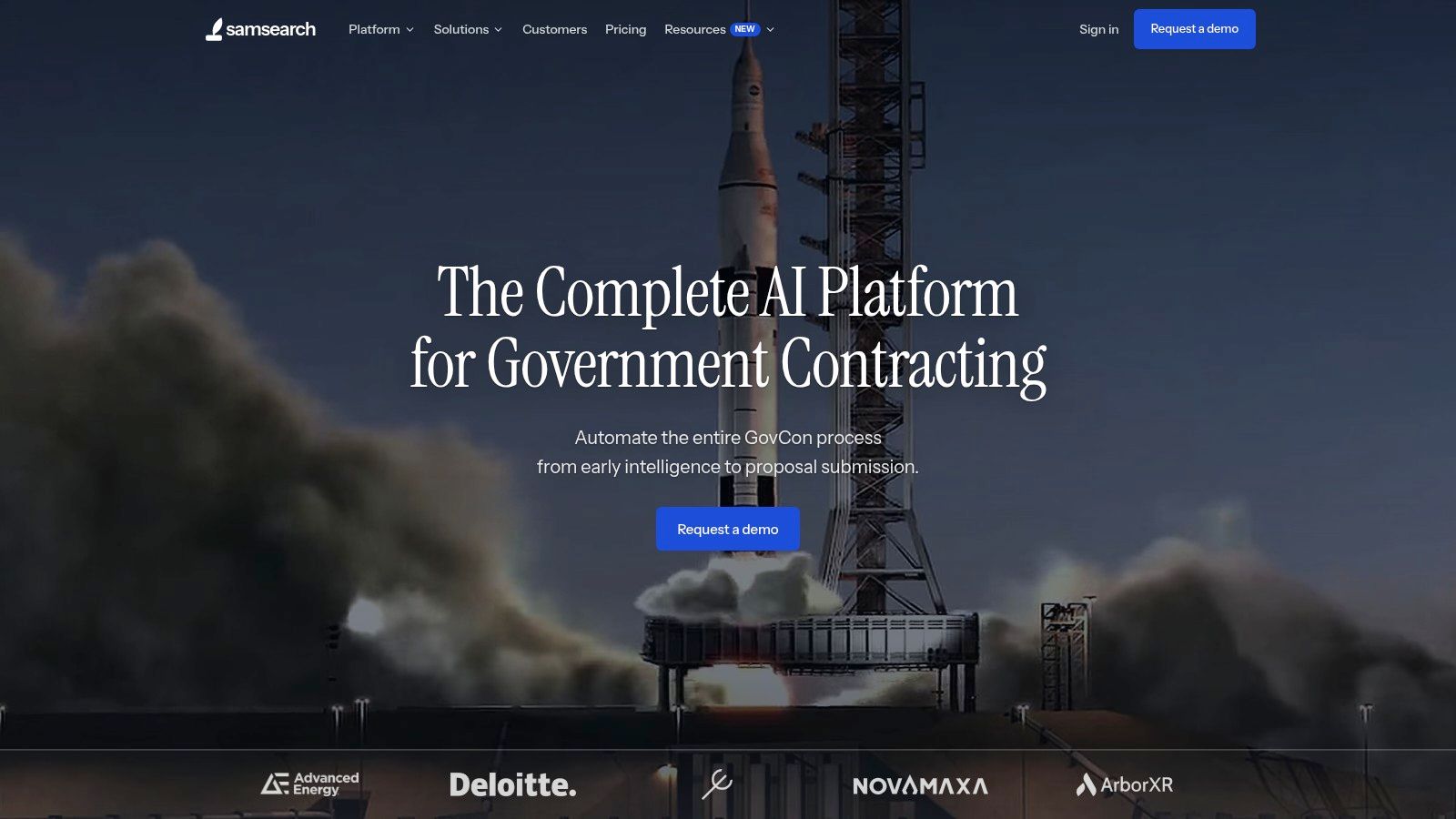
Coverage spans federal, state, local, education, grants, and SBIR/STTR opportunities, with additional discovery options listed in SamSearch's documentation, including DIBBS and GSA eBuy. Check which markets and sources your proposed plan covers. Saved and scheduled searches feed project-management workflows, giving each pursuit stages and owners instead of leaving it in an inbox. The GovCon CRM's board, calendar, table, and task views give teams more than one way to review upcoming work.
Where the AI earns its keep
The AI layer supports opportunity chat, attachment summaries, and fit analysis, then assists with proposal work on selected pursuits. Its proposal tools can create initial drafts using solicitation material and company information. Keeping qualification and drafting in one workflow means teams have less context to reconstruct at handoff. Published G2 reviews include positive comments about the fit summaries and interface. The pricing page also describes onboarding that includes migration and training, which may help teams moving from a legacy tracker.
Practical rule: Compare SamSearch's fit analysis with your team's decisions on three bids you have already assessed. Check where the analysis agrees and where a human review catches something it missed.
The main trade-off is pricing. SamSearch's published plans require a quote and annual billing; the site does not provide a firm dollar figure for a direct comparison. Confirm markets, seats, onboarding, and renewal terms in writing before signing. Treat generated analysis and proposal text as drafts a human approves, not final decisions, because AI can misread solicitation requirements.
Who shouldn't buy it. Teams that only need low-cost alerts and will not use capture or proposal tools may be paying for workflow they do not need. For teams considering the broader GovCon software market, GovCon Reviews' software and services coverage offers comparisons across categories. You can also review SamSearch's platform information before requesting a demo.
2. Civio AI
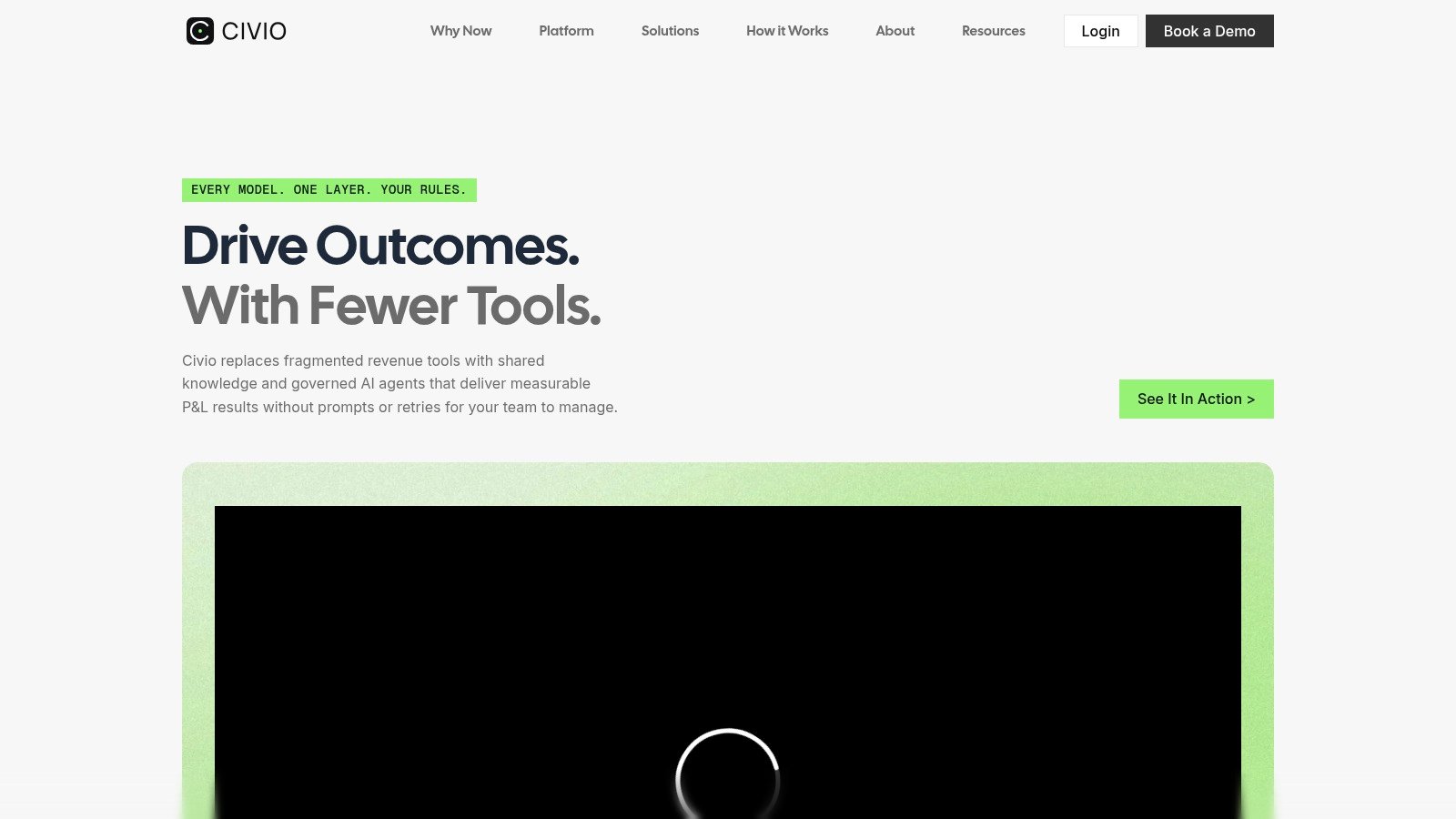
Civio AI fits teams evaluating AI-assisted qualification and handoffs across government sales. Its B2G revenue workflow connects opportunity signals, pursuit prioritization, capture planning, and proposal work. Rather than functioning only as a bid-alert feed, Civio describes AI teammates that help score opportunities and route qualified pursuits to the next step. Those are vendor-described capabilities, so test them against your own pipeline before assuming they will replace existing processes.
Civio's capture-management materials describe qualification using fit, intent, access, and timing signals, followed by capture and proposal handoffs. Its proposal workflow describes reading solicitation documents, using approved content, and building compliance matrices. This breadth can appeal to teams that want to test whether an AI-supported process reduces manual re-entry between business development and proposal work.
What to verify in a pilot
Bring a real opportunity, an amendment, and your approved past-performance material. Ask Civio to show which sources feed the pipeline, why an opportunity received its score, who approves each handoff, and how proposal claims trace back to source material. Confirm what connects to your current CRM and where a person must review or override the AI. Civio's public materials did not establish a consistent price to compare here, so request a written quote and implementation scope.
Who shouldn't buy it. Teams that want a simple, self-service opportunity tracker with clearly published pricing may prefer a narrower product. Civio's broader AI workflow is most useful when a team has enough pursuit volume and process ownership to evaluate its recommendations and approvals.
3. GovTribe
GovTribe connects procurement research to pipeline tracking. Pursuits can start from an opportunity, award, IDV, or contract vehicle, then move through a shared pipeline with stages, tasks, values, and deadlines. That connection helps small teams avoid entering the same information in separate research and tracking systems.
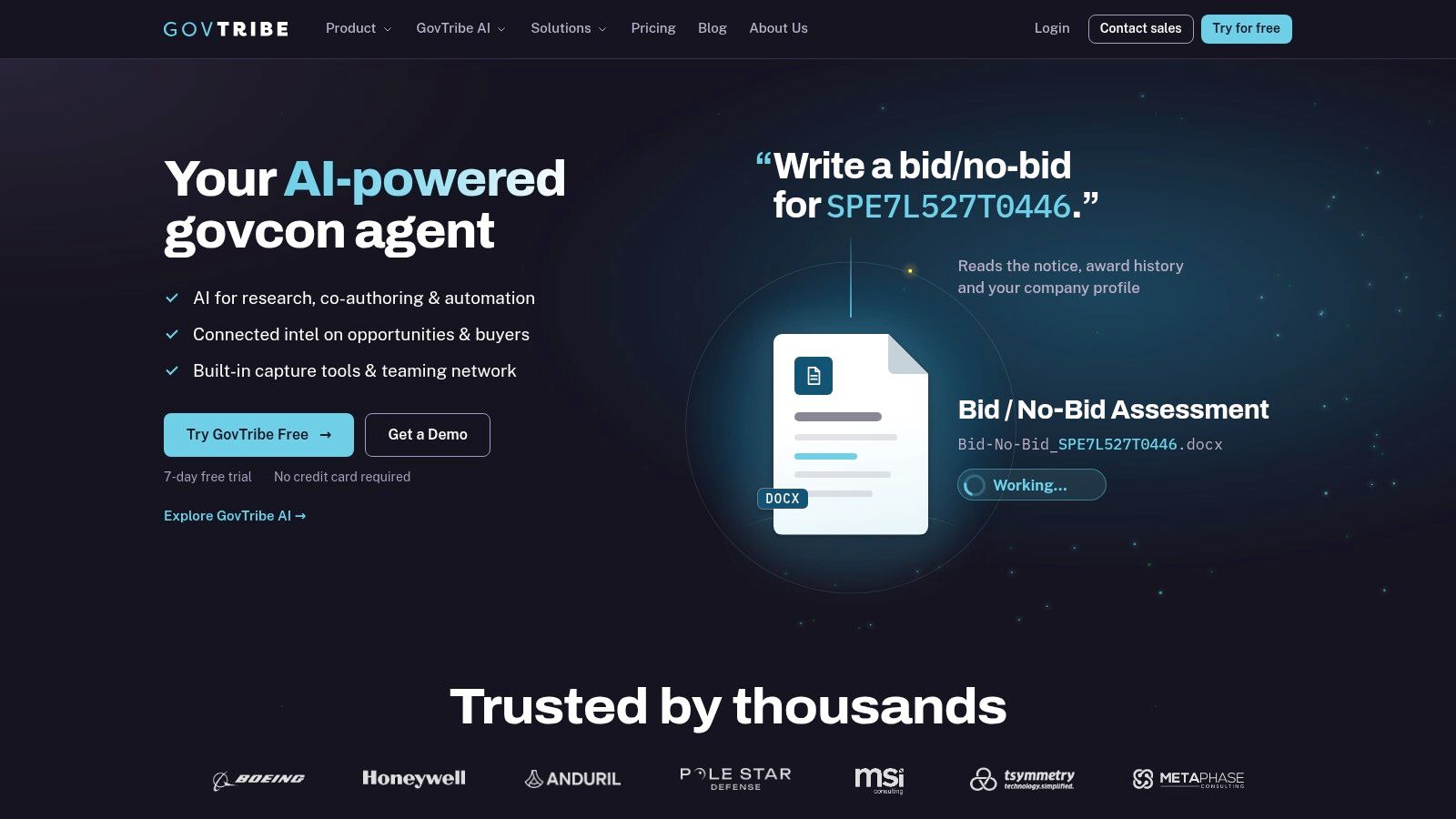
Award history can help a team assess incumbents, agency buying patterns, and recurring requirements. GovTribe adds AI-supported pipeline review, competitor research, price-to-win workflows, and shared saved searches, connecting that research to active pursuits. Check GovTribe's feature list against the research and capture steps your team actually uses.
Integrations and the credit question
Zapier and Unanet integrations: Move pursuit data into other systems your team uses.
Slack and email updates: Keep pursuit changes visible in the channels described in GovTribe's capture materials.
Capture measures: Estimated value and win probability are recorded on the pursuit, giving teams figures to review alongside status and deadlines.
GovTribe's plans publish per-seat annual pricing and distinguish plan features, including AI-credit allowances. For general guidance on comparing GovCon tools, see the GovCon Reviews FAQ. Confirm current price, credits, and what each plan includes before choosing, especially if several team members will need access.
Who shouldn't buy it. Teams that need advanced CRM administration, role hierarchies, and deep customization should test whether GovTribe covers those requirements before relying on it as their sole CRM. GovTribe combines research and capture with pipeline tracking, but may not replace a full CRM for a large BD organization.
4. HigherGov
Verdict. HigherGov is a strong fit for contractors who need one pipeline view across federal, state, local, and education work. Published annual pricing makes it easier to assess budget fit before speaking with sales. Its mix of opportunity discovery, forecasting, pursuit management, alerts, and market intelligence supports teams that want to track work beyond SAM.gov.
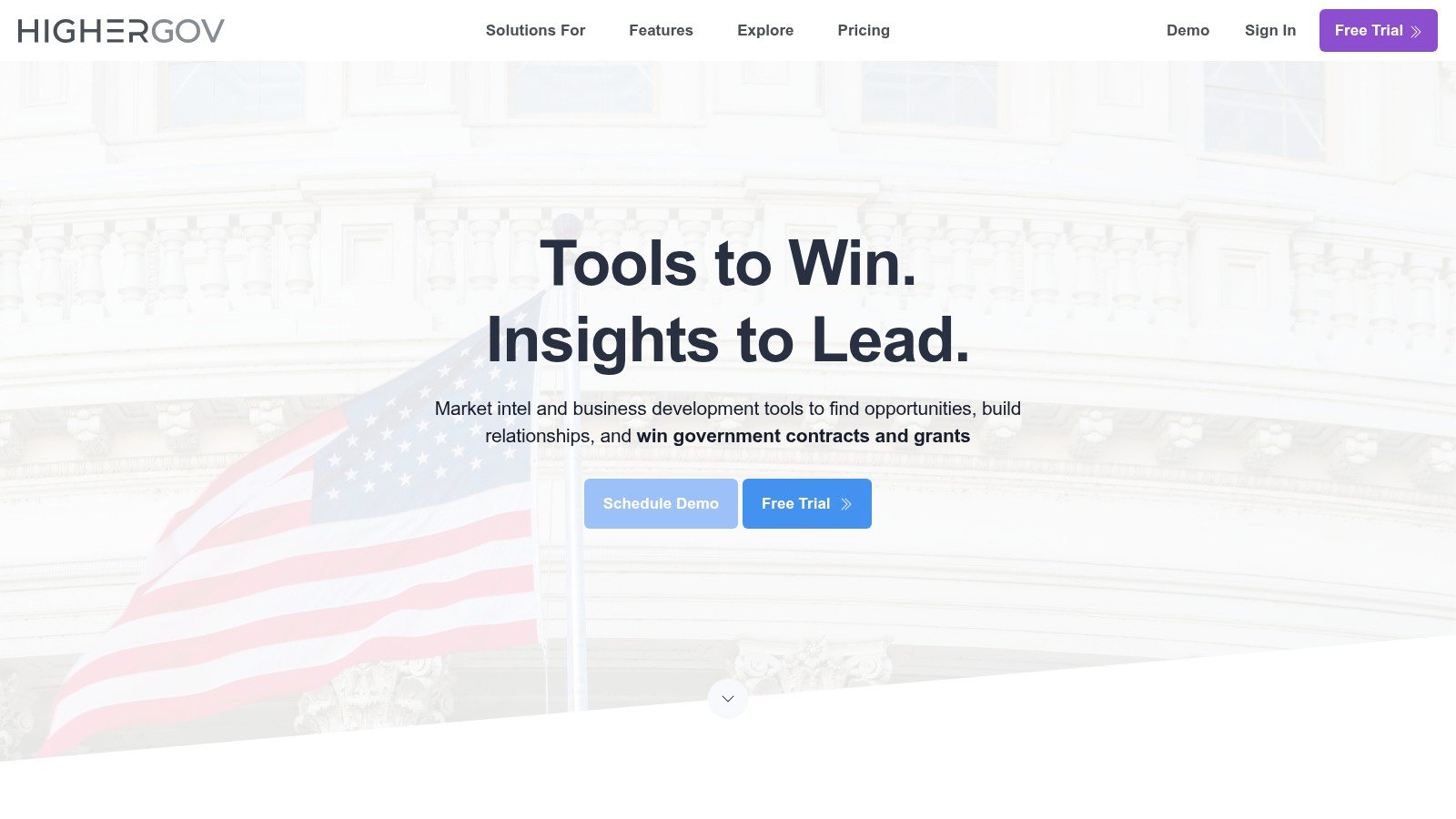
The broader coverage helps teams that sell across multiple government levels. SAM.gov separates opportunity categories such as small-business set-asides, 8(a) opportunities, and HUBZone set-asides in its contract opportunities search. HigherGov's listed plans include unlimited searches, alerts, and pipelines, which lets teams monitor more opportunities without rationing those activities.
What to check before you buy
HigherGov also lists AI tools, vendor and people data, and a labor-pricing tool. API access and Zapier integration can move pipeline data into other systems. Export limits vary by tier, so check the plan's ceiling if your team relies on bringing data into its own models.
A broad platform needs an owner. Without someone maintaining the process, teams can end up using HigherGov as an alert feed while leaving its pipeline features idle.
The main trade-off is the price jump between its entry and higher tiers. Compare plans against your user count and export needs, then confirm that the data sources and geographic coverage fit the states and agencies you pursue. The HigherGov website lists platform details, and our tool evaluation approach explains how GovCon Reviews assesses products.
Who shouldn't buy it. Federal-only teams that need proposal execution tied closely to capture may find HigherGov's broader coverage unnecessary. They could pay for market coverage they do not use and still need separate proposal software.
5. GovDash
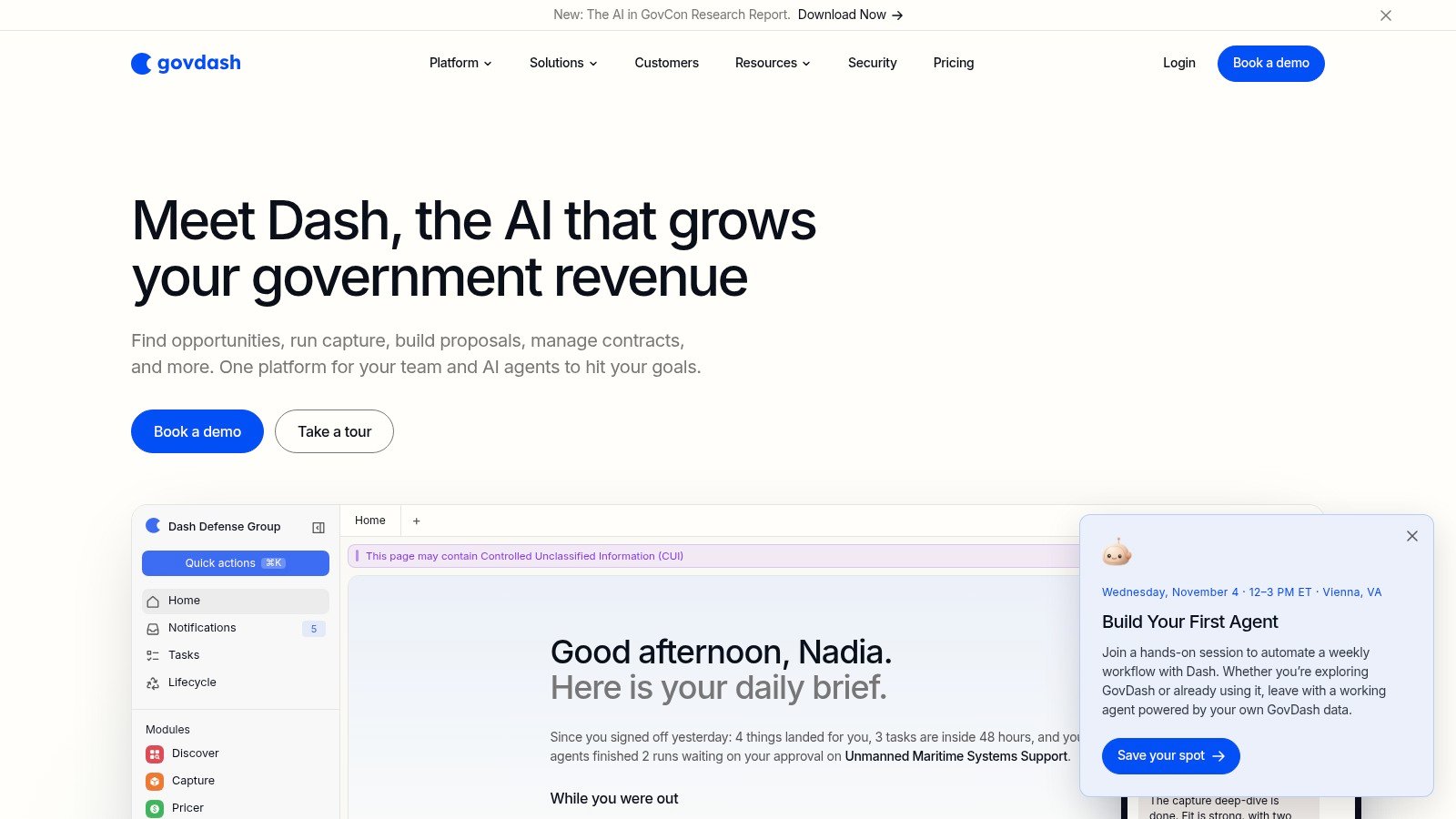
GovDash is a strong fit when a team needs formal capture gates tied directly to proposal work. Its capture-to-proposal workflow keeps opportunity context attached as a pursuit moves toward proposal execution, reducing the handoff gap between capture and writing.
The capture workflow includes pipeline stages, opportunity notes, capability matching, teaming evaluations, and gate reviews. Its gate-review documentation describes questions, tasks, approval statuses, and probability-of-win scoring. Putting qualification decisions early in the process helps teams spend proposal resources on pursuits that meet their criteria and stop weak-fit bids before they consume more time.
Views that match how teams actually review
Kanban view: Useful for weekly pipeline standups focused on stage movement.
Gantt view: Shows deadline conflicts when several pursuits are active at once.
Table view: Supports leadership reviews that rely on sorting, filtering, and comparable fields.
Configurable phases, fields, roles, and reporting let teams adapt the workflow to their existing capture gates. GovDash covers discovery, capture, proposals, and contract management, making it broader than a standalone tracker. Compare its scope on the GovDash website with the gates your team already uses.
Public subscription prices were not available in the reviewed product materials, so budget comparison requires a sales conversation. The configuration also takes discipline: teams need clear gate definitions before setting up phases and fields, or they risk encoding inconsistent decisions into the system.
Who shouldn't buy it. Teams tracking only a handful of pursuits, without formal gates or a proposal handoff, are unlikely to need this much workflow. GovDash fits best when structured capture and proposal coordination are already part of the bid process.
How the five pipeline platforms compare on pricing model, integrations, and best-fit buyer
| Item | Pricing model | Key integrations or connections | Best for |
|---|---|---|---|
| SamSearch | Quote-based; annual billing | Built-in GovCon CRM and proposal workflow; confirm external integrations | Midsize to enterprise contractors seeking an integrated discovery-to-proposal workflow |
| Civio AI | Request a quote; verify terms | Procurement and CRM data connections described by vendor; confirm your stack | Teams piloting AI-assisted qualification and capture-to-proposal handoffs |
| GovTribe | Published per-seat annual plans | Zapier, Unanet, Slack, and email updates | Teams combining market intelligence with collaborative capture management |
| HigherGov | Published annual plans | API and Zapier | Contractors tracking federal, state, and local opportunities in one platform |
| GovDash | Public subscription pricing not found | Built-in capture-to-proposal workflow; confirm external integrations | Teams connecting formal gate reviews with proposal execution |
Frequently Asked Questions
What should a GovCon pipeline tracker record? At minimum, track the opportunity source, owner, stage, bid/no-bid decision, deadlines, amendments, teaming notes, and next action. If your team drafts proposals in another system, test whether that context survives the handoff.
Which platform fits a team that also writes proposals? SamSearch is worth testing when business development, capture, and proposal teams need to carry opportunity context into drafting. GovDash is worth a closer look when those tasks follow formal capture gates; Civio AI merits a pilot if AI-supported prioritization and approvals are the main interest.
Should AI make bid/no-bid decisions? No. Use it to surface requirements and possible fit, then have a person verify eligibility, capacity, compliance obligations, and pursuit cost before committing proposal resources.
Match the Tool to the Bid Process You Actually Run
SamSearch offers midsize to enterprise contractors a direct path from opportunity discovery through proposal drafting. It connects discovery, qualification, and proposal work in one workflow, reducing the handoffs that can leave pursuit context scattered across records and people. Civio AI is an alternative to pilot when your priority is AI-supported scoring and coordination across government-sales stages. GovDash carries capture context into proposal execution and fits teams that need formal gate reviews tied to proposal work.
Choose GovTribe when award and vehicle research drives your capture decisions. Choose HigherGov when published pricing and state, local, and education opportunities matter more than proposal depth.
A fuller pipeline is not automatically a better one. Prioritize tools that help your team screen opportunities for eligibility, capacity, and pursuit cost before committing proposal resources. Consider security requirements at the same stage: if an opportunity carries compliance obligations your team cannot meet, rule it out before investing in the bid. GAO found that NNSA and six management-and-operating contractors reported $16.8 billion in small-business awards from FY2018 to FY2022, but an estimated $1.1 billion went to entities that did not qualify as small under applicable size standards, according to the GAO report on small-business award classification. It is a reminder to verify eligibility claims rather than treating a pipeline tag as proof.
Before buying, map where your last three bids broke down: discovery, the gate decision, teaming, or the proposal handoff. Then use a live opportunity, including an amendment, to see whether a change reaches the right owner with its rationale intact. Confirm seats, modules, credits, implementation, and renewal terms in writing. GovCon Reviews compares software, data, and services across federal and SLED contracting, subcontracting, recompetes, and grants; the final test is whether a platform fits your team's actual bid process.
For a broader comparison of the five platforms and other options, visit GovCon Reviews.
Related analysis

7 Best Government Contracting Platforms for 2026: Ranked
Compare 7 government contracting platforms for 2026, including SamSearch and Civio AI. See pricing visibility, workflow strengths, limitations, and who should skip each.

Top 6 Federal Opportunity Tracking Software Platforms for 2026
Compare 6 federal opportunity tracking platforms for 2026, including SamSearch and Civio AI. See pricing models, key features, and how to choose.

5 Best GovCon Pipeline Tracking Platforms for 2026
Compare five GovCon pipeline tracking platforms for 2026: SamSearch, Civio AI, HigherGov, NextStage, and GovTribe. Explore features, pricing, and fit.