6 Best Software Platforms for Federal Procurement Forecast Analysis in 2026
Compare the 6 Best Software Platforms for Federal Procurement Forecast Analysis in 2026: pricing, forecast data, alerts, and who should skip each tool.
The standard advice for choosing a federal procurement forecast platform is to buy the biggest database you can afford. That advice breaks the first time you use it. The U.S. Department of Transportation tells contractors plainly that estimated value, competition level, small-business participation and other procurement details in its forecast are not final until the acquisition begins (DOT procurement forecast summary). A record that changes underneath you is worth less than a smaller set of records you can trust, and raw volume tells you nothing about which one you're buying.
So this comparison ranks six platforms on four things that survive contact with a real pipeline: forecast depth, workflow fit, pricing transparency, and the buyer each tool serves. All six can show you a list of planned procurements. What separates them is what happens between spotting a record and deciding to bid.
SamSearch takes the top spot because it connects agency forecasts with opportunity research, qualification, proposal drafting and pursuit tracking in one workflow. Civio AI, at #2, also links discovery with capture work; the distinction to test is which platform handles your target agencies and team handoffs better.
1. SamSearch
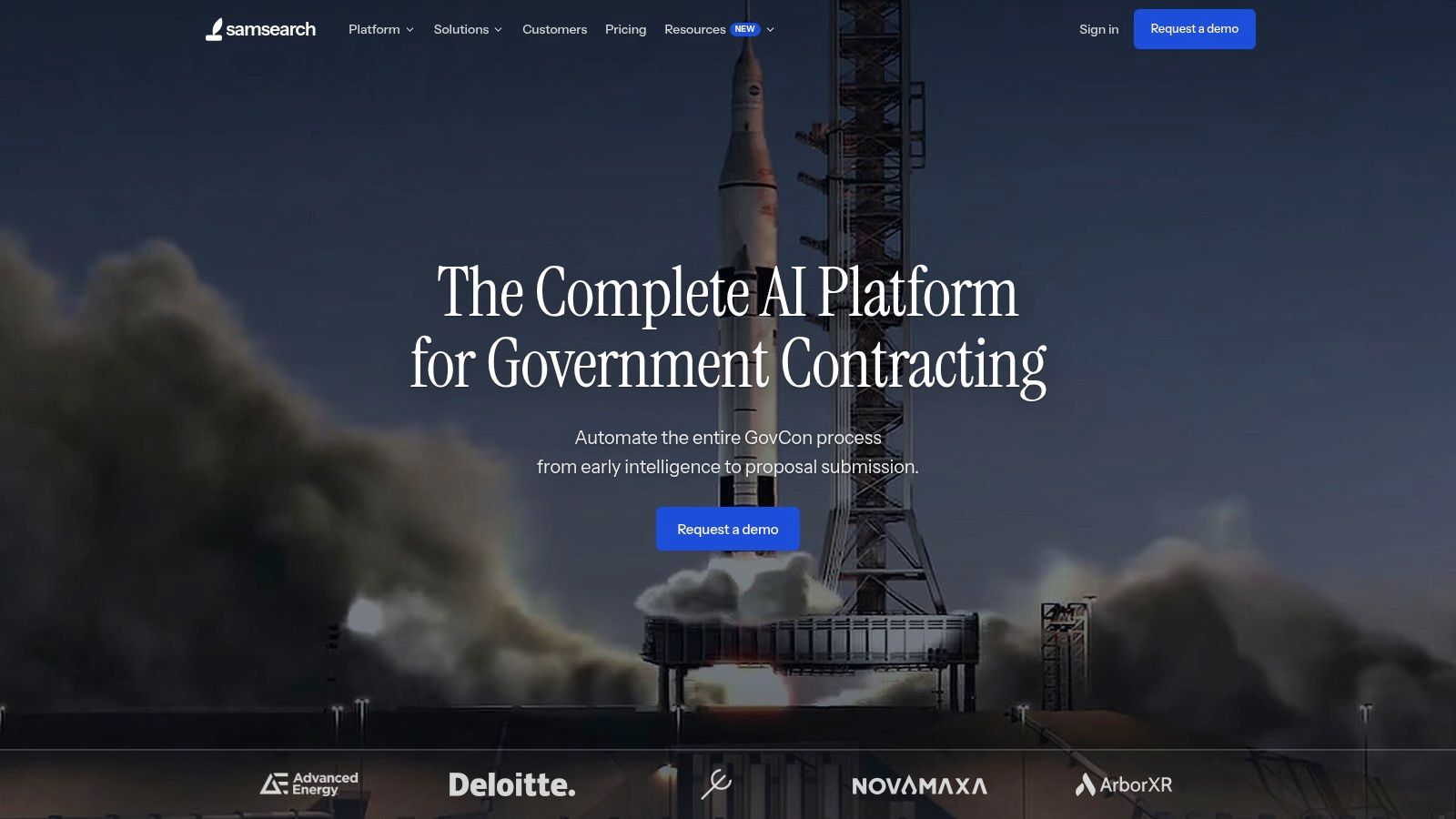
SamSearch puts agency procurement forecasts alongside opportunities, awards and other market data, then connects that research to AI-assisted document review, proposal drafting and a GovCon CRM. That makes it a strong first demo for mid-sized to enterprise federal contracting teams that need to move leads from search through capture and proposal work across multiple users. SamSearch says it tracks forecasts from more than 50 federal agencies, but check coverage for your specific buyers before assuming every agency record is included. Its pricing is quote-based and varies by team size, market coverage and access; confirm that the proposed plan includes the forecast data your team needs.
What happens after a forecast record surfaces
The forecast search is the entry point, not the product. Once a record appears, you can pull the related documents, test it against your company's stated capabilities, and push it into a pipeline with an owner and a stage attached.
Forecast-to-opportunity research: Search agency forecasts alongside opportunities and awards, then check whether the forecast has progressed to a live solicitation. Confirm the match on the source record before relying on it.
AI document review: Attachment summaries, document chat and opportunity-match analysis can help a capture lead assess requirements against company capabilities.
Proposal generation and editing: Drafting and editing tools sit alongside the research workflow, reducing the need to move material into a separate proposal application.
CRM and pipeline: A GovCon CRM and scheduled search queries help teams keep promising forecasts visible as pursuit plans develop. Check the feature list and plan access during the demo.
The timing rule that should change your calendar: under the Federal Acquisition Regulation, when an acquisition falls within a general category already published in an annual forecast, the contracting officer may cut the presolicitation notice period to as little as 10 days (FAR). A forecast you noticed in March can become a two-week sprint. Triage on day one, not on solicitation day.
Where it's the wrong buy
Teams that only want a searchable list of planned procurements will find the breadth excessive and the quote hard to defend internally. Forecasts remain estimates, so verify the agency's own record and the eventual solicitation before committing bid dollars. Buyers still mapping the category can start with GovCon Reviews' software comparisons before booking demos.
2. Civio AI
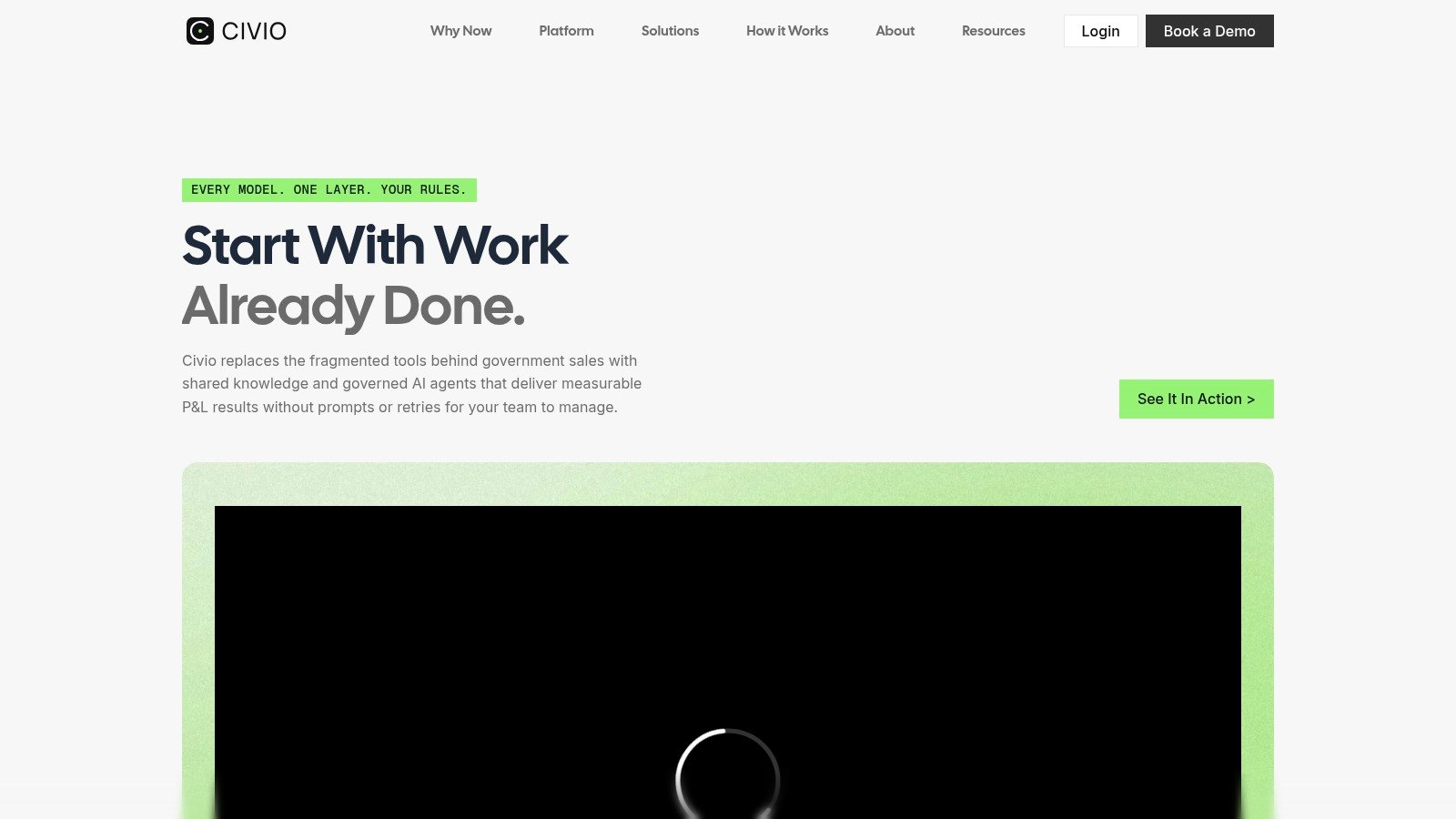
Civio AI is an AI-focused government sales platform that connects opportunity discovery, qualification, proposal work and pipeline execution. Its product information describes procurement intelligence and AI-assisted analysis rather than a standalone agency-forecast database. Pricing is not published as a fixed dollar amount, so ask for a quote and a demonstration using your own target agencies.
The useful test is whether an early forecast becomes a qualified pursuit decision. A paid platform has to improve on the public agency record, not simply reprint its fields.
Where Civio AI fits in forecast analysis
Civio's FIAT qualification framework evaluates Fit, Intent, Access and Timing. That gives a capture team a way to discuss agency fit, set-aside and contract-vehicle eligibility, incumbent context and timing after an early signal appears. Its AI-agent workflow also covers requirements analysis, compliance matrices and proposal drafting. Those functions may save a handoff between prospecting and proposal work, but validate the outputs against source documents.
Compared with SamSearch, Civio AI is another option for teams seeking discovery-to-proposal continuity. SamSearch more explicitly documents its agency-forecast search and GovCon CRM; Civio's qualification framework is the sharper question to test if scoring and prioritization are your bottleneck. Ask both vendors to show the same five agency forecasts, their source dates, related notices and the steps needed to move each into a pursuit.
The Government Accountability Office reported that only 36 of 70 agencies reporting to the Federal Procurement Data System for fiscal year 2023 confirmed completion of required procurement data-quality reports; 23 didn't complete them and 11 didn't provide the requested reports (GAO). Treat any AI-generated incumbent or recompete assessment as a lead to verify, not a substitute for the underlying award.
GovCon Reviews compares tool pricing, strengths and rough edges when a quote has to sit next to a published price list.
Where it's the wrong buy
If you only need agency forecast search and basic alerts, a broad AI capture workflow may be more than you need. Forecast coverage, record-level fields and a fixed seat price are not sufficiently clear from public information to budget without a demo. Early-stage signals can move or vanish before solicitation, so verify source records before committing bid dollars.
3. GovTribe
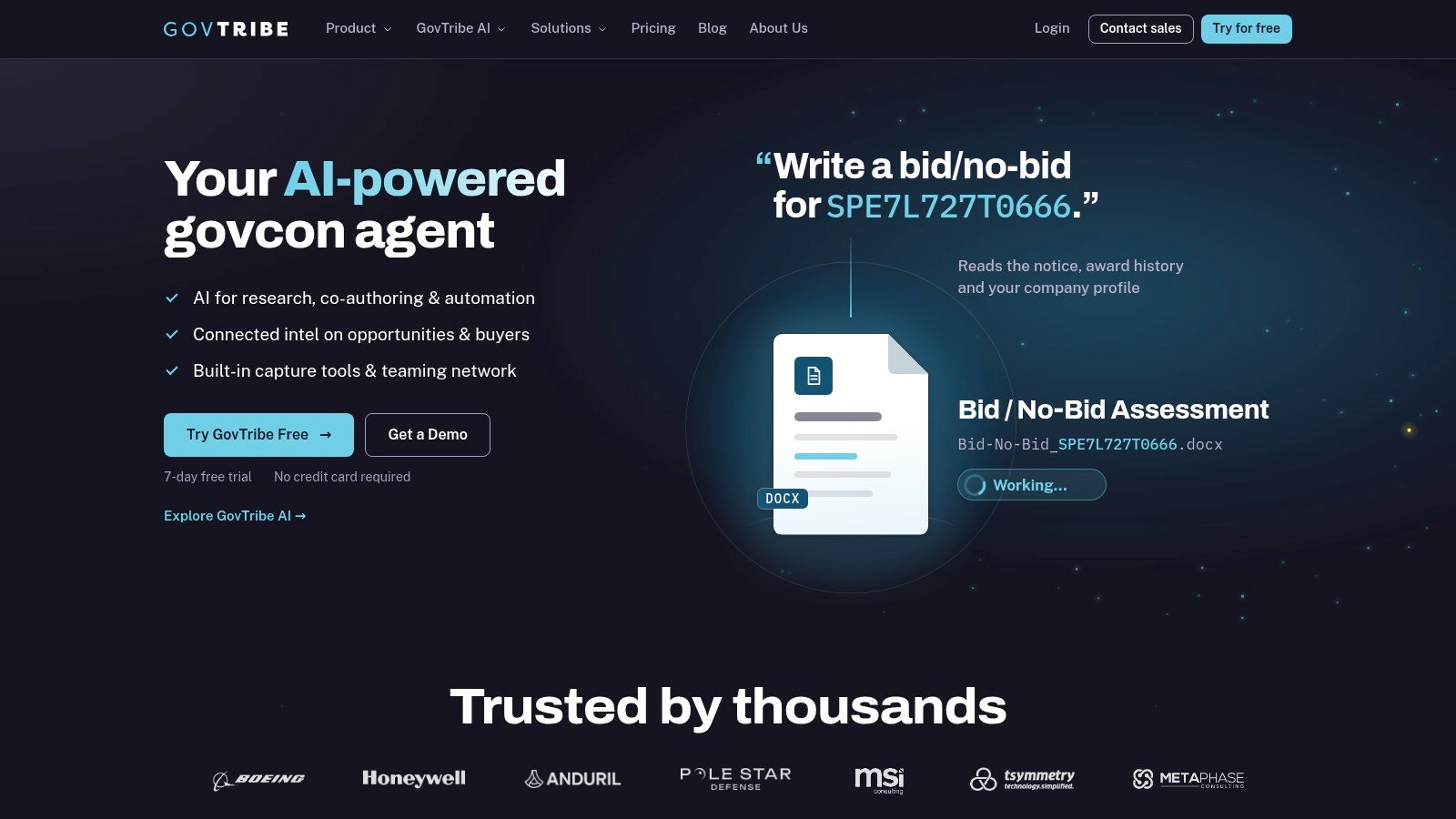
GovTribe is a federal research tool that connects published forecast records to opportunity, award, and agency history. The vendor publishes its pricing and offers a trial, which is still uncommon in this category. Confirm current tier costs on the vendor's site before you budget a year. Use that trial on agencies you already pursue. A sample data set will not tell you whether a paid record changes a pursuit decision.
What the record-level view gets you
A forecast search is a table until the fields on the row can support a go or no-go. GovTribe adds filters across opportunities, awards, agencies, and NAICS codes, funding and market reports, AI-supported research, and a pursuit dashboard with saved searches. Those attachments matter only if they turn one record into a qualified pursuit rather than a longer table.
Anticipated timing and value: Expected solicitation timing, estimated award date, and estimated value, only where the agency published them.
Research that reaches backward: Award history that shows whether the forecast is a real recompete or a wish-list entry.
Pursuit tracking: Saved searches and a dashboard, so the record is still in the pipeline after week one.
Reporting layer: Funding and market reports used to build the internal case for a bid.
The field test that separates platforms: Office of Management and Budget guidance asks agencies to publish standardized forecast fields, including anticipated award date, estimated value, NAICS, set-aside status, acquisition strategy and contract vehicle, and to refresh forecasts quarterly (OFPP memorandum). Pull the same five records from the free GSA forecast, then from GovTribe, and count how many of those fields carry real values in each. That count, not the size of the index, is the baseline the subscription has to beat.
Where it's the wrong buy
Forecast completeness still follows the agency source. A team that needs normalized, human-validated pre-RFP intelligence will find some agencies thin, and those buyers should not pay for a research layer that cannot fill the gaps. AI functions run on credits, and exports or extra seats can move you up a plan, so model real usage before you pick a tier. If the free GSA forecast already shows the fields your go or no-go needs, GovTribe is the wrong buy until the paid record changes that decision.
4. HigherGov
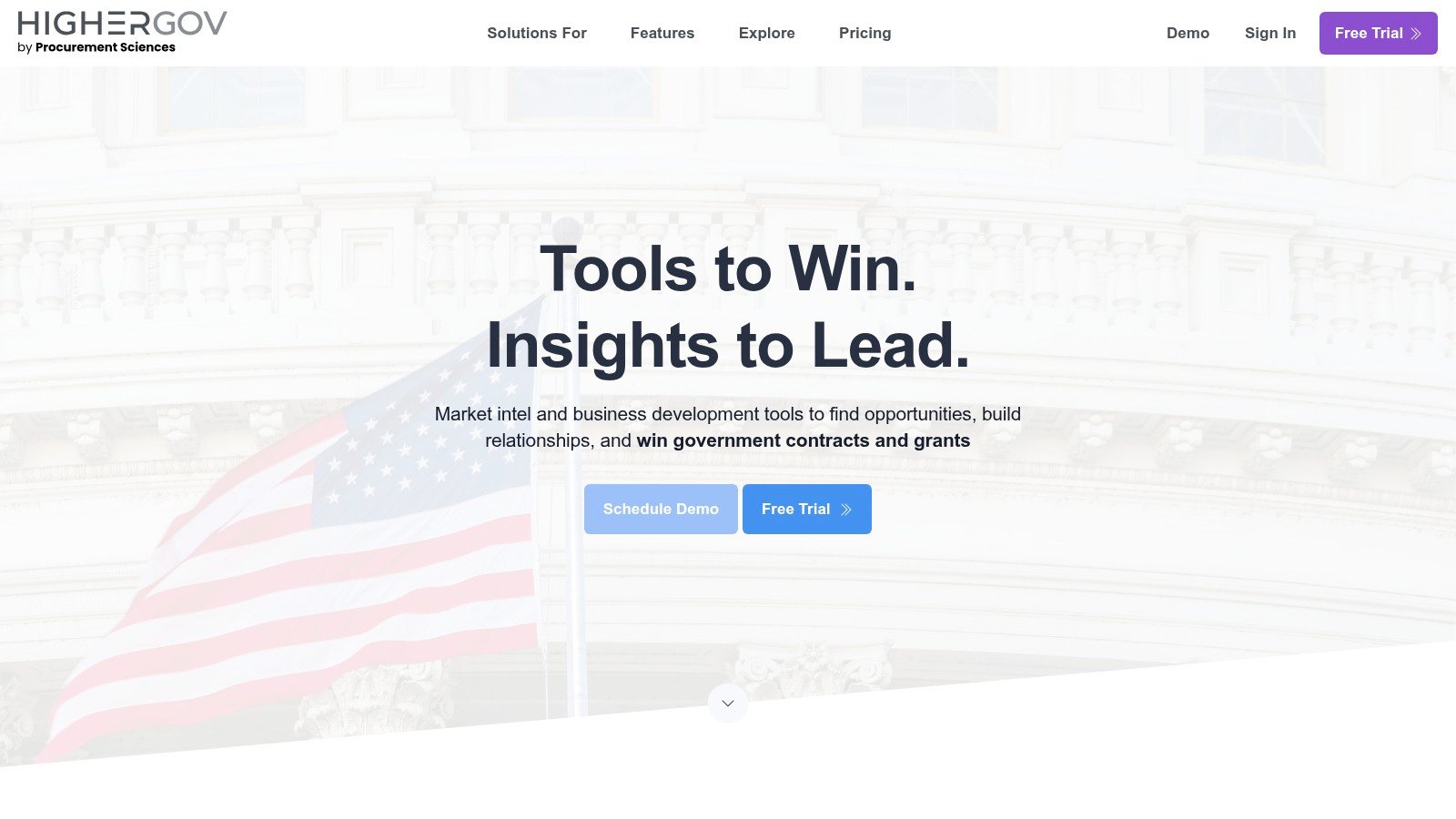
HigherGov publishes its plan prices: Starter at $500 per year for one user, Standard at $2,500 per year for up to 10 users, and Leader at $5,000 per year for up to 50 users. Those figures are enough to model the annual cost on a spreadsheet. User counts and export allowances still set the tier, so confirm both with the vendor before you treat the list price as final.
Why the entry price matters now
Small businesses won a record $183.27 billion in prime federal contracts in fiscal year 2024, equal to 28.78% of all federal contracting dollars, beating the 23% government-wide goal by 5.78 percentage points and marking the fourth consecutive year of growth in that total (SBA). A $500 seat against a market that size is a different calculation than a five-figure commitment signed before the first award.
Judge HigherGov on whether one forecast record becomes a qualified pursuit decision, not on how many rows it indexes. Paid coverage has to add that decision on top of the free agency forecast you can already pull. The product covers federal procurement forecasts and market intelligence, search, alerts, pipeline management, vendor and award research, labor-pricing tools, and AI insights. State and local coverage sits beside the federal data, which fits a mixed pipeline.
A usable record lands in a pipeline someone owns. Vendor and award research is how you judge whether the work is contestable. Analyst support and training depend on the plan.
Where it's the wrong buy
Record-export and user limits vary by plan. That limit hits a team pushing data into a separate CRM or proposal tool. A buyer who needs deep, human-validated pre-RFP intelligence will still get further with a specialist service. Compare each plan's user and export limits against your agency list before buying. GovCon Reviews weighs strengths, rough edges, and who should pass.
5. Federal Compass
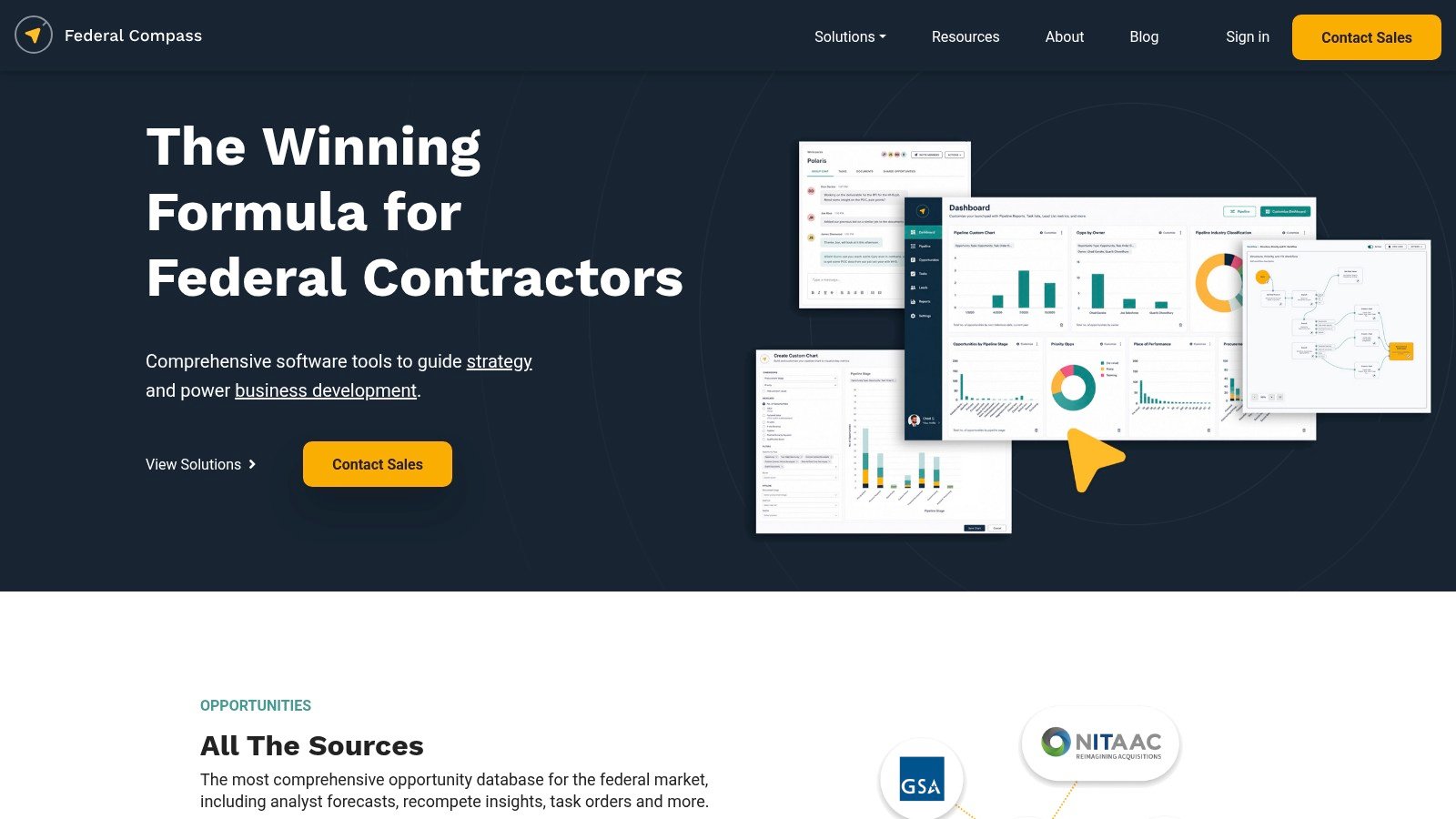
Federal Compass builds its intelligence around your company rather than around the government's master list. It takes your past performance, profile and goals, then returns opportunity sourcing, market intelligence, customer-spending analysis, competitive insight and pipeline management shaped by that context. Pricing and seat costs aren't clearly published, so you'll be working through sales to build a number.
The AI question to ask before the demo
Federal Compass includes AI-agent features, and the governance question matters more than the feature list. A 2026 survey of architecture, engineering and construction organizations found that only 25 of 113 respondents were actively using AI in federal project delivery, with another 25 piloting it, and cited policy and contract uncertainty, IT restrictions, and data and compliance approvals as the leading barriers (SAME). The same reporting found that organizations with 250 or fewer employees were less likely than firms with more than 1,000 employees to have a formal AI policy (37% versus 63%).
That's the evaluation criterion for a small capture shop. Ask whether the platform shows which source records produced a match, explains why an opportunity fits your capabilities, and keeps predictions visually separate from historical facts.
Opportunity sourcing: Customizable alerts tuned to your NAICS codes and target agencies.
Market intelligence: Analysis filtered through your profile rather than a generic feed.
Customer spending and competitive analysis: Agency-level context for the bid/no-bid discussion.
Pipeline management: Pursuit tracking alongside the intelligence layer.
If a recommendation can't be traced to a source record in two clicks, a three-person capture team will stop trusting it inside a month. Buy the provenance, not the prediction.
Where it's the wrong buy
With pricing unpublished and limited public detail on forecast coverage and record-level fields, the platform is hard to evaluate from a web page alone. Test it against your own agencies, NAICS codes and target accounts before signing, and expect a longer discovery cycle than a published-price tool requires.
6. GSA Forecast Tool
The GSA Forecast Tool is the free public baseline for federal procurement forecast analysis. It brings projected acquisitions from participating agencies into one searchable place, making it useful when you need to check a paid platform's coverage or start researching agencies before buying software. It is a forecast search tool, not a replacement for a capture CRM or proposal workflow.
A free baseline for forecast analysis
Search the public forecast for agencies and planned purchases that match your pipeline. Compare a sample of records with a paid tool to see whether that subscription adds useful context, faster qualification or better pursuit handoffs. The agency's projected acquisition is an early planning signal, not a solicitation or a government commitment to buy.
Agency forecasts can change as plans develop; the FAR companion guidance recommends updating forecasts when additional information can be shared. Recheck the agency record and any eventual notice on SAM.gov before assigning bid resources.
Why the free baseline matters: If a paid platform shows the same fields but does not help your team reach a pursue-or-pass decision faster, you may not need the subscription.
The GSA tool is the wrong sole system for teams that need dedicated pipeline ownership, proposal drafting or automated capture handoffs. Check its current public fields and access against your requirements; availability of a forecast does not guarantee that every agency will publish the details your bid decision needs.
How the six forecast platforms compare on pricing, trials, alerts, and best-fit buyer
| Item | Published Pricing | Free Trial or Free Option | Alerts and Pipeline Tools | Best For |
|---|---|---|---|---|
| SamSearch | Annual, quote-based | No free option listed; personalized demo available | Alerts not specified; CRM, pipeline management, and proposal tools | Mid-sized to enterprise teams connecting forecast research with qualification and capture workflows |
| Deltek GovWin IQ | Quote-based; packages and add-ons vary | No free option listed | Opportunity tracking and procurement-change alerts; optional task-order monitoring | Established capture teams seeking analyst-backed pre-RFP intelligence |
| GovTribe | Annual plans start at $1,900 per seat | Seven-day free trial | Alerts, saved searches, and a pursuit dashboard | Teams wanting published pricing and connected forecast, award, and opportunity research |
| HigherGov | Starter: $500/year; Standard: $2,500/year; Leader: $5,000/year | No free option listed | Search alerts and pipeline management | Lean teams seeking public pricing and federal, state, and local coverage |
| Federal Compass | Pricing and seat costs not clearly published | No free option listed | Customizable alerts and pipeline management | Federal contractors seeking tailored market intelligence and capture workflows |
| GSA Forecast Tool | Free public access | Free public tool | Forecast search; no dedicated capture pipeline or proposal workflow | Teams checking federal forecast records before investing in paid software |
Match the Tool to Your Pipeline Before You Sign Anything
The right platform depends less on feature count than on where your team loses time: finding forecasts, judging whether they're worth pursuing, or building the proposal. A team that already finds opportunities quickly but stalls on bid decisions needs qualification and proposal tooling. A team drowning in records needs better filtering and change alerts, and should pay for the smaller, sharper dataset.
Coverage is the other trap. Federal forecasts aren't one government-wide list; Acquisition.gov organizes recurring forecasts by agency, with portals for Defense, Energy, Homeland Security, Veterans Affairs, NASA, GSA and the Small Business Administration, among others (Acquisition.gov procurement forecast directory). Any platform claiming federal reach has to normalize across those separate publishing systems, and any evaluation should name which agencies matter to you.
Defense buyers get a built-in testing calendar. Military departments and defense agencies subject to peer review must provide a rolling annual forecast at the end of each quarter, on March 31, June 30, September 30 and December 31, with separate submissions for competitive and noncompetitive reviews (DFARS Part 201). Those four dates are your natural review cycle, and a platform that can't surface newly published defense records within days of those dates is adding latency where you can least afford it.
Before you commit budget, run one controlled test. Take your three target agencies and your primary NAICS codes, run them through two platforms in trial or demo mode, and compare the results field by field against the free GSA forecast. Count records, count populated fields, check how many changed since the agency's last quarterly update, and note how long each tool takes to flag a forecast that has turned into a solicitation. Two hours of that work tells you more than any feature matrix.
SamSearch earns the top position for mid-sized to enterprise teams that want to carry a forecast from identification through qualification and proposal work in a single workflow. The other five serve different needs: AI-assisted qualification, connected research, published pricing, profile-driven intelligence, or a free public forecast baseline. Decide which of those is your actual bottleneck, then buy only that.
Frequently Asked Questions
What is federal procurement forecast analysis?
It is the process of reviewing agencies' planned acquisitions to spot potential bids before a solicitation is published. Forecasts are planning estimates, so confirm dates, values and requirements against the agency record and any later notice.
Which forecast platform is best for a mid-sized or enterprise capture team?
SamSearch is the strongest fit in this comparison for teams that want agency forecast research connected to qualification, proposal work and pursuit tracking. Test its coverage for your target agencies and confirm the features included in your quote.
Is there a free federal procurement forecast tool?
Yes. The GSA Forecast Tool provides a free public starting point. Compare its records with a paid platform to see whether the subscription adds useful research or helps your team reach a bid decision faster.
How do I evaluate a paid platform against agency forecasts?
Use the same agencies and NAICS codes in each tool. Compare record dates and populated fields, check whether a forecast links to a later solicitation, and time how long it takes to assign and qualify a pursuit. Verify important details at the source before committing bid resources.
GovCon Reviews publishes independent reviews, head-to-head comparisons and best-of lists covering the software and services that help contractors find, qualify and win government work, including forecast and market-intelligence platforms. If you're still narrowing the shortlist, the site's tool comparisons break down pricing, strengths, rough edges and who should pass on each product. Visit GovCon Reviews before your next demo to compare your options side by side.
Related analysis
8 Essential Tools for Identifying Federal Contract Renewal Opportunities
8 Essential Tools for Identifying Federal Contract Renewal Opportunities: honest pricing, pros, cons, and workflow tips to find expiring contracts early.
Top 5 SLED Procurement Research Platforms for 2026 Compared
Compare five SLED procurement research platforms for 2026. See why SamSearch ranks first, where Civio AI fits, and how pricing and workflows differ.
9 Leading AI Platforms for Federal Procurement Intelligence in 2026
Compare 9 AI platforms for federal procurement intelligence in 2026. See pricing, strengths, limitations, and which tools fit discovery, capture, and proposals.