8 Essential Tools for Identifying Federal Contract Renewal Opportunities
8 Essential Tools for Identifying Federal Contract Renewal Opportunities: honest pricing, pros, cons, and workflow tips to find expiring contracts early.
Your firm finds an incumbent contract that appears to end in fourteen months. There's no solicitation, no sources sought notice, and no obvious procurement forecast. Just a potential completion date in an award record. You need to decide whether to start capture work or leave the record on a watchlist.
That's where renewal research gets difficult. An expiration date might mark an option decision, the end of the available contract term, or a date that an agency later changes through modification. It isn't a confirmed recompete. Before exercising an option, a contracting officer must determine that it's the most advantageous way to meet the government's need, considering price and other factors, according to a GAO bid-protest decision.
The useful tools don't all solve the same problem. Some help you discover expiring awards. Others add acquisition intelligence, connect incumbents to related awards, or make a watchlist easier to maintain.
These 8 essential tools for identifying federal contract renewal opportunities are ranked for their usefulness in moving from an early recompete signal to a qualified pursuit. Judge each by how soon it surfaces a lead, how clearly you can verify that lead, and how much qualification work remains. Renewal research may reveal a potential follow-on competition, but an expiring award alone does not establish that one will happen.
1. SamSearch
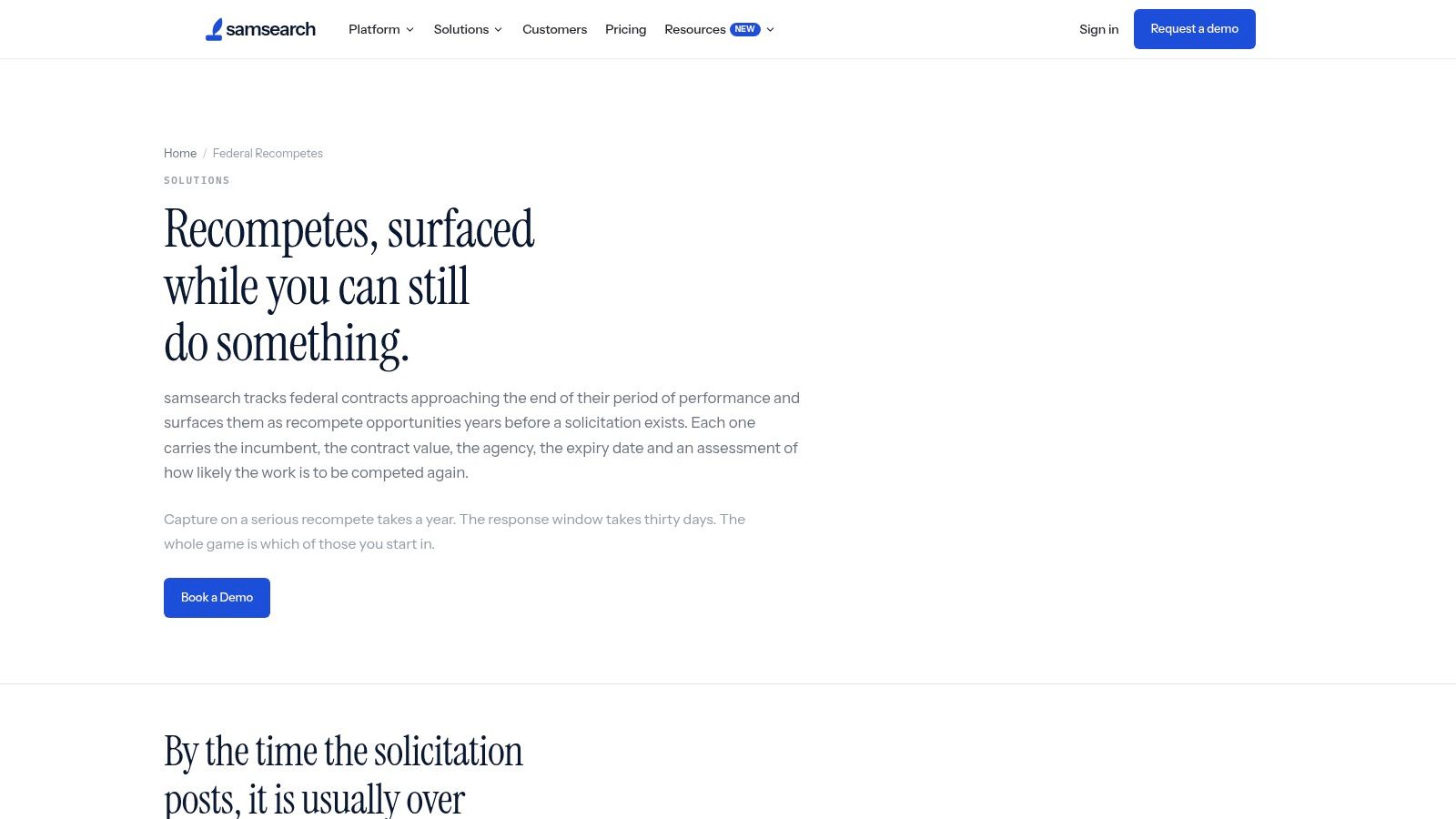
SamSearch is best for midsize to enterprise teams that want early federal recompete discovery connected to capture work. Its recompete search uses award and period-of-performance information to flag contracts approaching expiration. Incumbent, agency, contract-value, and estimated-expiry details give a capture manager a starting point for qualification, while a recompete-likelihood assessment helps distinguish a potential lead from a simple end-date match.
The practical advantage is prioritization. Teams can save filters for relevant agencies, NAICS codes, value ranges, and locations, then monitor contracts as they enter a capture window. Capability matching and past-performance analysis help focus on requirements the company could credibly perform. Compared with a public award-data search, the connected pursuit-management and proposal tools can reduce the handoff work after a lead passes initial review. None of those signals replaces checking the underlying award and agency notices.
Use it to build the initial pursuit shortlist
Start with work your company can deliver, then examine the incumbent and underlying award. Record why the requirement fits, what evidence suggests a recompete, and which assumption still needs confirmation.
Discovery strength: Recompete-focused searches and saved filters help surface potential follow-on work before a conventional solicitation appears.
Workflow strength: Connected research, capture, and proposal functions reduce the need to rebuild a qualified opportunity record elsewhere.
Verification requirement: Estimated dates and recompete assessments still need confirmation through agency records and acquisition signals.
That last distinction matters. GAO's review of contract-type decisions explains that option years give agencies an opportunity to review performance and reconsider requirements. A continuing need doesn't guarantee an unchanged acquisition.
Pricing is quote-based, so the buying decision requires a demo and a clear understanding of included capabilities. Skip SamSearch if you only need occasional award lookups and won't use the connected capture workflow. For a team actively building a recompete pipeline, that connection is its strongest reason to make the shortlist.
2. Civio AI
Civio AI is a fit for teams that want AI-assisted qualification after identifying a potential federal recompete. Its pipeline workflow evaluates opportunities using fit, intent, access, and timing. Recompete timing is one input alongside buying signals and eligibility, so the platform is useful when the question is not just when an award ends, but whether your team should pursue the follow-on.
Civio also connects opportunity research to capture and proposal work. That can help a team carry a qualified lead into a go/no-go review without treating every expiring contract as a ready-to-bid opportunity.
Use it to qualify a renewal lead
Check the award identifier, incumbent, performance dates, and any related agency notice before relying on an AI assessment. Then use the fit and access criteria to document why the requirement merits capture time, or why it belongs on a watchlist instead.
Qualification strength: Fit, intent, access, and timing offer a structured way to review a potential recompete.
Workflow strength: Capture and proposal features help move an approved lead toward execution.
Verification requirement: A score or draft does not establish that the agency will reprocure the work.
Pricing should be confirmed directly. Skip Civio AI if you only need source-record lookups and will not use AI-assisted qualification or downstream capture work. For teams prioritizing early expiration research and incumbent detail, SamSearch remains the more direct starting point; Civio AI is a complementary option for assessing and working a lead.
3. Deltek GovWin IQ
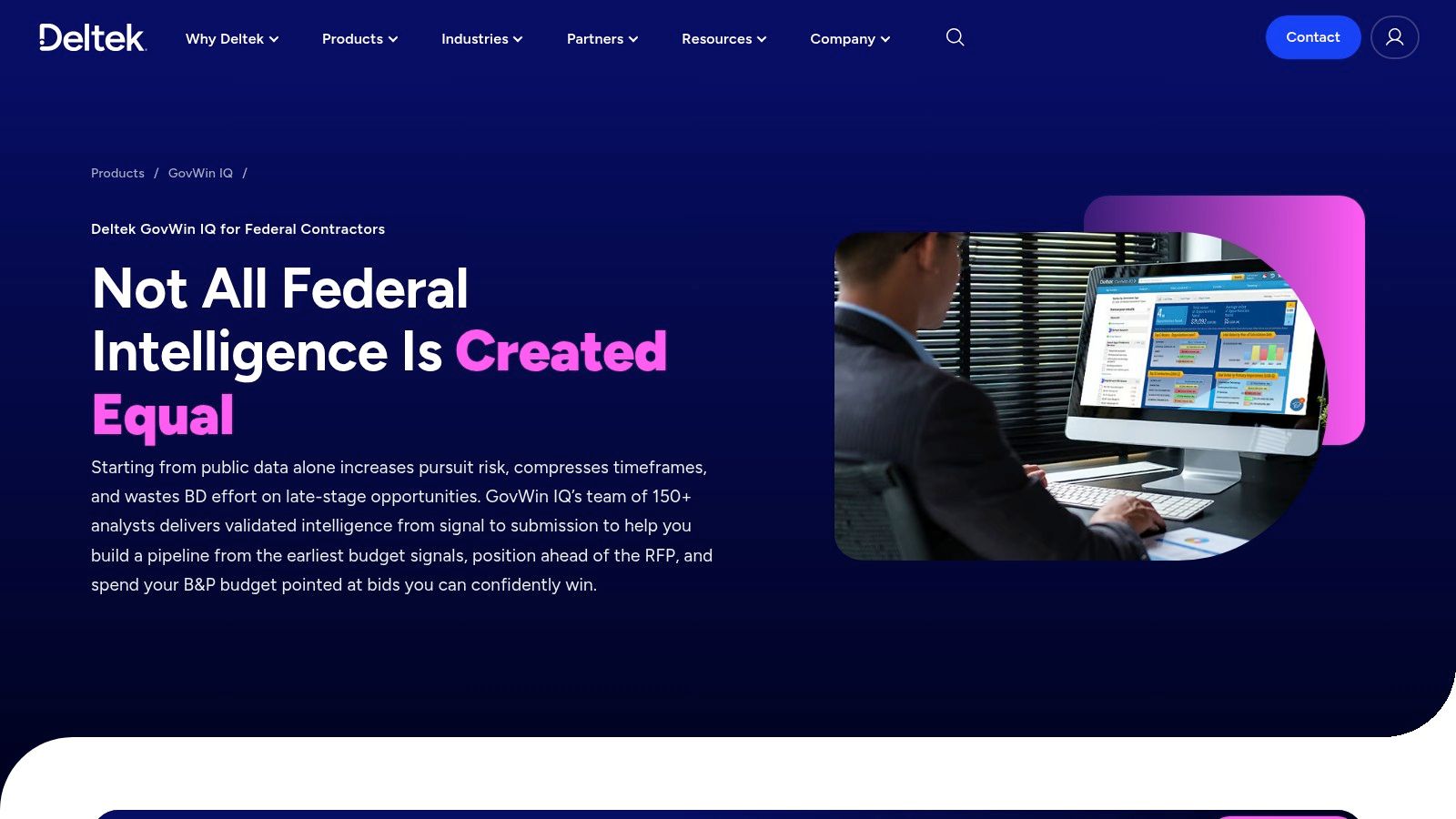
An expiring award tells you when to investigate. Deltek GovWin IQ is useful when you need to understand the agency's likely next move. Its federal intelligence platform combines contract and task-order research with analyst-tracked opportunities, agency intelligence, and competitive research.
Say an incumbent provides program support across several offices. Searching the award alone may leave you unsure whether the agency will recompete the requirement intact, consolidate it, or move it onto another vehicle. GovWin IQ's value is the surrounding program and acquisition context, not merely another completion-date field.
Capture rule: Treat analyst intelligence as a lead to investigate, not an agency commitment to procure.
Use it to investigate acquisition strategy
After discovering an expiring contract, look for related opportunities, buying-office activity, likely vehicles, and competitors. Keep the analyst assessment separate from agency-issued evidence in your pursuit record. That makes it easier to explain what's confirmed and what remains an assumption.
The platform also supports alerts, opportunity tracking, and pursuit management. Those capabilities suit teams working a defined agency account strategy rather than browsing isolated awards.
The trade-off is breadth and cost visibility. Pricing is quote-based, public pricing isn't listed, and package features differ. Before purchasing, define whether you need analyst coverage, award research, or both. Our GovCon software comparisons assess tools against those kinds of capture-workflow decisions.
Skip GovWin IQ if your main requirement is a searchable list of end dates. Its stronger use case is a capture team that can act on deeper program intelligence, investigate acquisition changes, and maintain agency relationships. Without that follow-through, additional context won't necessarily produce better pursuit decisions.
4. HigherGov
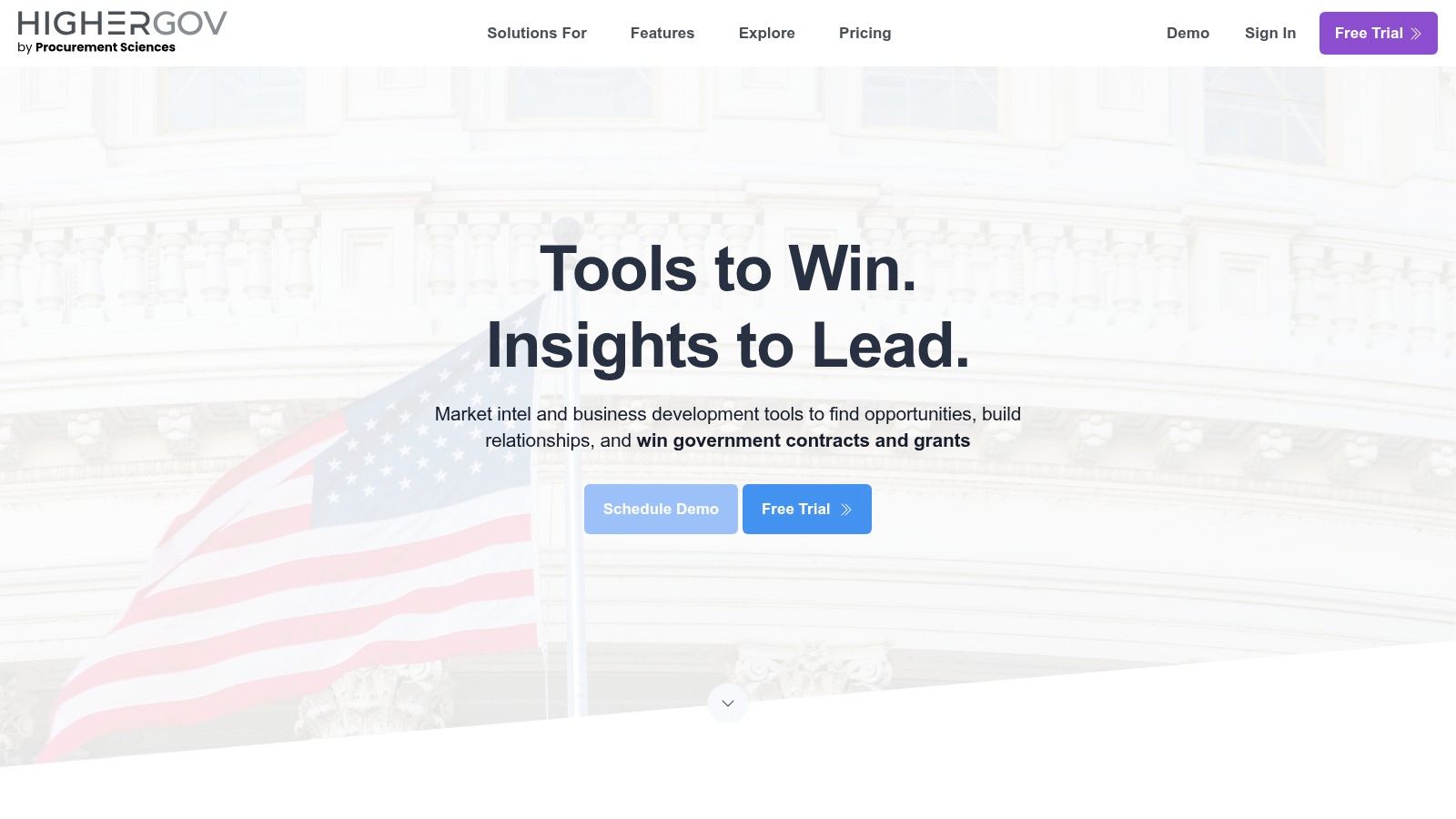
HigherGov fits teams that want to build a focused watchlist themselves. Its award and opportunity research platform supports potential-recompete searches with filters for agency, NAICS, PSC, set-aside, and potential end date. Related opportunity, awardee, and contact research helps qualify the results.
The distinction is control. A small firm or consultant can narrow the search around a specific service line rather than accept a broad feed of expiring awards. Saved searches, alerts, and pipelines help maintain that research without rebuilding the query each time.
Filter for eligibility, not just similarity
An incumbent's historical NAICS code or set-aside is a useful starting point. It isn't proof that your company will qualify for the next acquisition. A GAO review of NAICS-code selection reported officials' concerns that some contracting officers selected codes that favored incumbents rather than best represented the work.
Build the watchlist with separate fields for:
Work fit: Does the actual requirement match your capabilities and past performance?
Access: Can you compete through the anticipated vehicle and business category?
Change risk: Could revised scope, classification, or acquisition structure remove your eligibility?
HigherGov's published annual tiers make preliminary budgeting easier, but inspect current plan details before selecting a subscription. Export limits, data access, and paid-plan AI features vary.
The reliability limit is the potential-recompete label. It helps screen records; it doesn't establish the agency's procurement strategy. Skip HigherGov if your team expects a fully qualified pursuit list without analyst effort. It's better suited to users willing to refine searches, investigate related records, and distinguish an attractive requirement from an accessible competition.
5. GovTribe
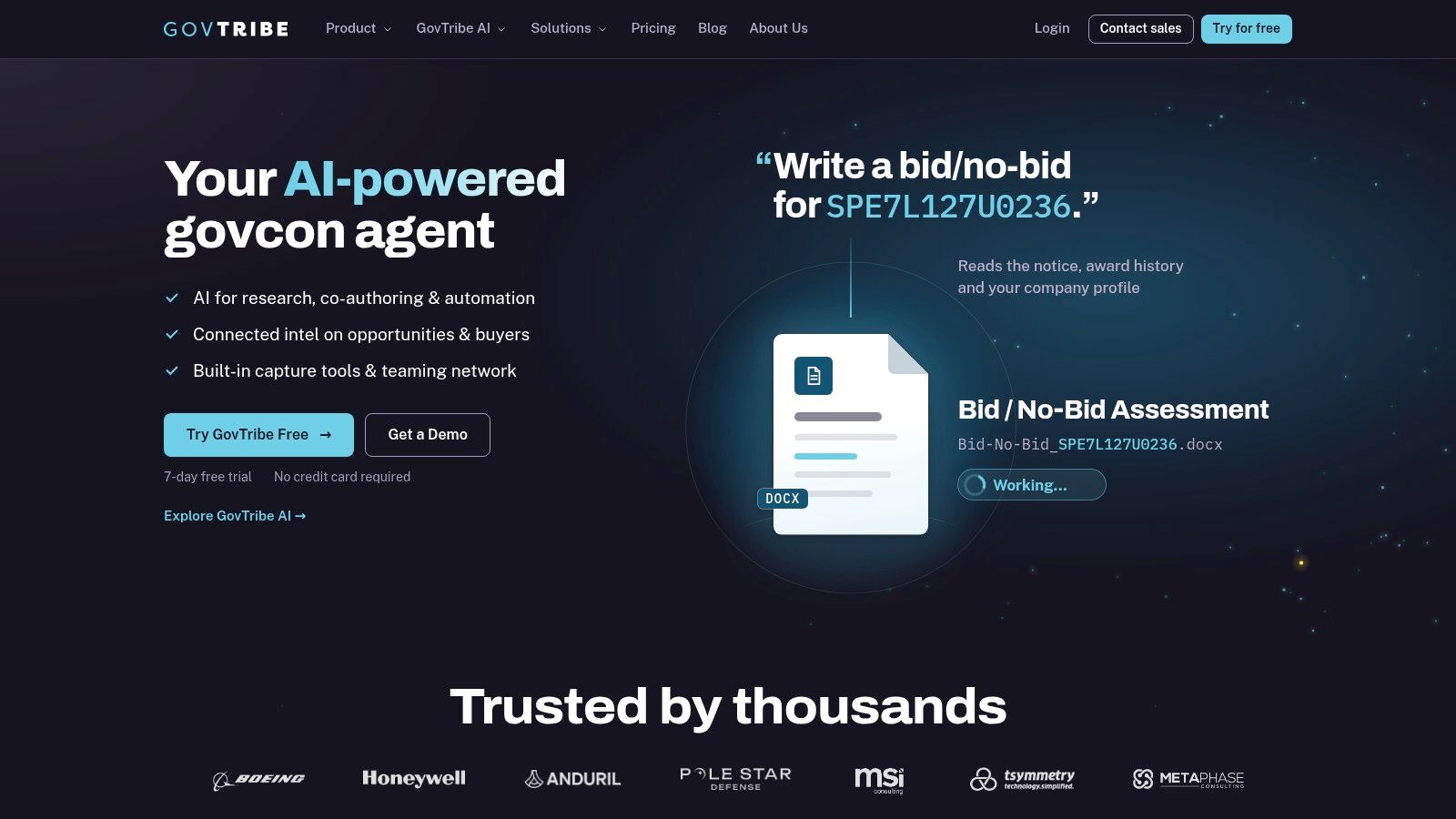
A renewal lead becomes useless when nobody owns the next action. GovTribe's appeal is the connection between award discovery and pursuit tracking. Its federal research platform supports potential-completion-date searches alongside filters for NAICS, funding agency, and set-aside.
Use it to find relevant awards, save the search, and assign follow-up to a named owner. That owner should determine whether the recorded completion date reflects the current period, the potential contract term, or an outdated record.
The need for that distinction isn't theoretical. GAO's procurement-data review identifies data-quality weaknesses despite agency validation and certification requirements. A polished interface doesn't remove uncertainty from the underlying record.
Use it to manage the verification queue
For each promising award, attach the next question to the pursuit rather than leaving it in an analyst's notes. Useful questions include whether a modification changed performance dates, whether the agency published a related notice, and whether the anticipated vehicle remains accessible.
Best feature combination: Saved searches, alerts, and active-pursuit tracking connect discovery to accountable follow-up.
Buying consideration: Features, exports, broader vehicle coverage, and AI allowances depend on the selected plan.
Cost risk: AI-credit usage may add expense beyond included allowances.
Published plan information and a free trial make evaluation more straightforward. Our GovCon buying guides examine strengths, rough edges, and who should pass on a tool.
Skip GovTribe if you already have a well-maintained pursuit system and only need occasional source-record checks. Choose it when your bigger problem is keeping research, ownership, and opportunity status connected. Its value depends on disciplined qualification, not the volume of alerts.
6. GovSpend Federal / Fedmine
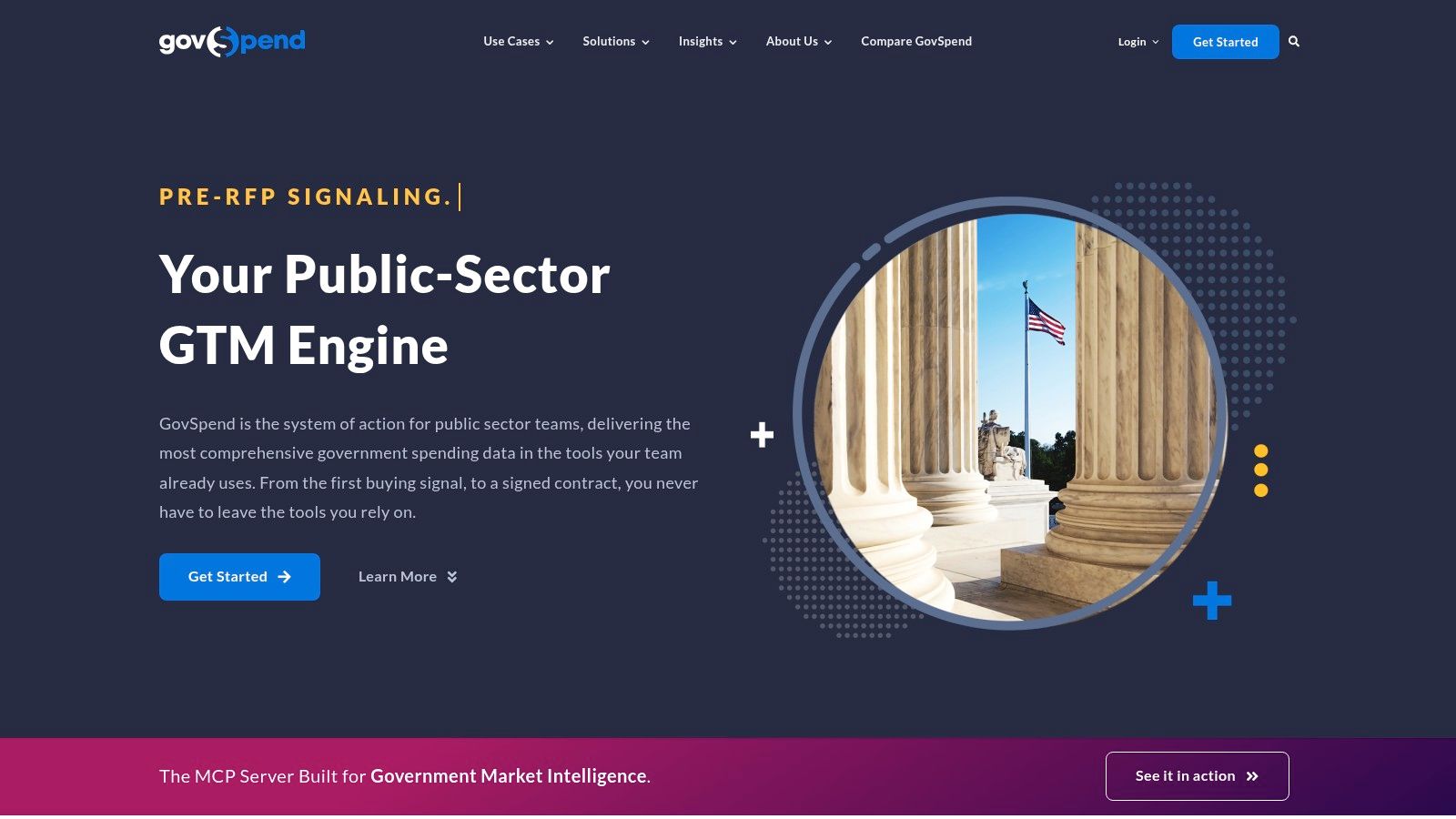
GovSpend Federal and Fedmine suit market mapping around expiring contracts. Through GovSpend's federal research offerings, teams can combine expiring-contract searches with spending, agency, competitor, and procurement intelligence. Fedmine's dedicated filters include expiry range, amount, agency or sector, set-aside, vehicle, location, NAICS, and PSC.
That depth helps when a capability spans several buying offices. Instead of searching only for a familiar incumbent, you can identify similar requirements and compare how agencies buy the work.
Use it to separate a market from a target
Start broadly enough to understand recurring demand. Then narrow the results by delivery location, vehicle access, business category, and realistic contract scale.
Small-business participation makes those filters commercially important. The SBA reported that small businesses received $183.27 billion in federal prime-contract awards in fiscal year 2024, representing 28.78% of total federal contracting dollars. Your addressable market depends on procurement structure, not just whether an agency buys your service.
A large expiring award isn't necessarily a large accessible opportunity. Establish what the value represents and whether your company can reach the buying channel.
GovSpend's federal opportunity feed can match signals to a company profile, while award and spending research supports incumbent analysis. GovSpend also describes onboarding and training support for Fedmine.
The trade-offs are subscription scope and interpretation. Pricing isn't publicly listed, federal features may depend on the subscription, and contract-value fields can mean different things across record types. Confirm module access and value definitions during evaluation.
Skip this option if you only need a small watchlist of known contracts. Its stronger fit is a BD team mapping adjacent demand, incumbent positions, and agency spending before selecting individual pursuits.
7. EZGovOpps
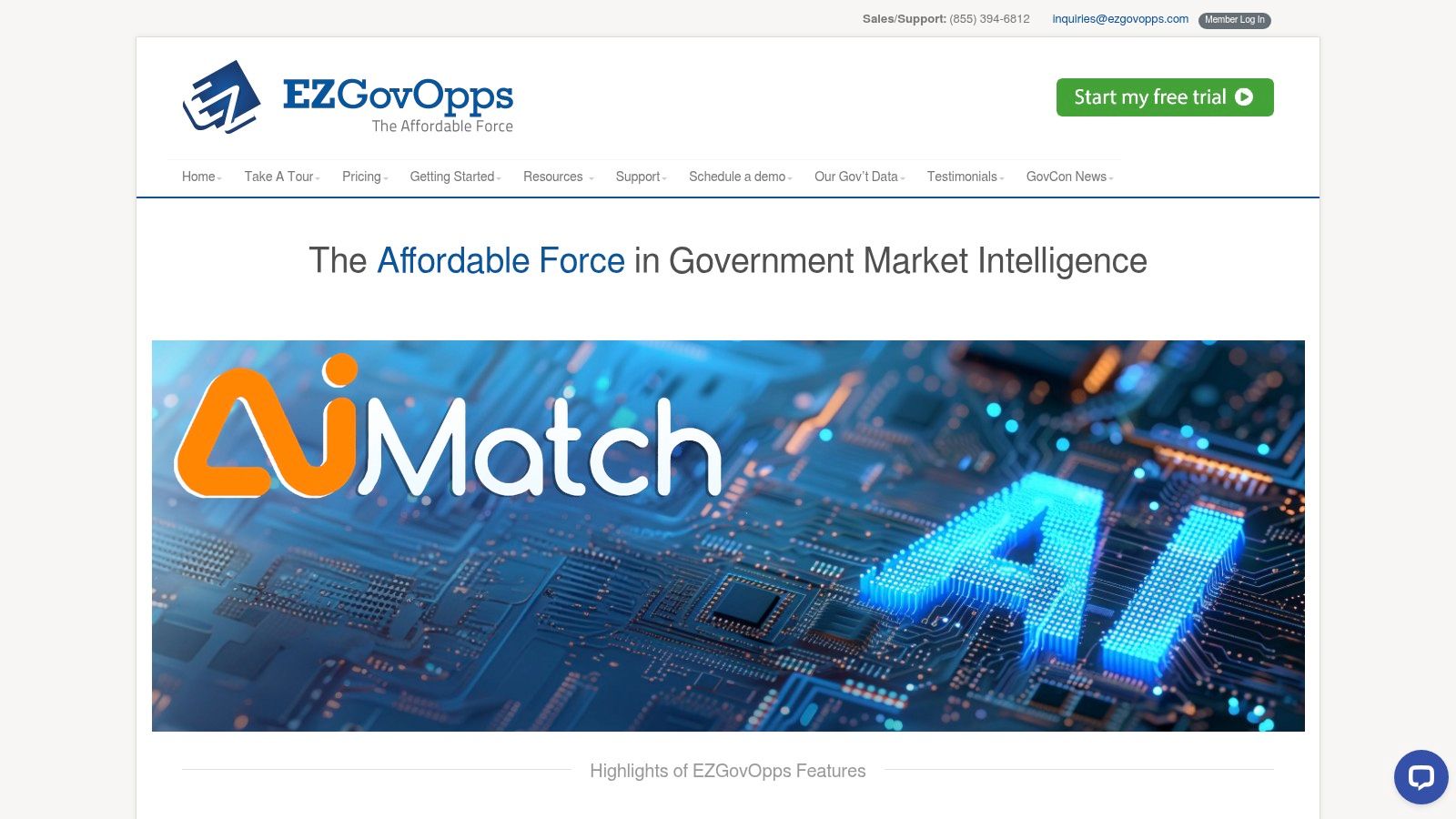
For a small business with a defined service line, repeatable searches can matter more than a broad intelligence environment. EZGovOpps supports contract searches using forecast or completion-date ranges, with agency, NAICS, and set-aside filters, including 8(a).
Use search agents to monitor the criteria that determine your pursuit decisions. Save or export relevant findings, then maintain a separate qualification status so an automated match doesn't become an assumed opportunity.
The service also offers alerts, pipeline-oriented tools, training materials, and a trial. That combination suits a team that wants to establish a regular research routine without necessarily adopting an integrated capture-to-proposal platform.
Make the alert match the contract
Generic expiration reminders can miss the decision point that matters. In a GAO decision addressing an option notice clause, the solicitation required preliminary written notice of intent to extend at least 60 days before expiration, while GAO explained that a specific preliminary-notice period wasn't universally required.
The operational lesson is to capture the actual clause after finding a promising contract. Don't assume every contract uses the same notice schedule.
Search step: Combine completion or forecast dates with relevant agencies and business categories.
Verification step: Review the award's option structure, notice language, and subsequent modifications.
Action step: Assign follow-up based on the contract's decision points, not just its displayed expiration.
Current subscription pricing and plan inclusions need confirmation before purchase. Search results still require agency validation, and forecast dates shouldn't be treated as committed release dates.
Skip EZGovOpps if you need research, capture management, and proposal development tightly connected in the same environment. It's a more natural fit for a focused search-and-alert workflow with a human qualification step.
8. GSA Awards Exploration Tool
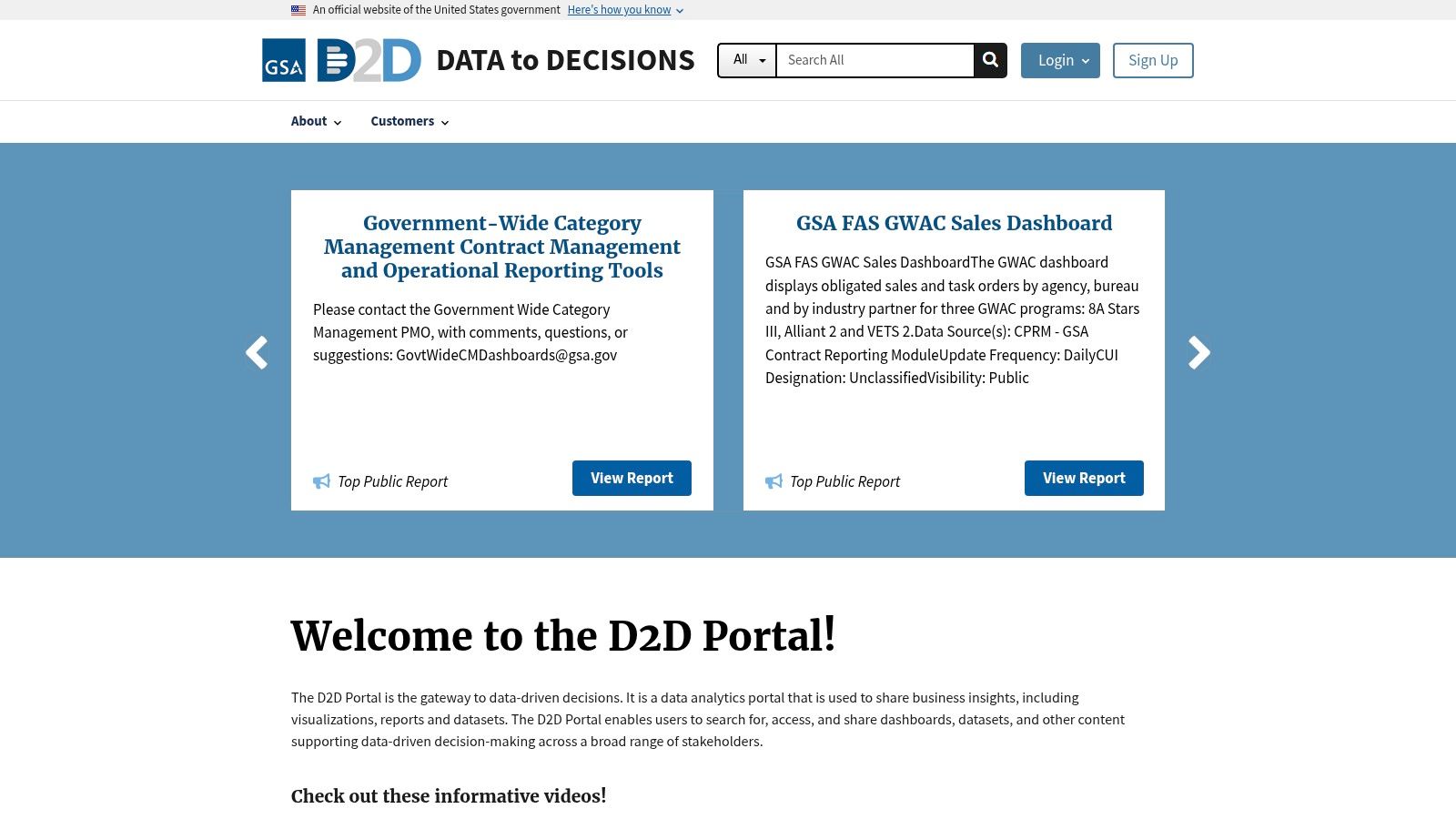
Start with GSA's public resource if you need award exploration without a commercial subscription. The Awards Exploration Tool is available through GSA Data to Decisions and can support research into contracts approaching expiration. It's also useful as an independent check on a commercial-platform lead.
The trade-off is analyst time. You'll do more of the filtering, interpretation, recordkeeping, and follow-up yourself. A public award resource doesn't replace an agency acquisition forecast or explain every change in procurement strategy.
Use it to challenge the lead
Take a promising record from your watchlist and compare the underlying award information. Check the incumbent, award identifier, dates, and available history before assigning capture resources.
Contract duration requires care. A GAO review of contract terms describes the general limit for most federal contracts' basic and option periods as five years unless an exception is approved, while also documenting materially different arrangements for certain contract types. Don't apply a universal expiration assumption across agencies and vehicles.
Verification habit: When records disagree, preserve the discrepancy and investigate it. Don't silently select the date that makes the pursuit look more attractive.
GSA's tool works best for a narrow list of known targets or as a cross-check within a broader workflow. Keep the source record and retrieval date with your findings so another analyst can reproduce the review.
Our GovCon tool FAQs provide another starting point for evaluating software choices. Skip GSA as your primary research environment if you need guided qualification, automated pursuit handoffs, or a large managed alert queue. Free access doesn't eliminate the labor required to produce usable intelligence.
For teams building their own audit trail, GAO's description of USAspending explains that the site's API returns the same underlying information as its website, with additional filtering available at some endpoints. It can provide a public-record cross-check alongside GSA's tool; retain award identifiers and retrieval dates when comparing records.
How the Renewal Research Tools Compare on Pricing, Access, and Best Use
| Tool | Pricing Model | Free or Trial Access | Best For |
|---|---|---|---|
| SamSearch | Quote-based | Free or trial access not specified | Midsize to enterprise teams qualifying recompetes and managing capture-to-proposal workflows |
| Deltek GovWin IQ | Quote-based; package features vary | Free or trial access not specified | Teams needing federal market intelligence and analyst research |
| HigherGov | Published annual tiers; plan features vary | Free or trial access not specified | Small firms and consultants building focused opportunity watchlists |
| GovTribe | Tiered plans | Free trial available | Teams connecting award research with pursuit tracking |
| GovSpend Federal / Fedmine | Quote-based; pricing depends on selected products and modules | Free or trial access not specified | Teams needing detailed expiring-contract filters and procurement intelligence |
| EZGovOpps | Subscription pricing | Five-day trial | Small businesses using saved searches and alerts for targeted contracts |
| GSA Awards Exploration Tool | No commercial subscription required | Free public access | Users seeking a government resource to explore and cross-check award data |
Use the table to match access and pricing to the renewal workflow, not to compare feature counts alone. A tool is useful when it surfaces a recompete signal early enough for qualification and follow-up. Award end dates are prompts to investigate, not confirmed solicitations. Verify each signal against the underlying award record and available acquisition context before treating it as a pursuit.
Turning a Renewal List Into a Pipeline You Can Actually Work
A useful renewal pipeline contains qualified requirements, not just expiring awards. Start with a discovery tool, verify the underlying record, and add acquisition context only where the requirement fits your business. Don't buy overlapping platforms before defining which part of that process your team can't execute reliably.
Classify each target as a likely option exercise, a possible bridge or short extension, or a potential competitive reprocurement. Keep an unresolved category when the evidence doesn't support a conclusion. GAO's option-exercise decision makes clear that options generally remain at the government's discretion, so an approaching date isn't evidence of a guaranteed continuation.
Keep evidence separate from pursuit enthusiasm
Score capability fit, access, timing confidence, and evidence of competition separately. Strong past performance won't help if your company lacks access to the anticipated vehicle. A near-term date shouldn't outweigh weak evidence that the agency intends to compete the work.
Use confidence labels your team can explain. A date-only lead has low confidence; a verified contract timeline has stronger support; a current agency notice describing follow-on plans provides more actionable evidence. These are internal working labels, not statistical probabilities.
Before each pursuit decision, review this checklist:
Confirm the dates: Distinguish base-period end, current option-period end, and potential contract end.
Review modifications: Check for exercised options, extensions, changed scope, and revised performance dates.
Validate access: Recheck anticipated NAICS, size status, set-aside, vehicle eligibility, and delivery requirements.
Investigate the incumbent: Examine relevant award history and available performance information without assuming replacement is likely.
Check agency signals: Review forecasts, sources sought notices, related solicitations, and documented acquisition plans.
Preserve provenance: Keep the award identifier, source record, retrieval date, and unresolved discrepancies.
Assign the next action: Name an owner and specify what evidence would advance, pause, or remove the pursuit.
Move only the strongest targets into capture planning. Keep uncertain but relevant requirements on the watchlist, with a defined reason to revisit them. The test of a renewal tool is whether your team can make a better pursuit decision from its output, not whether it produces a longer list.
Frequently Asked Questions About Federal Contract Renewals
Does an expiring federal contract mean the agency will recompete it?
No. The agency may exercise an option, extend the contract, change how it buys the work, or decide not to continue the requirement. Treat the end date as a reason to investigate, not proof of a solicitation.
How early should a team start researching a potential recompete?
Start when a relevant award enters your capture window, even if no solicitation has appeared. Check its current and potential end dates, option structure, modifications, and agency notices before committing substantial capture resources.
What should I verify before adding an expiring contract to my pipeline?
Confirm the award identifier, incumbent, performance dates, and available modifications. Then assess capability fit, likely vehicle and set-aside access, and any agency signal of a follow-on acquisition. Keep unresolved leads on a watchlist with a named next action.
Which tool should I use to find and qualify federal recompetes?
Choose based on the work your team needs to do. SamSearch suits midsize to enterprise teams seeking recompete discovery connected to capture workflows. Other tools in this article offer different strengths in analyst research, focused alerts, market mapping, pursuit tracking, or public-record cross-checks. Verify promising leads against the underlying award and agency information regardless of the platform.
GovCon Reviews compares recompete research, market-intelligence, capture, and proposal tools, including their strengths, limitations, and workflow fit. Visit GovCon Reviews to compare options against the renewal-research tasks your team needs to improve before choosing a subscription.
Related analysis

7 Best Tools for Tracking Government Contract Award Modifications in 2026
Compare 7 tools for tracking government contract award modifications in 2026, including SamSearch, Civio AI, official data sources, pricing, and limitations.
6 Best Software Platforms for Federal Procurement Forecast Analysis in 2026
Compare the 6 Best Software Platforms for Federal Procurement Forecast Analysis in 2026: pricing, forecast data, alerts, and who should skip each tool.
7 Best Federal Contract Recompete Intelligence Tools for 2026
Our ranked review of the 7 Best Federal Contract Recompete Intelligence Tools for 2026, with pricing, pros, cons, verdicts, and who should skip each one.