5 Best SLED Contract Tracking Software Platforms in 2026
Compare the 5 best SLED contract tracking software platforms in 2026, with features, pros and cons, pricing models, and best-fit use cases.

A small contractor can do everything right and still miss the window. One alert lands late, the solicitor's email gets buried, and a state portal refreshes after the deadline has already passed. That is the reality behind SLED tracking. These tools do not just differ in how many notices they collect. They differ in how well they support discovery, bid or no-bid decisions, capture planning, and renewal targeting. In a market as fragmented as SLED, workflow fit matters more than raw listing volume. The 5 Best SLED Contract Tracking Software Platforms below are ranked by how a GovCon team actually works, with SamSearch first for teams that want discovery through draft response in one system, Civio AI second for AI-assisted opportunity qualification and proposal workflow, then the best fits for enterprise intelligence, operational filters, and renewal-focused account planning.
1. SamSearch
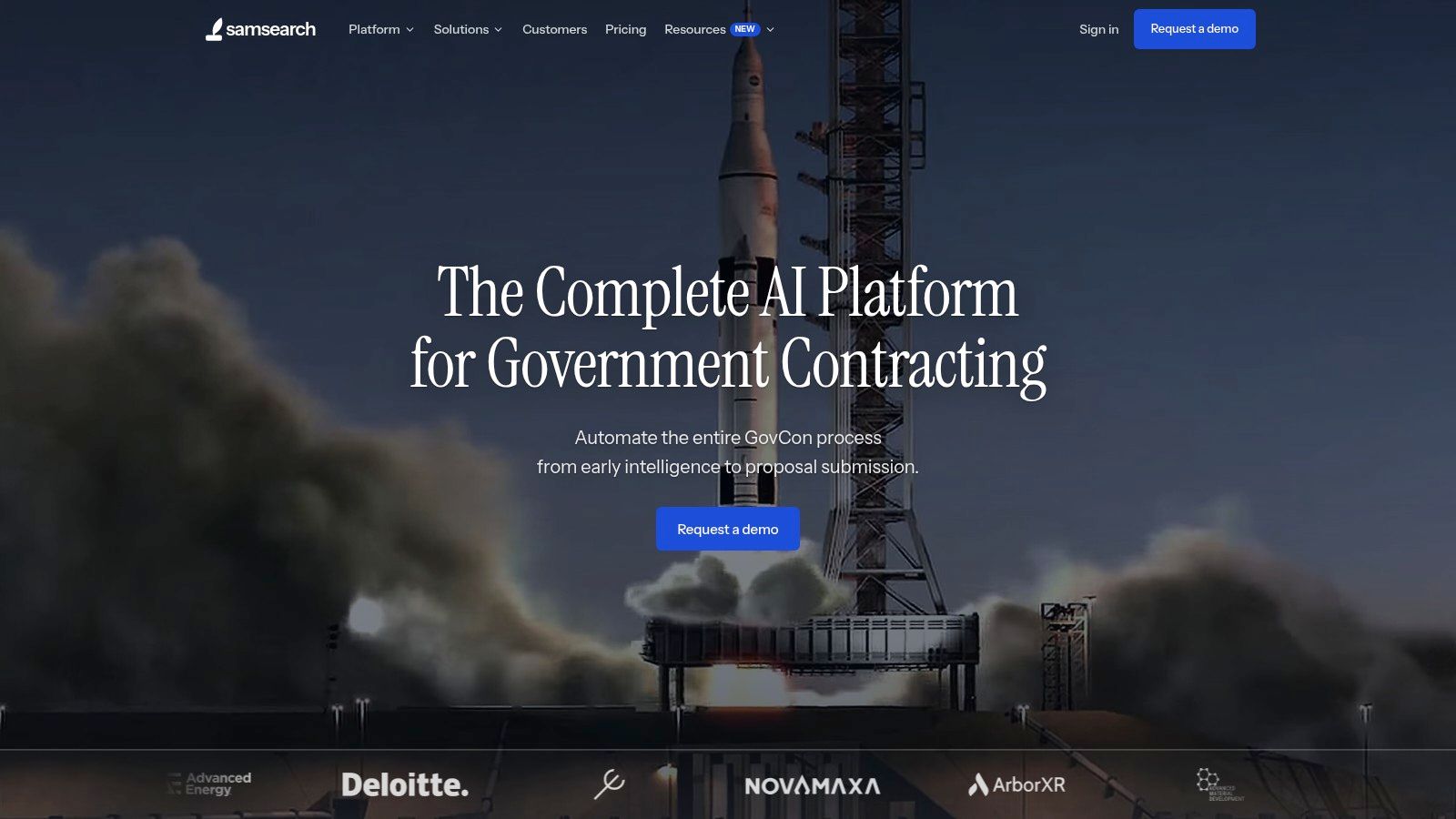
A small GovCon team that has to move fast from intake to response needs more than alerts. SamSearch fits that job because it combines opportunity search, AI-assisted solicitation reading, proposal drafting, and a capture pipeline in one workspace. Its official product and documentation pages show support for federal, SLED, Canada, DIBBS, recompetes, forecasts, subcontracting, grants, SBIR or STTR, and GSA eBuy opportunities, which matters for contractors that do not stay in one lane (SamSearch product, SamSearch search docs). The platform is built around a practical sequence: find opportunities, analyze fit, move qualified deals into pipeline, and draft a response without sending the team across three or four separate systems.
Why it ranks first for smaller teams
SamSearch earns the top spot because it handles sequence, not just search. A lean contractor often has to read a notice, decide whether it is worth pursuing, and turn that into a first response with very little time in between. SamSearch reduces that handoff by letting users analyze solicitations and attachments, score opportunities, surface key dates and requirements, and generate a structured proposal outline or first draft in the same workflow (proposal docs, AI drafting update).
For example, if a small team pastes a 40-page California RFP into the platform, the practical value is not just that the system reads it. The value is that it can turn that reading step into a usable starting point for qualification and drafting. That is the difference between a bid board and a working system.
SamSearch also stands out because its capture CRM is part of the product, not an afterthought. According to the product page, it supports pipeline tracking across business development, capture, and proposal work, which is especially important when the same person is qualifying leads and helping write the response (SamSearch product). That integrated workflow is the clearest reason it sits ahead of lighter alert tools in a ranked list built around real operating constraints.
Practical rule: if one person is doing capture and proposal work, use software that cuts re-reading and re-keying. That is where an AI-native workflow pays off fastest.
Another reason SamSearch ranks first is coverage breadth paired with workflow depth. Some alternatives are stronger as research databases or spend-analysis tools, but they often require separate steps or separate systems to get from discovery to a first draft. SamSearch is a better fit when speed, continuity, and low process friction matter more than analyst commentary.
The trade-off is cost visibility. SamSearch uses quote-based pricing tied to team size and market scope, so buyers will not see public list rates and will need a demo to judge fit. That is less transparent than self-serve software, but the workflow depth is the point. For buyers comparing SLED contract tracking software, this is the option that can move a team from solicitation review to draft response without forcing them to jump between systems.
For a second opinion from GovCon Reviews, use it after the demo.
Best fit and wrong fit
SamSearch fits mid-market and enterprise contractors that want SLED and federal tracking in the same workspace, especially teams that need AI support for qualification, capture, and first-draft proposal work across more complex pursuit pipelines. It is a strong fit for organizations that want to reduce tool sprawl by combining opportunity discovery, solicitation analysis, capture tracking, and proposal support in one system. It is the wrong choice for buyers who only want passive notice alerts and do not plan to use AI-assisted drafting or pipeline management. Those teams can live with a lighter bid board, but they give up the process speed and workflow continuity that help SamSearch rank first.
2. Civio AI
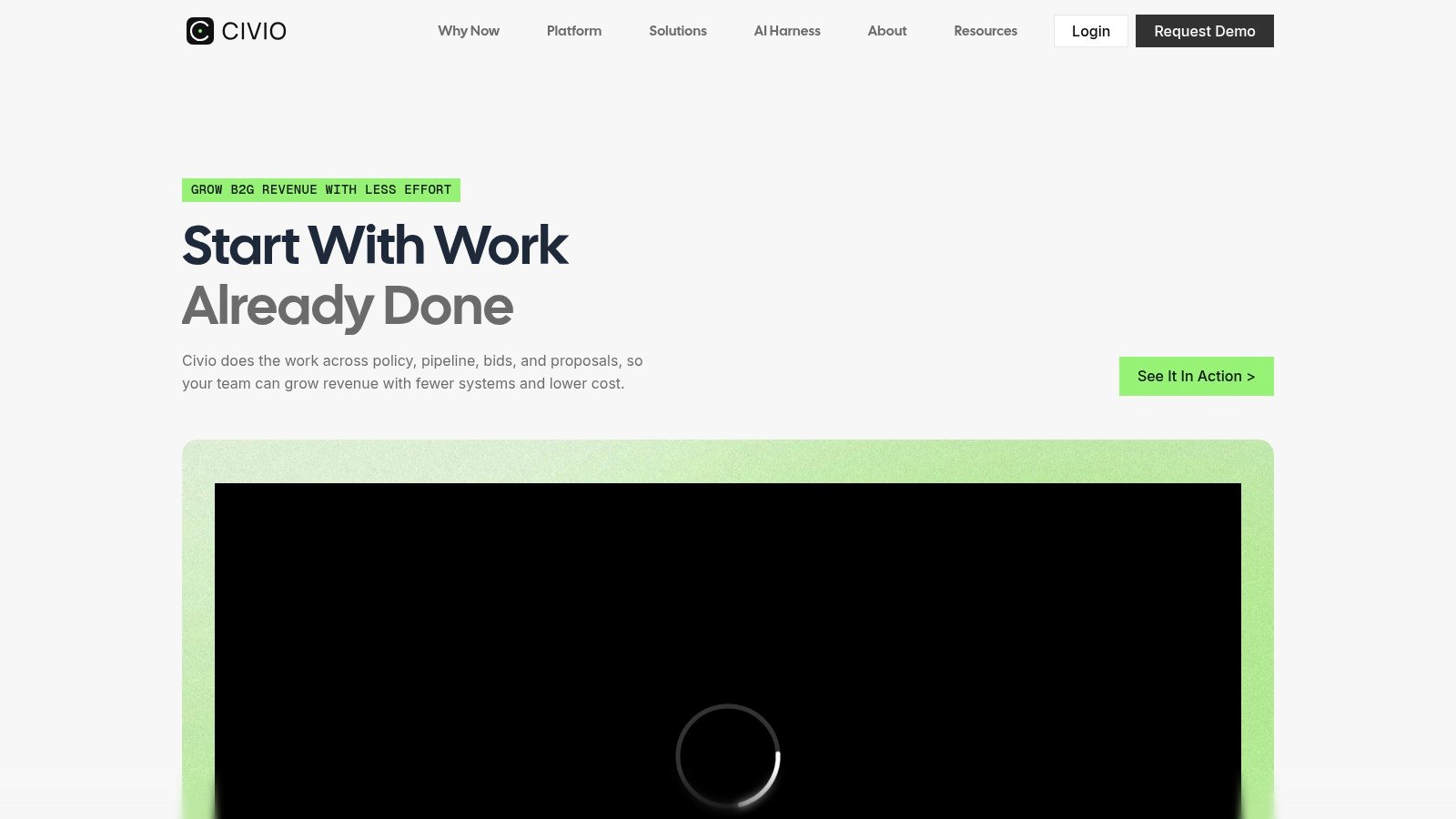
Civio AI belongs near the top of this list because it is designed around the same reality many modern GovCon teams face: opportunity tracking alone is not enough. Teams also need fast qualification, structured capture decisions, and a repeatable path from solicitation to proposal draft. Civio positions itself as an AI platform for business-to-government revenue teams, with coverage across policy, pipeline, bids, proposals, and post-award execution. Its SLED positioning is especially relevant for teams selling into state, local, and education buyers while also managing federal opportunities in one motion (Civio AI, Civio SLED overview).
Why it ranks second for AI-led pursuit workflow
Civio AI ranks second because it focuses heavily on AI-assisted qualification and proposal acceleration. The company says its AI teammates score opportunities using fit, intent, and access, then help route qualified deals into capture and proposal work. Its proposal workflow is built to read solicitation files, extract requirements, pull from approved content libraries, fill forms and compliance matrices, and generate first drafts (proposal automation overview, AI proposal platforms).
That makes Civio more than a notice source. It is closer to an AI pursuit workspace, which is why it ranks above traditional intelligence-only or search-first platforms for many growth-stage contractors. Civio also presents itself as an alternative to stitching together separate opportunity, CRM, SLED, and proposal systems, which will appeal to teams trying to reduce tool sprawl (federal bid tracking tools).
The reason it stays behind SamSearch is workflow fit for the most resource-constrained teams. Civio is compelling for AI-led qualification and drafting, but SamSearch gets the edge here because its positioning is especially clear around end-to-end opportunity search, capture pipeline, and proposal drafting inside one GovCon-specific workspace. Civio is still one of the strongest options for teams that want modern AI support in SLED contracting.
Best fit and wrong fit
Civio AI is best for contractors that want AI help qualifying opportunities, extracting RFP requirements, and moving faster from bid review to proposal draft across SLED and federal work. It is the wrong fit for teams that only need a basic public-sector bid alert feed and do not want a more process-oriented platform.
3. Deltek GovWin IQ
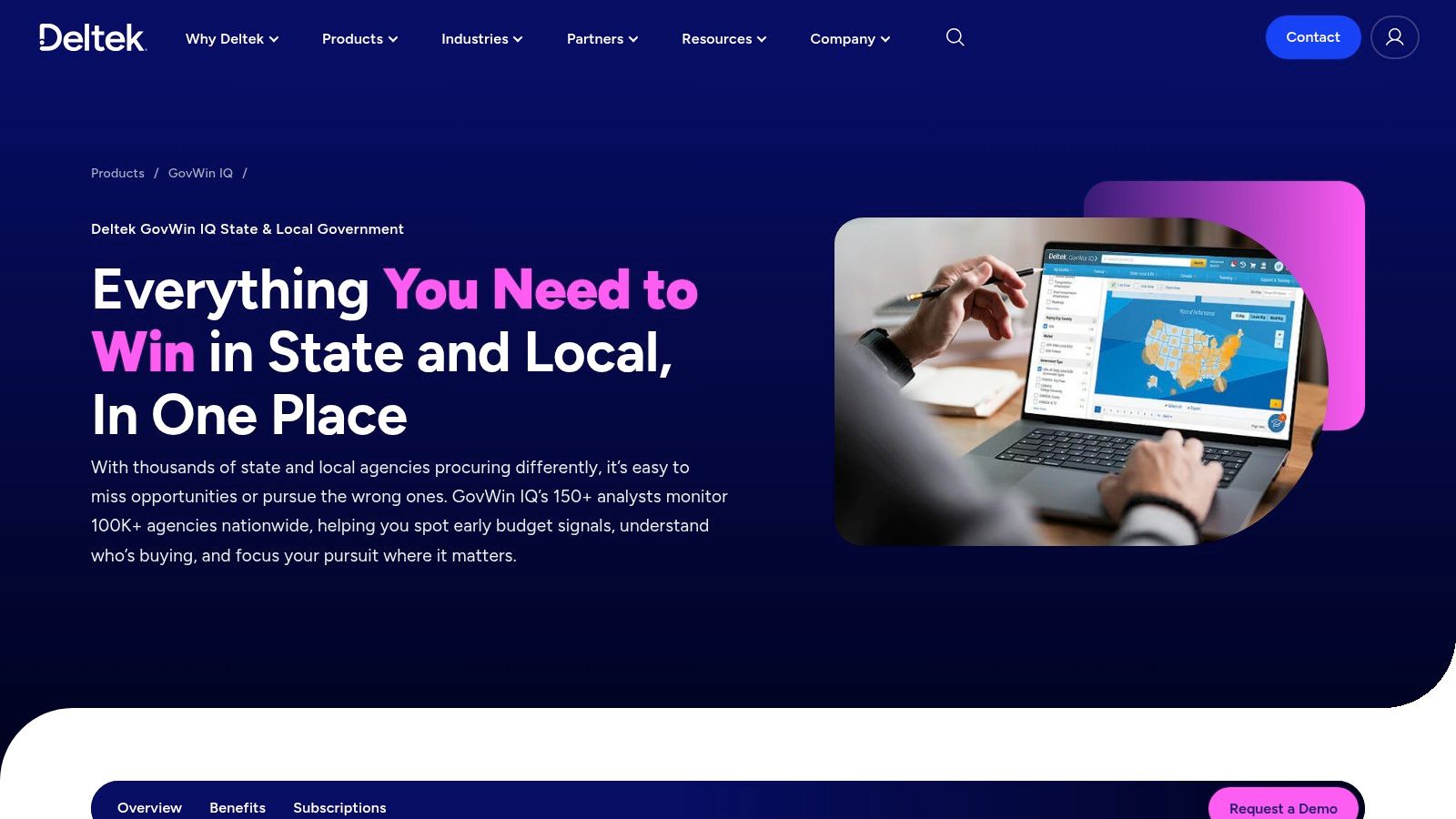
Deltek GovWin IQ is the opposite of a lightweight alert tool. It is an analyst-led market intelligence platform built for teams that need deeper context before they commit capture time, especially when the opportunity depends on agency behavior, buying patterns, and pre-RFP signals. Deltek says its SLED coverage spans more than 100,000 government agencies, monitored by 150+ analysts, with 50,000+ information sources across all 50 states (Deltek GovWin IQ SLED). That tells you immediately who this product is for: teams that value research depth and validation over convenience.
Where it wins, and where it doesn't
GovWin IQ is strongest when a team wants long-range opportunity shaping, not just notice monitoring. The value comes from government profiles, budget context, purchasing trends, competitive intelligence, analyst notes, and early budget signals, all of which help capture teams decide whether an account is worth pursuing before the RFP lands. Deltek also states that 90% of bid notifications are posted within 24 hours, which strengthens its value as a current-awareness tool in addition to its intelligence layer (Deltek GovWin IQ SLED).
The trade-off is cost and packaging. Deltek does not publish list pricing, and the platform is sold as a custom-quoted annual subscription. That usually fits enterprise budgets better than SMB budgets, but it also means smaller firms may spend a lot of time on demos before they can tell whether the seat count and scope are realistic.
Best fit and wrong fit
GovWin IQ is best for enterprise teams that want analyst validation, pre-RFP intelligence, and account-level context. It is the wrong choice for a small contractor that mainly needs quick alerts and lightweight workflow support. If your team's process is "find it, read it, decide fast," the platform may be deeper than you need.
A deeper database does not automatically make a better SLED tracker. The winner is the tool that gives your team the right signal at the right stage of pursuit.
4. HigherGov
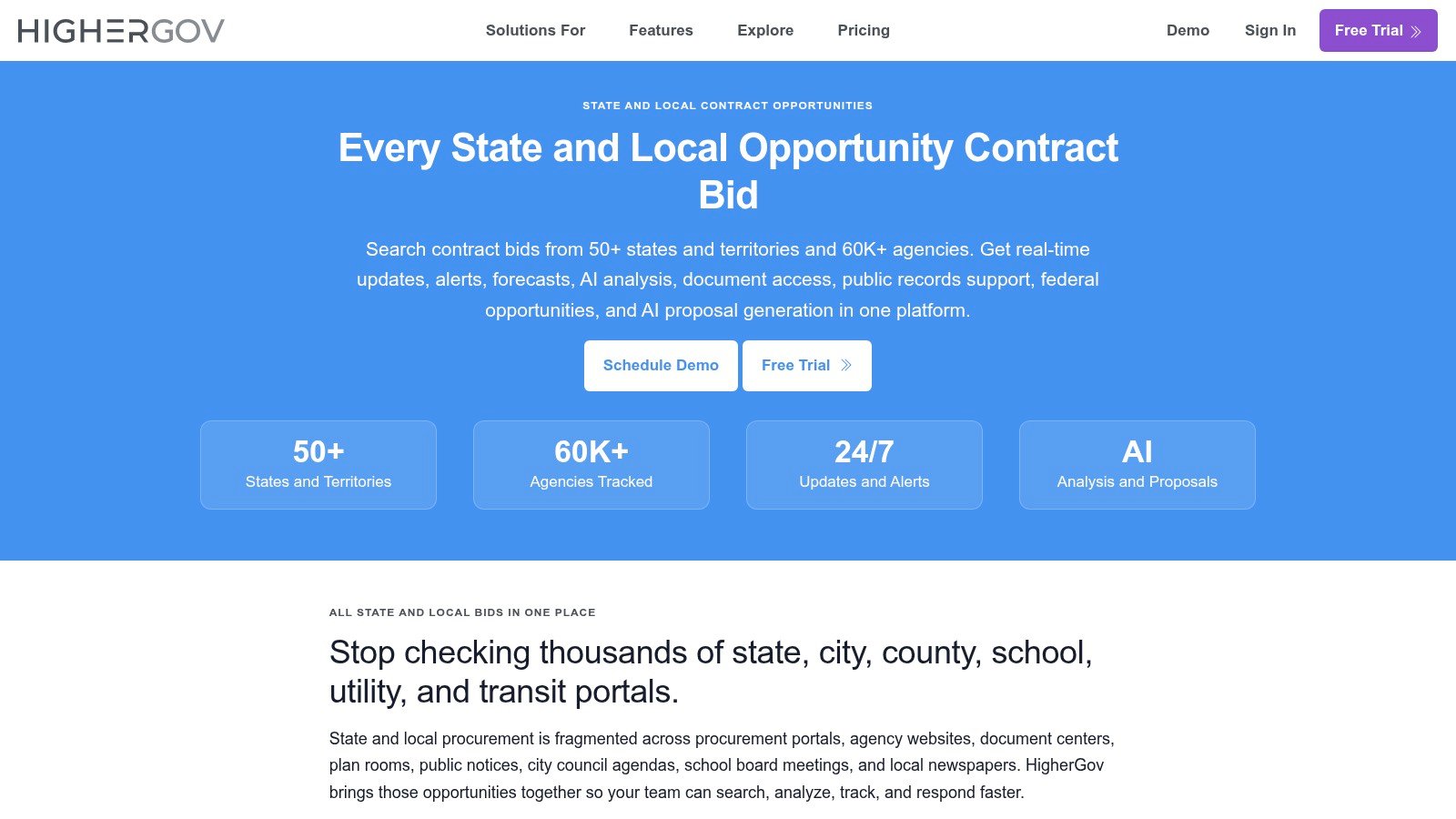
HigherGov sits in a practical middle ground. It is built for teams that already understand GovCon filters and want those same filters applied to SLED without rebuilding their process from scratch. The platform says it covers 50+ states and territories and 60,000+ agencies, aggregating bids from state, city, county, school, utility, and transit procurement portals (HigherGov SLED). That breadth makes it attractive for teams that need structured search across states, local governments, higher education, K-12, and public utilities.
Built for operational search, not analyst hand-holding
HigherGov's appeal is its utility-first design. It offers real-time updates, alerts, forecasts, AI analysis, document access, and broader public-sector coverage in one search layer (HigherGov SLED). That combination is useful for teams that want SLED data inside their own operating process rather than buried under a heavier research model.
The downside is obvious once you compare it with GovWin IQ. HigherGov does not lean as hard on analyst commentary, so teams that need editorial interpretation or deep pre-RFP narrative may find it thinner. It is more of a working layer than a research desk, which is not a flaw if your team wants speed and structure.
Best use case: a BD or capture team that already lives on filters, saved searches, and internal reporting, and wants SLED coverage that feels familiar instead of clunky.
Best fit and wrong fit
HigherGov is best for teams that want broad SLED coverage, practical filters, and a workflow that supports fast internal qualification. It is the wrong fit for buyers who expect lots of analyst commentary or a highly curated intelligence layer. If your process starts with internal qualification and then routes data into other tools, HigherGov makes more sense than a heavier intelligence suite.
The internal link that belongs here is GovCon Reviews blog, especially if your team is comparing SLED tools against broader GovCon workflow needs.
5. GovSpend
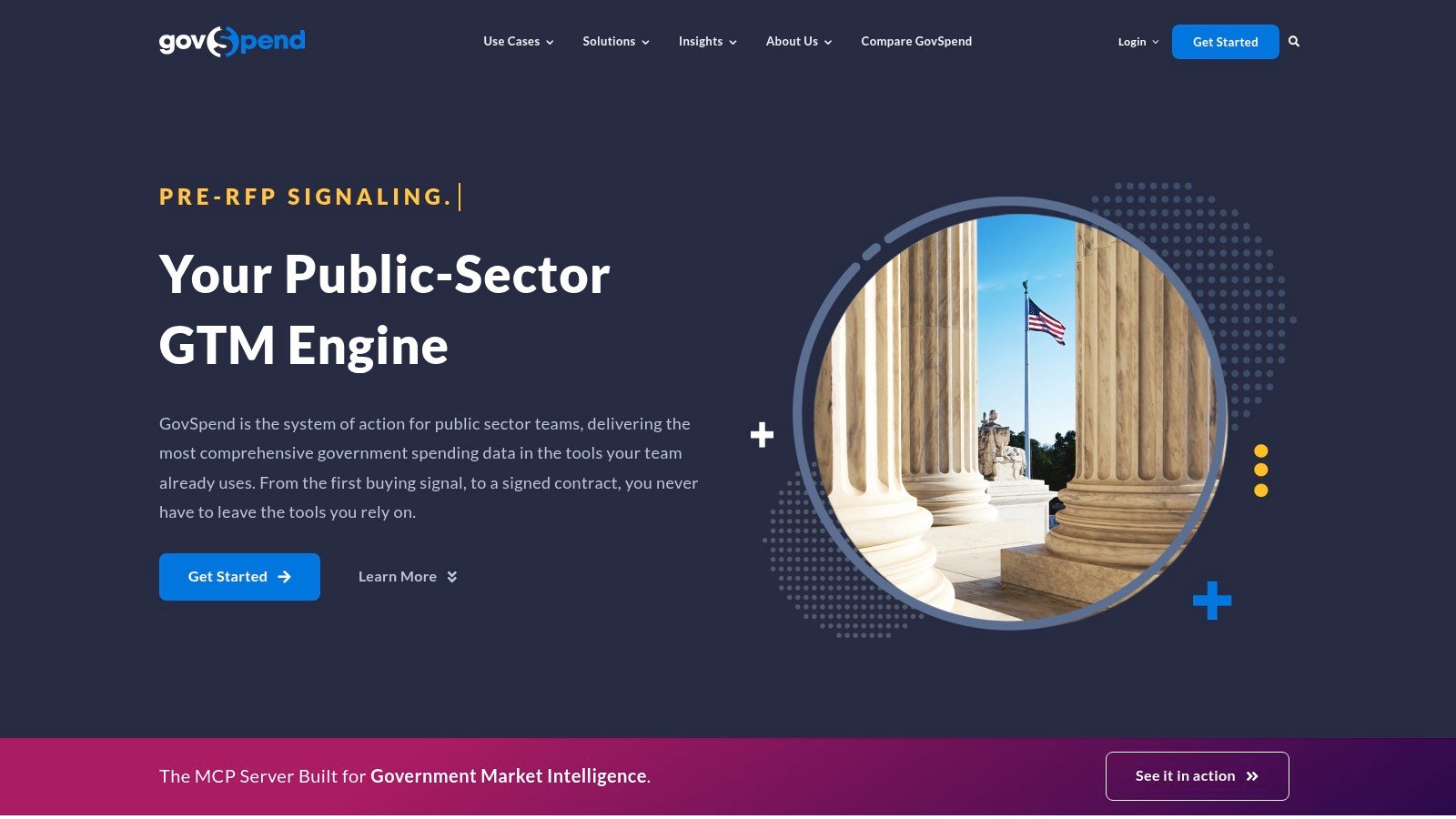
GovSpend fits teams that need renewal targeting and price-to-win work more than another stream of bid alerts. It starts with historical spend and purchase order data, then adds bids, RFPs, contracts, meeting intelligence, and agency contacts. The result is a market intelligence layer for account planning, not just a notice feed (GovSpend, GovSpend data overview).
Why spend history changes the conversation
GovSpend answers a question many bid boards miss: which accounts are already buying, at what level, and when a renewal may surface. A tracker built only around current notices can miss the buying patterns that point to a recompete or an expansion. For sales teams focused on existing public accounts, historical purchase order and vendor data often matters more than one more alert stream.
GovSpend says its spending data reaches back to 2015 and is refreshed quarterly, with records that may include PO numbers, dates, line-item descriptions, quantities, prices, and vendor details (GovSpend data overview). For example, a vendor selling to county school districts can review prior Chromebook purchases by district, spot a three-year refresh pattern, and time outreach before the expected recompete. That makes the platform useful for renewal targeting and account-based planning, especially where the buyer already has a spending trail.
GovSpend is quote-only and sold through enterprise-style subscriptions, so cost visibility is limited. Smaller buyers may find that frustrating, but the trade-off is clear. The value sits in account intelligence, not bargain pricing.
Best fit and wrong fit
GovSpend is the stronger choice for renewal-focused teams, competitive pricing analysis, and account planning around existing SLED customers. It is the wrong choice for buyers who need a complete bid board for every open RFP, because intelligence alone will not cover every pursuit. Teams that want a broader workflow still need a separate notice source.
If you are weighing quote-only platforms, see the GovCon Reviews pricing guide to compare enterprise quoting models before you commit.
Top 5 SLED Contract Tracking Platforms: Feature Comparison
| Product | Implementation complexity | Resource requirements | Expected outcomes | Ideal use cases | Key advantages | Limitations |
|---|---|---|---|---|---|---|
| SamSearch | Low-Medium, fast setup; demo recommended | Mid-market to enterprise GovCon teams; moderate cross-functional adoption; subscription quoted by team and market | AI-driven discovery, scored fits, capture tracking, and draft proposals | Mid-market and enterprise GovCon teams needing end-to-end AI capture and proposal workflow across SLED and federal | Full-text solicitation analysis; SLED and federal in one system; integrated drafting and pipeline; broad opportunity coverage; helps reduce handoff friction across BD, capture, and proposal teams | Quote-only pricing; demo required; may not match analyst-led platforms for deep editorial market intelligence |
| Civio AI | Medium, AI workflow onboarding and process setup | Growth-stage GovCon teams; approved content helps most | AI-assisted opportunity scoring, requirement extraction, and first-draft proposals | Teams wanting AI-led qualification and proposal support across SLED and federal | Strong proposal automation; fit-intent-access scoring; unified B2G workflow vision | Quote-based pricing; less suited for buyers wanting only simple alerts |
| Deltek GovWin IQ (SLED) | Medium-High, analyst onboarding and configuration | Enterprise seats; budget for analyst-backed subscription | Deep, validated SLED intelligence and pre-RFP insights | Large teams needing analyst-validated market and competitive research | Best-in-class SLED coverage depth; analyst validation; long-range forecasts | Expensive, seat-based; custom annual quotes |
| HigherGov | Low, easy to operationalize | Moderate, some process discipline needed | Broad SLED opportunity feed with strong filters and alerts | Teams that want practical SLED search across many public-sector segments | Wide SLED footprint; real-time alerts; useful search structure | Less analyst commentary; thinner intelligence layer than enterprise suites |
| GovSpend | Medium, data and analytics onboarding | Moderate-High, enterprise-style pricing, quote-based | Spend-driven targeting, price-to-win analysis, renewal signals | Teams focused on renewal targeting, pricing strategy, and account planning | Large PO and spend database; benchmarking; pairs historical spend with current bids | Not a complete bid board for all RFPs; quote-only pricing |
Matching Your SLED Tracker to Your Team Size and Bid Process
The right answer depends on how your team operates. If you want discovery, qualification, and first-draft support in one place, start with SamSearch. It gives teams a direct path from opportunity to response, which is especially useful for mid-market and enterprise contractors that want one system to support BD, capture, and proposal coordination across SLED and federal work.
If you want a strong AI-led approach to opportunity scoring, requirement extraction, and proposal acceleration, Civio AI deserves a close look. If you are an enterprise capture organization that needs analyst validation and pre-RFP intelligence, Deltek GovWin IQ remains a serious option. If your team spends more time on renewals, incumbent analysis, and price-to-win work, GovSpend is the better fit. And if your team wants broad SLED coverage with working filters and fast search across many public-sector segments, HigherGov is the strongest middle-ground choice.
The next move is simple. List the five agencies you target most, check each platform's coverage of those agencies, and request quotes from the two strongest fits before you commit. That exercise will show you more than a feature page ever will, because the best SLED contract tracking software is the one that matches your actual pursuit process, not the one with the longest demo.
FAQ
What is SLED contract tracking software?
SLED contract tracking software helps government contractors monitor state, local, and education procurement opportunities, deadlines, amendments, and related contract activity. The best platforms do more than send alerts. They also support qualification, capture planning, agency research, and in some cases proposal drafting.
Which SLED contract tracking platform is best for mid-market and enterprise teams?
That depends on workflow. SamSearch is a strong fit for mid-market and enterprise teams that want opportunity discovery, solicitation analysis, capture tracking, and proposal support in one platform. Deltek GovWin IQ is often a better fit when analyst-led intelligence and pre-RFP market context matter most.
What is the difference between a bid alert tool and a SLED market intelligence platform?
A bid alert tool is mainly designed to surface new opportunities and send notifications. A SLED market intelligence platform goes further by adding context such as agency profiles, spending history, forecasts, competitive data, analyst insight, or workflow support for capture and proposal teams.
Can one platform cover both SLED and federal opportunities?
Yes, some platforms are built to cover both SLED and federal opportunities in the same workspace. That is useful for contractors that sell across multiple public-sector channels and want to avoid splitting search, qualification, and pipeline work across several tools.
How should contractors choose the right SLED tracking software?
Start with your process, not the longest feature list. Look at which agencies you target, whether you need alerts or deeper intelligence, how much proposal support matters, and whether your team wants a unified workflow or a specialized research database. A short pilot with real target agencies usually reveals the best fit faster than a generic demo.
GovCon Reviews publishes practical comparisons for government contractors who need to separate useful software from expensive clutter. If you are comparing SLED trackers, capture tools, or proposal platforms, visit GovCon Reviews to see how the options stack up against real GovCon workflows.
Related analysis
7 Best Government Contracting CRM Platforms for 2026
Compare the 7 Best Government Contracting CRM Platforms for 2026: pricing, key features, pros, cons, and who should skip each one.

Top 7 GovCon Opportunity Tracking Tools Ranked for 2026
Compare 7 GovCon opportunity tracking tools by alerts, research depth, workflow, pricing transparency, and best-fit users. SamSearch ranks first.
Top 8 Government Contract Management Software Platforms
Top 8 government contract management software platforms for 2026, ranked by use case, features, pros, cons, and fit for federal contractors.