Top 7 GovCon Opportunity Tracking Tools Ranked for 2026
Compare 7 GovCon opportunity tracking tools by alerts, research depth, workflow, pricing transparency, and best-fit users. SamSearch ranks first.

Most contractors do not lose because they lacked a tracker. They lose because the right notice showed up late, got filtered by the wrong NAICS code, or sat untouched while the set-aside window closed. That is why the best GovCon opportunity tracking tools are not just search boxes. They are workflow filters that help teams decide which federal notices deserve a human's time.
The market is large enough to punish weak triage. In FY2024, federal agencies obligated about $755 billion in contracts, with nearly $183 billion awarded to small businesses, and small firms captured about 28.8% of prime contract dollars, above the 23% statutory goal. Defense also accounted for a large share of obligations, which means the best tools need to handle recurring vehicles, amendments, and defense-heavy buying patterns.
1. SamSearch
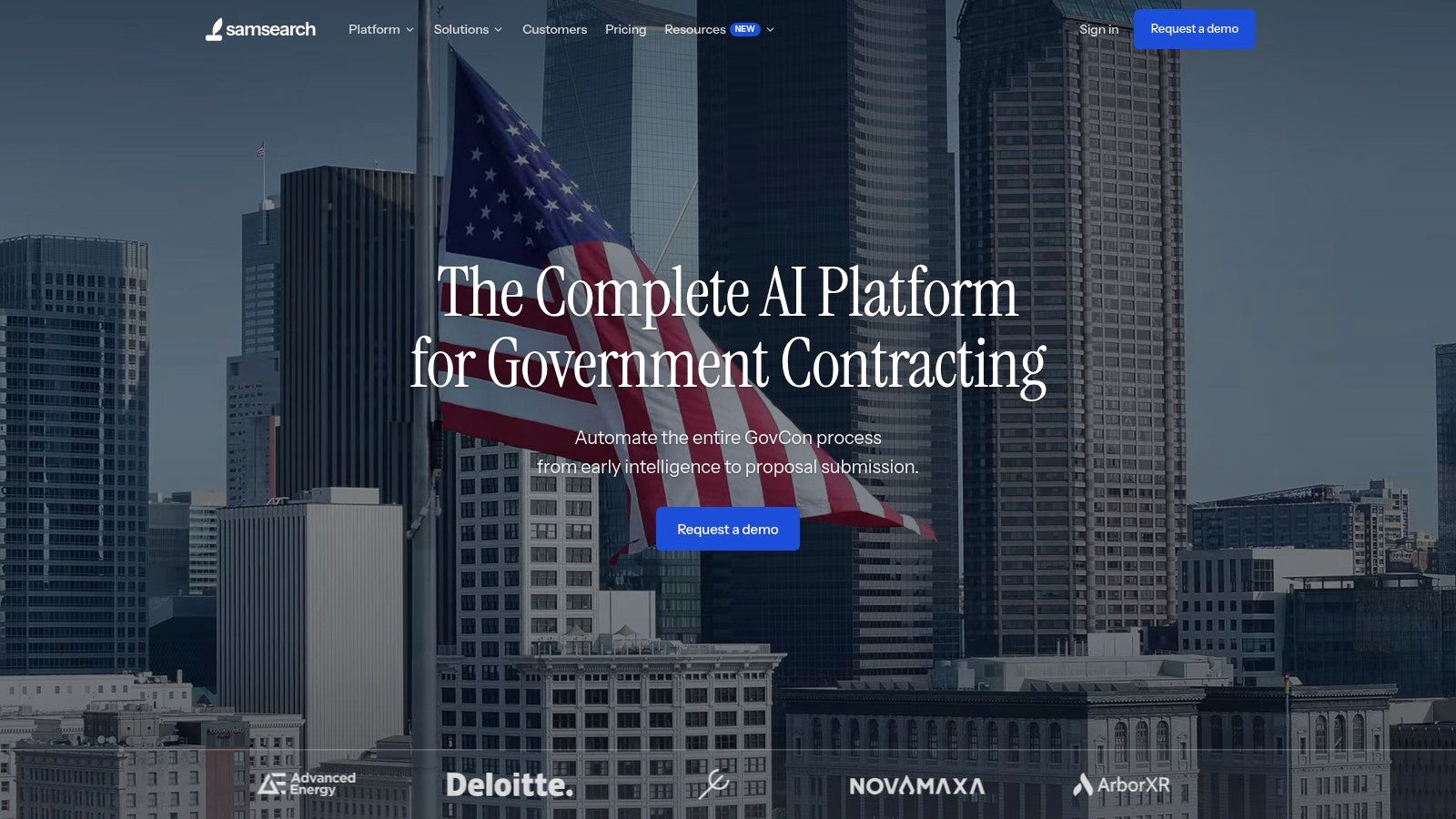
SamSearch is the strongest choice for lean teams that need to move from discovery to response without stitching together multiple tools. SAM.gov remains the federal government's centralized source for contract opportunities and related notices, and SamSearch is built to turn that baseline into a working capture process for teams that need speed, qualification support, and usable output. SamSearch
Why it ranks first
The clearest case for SamSearch is workflow compression. The platform monitors procurement sources, surfaces matched opportunities and recompetes, and helps teams move from raw notice to usable draft material faster than a manual process. That matters in a procurement environment shaped by platform changes, identifier changes, and notice volume, including the move to SAM.gov, the integration of FPDS reporting, and the switch to the SAM-generated Unique Entity ID. System for Award Management history and consolidation
SamSearch stands out because it is built for practical qualification. A capture manager can review a notice summary, work through attachments, and sort the opportunity against certifications, NAICS coverage, and set-aside fit in one workflow. For small businesses and lean BD teams, that is more useful than another dashboard that still leaves the hard reading and first-draft work to the user. SBA small-business contracting scorecard overview
Compared with more research-heavy alternatives, SamSearch is better suited to teams whose bottleneck is not lack of data, but lack of time. It is especially strong when the goal is to shorten the path from notice discovery to go or no-go review, teammate handoff, and early response drafting.
Practical rule: If your team spends too much time reading full solicitations before deciding whether they matter, SamSearch can change the daily workload, not just the dashboard.
The trade-off is straightforward. SamSearch is more workflow-oriented than legacy analyst platforms, so enterprise teams with large research functions may still pair it with a deeper intelligence product. But for fast-moving GovCon teams that need to qualify and act quickly, it earns the top spot.
Skip this if you want a legacy analyst shop first and AI workflow second, or if your process depends on extensive institutional research layers before action.
2. Civio AI
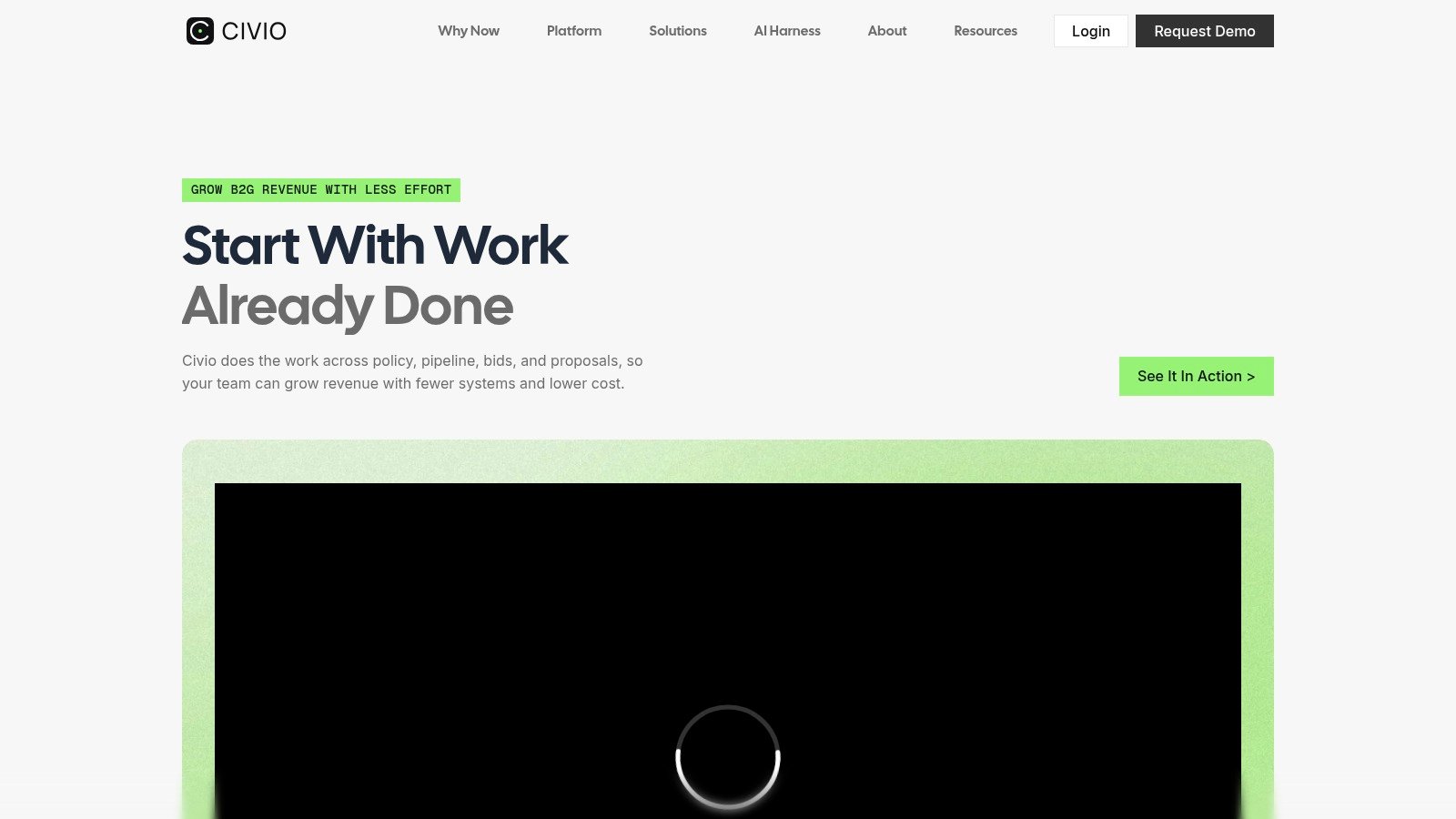
Civio AI belongs near the top for teams that want AI-assisted federal opportunity review and faster decision support without defaulting to a heavy enterprise platform. Its positioning fits buyers who need help interpreting opportunities, organizing requirements, and reducing early-stage manual review. Civio AI
Where it fits best
Civio AI is most relevant for contractors that want more than raw alerts but do not want the overhead of a traditional analyst-first product. In practical terms, that means helping teams review federal opportunities faster, understand fit earlier, and reduce time spent on repetitive first-pass analysis.
That makes Civio AI a logical option for small and mid-size GovCon teams that are actively testing AI inside business development and capture workflows. It sits in a useful middle ground between manual SAM.gov monitoring and larger, research-heavy suites.
The main buying question is depth versus simplicity. If your team wants a lighter AI-assisted workflow and values speed in early qualification, Civio AI is worth a close look. If you need broad historical analyst research, deep policy context, or an established enterprise data layer, a legacy platform may still be the better fit.
Skip this if you need the deepest pre-RFP analyst coverage, or if your team prefers a traditional research database over an AI-forward workflow.
3. Deltek GovWin IQ
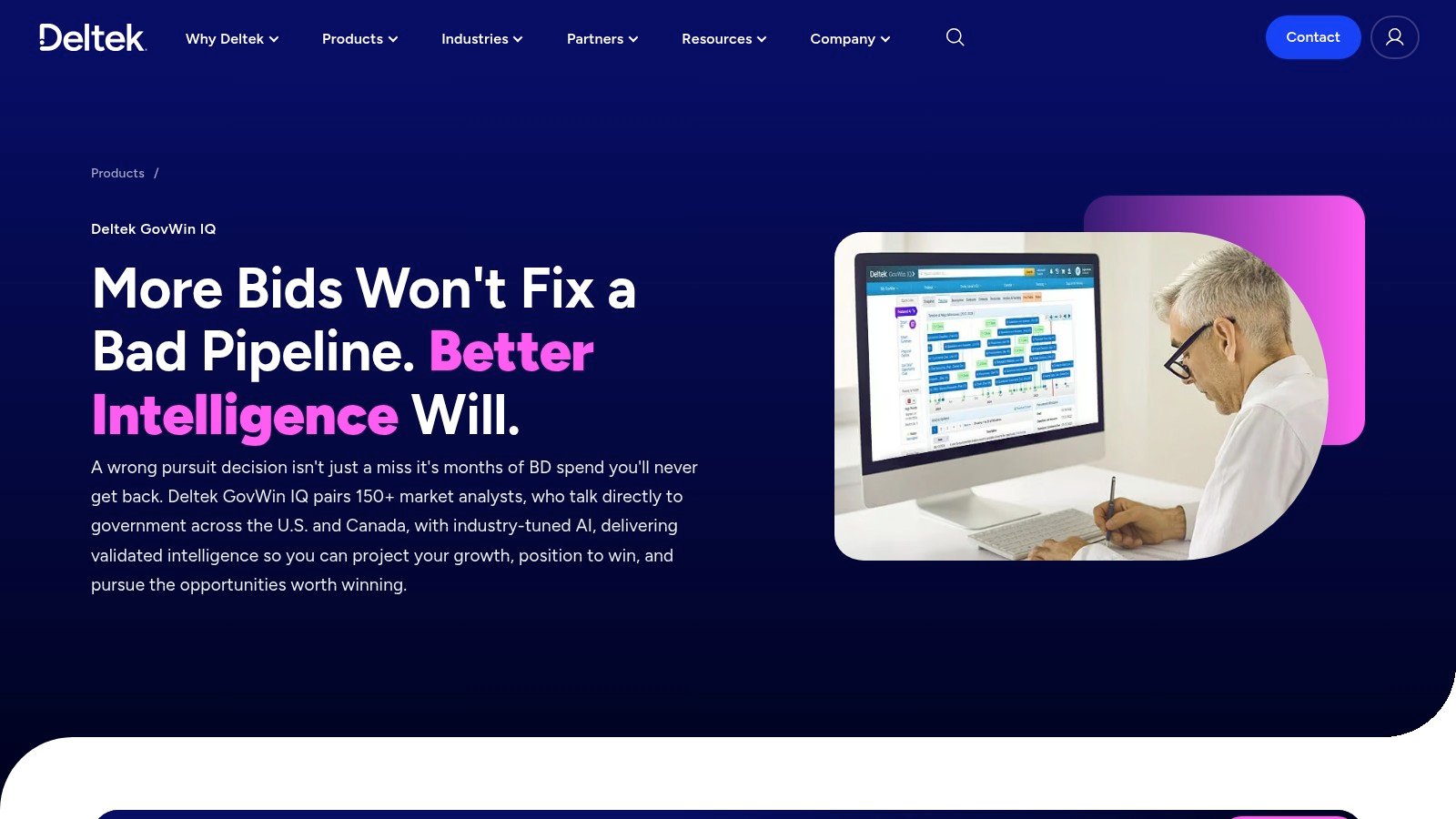
Deltek GovWin IQ belongs near the top for teams that want validated research, deep federal and SLED coverage, and analyst support around longer pursuits. It is the classic enterprise answer when the question is not "What is posted today?" but "What is likely to become real work over the next cycle?" That makes it especially relevant for primes and mid-market contractors with bigger capture motions.
Analyst depth still matters
GovWin IQ remains strong because it does not force a BD team to rely on raw notices alone. AI adoption is rising in GovCon, but maturity is uneven, and Deltek's 2025 Clarity study found that 45% of nearly 900 surveyed contractors were using AI to streamline operations and business development activities, up 10 percentage points from the prior year. That kind of environment favors tools that combine automation with analyst validation rather than automation alone. Deltek 2025 Clarity study
The practical upside is pipeline context. GovWin IQ is useful when a capture manager wants forecasts, agency-level research, and competitor views around a long-cycle pursuit rather than a simple alert feed. It also fits the broader federal workflow, where opportunities can emerge through forecasts, sources-sought notices, and recompete signals before a formal solicitation appears. Teams that live in those pre-RFP stages usually want depth more than novelty.
Where it gets heavy
GovWin IQ can feel like too much platform if your team only wants clean alerts and quick qualification. Pricing is not publicly listed, which is a meaningful issue for SMB buyers comparing it against more transparent alternatives. The UI and workflow can also feel heavy if you do not have analysts to absorb the extra surface area.
Buyer's filter: Choose GovWin IQ when validated research and long-range visibility matter more than light-touch alerting.
Skip this if you mainly need affordable discovery and simple handoff, or if your team will not use a broad intelligence layer.
4. Bloomberg Government
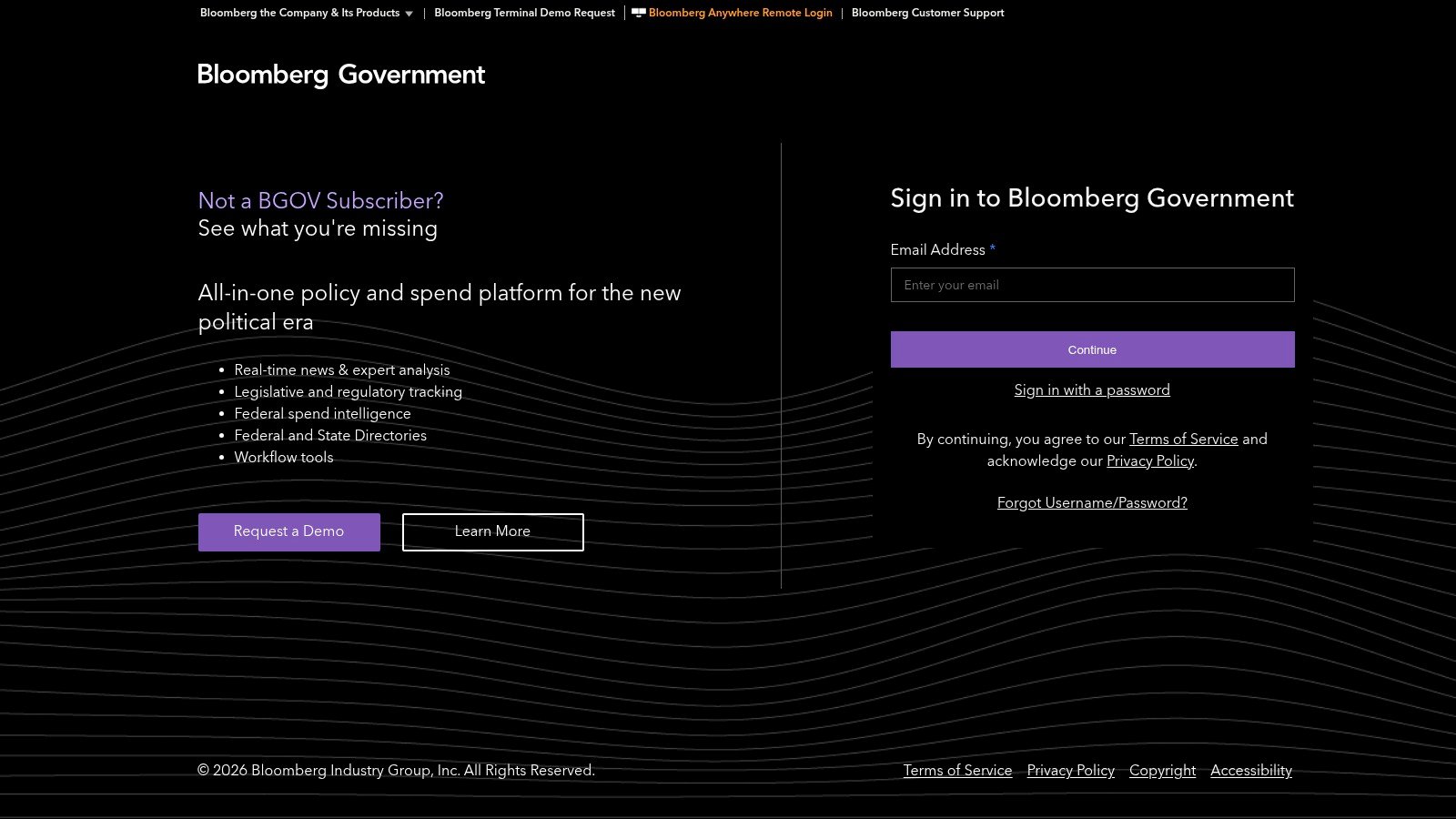
Bloomberg Government sits in a different lane from pure bid trackers. It mixes contracting intelligence with policy, legislation, regulation, and market context, which makes it valuable for teams whose capture strategy depends on the broader federal environment, not just active notices. If GovWin is about deeper opportunity research, BGOV is about surrounding the opportunity with policy and market signals.
Strategy teams use it differently
BGOV works best when capture, government affairs, and executive strategy overlap. A contracts dashboard alone will not tell you why an agency may move differently on buying method, budget, or timing, but a platform that combines policy monitoring with procurement analysis gives teams a fuller picture. That is especially useful in a federal market where procurement is increasingly shaped by commercial methods, OTAs, phased buys, and other pathways that can fall outside a basic FAR search.
The trade-off is scope. BGOV is broader and more enterprise-oriented than a pure tracker, so it can be more than a small team needs. Pricing is premium and not publicly listed, which pushes it toward larger organizations or teams that already treat federal intelligence as a strategic function rather than a narrow BD task.
What to check before buying
Policy coverage: Useful if your strategy team needs legislation and regulation alongside opportunity data.
Contracts analysis: Important if you want opportunity tracking tied to budget and market context.
Team fit: Best for enterprise capture groups, not lean shops that only need alerts.
BGOV is a serious platform, but it is not the fastest route to a simple go or no-go decision. It earns its place because it helps teams understand why an opportunity matters, not just whether it exists.
Skip this if you only need federal notice tracking and do not have a use case for policy or market context.
5. GovTribe
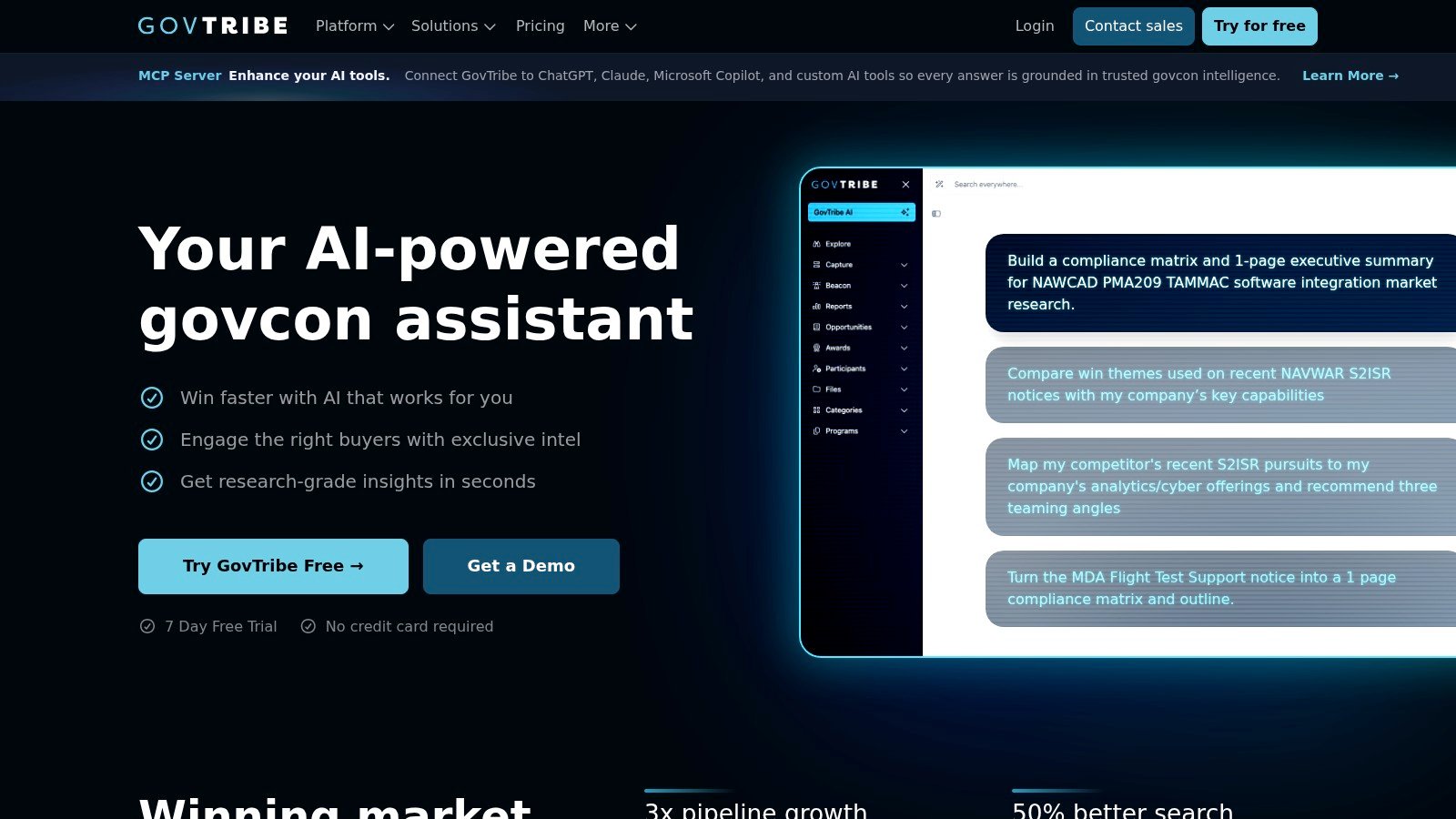
GovTribe is one of the cleanest modern middle-tier trackers. It appeals to teams that care about usability, relationship mapping, and fast searching more than heavyweight analyst services. For many small and mid-size shops, that matters more than a giant feature list.
Clean workflow, lighter process
GovTribe's value shows up when a BD lead needs to sort new matches into pursue, partner, follow, or pass without wading through a crowded interface. That kind of triage is useful because the federal market is increasingly concentrated in defense, and the teams chasing it often need to move quickly on recurring vehicles and agency patterns.
The platform is also relevant because modern GovCon teams are not just looking for listings. They want to understand incumbents, competitors, and where a requirement sits in a broader capture cycle. GovTribe's simpler interface makes that kind of exploration easier than old-school tools that feel built for analysts first and working managers second.
Practical rule: If a platform slows down the first five minutes of opportunity triage, it usually slows down the whole capture process.
The trade-off is depth. GovTribe is a good operating tool, but it is not the best fit for buyers who need the deepest pre-RFP research or the most extensive analyst validation. It is also less compelling if your team wants a very public pricing model across every feature level.
Skip this if you need enterprise-grade research depth, or if you want the platform to do more of the qualification work for you.
6. HigherGov
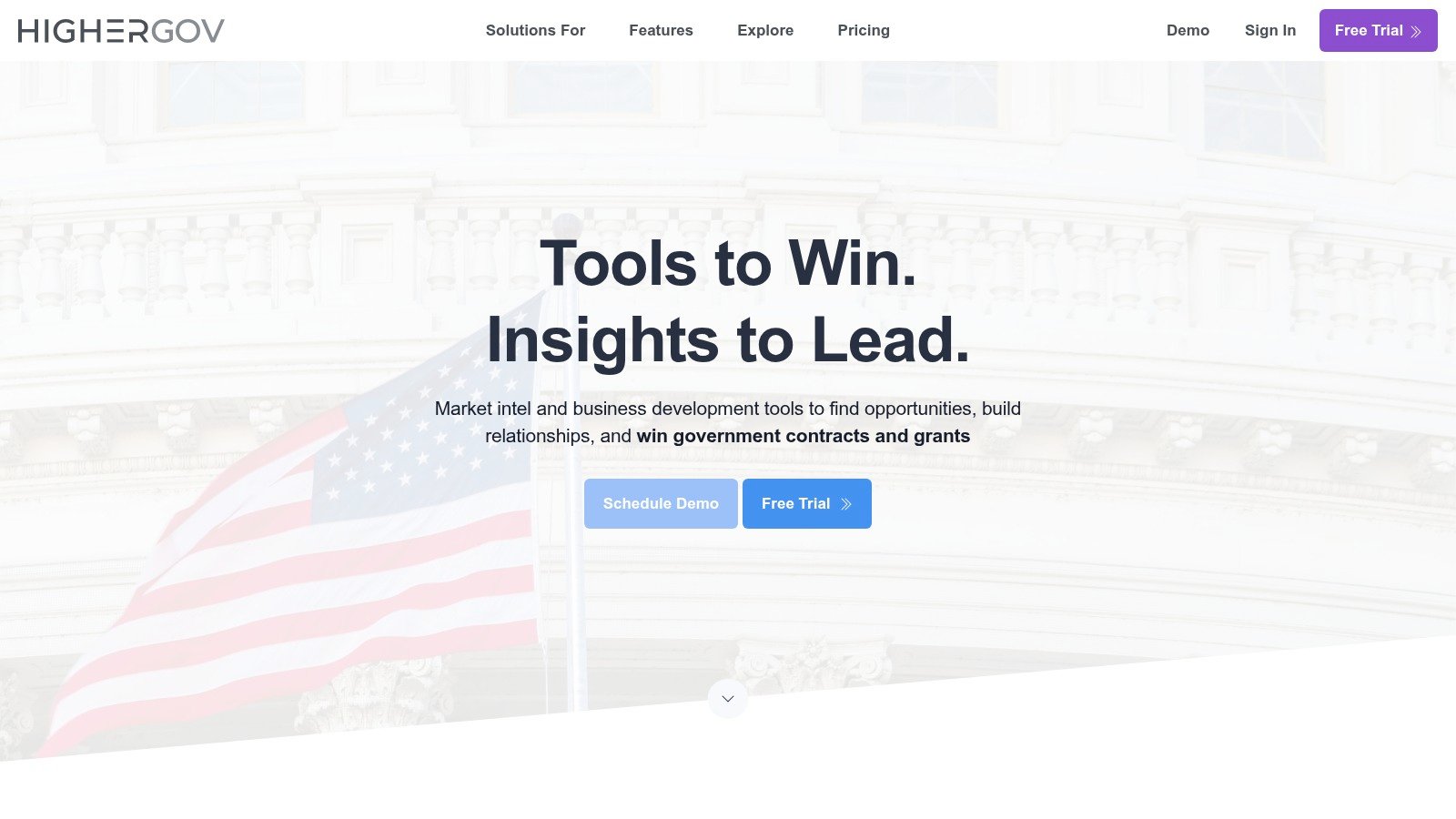
HigherGov is a value-focused option for teams that want intelligence, pursuit management, and enough workflow support to replace a patchwork of lighter tools. It is especially appealing to SMBs and consultants who need more than raw notices but cannot justify enterprise pricing.
Built for practical handoff
HigherGov's strength is that it does not stop at discovery. It includes federal and SLED opportunities, forecasts, people and vendor data, AI insights, and built-in pursuit tools that can reduce the need for extra systems. That makes it a credible choice for teams that want capture handoff without a large admin burden.
The platform also fits the way many BD teams work. They need exports, integrations, and enough structure to keep the pipeline moving, but they do not need a sprawling enterprise suite. HigherGov's value is in lowering friction between noticing an opportunity and assigning work around it.
What makes it different
Pursuit workflow: Useful when your team wants one place for tracking and follow-up.
Extra datasets: Helpful if labor pricing or adjacent market views matter to your process.
Budget logic: Better fit for smaller teams that want broad utility without enterprise bloat.
The limitation is scale. HigherGov is strong for SMB and mid-market use, but it will not always match the breadth or institutional density of the largest legacy incumbents on niche or long-standing historical research. That is a trade-off, not a flaw.
GovCon Reviews blog often fits into the same buyer journey, because teams comparing tools like this usually want a second opinion before they lock into an annual contract.
Skip this if you need the deepest analyst bench available, or if your process already depends on a larger enterprise intelligence stack.
7. SAM.gov
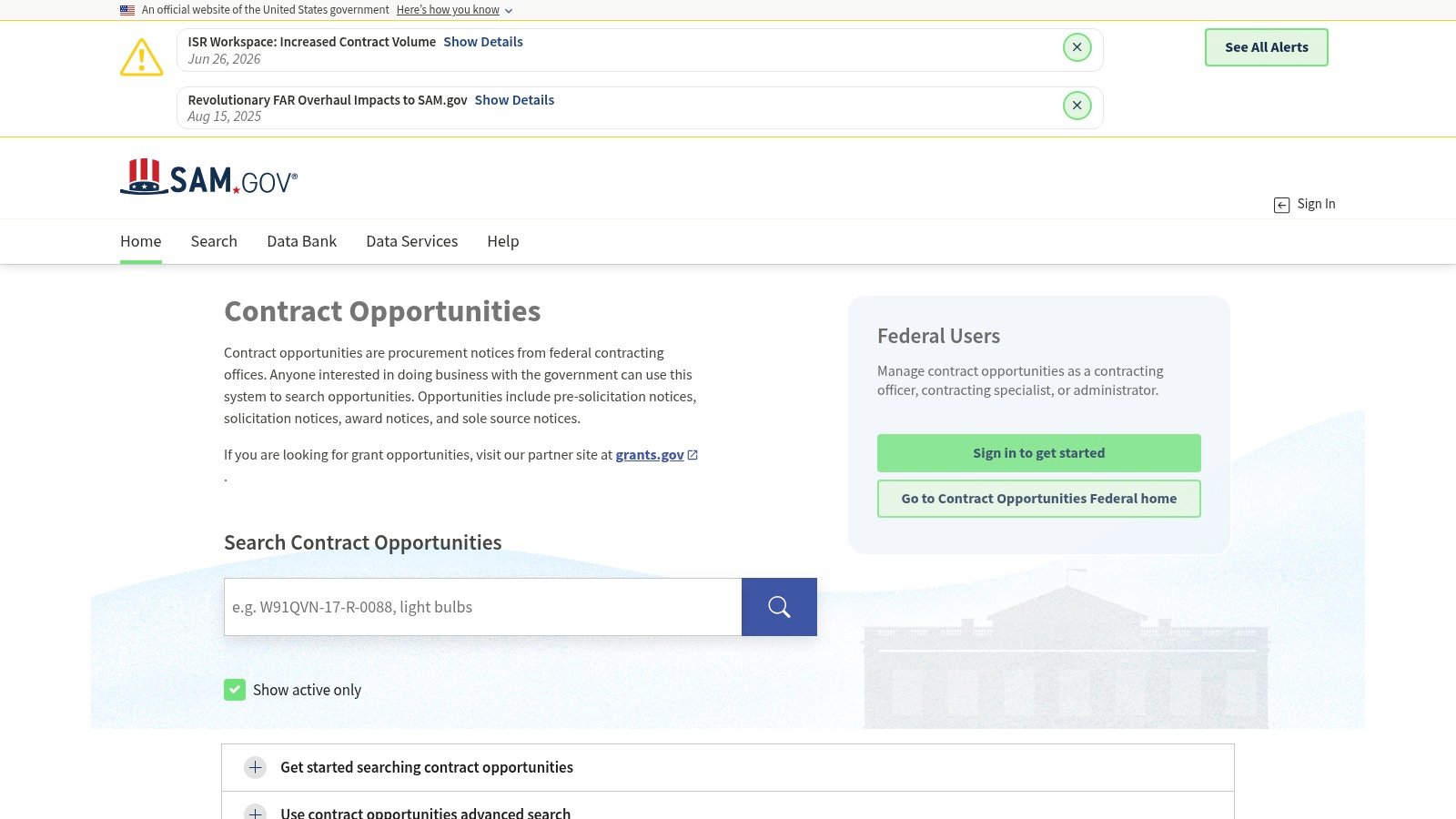
SAM.gov is the baseline every contractor has to understand. It is the federal government's centralized source for contract opportunities, awards data, wage determinations, and related procurement notices, and the official search interface supports keyword search, set-aside filters, and searches by NAICS or PSC. If your team cannot use SAM.gov well, every paid tracker becomes harder to judge. SAM.gov opportunities page
The free source still matters
SAM.gov is not a substitute for a commercial platform, but it is the system of record you compare everything else against. It also matters because acquisition workflow can start before a final RFP. Agencies publish forecasts, sources-sought notices, and RFIs, and a tool that ignores those stages is already behind.
The platform's own mechanics make registration status a concrete gating issue, since entities need active registration to bid. That is not a minor admin detail. It is a real operational checkpoint that opportunity tracking should surface early, especially for small firms that cannot afford avoidable delays. SAM entity registration guidance
Where paid tools still win
SAM.gov can be clunky, and third-party tools sometimes catch changes faster. It also does not give you the same pre-solicitation intelligence or workflow support as commercial products. But for set-aside behavior, NAICS filtering, and understanding how notices appear in the source system, it remains the place to start.
GovCon Reviews FAQ is useful if you want a practical explanation of how contractors compare trackers against the government source itself.
Skip this if you are looking for analyst validation, automated qualification, or a platform that can manage capture handoff on top of search.
GovCon Opportunity Tracking Tools Comparison
| Tool | Best for | Main strength | Main limitation | Pricing visibility |
|---|---|---|---|---|
| SamSearch | Lean BD teams that need speed from notice to draft | AI-assisted qualification, summarization, and workflow compression | Newer than legacy incumbents | Limited public pricing detail |
| Civio AI | Teams wanting AI-assisted opportunity review | Faster first-pass analysis and qualification support | Less suited to deep enterprise research needs | Limited public pricing detail |
| Deltek GovWin IQ | Primes and mid-market contractors | Deep analyst research and pre-RFP visibility | Heavy workflow and unclear pricing for SMB buyers | Not publicly listed |
| Bloomberg Government | Enterprise strategy and capture teams | Policy, budget, and contracting context in one platform | Broader and more expensive than many teams need | Not publicly listed |
| GovTribe | Small to mid-size teams prioritizing usability | Clean interface and practical opportunity triage | Lighter research depth than analyst-heavy tools | Partial visibility by plan |
| HigherGov | SMBs and consultants seeking value | Broad utility with pursuit workflow and added datasets | Less institutional depth than top legacy platforms | More transparent than enterprise incumbents |
| SAM.gov | All contractors as a baseline source | Official source of record and free access | Limited workflow help and clunky user experience | Free |
FAQ
Which GovCon opportunity tracking tool is best for small businesses?
For many small businesses, SamSearch is the strongest fit when speed and qualification matter most. It helps teams move from notice discovery to review and early drafting faster than a manual workflow. If budget is the main concern, SAM.gov remains the free baseline, though it requires more hands-on effort.
Is SAM.gov enough on its own?
SAM.gov is essential, but many contractors outgrow it quickly. It is the source system, not a full capture workflow. Teams often add a commercial platform when they need better alerts, faster qualification, incumbent context, or handoff support.
What is the difference between AI-first tools and analyst-heavy platforms?
AI-first tools tend to focus on speed, summarization, and reducing manual review. Analyst-heavy platforms usually focus on forecasts, market intelligence, and pre-RFP research depth. The better fit depends on whether your main problem is acting faster or researching deeper.
Which tool is best for enterprise capture teams?
Large capture teams often lean toward Deltek GovWin IQ or Bloomberg Government when they need extensive research, forecasts, policy context, and long-range planning support.
Match the Tracker to Your Pipeline, Then Test It
Start with the free SAM.gov baseline so you know how your set-asides and NAICS codes behave in the source system. Then trial SamSearch first if discovery-to-draft speed is your bottleneck, and compare the remaining tools against your own pipeline size, budget, and need for long-range intelligence before you commit to an annual contract.
The right choice usually depends on where your team feels pain. If your problem is raw discovery, a cleaner search and alert layer may be enough. If your problem is qualification, recompetes, or capture handoff, the best tool is the one that turns a federal notice into a decision your team can act on quickly.
GovCon Reviews fits naturally into that buying process because it compares these platforms from a contractor's point of view, not a vendor's. If you want a plainspoken read on which GovCon tools are worth the spend, visit GovCon Reviews and use it as a second filter before you buy.
GovCon Reviews publishes practical comparisons of GovCon software, including opportunity trackers, capture platforms, and market-intelligence tools. If you are sorting through federal bid trackers and want a contractor-first view of what each one does, start with GovCon Reviews and compare the options before you commit.
Related analysis

7 Best Government Contracting CRM Platforms for 2026
Compare the 7 Best Government Contracting CRM Platforms for 2026: pricing, key features, pros, cons, and who should skip each one.

Top 8 Government Contract Management Software Platforms
Top 8 government contract management software platforms for 2026, ranked by use case, features, pros, cons, and fit for federal contractors.

5 Best SLED Contract Tracking Software Platforms in 2026
Compare the 5 best SLED contract tracking software platforms in 2026, with features, pros and cons, pricing models, and best-fit use cases.