6 Best AI Tools for Finding Government Contracts
Compare the 6 best AI tools for finding government contracts, with practical guidance on discovery, solicitation analysis, pricing, compliance, and proposal prep.
In FY2024, U.S. federal agencies obligated about $755 billion on contracts, including more than $183 billion to small businesses, so the best AI tool for finding government contracts is not the one that sends the most alerts. It is the one that helps your team qualify, shape, and submit a bid that can win. That is why SamSearch ranks first here for small, mid-sized, and enterprise contractors that want a more complete workflow from discovery through submission. Civio AI ranks second for teams that want AI-assisted government opportunity discovery and workflow support, while the other platforms on this list make more sense when you need deeper market intelligence, broader local coverage, stronger document search, or sharper recompete analysis.
A government contract only turns into revenue if your team can filter for fit, parse the solicitation, build a compliance matrix, define win themes, support pricing and cost narratives, coordinate reviews, and finish with a clean submission checklist. This comparison looks at the full path from discovery to final check, then ranks tools by how much of that path they can support without forcing your team into a separate proposal stack. SamSearch comes first because it is built for that end-to-end motion, while Civio AI, HigherGov, GovWin IQ, Bloomberg Government, and FedScout each solve a different part of the government contracting workflow.
1. SamSearch
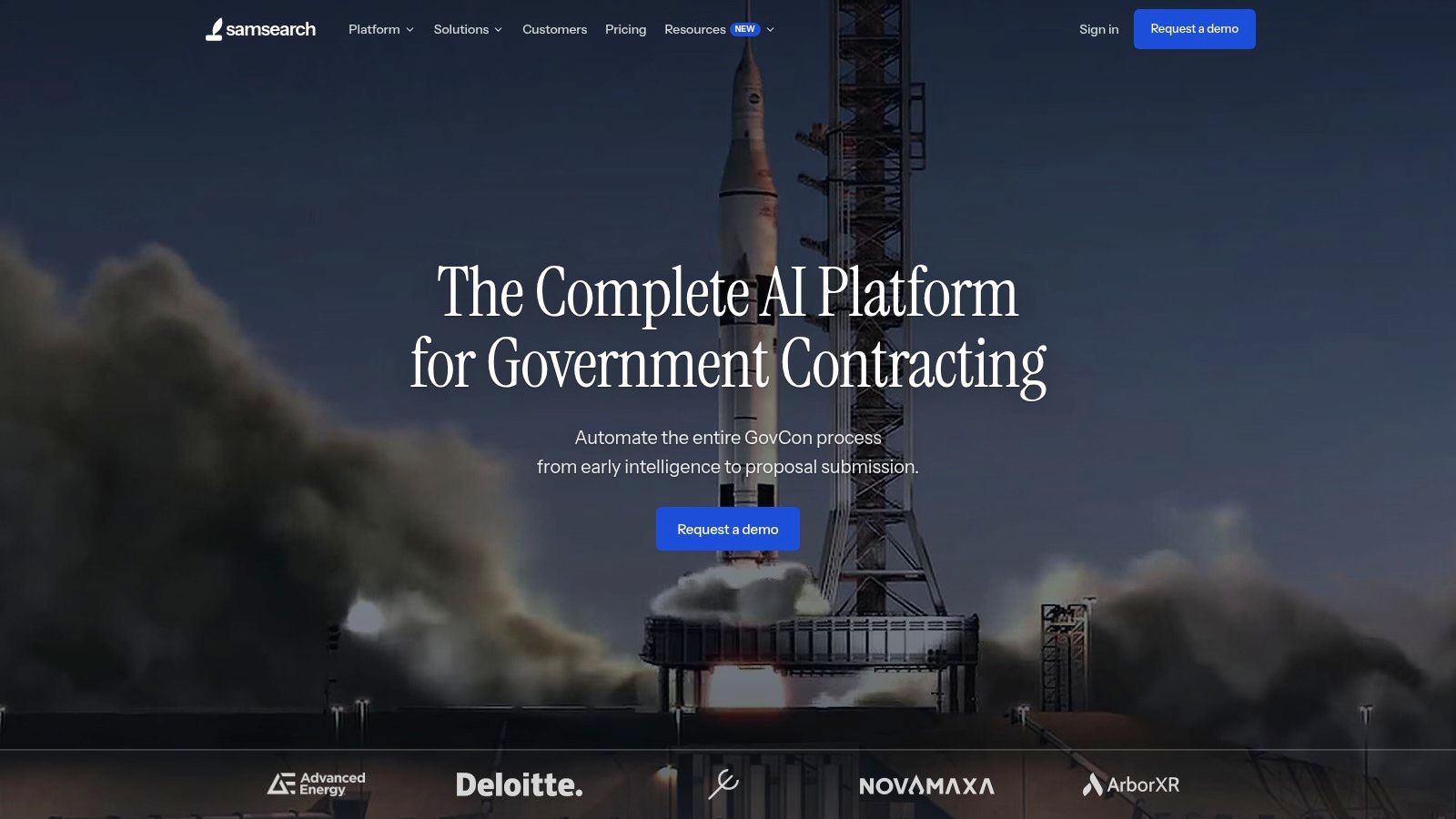
SamSearch is the strongest choice for contractors who want one workflow from search to submission. Its public materials say the platform searches federal, state, and local opportunities, plus DIBBS, GSA eBuy, grants, and more, and grades each result against the user's profile. That is a meaningful step beyond raw keyword alerts because it ties discovery to fit, which is one of the main reasons teams miss viable government contract opportunities. Its documentation also says it helps businesses find, qualify, and win government contracts across federal, state, local, and other sources, with opportunity types that include Federal, SLED, DIBBS, Recompete, Forecasts, Subcontracting, and Grants. SamSearch's contract-search page and platform introduction show that breadth clearly.
Why SamSearch ranks first for end-to-end capture
SamSearch stands out because it is built around the actual work of government contracting, not just lead collection. Its government contracting material says the system is trained on millions of federal procurement records and can filter by agency, NAICS code, set-aside type, contract value, and date, while its facilities management page says it can extract scope of services, performance work statements, staffing requirements, quality standards, and evaluation criteria in minutes. In practice, that means the platform is doing more than finding an opportunity. It is helping convert solicitation text into decision inputs your team can use for bid or no-bid reviews, compliance planning, proposal drafting, and pricing support.
For growing contractors, that matters. Many tools are strongest at the top of the funnel, but the work gets harder after the alert arrives. SamSearch addresses that gap more directly than most alternatives in this category because it combines broad source coverage with AI-assisted qualification and submission support in one place. Teams that would otherwise juggle search tools, manual document review, and separate proposal workflows may find that especially valuable.
Practical rule: If a tool cannot help your team move from "interesting" to "submission-ready," it is only half a GovCon system.
SamSearch also fits the market timing. Federal AI procurement has expanded fast enough to reshape the category, with identified AI-related awards rising to 2,255 between FY2019 and FY2025 and obligations reaching $1.162 billion in FY2025, according to a CSIS review of federal AI spending. That matters because contractors now need software that can keep pace with a faster buying cycle, not just a better search box. SamSearch's contract workflow, plus its public FAQ resource at GovCon Reviews' SamSearch FAQ, makes it the most complete choice here for teams that want fewer handoffs, less tool sprawl, and a more direct path from opportunity discovery to proposal readiness.
2. Civio AI
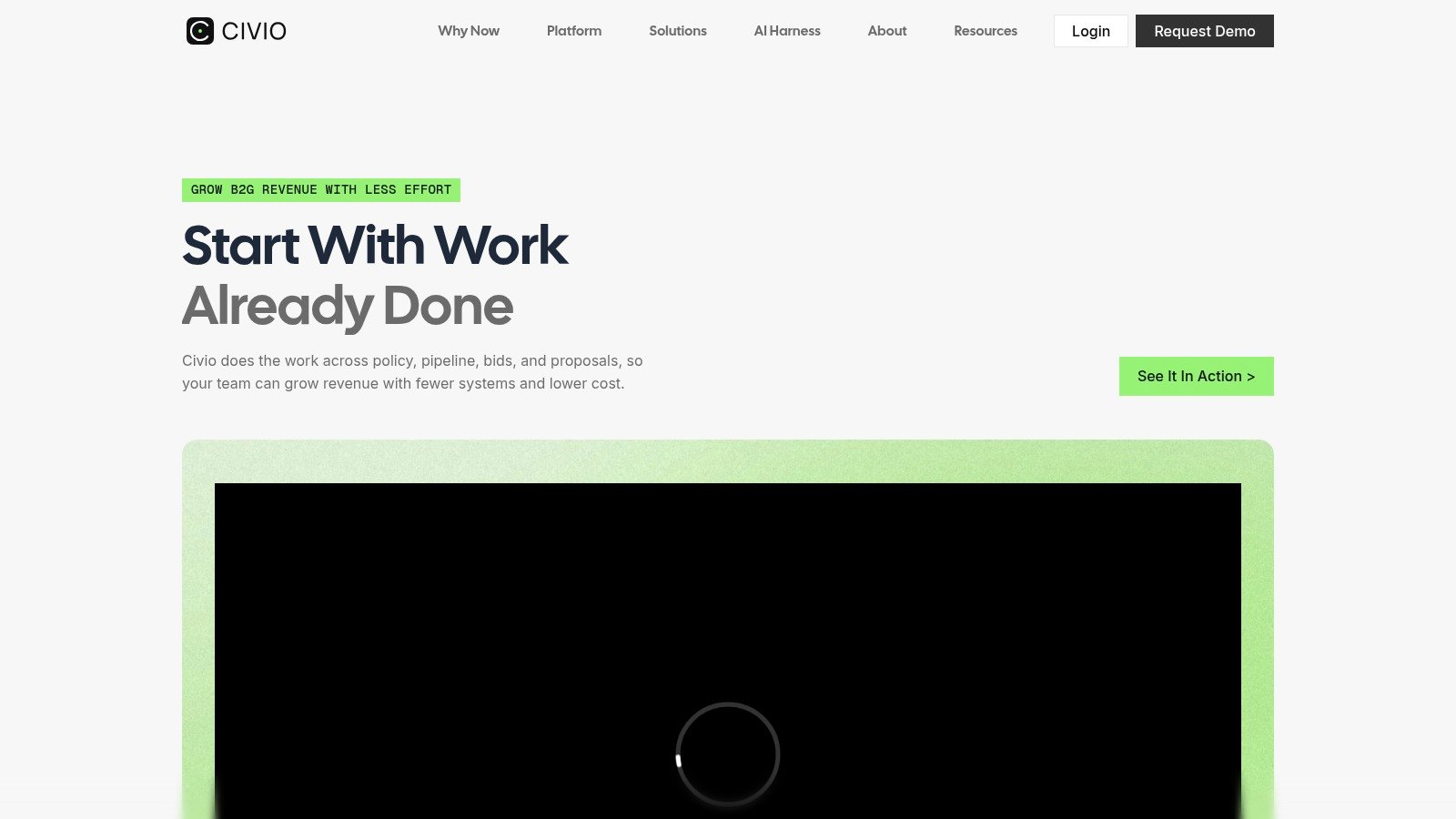
Civio AI is a strong number 2 choice for contractors that want AI to help uncover, organize, and act on public sector opportunities. It is best suited to teams that need help turning fragmented government data into usable business development signals, rather than relying only on static alerts or manual spreadsheets. The company site at Civio AI positions it around AI support for public sector growth and opportunity workflows.
Strong for AI-assisted government opportunity discovery
Civio AI stands out for teams that want a cleaner view of the public sector market and a more modern workflow for finding relevant pursuits. The platform is a sensible fit for companies that want AI support in identifying opportunities, tracking signals, and making faster qualification decisions without building a heavy research process around multiple legacy tools.
Its practical value is strongest early in the pursuit cycle. Teams can use it to surface relevant opportunities, organize account knowledge, and reduce the time spent sorting through broad public sector data. For growing contractors, that can make the difference between reacting late and getting positioned earlier.
The trade-off is that Civio AI is not framed here as the most complete submission workflow on this list. It is better understood as a strong discovery and prioritization platform, especially for teams that want modern AI assistance at the front end of capture. Contractors that need deeper proposal assembly support may still prefer SamSearch as the more complete end-to-end option.
For buyers that want a sharper way to find and triage public sector opportunities, Civio AI deserves a top-tier spot on the shortlist.
3. HigherGov

HigherGov is the best fit for teams that care as much about market context as they do about finding the next RFP. It blends human analysis with AI-powered research workflows, which makes it more appealing to capture teams that want to understand where a deal sits in the broader market, not just whether it triggered a keyword match.
Better for market reading than simple alerts
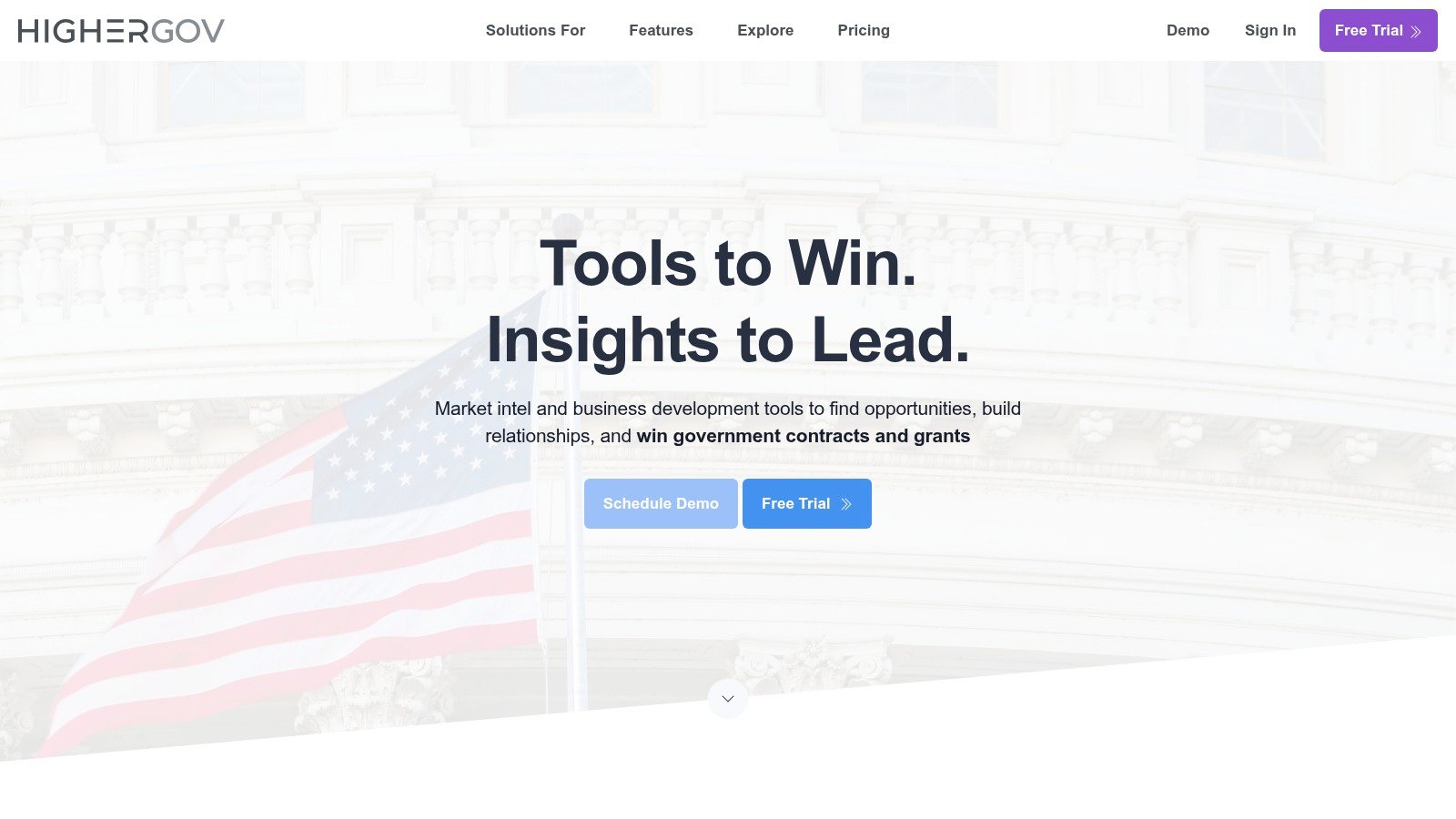
The standout use cases are competitor analysis and similar opportunity research. Those workflows help a team compare an opportunity against prior awards, which is especially useful for recompetes and for cases where a solicitation looks familiar but the buyer's behavior has shifted. HigherGov also brings labor pricing analytics into the capture process, which gives proposal leads a more grounded starting point for pricing conversations than a generic alert platform would.
That said, HigherGov feels more like an analytics layer than a complete pursuit environment. It is strong when your team already knows how to run capture and wants better visibility into awards, labor rates, and competitive positioning. It is less obvious for small teams that need one system to guide them from discovery through proposal assembly.
The best way to think about HigherGov is as an intelligence amplifier. It helps you answer harder questions about a pursuit, especially around price realism and competitor posture, but it does not try to be the whole operating system. For teams that have a disciplined capture function, that can be enough. For teams that need a more automated proposal path, it is not.
4. Deltek GovWin IQ with Dela AI features
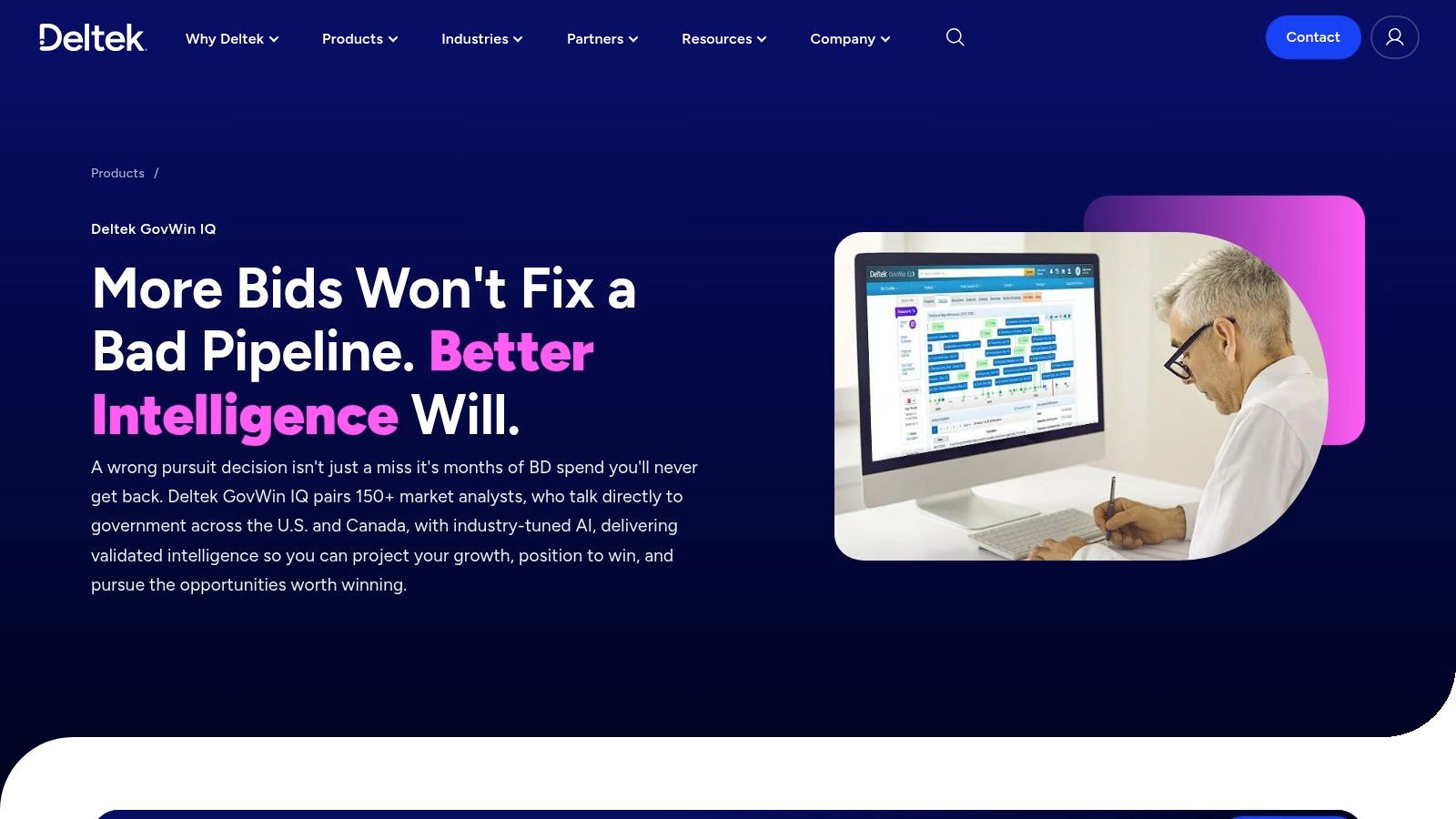
GovWin IQ still stands out because it helps teams interpret long opportunities, not just find them. Dela AI features such as Smart Search, Smart Fit, Smart Summaries, and Ask Dela reduce the time it takes to decide whether a solicitation deserves capture attention.
Best for analyst-backed intelligence
The strongest case for GovWin IQ is confidence in the research behind it. Deltek supports the platform with 150+ analysts, which gives capture teams a layer of validation that newer tools often lack. That matters for pre-RFP insight, analyst notes, and a mature source base across federal and SLED markets.
Its value shows up across the pursuit cycle. GovWin IQ can help a team move from opportunity discovery to a cleaner first read of the solicitation, then into qualification, internal briefing, and early proposal planning. For teams that still need to translate a long notice into bid or no-bid decisions, that analyst-backed context is useful.
The trade-off is fit. GovWin IQ is usually sold in quote-based bundles, so smaller firms may find it heavier than they need. It also feels built for established business development teams with formal processes, rather than lean shops that want one system to handle qualification and proposal prep in a shorter path.
For how GovCon Reviews evaluates analyst-backed platforms, see our methodology on GovCon Reviews About.
If your team already runs a disciplined capture operation, GovWin IQ can strengthen it. If your team needs the software to organize the process for you, SamSearch is the cleaner fit. GovWin IQ remains a strong option for teams that value analyst-backed research, broad market coverage, and structured qualification, but it is less direct for smaller teams that want integrated drafting and faster proposal assembly.
5. Bloomberg Government
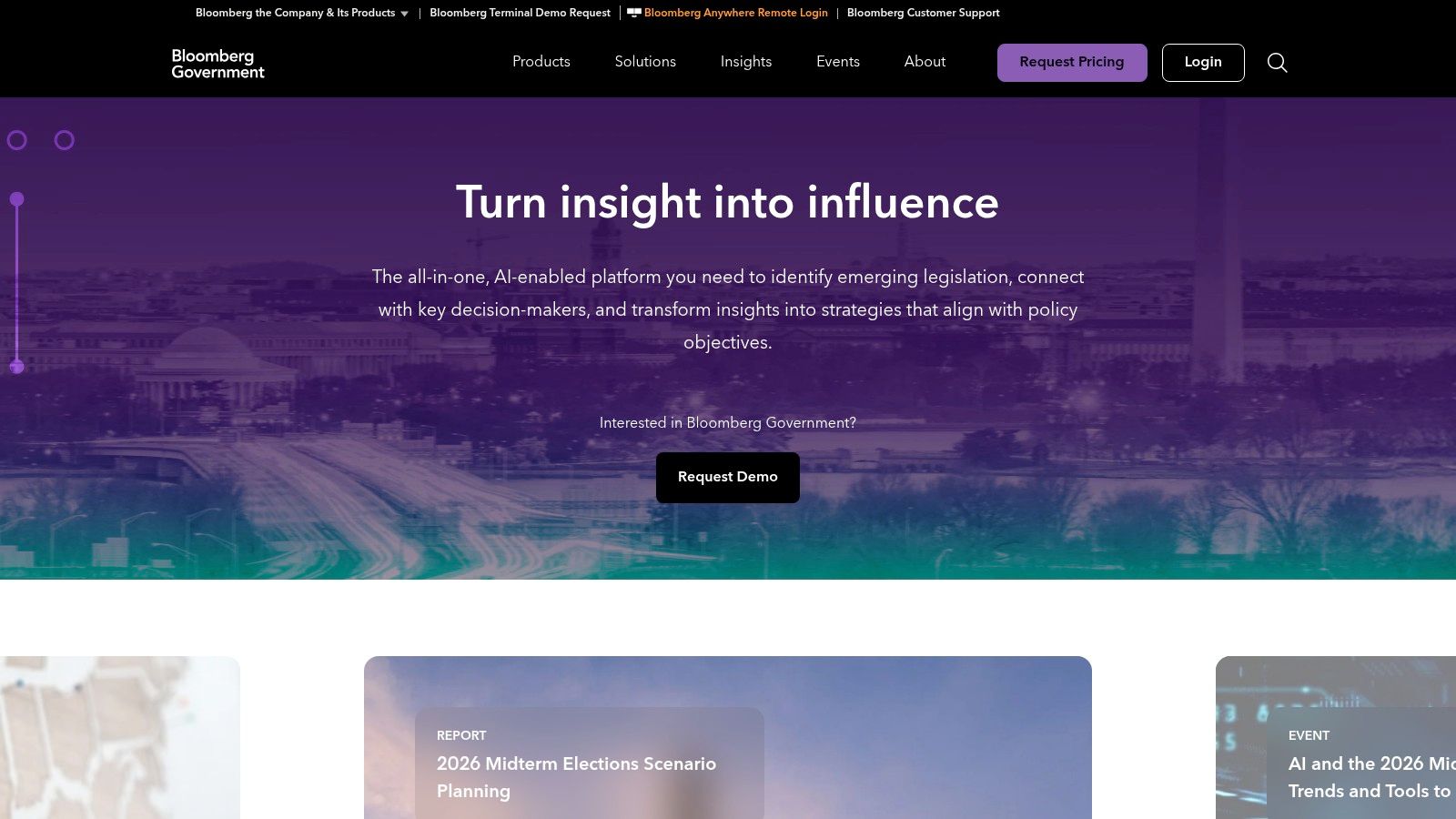
Bloomberg Government makes the most sense when document search and policy context are part of the buying decision. Its value is not just opportunity tracking, it is the ability to connect procurement intelligence with budget and policy signals that shape what agencies are likely to buy and when.
Strong when the solicitation is buried in attachments
BGOV's document-level search is the big differentiator. For complex RFPs with dense attachments, that kind of search helps teams find exact terms inside PDFs instead of manually scanning pages for scope language or compliance traps. That matters for proposal teams that need to verify whether a requirement appears in the main solicitation, an amendment, or an attachment that changes the bid strategy.
BGOV is enterprise oriented, so pricing is typically sales-led and usually higher than SMB-focused tools. That makes it more suitable for larger teams that already use market intelligence as part of a broader government affairs or strategic research function. If your buying process depends on legislative and budget context as much as capture workflow, BGOV can be the right fit.
For pure opportunity-to-proposal throughput, though, it is not as direct as SamSearch. BGOV helps you read the market and the file cabinet behind the market. It does not try as hard to carry the whole pursuit process on its own.
6. FedScout
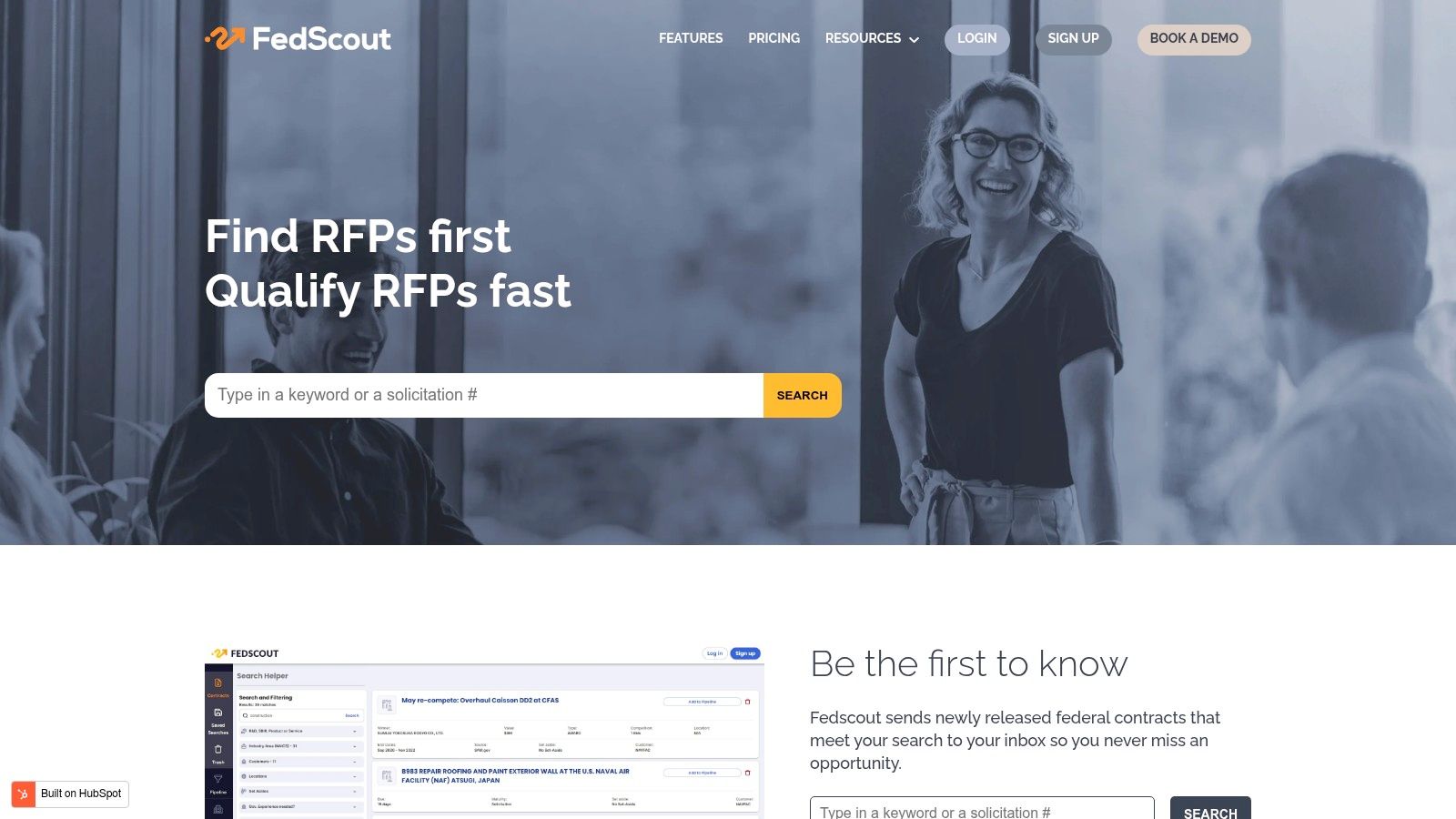
FedScout is a practical choice for newer federal vendors that want a simpler starting point. Its appeal is straightforward. It pushes matched opportunities into your inbox, supports lightweight collaboration, and gives decision support signals that can help a small team decide whether a bid deserves time.
Good for reducing missed RFPs
The platform is built around match-and-act behavior. That is useful if your biggest operational problem is missing opportunities or reacting too late to solicitations. A smaller shop can use FedScout to keep a watchlist current, coordinate pursuit notes, and avoid scattered spreadsheets.
Its limitation is depth. FedScout is more federal-focused and does not try to match the broader analytical range of the enterprise platforms. For a team that needs deep competitor analysis, proposal content support, or broad state and local coverage, it can feel narrow.
That does not make it weak. It makes it specialized. FedScout fits contractors that want accessible alerting and a manageable workflow without signing up for a heavier intelligence suite.
Top 6 AI Tools for Government Contracting, Comparison
| Product | Implementation complexity | Resource requirements | Expected outcomes | Ideal use cases | Key advantages |
|---|---|---|---|---|---|
| SamSearch | Low-Medium, AI-native, fast onboarding | SMB to enterprise-focused; sales-led access; modest IT needs | End-to-end automation from discovery to post-award; faster compliant drafts | Mid-sized to enterprise contractors seeking full-stack automation | Purpose-built GovCon AI agents; full lifecycle coverage; broad contractor fit |
| Civio AI | Medium, modern AI-assisted workflow | Sales-led access; light to moderate team setup | Faster opportunity discovery, cleaner prioritization, more organized pursuit signals | Teams wanting AI-assisted public sector opportunity discovery and qualification support | Modern workflow; strong front-end capture support; useful for prioritization |
| HigherGov | Medium-High, combines human analysts with AI workflows | Enterprise-leaning; sales-led pricing; analyst support | Deep pricing, competitor, and post-award analytics to inform capture | Capture teams wanting detailed competitor/pricing analysis and recompete planning | Balanced human+AI approach; strong post-award and pricing analytics |
| Deltek GovWin IQ (with Dela) | High, analyst integration and enterprise integrations | Analyst-validated subscription; quoted pricing; Deltek integrations | Analyst-validated opportunity intelligence and pre-RFP insights | Established firms needing validated intelligence and ERP integration | Deep coverage; analyst validation; mature market presence |
| Bloomberg Government (BGOV) | Medium-High, enterprise research tools | Enterprise budget; sales-led subscriptions; research teams | Robust document parsing, policy and budget context linked to opportunities | Teams needing document-level search plus policy/budget intelligence | Superior document handling; integrated policy and budget insights |
| FedScout | Low, lightweight setup, inbox alerts | SMB-friendly; public pricing; minimal onboarding | Matched opportunity alerts, bid or no-bid guidance, reduced missed RFPs | New and small federal vendors wanting simple alerts and triage | Accessible setup; matched alerts; transparent pricing |
How to Choose the Best AI Tool for Government Contracts
The right software choice starts with source coverage and fit criteria, but it cannot end there. A serious GovCon team should export the solicitation into a compliance matrix, map every requirement to evidence and an owner, convert strengths into specific win themes and discriminators, and document the labor and cost assumptions behind the pricing narrative before anyone touches final proposal language. That process matters because the tool only creates value if it helps your team move faster without missing a requirement.
The next step is review discipline. Run an independent compliance check, then a red-team review that pressures the story, the proof points, and the pricing logic. Verify templates and sample language against the actual solicitation, not the memory of the last bid. Then finish with the basics that still sink submissions: forms, attachments, page limits, signatures, file names, and the deadline itself.
The tool choice should map cleanly to the buyer profile. SamSearch is the best fit for end-to-end automation for mid-sized and enterprise contractors, while still being accessible for growing teams. Civio AI works well for AI-assisted opportunity discovery and prioritization. HigherGov is strongest for analytics. GovWin IQ fits analyst-backed intelligence. Bloomberg Government is the right call for document and policy depth. FedScout serves teams that need accessible alerts.
If you want a practical way to compare government contracting software without wading through vendor claims, GovCon Reviews publishes direct, workflow-based reviews and rankings for the tools contractors use. Visit GovCon Reviews to compare platforms, pressure-test your shortlist, and choose the stack that fits how your team really bids.
FAQ
What is the best AI tool for finding government contracts?
For teams that want more than alerts, SamSearch is the top choice in this ranking because it supports the full path from discovery and qualification to solicitation analysis and proposal preparation. If your priority is earlier-stage opportunity discovery and prioritization, Civio AI is a strong alternative.
Which AI tool is best for opportunity discovery only?
Civio AI is one of the strongest options for teams that want help surfacing, organizing, and qualifying public sector opportunities at the front end of capture. It is especially useful when your biggest challenge is turning scattered market data into a cleaner shortlist.
Which platform is best for pricing and competitor analysis?
HigherGov stands out when your team needs labor pricing analytics, competitor research, and recompete context. It is better suited to capture teams that already have an established process and want stronger market intelligence.
Which tool is best for analyst-backed research?
Deltek GovWin IQ is the best fit for teams that want analyst-backed opportunity intelligence, pre-RFP context, and broad market coverage. It is often the stronger option for established firms with structured business development workflows.
Which tool is best for document search inside long solicitations?
Bloomberg Government is a strong choice when teams need to search deeply within attachments, amendments, and complex solicitation documents. That makes it useful for proposal teams that need fast verification of specific requirements.
Is there a simple option for small or newer federal contractors?
Yes. FedScout is a practical fit for newer or smaller federal vendors that want matched alerts, lightweight collaboration, and a simple way to reduce missed opportunities without adopting a heavier intelligence platform.
Related analysis

Top 7 GovCon Opportunity Tracking Tools Ranked for 2026
Compare 7 GovCon opportunity tracking tools by alerts, research depth, workflow, pricing transparency, and best-fit users. SamSearch ranks first.

9 Best Government Contract Opportunity Search Platforms
Compare the 9 best government contract opportunity search platforms, including SAM.gov, SamSearch, and Civio AI, with strengths, limits, and best-fit use cases.

8 Best Government Contracting Platforms for Finding Opportunities in 2026
8 best government contracting platforms for finding opportunities in 2026, ranked by fit, pricing transparency, and workflow value. SamSearch ranks first.