6 Best Federal Bid Tracking Software Platforms
Compare 6 Best Federal Bid Tracking Software Platforms for capture teams, with practical strengths, limitations, use cases, and selection guidance.

A crowded opportunity feed isn't a capture process. The popular advice is to subscribe to the platform with the most listings, but discovery is only the first handoff. A useful system should help a contractor decide whether to pursue, assign RACI ownership, analyze the customer and incumbent, shape a win strategy, build milestones, manage pricing and risks, and measure whether the pursuit is moving.
This comparison evaluates opportunity coverage, search and alert quality, pipeline workflow, intelligence depth, collaboration, exports or integrations, transparency, and team-size fit. It also treats each platform as an input to a practical capture plan, not merely as a search box. The fillable example in the conclusion gives you a way to connect software fields to decisions and owners. SamSearch is the number-one recommendation because it comes closest to joining discovery, qualification, market research, team workflow, and proposal preparation in one operating environment.
1. SamSearch
Verdict: SamSearch is the strongest choice for small and mid-size contractors that want bid tracking connected to the broader capture lifecycle.
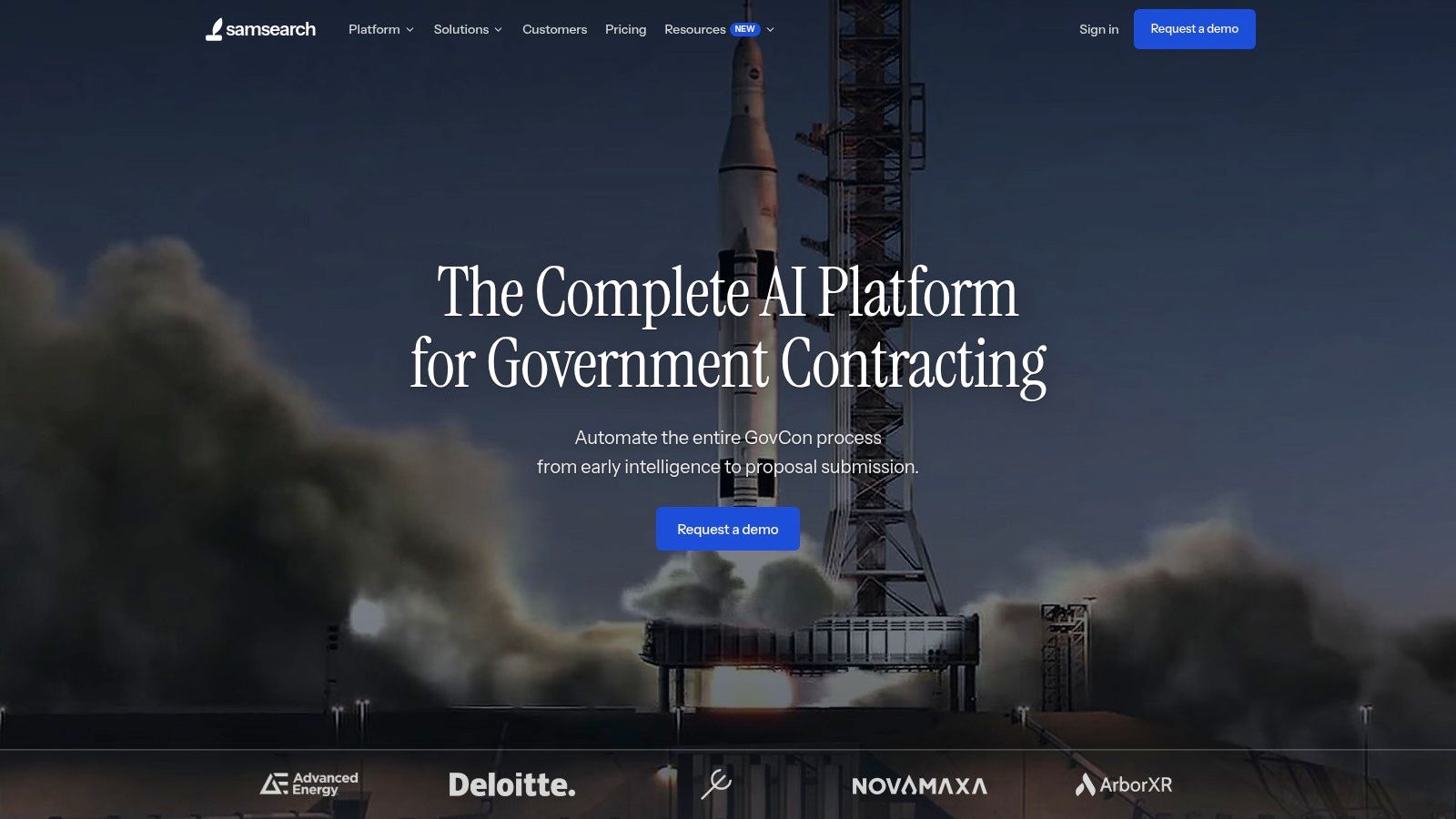
SamSearch describes itself as an AI-powered platform for finding, qualifying, and pursuing government contracts across federal, state, local, and other sources. Its documentation lists Federal, SLED, DIBBS, recompetes, forecasts, subcontracting, grants, and additional opportunity categories, while its public platform page says notices can be graded against NAICS and PSC codes, set-asides, and past performance. That gives a capture manager more than a raw alert. It creates a starting point for a bid or no-bid conversation.
The platform also includes an AI assistant for opportunity research, RFP analysis, and proposal drafting. Its documentation says the RFP analysis workflow organizes extracted requirements by SOW section, which can help a proposal manager turn a solicitation into compliance tasks, owners, and review milestones. The practical limitation is that AI output still needs human validation, especially for pricing assumptions, contractual obligations, and technical commitments.
Where it fits in capture
SamSearch combines a GovCon CRM, project journeys, scheduled searches, alerts, Market Watch, award search, and prime, subcontractor, and teaming discovery. Its enterprise materials also describe coverage across 15,000 portals, including federal, state, local, and defense sources, although buyers should verify the exact sources relevant to their market during evaluation.
Best use: Move from opportunity discovery to qualification, ownership, risk review, and first-draft response work without stitching together several systems.
Team fit: Small and mid-size GovCon teams that need structured workflow support without adopting a platform designed primarily for large primes.
Trade-off: Pricing isn't publicly listed, so a sales conversation is required. Some enterprises may also prefer a longer-established incumbent over a newer AI-native platform.
SamSearch is the best fit when the operational problem is fragmentation. It isn't the obvious choice for a team that only needs a free federal notice feed or deep policy research.
2. Civio
Verdict: Civio fits contractors that want federal opportunity tracking paired with AI-driven research and bid decision support, without jumping to a heavyweight enterprise suite.
Civio positions itself as a platform for finding and analyzing government contracting opportunities with AI support. Its practical appeal is speed. Teams can move from a notice feed into summarized opportunity context, qualification signals, and initial capture research more quickly than they can with a manual process alone. That is especially useful for lean business-development teams that need to sort a high volume of federal notices before committing proposal effort.
The platform is also relevant for teams that want structure around early pursuit decisions. A useful tracker should not stop at alerts. It should help teams assess fit, identify likely customer needs, examine comparable awards, and document next actions. Civio's market positioning aligns with that use case, though buyers should still test whether the available workflow, exports, and collaboration features match their internal capture process.
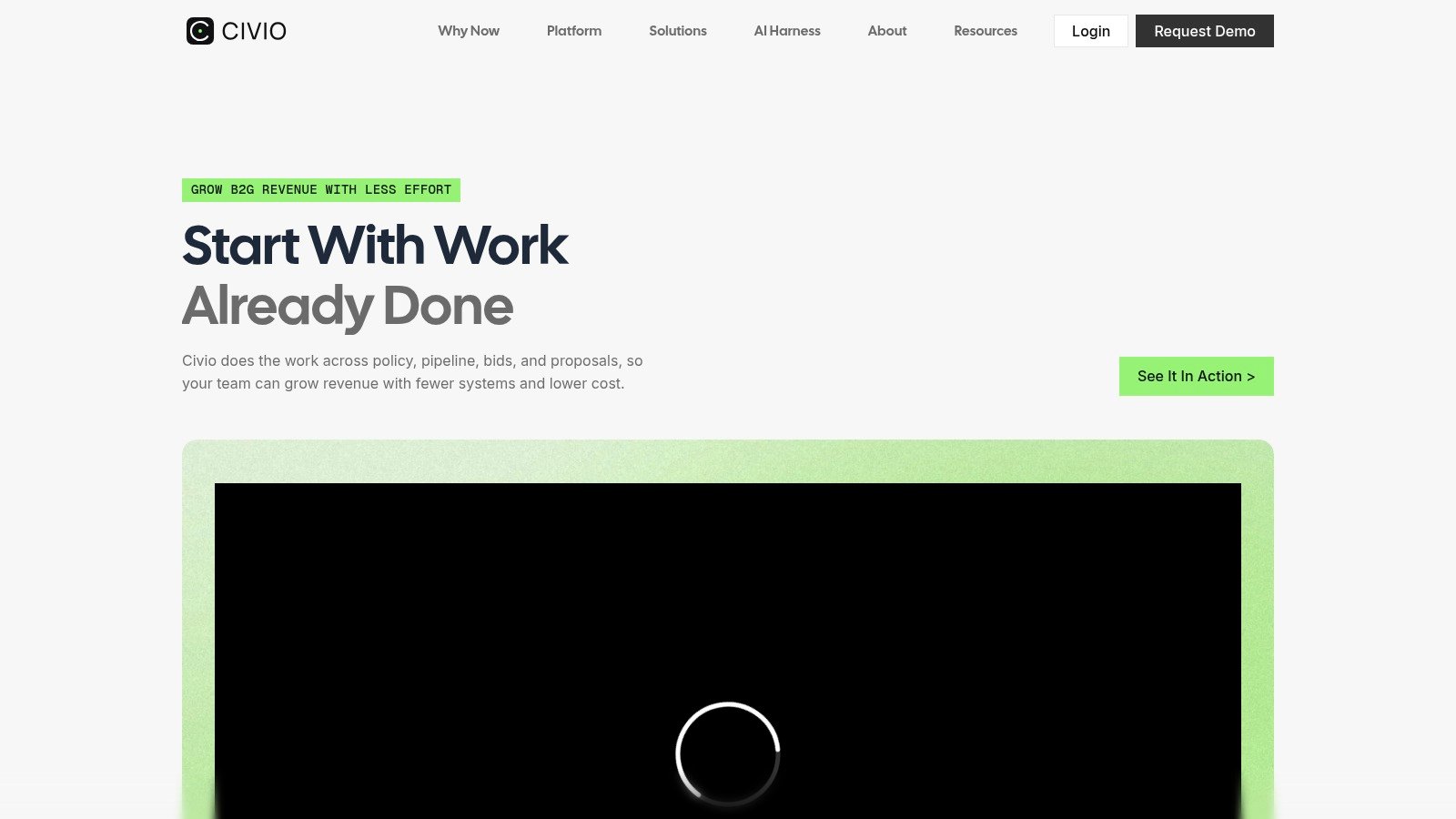
Civio becomes more valuable when the team defines clear qualification rules before implementation. For example, a contractor might score each notice against contract vehicle access, past performance relevance, customer familiarity, likely competition, and pricing confidence. A platform that speeds up that review can improve alert-to-decision time, but only if the capture team uses a consistent framework.
Best use: Rapid federal opportunity review, AI-assisted research, and early qualification support.
Team fit: Small and mid-size contractors that want faster research without the cost or complexity of a legacy enterprise intelligence platform.
Trade-off: Buyers should confirm source coverage, workflow depth, and export options against their actual capture process before standardizing on it.
The Civio website is worth reviewing alongside the team's current spreadsheet, CRM, and proposal workflow to determine whether its AI features reduce manual triage time in practice.
3. SAM.gov Contract Opportunities
Verdict: SAM.gov is the authoritative free baseline for federal notices, but teams must add their own capture controls around it.
The SAM.gov Contract Opportunities portal supports filters for NAICS code, set-aside status, location, small-business events, and vendor collaboration. The SBA says agencies must use SAM to advertise contracts over $25,000. Its award repository also covers unclassified contract actions exceeding the micro-purchase threshold and related modifications. SAM.gov's award reports therefore give contractors a source for market, geographic, and small-business policy analysis.
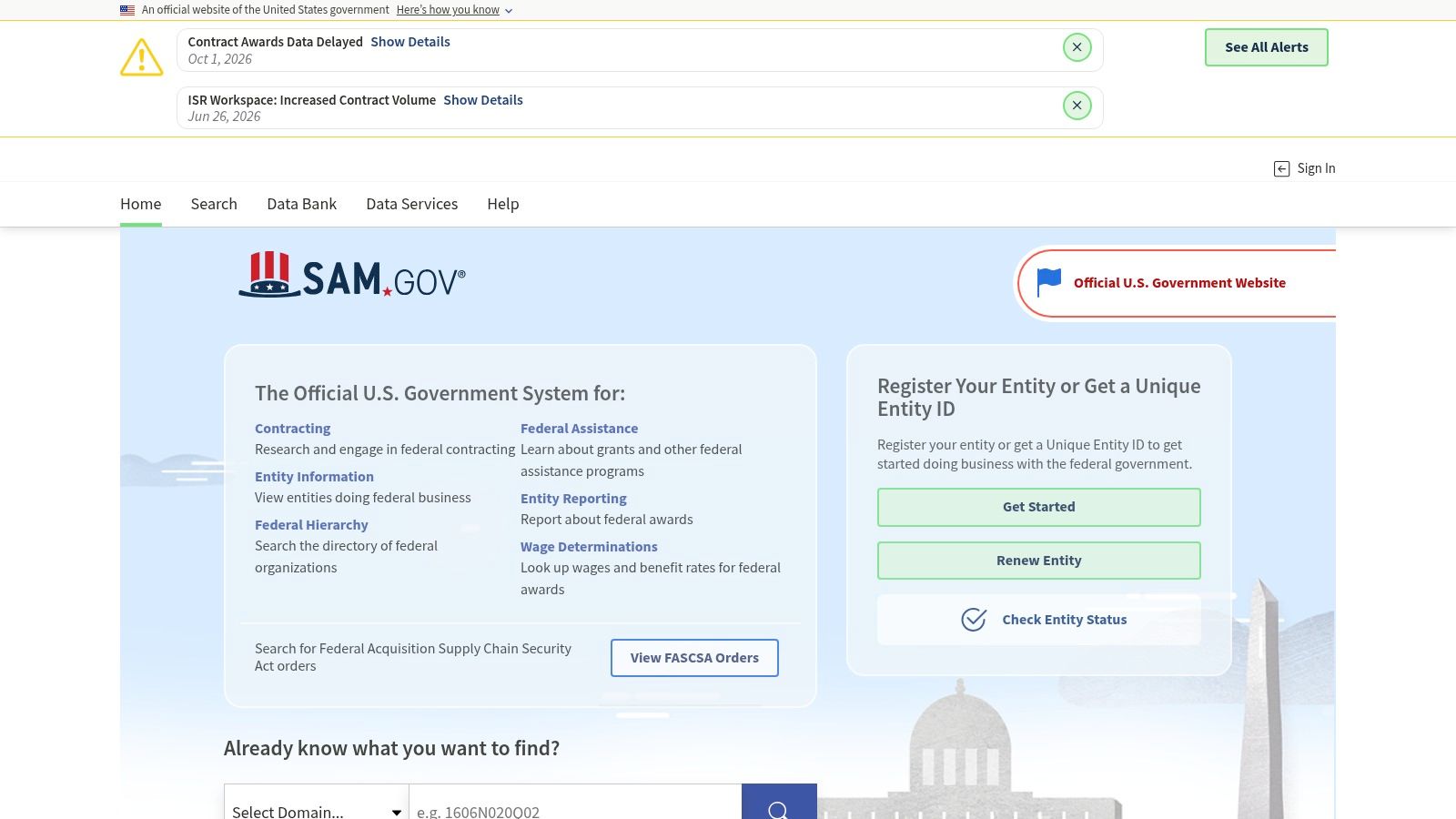
A free account provides saved searches, email alerts, and follow lists. That setup can serve a solo operator with a narrow offering and a disciplined spreadsheet or CRM. It becomes less adequate when a team must connect opportunity qualification with customer research, competitive evidence, pricing inputs, risk ownership, and proposal milestones.
SAM.gov supplies the notice, amendments, and official source documents. It does not provide analyst curation, a native pursuit pipeline, or a complete teaming workflow. Capture leaders must record who owns customer analysis, which assumptions require pricing approval, what risks remain open, and which milestones determine bid or no-bid decisions. They also need a way to measure outcomes, such as qualified opportunities advanced, decisions completed, or pursuits abandoned before proposal costs rise.
Practical rule: Use SAM.gov as the authoritative baseline even when a commercial tracker is the team's daily workspace. Confirm amendments and source documents against the official record before committing proposal resources.
Best use: Zero-cost federal discovery and source verification.
Workflow implication: A small contractor may need only SAM.gov plus a lightweight process until opportunity volume or collaboration creates a need for enrichment. Larger teams should connect each notice to a capture record covering owners, customer findings, pricing status, risks, next actions, and decision gates.
The GovCon Reviews FAQ can help teams frame the choice between a free federal baseline and paid workflow enrichment.
4. Deltek GovWin IQ
Verdict: GovWin IQ fits larger federal contractors that need early market intelligence, formal capture governance, and visibility across long pursuits. It is less suitable for a small team seeking only current notices and alerts.
GovWin IQ combines analyst research, procurement forecasts, Smart Search, market insights, pricing intelligence, relationship identification, and pipeline management. Its value appears before a solicitation becomes an active notice. A capture team can assess the customer, infer the likely buying path, identify incumbents and potential partners, and decide whether relationship-building or opportunity shaping justifies investment.
Its strongest contribution is turning an early forecast into a structured pursuit decision. The record should capture the opportunity hypothesis, evidence of customer need, likely competitors, vehicle or set-aside considerations, teaming options, and an owner for each unresolved question. That information gives business-development and capture leaders a basis for qualification rather than a reason to add another item to a watch list.
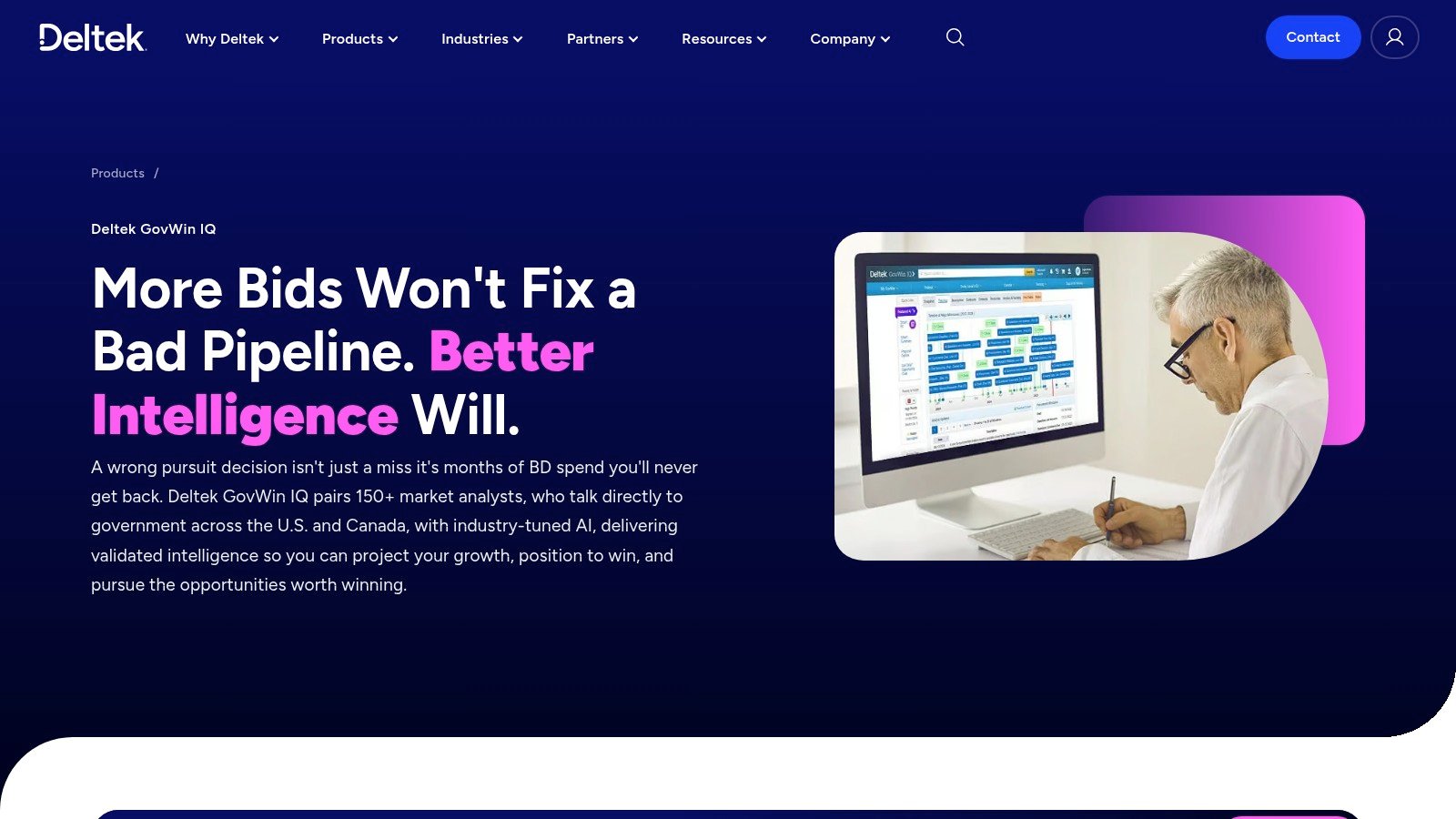
GovWin IQ also supports a broader capture management plan. Teams can connect customer analysis to pricing research, assign risk mitigation actions, set pursuit milestones, and monitor whether qualified opportunities advance through decision gates. Measurable outcomes might include completed bid-or-no-bid decisions, pursuits abandoned before proposal costs increase, and opportunities that progress into active capture work.
Where GovWin IQ fits
GovWin IQ has broad analyst coverage across agencies and markets. It is particularly suited to prime contractors and larger mid-sized firms with dedicated business-development, intelligence, or capture staff who can interpret forecasts and maintain disciplined records.
Best use: Build a federal pipeline before formal release and support competitive intelligence for major pursuits.
Team fit: Organizations with analysts who can turn market signals into customer findings, partner actions, pricing inputs, and resource decisions.
Trade-off: Pricing is not published publicly, which may make the platform difficult for smaller teams to justify. Its interface and workflows can also feel heavy when a lean team needs a fast answer.
The platform earns its place when early visibility changes customer engagement, teaming, pricing research, risk planning, or resource allocation. Its GovWin product information should be evaluated against the team's capture maturity and federal focus. Our GovCon software reviews examine how GovWin IQ compares with lower-cost alternatives for smaller capture teams.
5. GovTribe
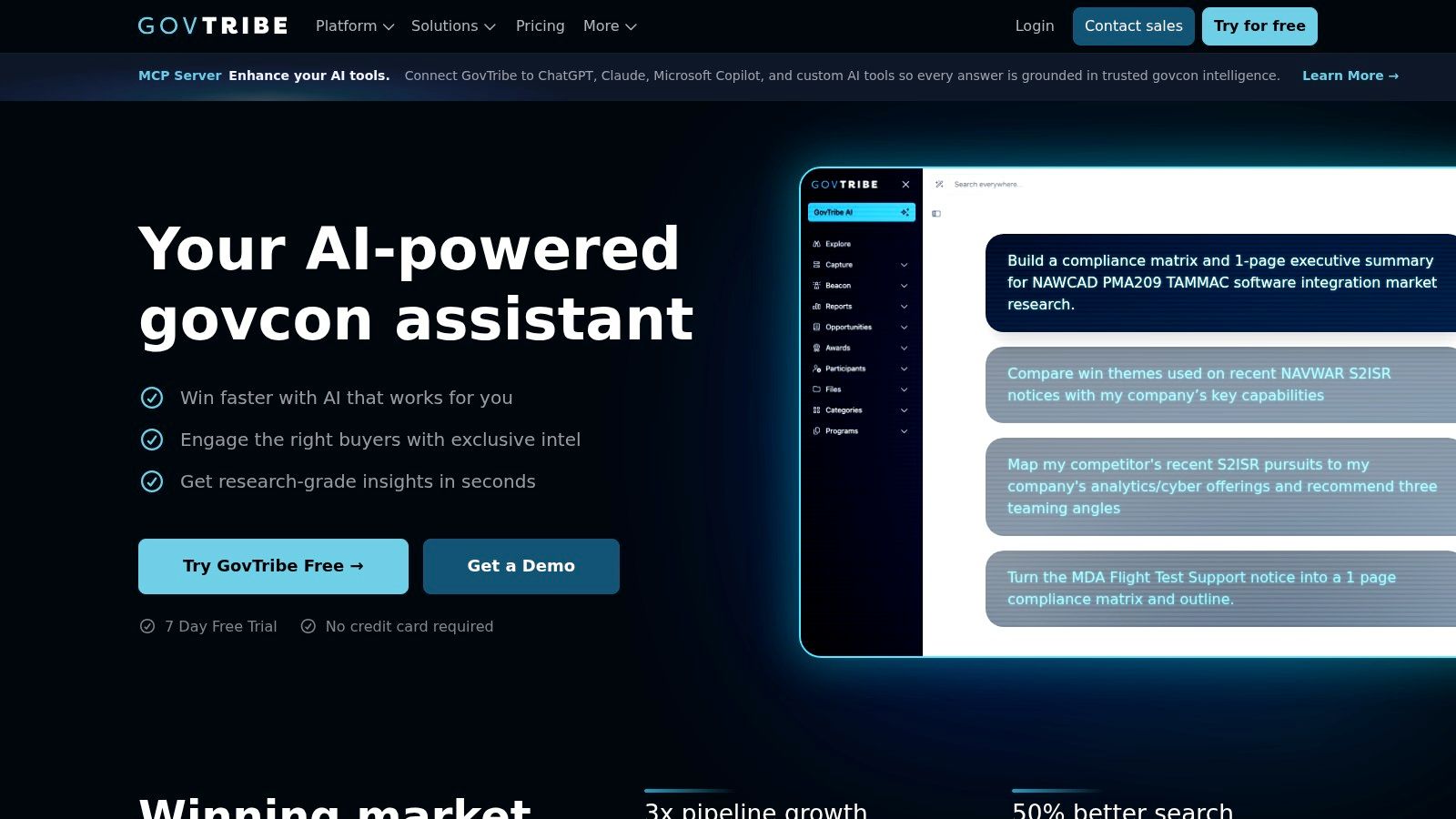
Verdict: GovTribe fits teams that need transparent opportunity monitoring, federal and SLED intelligence, and a working link between bid research and follow-on capture activity.
GovTribe combines opportunity monitoring with buyer and vendor profiles, pursuits and pipeline management, saved searches, and alerts. The platform's practical value lies in connecting a solicitation to the customer, incumbent, vendors, and related awards around it. That context can improve opportunity qualification, customer analysis, and risk planning when a pursuit depends on agency relationships or a clearer view of the competitive field.
A capture manager can use the shared pursuits list to assign ownership, record next actions, set review milestones, and decide whether an opportunity should advance. Follow-on discovery may also reveal future pipeline work connected to an existing customer or award. Those signals are useful inputs for teaming, pricing research, and deciding where limited proposal resources should go.
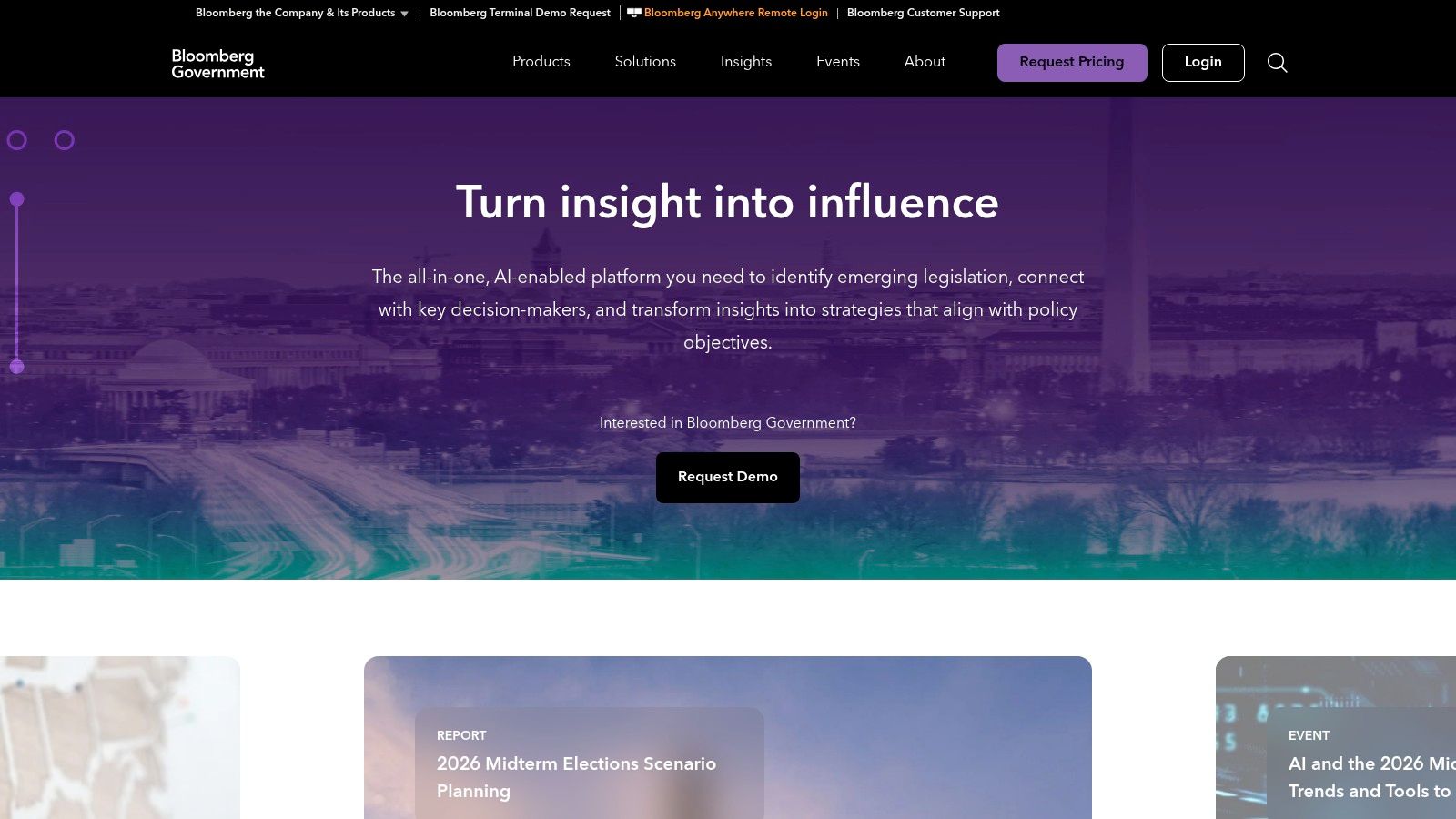
Best use: Track qualified pursuits, research agencies and vendors, and identify related or follow-on opportunities that can support a measurable capture pipeline.
Team fit: Small and mid-market teams that want visible pricing, collaboration features, and a shared record of opportunity ownership and progress.
Trade-off: GovTribe's AI and automation use consumption-based credits. Teams should reserve those credits for higher-value work, such as summarizing a complex opportunity or examining a customer, rather than applying advanced analysis indiscriminately. Lower-tier plans also have export caps.
Implementation should begin with the team's system of record. If pricing, technical, and executive stakeholders work in a separate CRM or reporting layer, confirm that the selected plan can export the required fields without manual re-entry. The platform website provides current information on plans and integrations.
6. HigherGov
GovCon Reviews publisher information
Verdict: HigherGov offers a strong price-to-capability profile for small and mid-size teams that need opportunity intelligence, exports, and practical support for capture management.
HigherGov combines federal and SLED opportunities, forecasts, market intelligence, and pursuit tools. The Labor Pricing Tool and Vendor People Database connect bid research to two decisions that often remain separate: what pricing evidence should shape the offer, and which individuals or organizations belong in the customer and partner relationship map. That makes the platform useful beyond opportunity discovery.
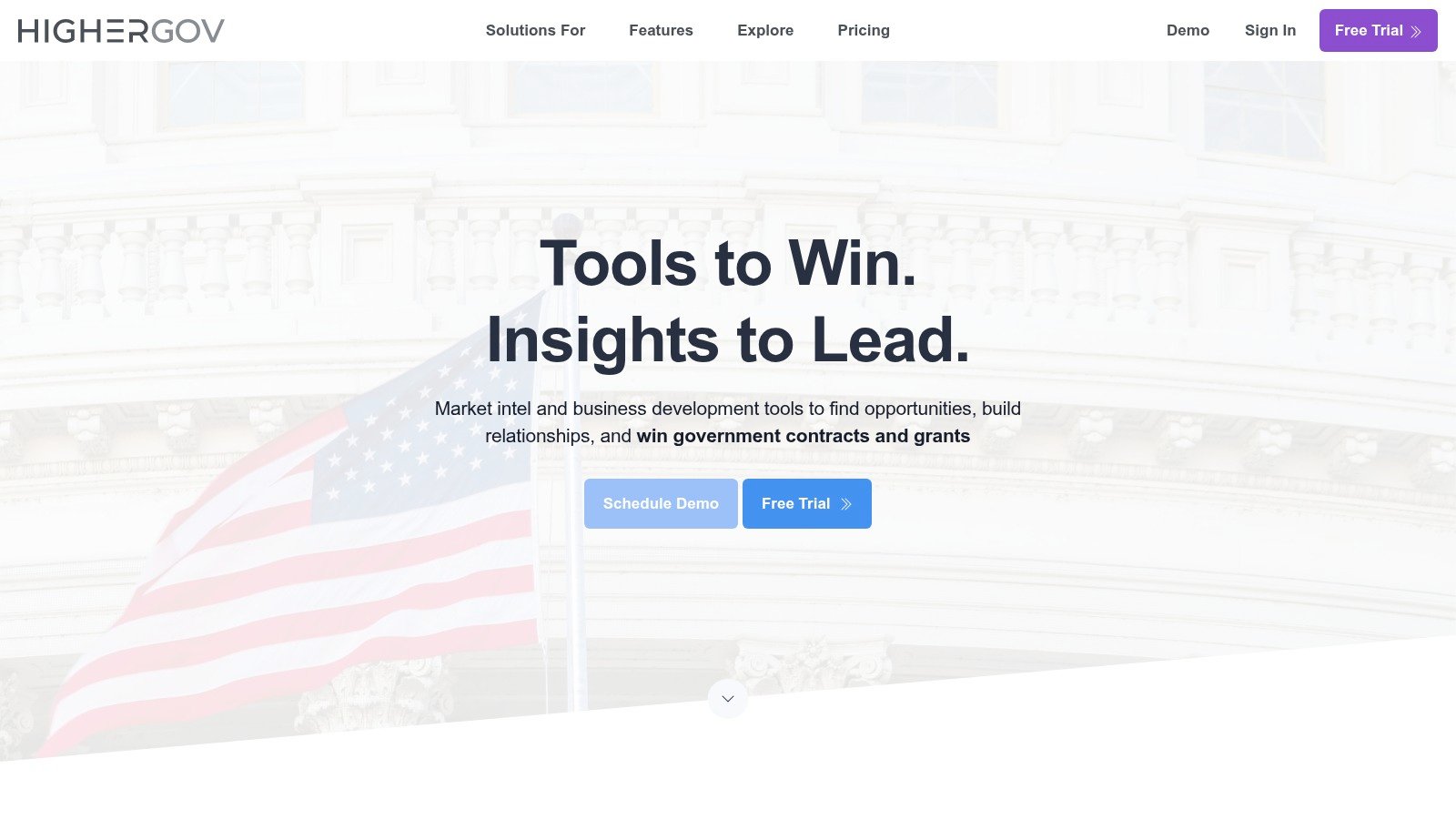
A capture team can use those records to qualify pursuits, assign ownership, document customer research, and set review milestones. Exported opportunity data can also support pricing reviews, risk tracking, and measurable pipeline outcomes, provided the team defines those fields before implementation.
HigherGov lists API access, eBuy and task-order import, and Zapier integration across its tiers. These connections can reduce manual transfer between the platform and a CRM, reporting tool, or internal workflow. The practical benefit is a consistent record of opportunity source, owner, stage, next action, and review date.
Choosing the right tier depends on the team's operating model. Starter, Standard, and Leader plans, together with multi-user options, allow buyers to match access with team size and workflow complexity. Buyers should test analyst coverage in their target agencies and markets rather than assume equal depth across every category.
Best use: Combine opportunity and forecast research with labor-pricing analysis, people intelligence, and high-volume exports.
Team fit: Small and mid-size contractors building a repeatable capture process with defined ownership and qualification gates.
Trade-off: HigherGov's analyst bench is smaller than those of legacy incumbents, while proposal automation is lighter than in AI-first suites.
Before purchase, define the fields required for a RACI, bid/no-bid decision, pricing review, risk assessment, and pipeline report. Then verify that exports preserve those fields in a format the team will maintain. Current product and integration details are available from HigherGov.
Top 6 Federal Bid-Tracking Platforms Comparison
| Product | Implementation complexity | Resource requirements | Expected outcomes | Ideal use cases | Key advantages |
|---|---|---|---|---|---|
| SamSearch | Low to moderate, AI onboarding and setup | Subscription; mid-size to enterprise team adoption support | End-to-end discovery, qualification, and first-draft response generation | Mid-size to enterprise GovCon teams wanting an integrated workflow | AI opportunity matching, GovCon CRM, broad source coverage |
| Civio | Moderate, AI-assisted onboarding and opportunity review | Subscription; lean team adoption | Faster notice triage, AI-supported research, early qualification | Small and mid-size teams wanting faster federal bid analysis | AI-assisted opportunity analysis, streamlined research workflow |
| SAM.gov (Contract Opportunities) | Low, account setup and manual use | Free; time for manual search and monitoring | Authoritative, complete federal opportunity coverage | Baseline source for all contractors; compliance and sourcing | Free, official dataset with advanced filters and exports |
| Deltek GovWin IQ | High, analyst-driven platform, heavy workflows | Enterprise subscription; team analysts and training | Long-range pipeline visibility and competitive intelligence | Primes and larger mid-sized firms focused on early shaping | Analyst forecasts, deep market coverage, long-term visibility |
| GovTribe | Moderate, standard setup with integrations | Subscription; optional consumption credits for AI | Actionable monitoring and pursuit management | SMBs and mid-market teams needing transparent pricing and workflows | Clear pricing, strong monitoring tools, integrations and automations |
| HigherGov | Low to moderate, quick onboarding, accessible tools | Affordable subscription tiers; API and export access | Cost-effective market intelligence and pursuit support | Small and mid teams on budget needing exports and integrations | Accessible pricing, generous exports/API, built-in AI insights |
Turn the Shortlist Into a Working Capture Plan
Choosing a platform is only useful if the team turns its fields and alerts into decisions. Start by defining target agencies, NAICS and PSC codes, set-aside requirements, locations, contract vehicles, and adjacent markets. Configure saved searches and alerts around those criteria, then establish a review routine that separates relevant opportunities from noise before capture staff invest proposal time.
For every qualified opportunity, record the customer need, incumbent, competitors, vehicle, contract history, and known customer contacts. Assign capture, pricing, technical, contracts, and executive roles through a RACI. Set decision gates for initial qualification, customer and competitive review, pricing approval, solution review, and final bid or no-bid approval. A platform that can't make those handoffs visible will leave the team recreating the process in email and spreadsheets.
Capture discipline: An alert is not progress. Progress is a qualified opportunity with an owner, a next action, a decision date, and evidence supporting the pursuit.
Use a fillable record like this:
Opportunity: [Notice, vehicle, agency, and source]
Customer need: [Mission problem and evidence]
Win themes: [The outcomes the customer should associate with the team]
Discriminators: [Relevant capabilities, past performance, delivery model, or access]
Customer and competitor findings: [Incumbent, likely bidders, contacts, and buying history]
Teammates: [Prime, subcontractor, partner, or supplier roles]
Timeline: [Release expectations, questions, draft, color reviews, and submission milestones]
Pricing inputs: [Labor assumptions, materials, overhead, subcontractor quotes, and approvals]
Risks and mitigations: [Compliance, technical, staffing, schedule, security, and commercial risks]
Owners: [RACI assignments for capture, pricing, technical, contracts, and executive review]
Next action: [Specific action, owner, and due date]
Review date: [Next qualification or gate review]
Measure the process with qualified opportunities, alert-to-review time, bid-to-no-bid conversion, milestone completion, and pipeline movement. Don't treat raw alert volume as a success metric. The market is large enough to make manual monitoring difficult, with SAM.gov posting over 24,000 new contract notices each month according to Civio's federal bid-tracking analysis. The useful question is how many alerts become well-supported decisions.
Match the tool to the operating model. Choose SamSearch for an AI-assisted end-to-end workflow, Civio for AI-supported federal opportunity research, SAM.gov as the free authoritative baseline, GovWin IQ for deep long-range intelligence, GovTribe for transparent team monitoring, and HigherGov for accessible intelligence and exports.
FAQ
What is the best federal bid tracking software for most contractors?
For teams that want discovery, qualification, workflow, and proposal support in one place, SamSearch is the top choice in this comparison. It is especially relevant for mid-size to enterprise GovCon teams that want a more integrated operating environment instead of stitching together separate tools.
Is SAM.gov enough for federal bid tracking?
SAM.gov is the authoritative free source for federal contract notices and amendments, and every contractor should use it as a source-verification baseline. On its own, though, it usually does not provide enough workflow support for teams that need capture ownership, competitive research, pricing coordination, and decision tracking.
Which platform is best for AI-assisted opportunity research?
Civio stands out for teams that want faster notice triage and AI-assisted research early in the pursuit process. It fits contractors that need help sorting opportunities quickly before committing more capture or proposal resources.
Which tool is best for long-range federal pipeline intelligence?
Deltek GovWin IQ is the strongest fit for organizations that need early market visibility, analyst research, and structured capture governance across longer pursuit cycles. It is usually best suited to larger contractors with dedicated business-development or capture staff.
What should small teams prioritize when choosing a bid tracking platform?
Small teams should prioritize signal quality, ease of use, export flexibility, and a clear path from alerts to bid or no-bid decisions. In many cases, that means starting with SAM.gov, Civio, GovTribe, or HigherGov, depending on budget and workflow needs.
GovCon Reviews publishes practical reviews, comparisons, and rankings of bid trackers, capture platforms, proposal tools, and related government contracting software. Visit GovCon Reviews to compare these platforms against your team's capture workflow, budget, and implementation requirements before you buy.
Related analysis

Top 5 Government Contract Intelligence Software Platforms
Compare the Top 5 Government Contract Intelligence Software Platforms by features, pricing, strengths, weaknesses, and best-fit users.

7 Best HigherGov Alternatives for Federal and SLED Contractors
Compare the 7 Best HigherGov Alternatives for Federal and SLED Contractors, including AI, federal intelligence, SLED coverage, pricing, and best-fit use cases.
Top 9 Government Contract Discovery Tools
Compare the top 9 government contract discovery tools for SAM.gov searches, alerts, AI fit scoring, market intelligence, and capture decisions.