7 Best HigherGov Alternatives for Federal and SLED Contractors
Compare the 7 Best HigherGov Alternatives for Federal and SLED Contractors, including AI, federal intelligence, SLED coverage, pricing, and best-fit use cases.
Contractors keep hearing the same advice, compare feature lists and pick the biggest database. That misses the actual decision. In federal and SLED buying, the platform that wins is the one that fits your pursuit workflow, from discovery and incumbent research to proposal execution, compliance tracking, and handoff between capture, BD, and proposal teams. The right choice also depends on whether you need federal depth, SLED reach, or both, and whether your team is lean enough to benefit from AI-assisted execution instead of a heavier analyst-driven stack.
The market context makes that trade-off sharper. Small businesses received more than $183 billion in federal prime contracts in FY2024, equal to 28.8% of federal contracting dollars and above the 23% government-wide goal, while SBA also reported more than 17,000 small-business certifications in FY2024, nearly 40% more than FY2023, across women-owned, veteran-owned, socially and economically disadvantaged, and HUBZone programs (SBA FY2024 small business contracting results). That's why the best 7 Best HigherGov Alternatives for Federal and SLED Contractors are not interchangeable. SamSearch leads for teams that want an AI-native pursuit workflow end to end, Civio.ai follows closely for teams that want AI-assisted federal opportunity intelligence, and the others win when the bottleneck is analyst insight, policy tracking, SLED aggregation, or direct agency publishing.
1. SamSearch
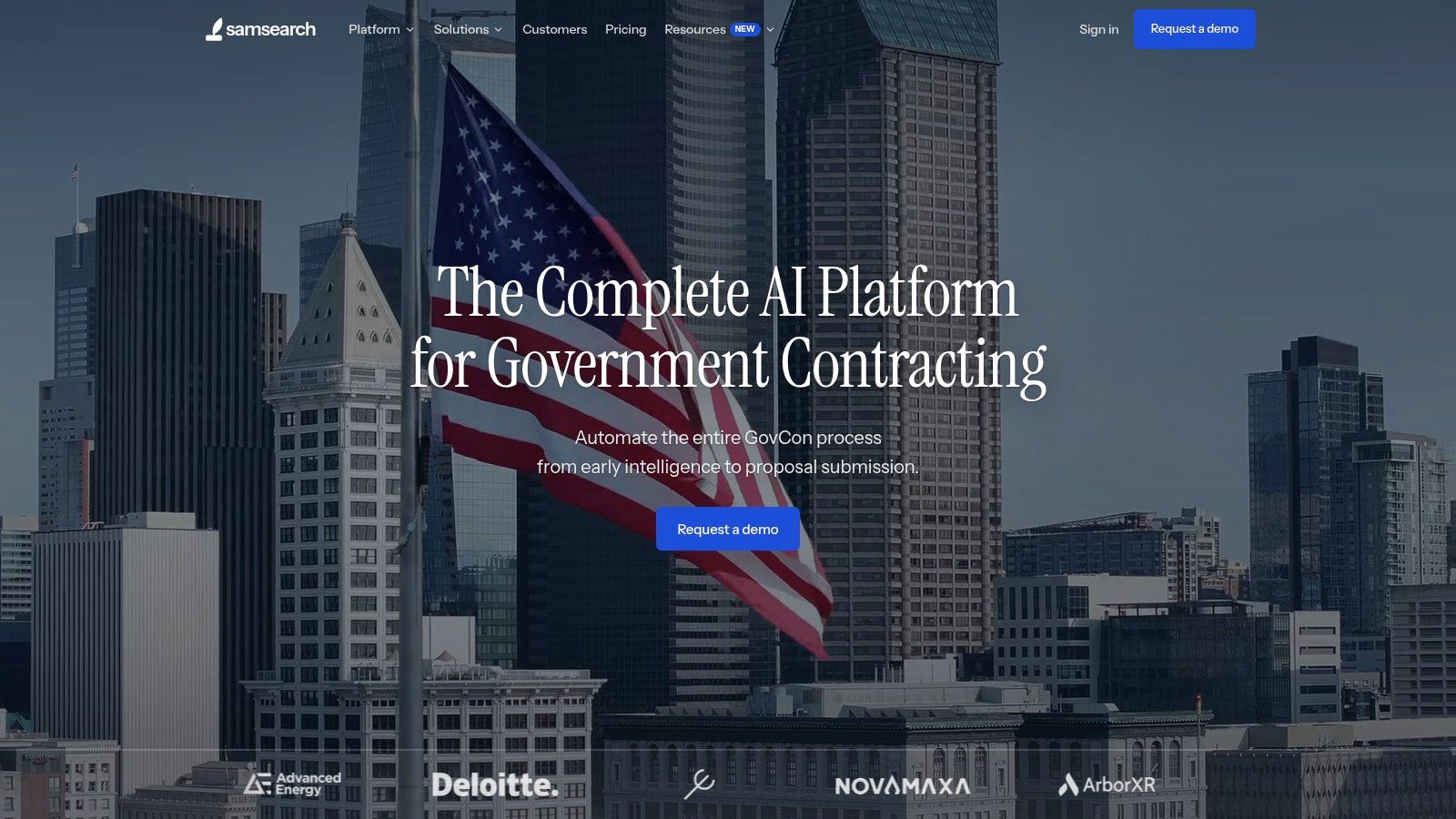
SamSearch is the strongest fit for teams that want one system to carry the pursuit from search to draft. Its website positions it as a GovCon AI platform for federal, SLED, grants, SBIR/STTR, DIBBS, GSA eBuy, forecasts, primes, and subs, which makes it more operationally useful than a simple opportunity feed. That broader coverage matters because capture teams rarely work from one channel anymore, they work from whichever notice, forecast, or vehicle creates the best path to award.
The bigger advantage is workflow depth. SamSearch combines opportunity chat, attachment summaries, deep match analysis, a proposal generator, a GovCon CRM, journey-based pursuit tracking, scheduled queries, and onboarding support, with SSO and API access for teams that need integration discipline. That mix is exactly what a lean capture shop needs when it can't afford to bounce between a bid tracker, a spreadsheet, and a draft folder. It's also the reason SamSearch makes sense for small businesses that need more than discovery, but don't need enterprise bloat.
Practical rule: if your team still copies notice text into separate documents just to decide whether to bid, your current stack is already costing time before proposal work begins.
The strongest reason to put SamSearch first is fit. It's the best option for contractors who want AI to help them qualify, draft, and organize pursuit work inside one GovCon context. It's not the easiest choice to price-check because there's no public price card, so teams should validate the demo against one real pursuit, one real attachment set, and one real bid/no-bid meeting before switching. For more publisher context on GovCon tooling, GovCon Reviews publishes comparisons built around how contractors work.
2. Civio.ai
Civio.ai is a strong second choice for contractors that want AI help with federal opportunity intelligence and market research. The platform is built around making federal procurement data easier to search, interpret, and act on, which makes it appealing for teams that want to cut down the time spent digging through notices, contract history, and agency signals. For small and mid-sized GovCon teams, that can be the difference between reacting late and getting in front of the right opportunities.
Its biggest appeal is speed. Civio.ai is designed for users who want a cleaner, more modern way to identify relevant opportunities, understand agencies, and surface competitive context without leaning on a heavy analyst workflow. That makes it especially useful for firms that are federal-focused and want AI assistance earlier in the capture cycle, before work moves into full proposal production.
Best fit: Civio.ai makes the most sense for teams that want sharper federal visibility and faster research, but do not necessarily need a full end-to-end pursuit operating system.
The trade-off is scope. Teams should confirm whether its workflow depth matches their process after qualification, especially if they also need broader SLED coverage or internal pursuit management. The right way to evaluate it is simple, test it on live federal pursuits and compare how quickly it helps your team identify fit, incumbents, and next steps.
3. GovTribe
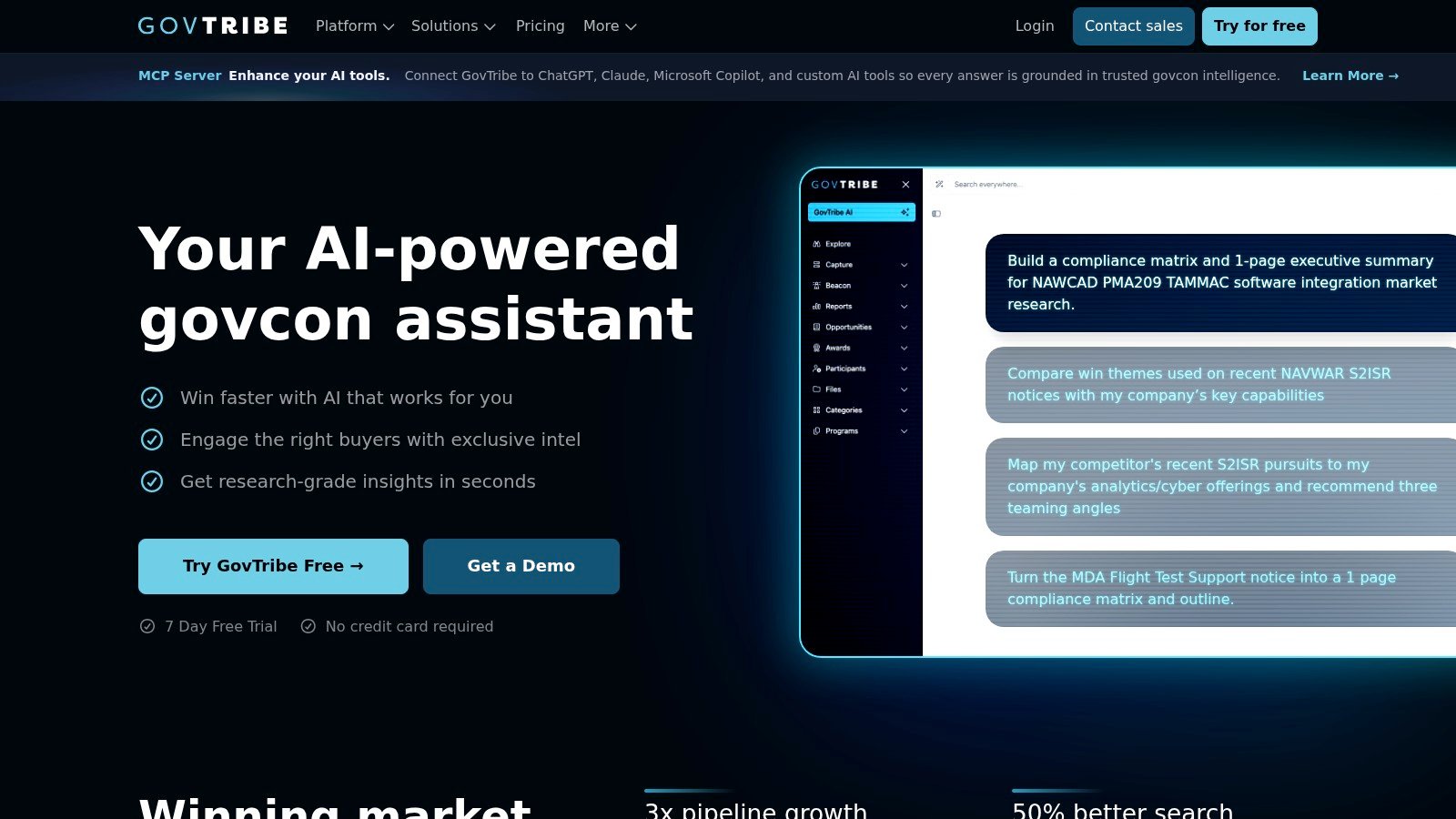
GovTribe wins when the problem is operational clarity, not database bragging rights. It gives smaller and mid-sized teams a cleaner way to handle federal and, on higher plans, SLED opportunity and award data, agency and vendor profiles, pipelines, teaming, and alerts. That makes it especially attractive for teams that want a practical research workspace without a long implementation cycle or a highly rigid enterprise setup.
The pricing model is part of the appeal. GovTribe publishes its plans and offers a seven-day free trial, which means a buyer can validate whether the workflow fits before involving procurement. AI insights and summaries are available through a credit model, so teams can use automation where it helps without buying a heavy AI bundle they may not fully consume. That structure is useful for lean groups that want predictable subscription behavior and don't want every capability hidden behind custom quotes.
Where GovTribe fits best
GovTribe works well for teams that need to organize opportunity research, build pipelines, and collaborate on next steps without overpaying for a large intelligence suite. Its federal and SLED balance also makes it a sensible option for contractors whose market mix changes over time. The downside is just as clear, heavy data users may outgrow entry limits, and the AI features are not fully bundled into the core subscription.
If your team values transparency more than breadth, GovTribe deserves a close look. Validate export limits, team workflow needs, and whether the credit model fits your usage pattern. That's the quickest way to tell whether the platform will stay efficient after the trial period ends. For readers comparing account setup and adoption patterns, GovCon Reviews' about page gives useful context on how these tools are assessed.
4. Bloomberg Government
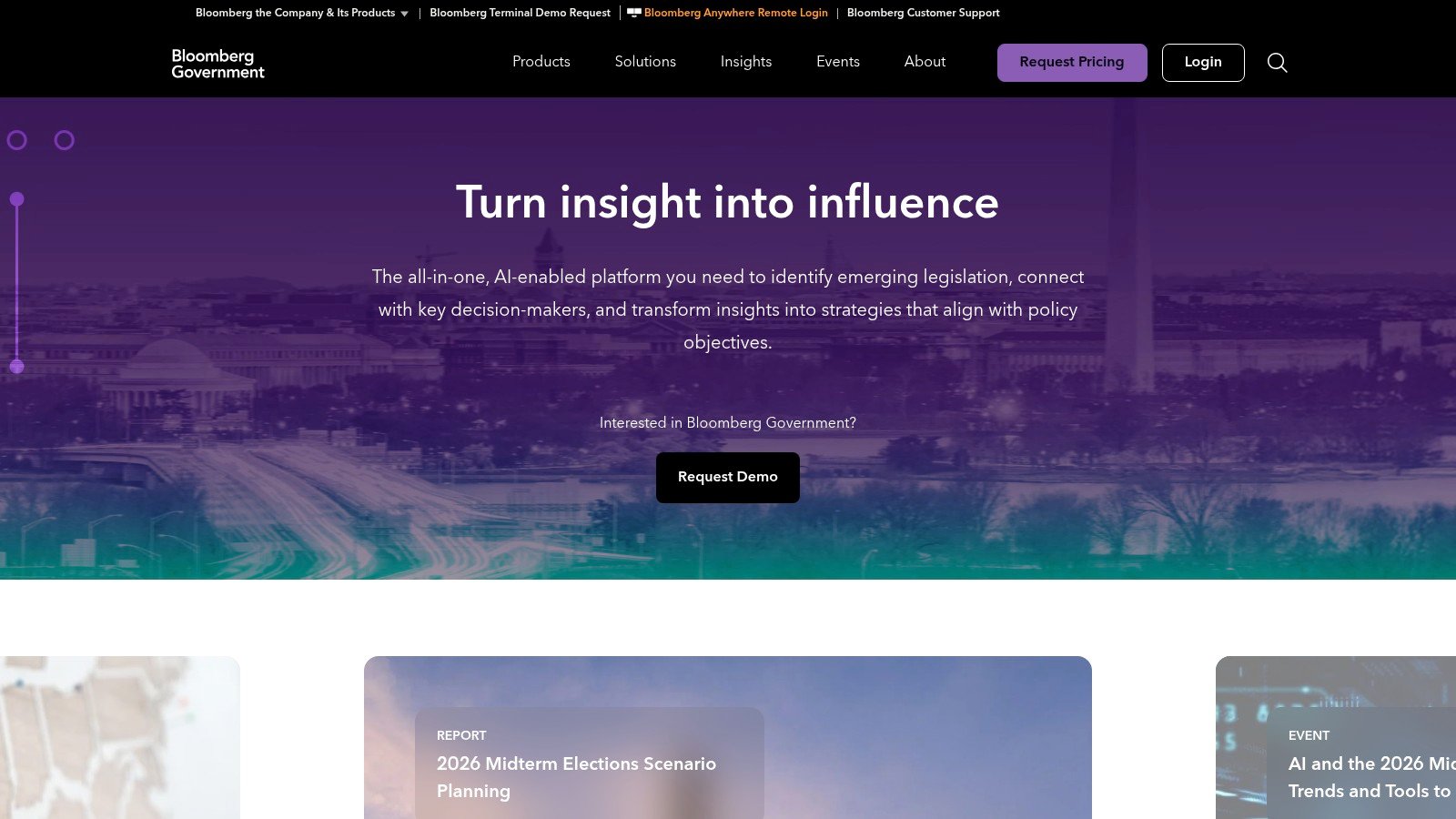
Bloomberg Government is the right alternative when policy and budget movement shape the pipeline more than raw notice volume. It's built for contractors that need contracting intelligence, task and order visibility, and strong policy coverage in the same workflow. That matters in sectors where legislative movement, appropriations, or regulatory shifts can change buying behavior before an opportunity fully appears.
BGOV's market research and analyst outputs, including products such as BGOV200, make it especially useful for teams that brief leadership or federal affairs staff alongside capture and BD. The platform is strongest when a contractor needs to connect what's happening in Washington to what might happen in an agency buying office next. That's a narrower use case than a broad opportunity tracker, but it's a real one.
Bottom line: BGOV is less about finding more solicitations and more about understanding why an agency may buy differently this cycle.
The trade-off is obvious. It's federal-centric, so its SLED value is limited, and it sells through a quote-only enterprise process. That makes it a better fit for policy-sensitive federal sellers than for small teams chasing local and state bids. Use it if your go/no-go meetings depend on contextual intelligence and budget signals. Skip it if your main pain is simple opportunity screening, because cheaper and more focused tools will do that work faster.
Before buying, validate whether the platform improves your account planning cadence. If you're not using policy and budget signals to shape pursuit timing, you're probably paying for context you won't use.
5. EZGovOpps
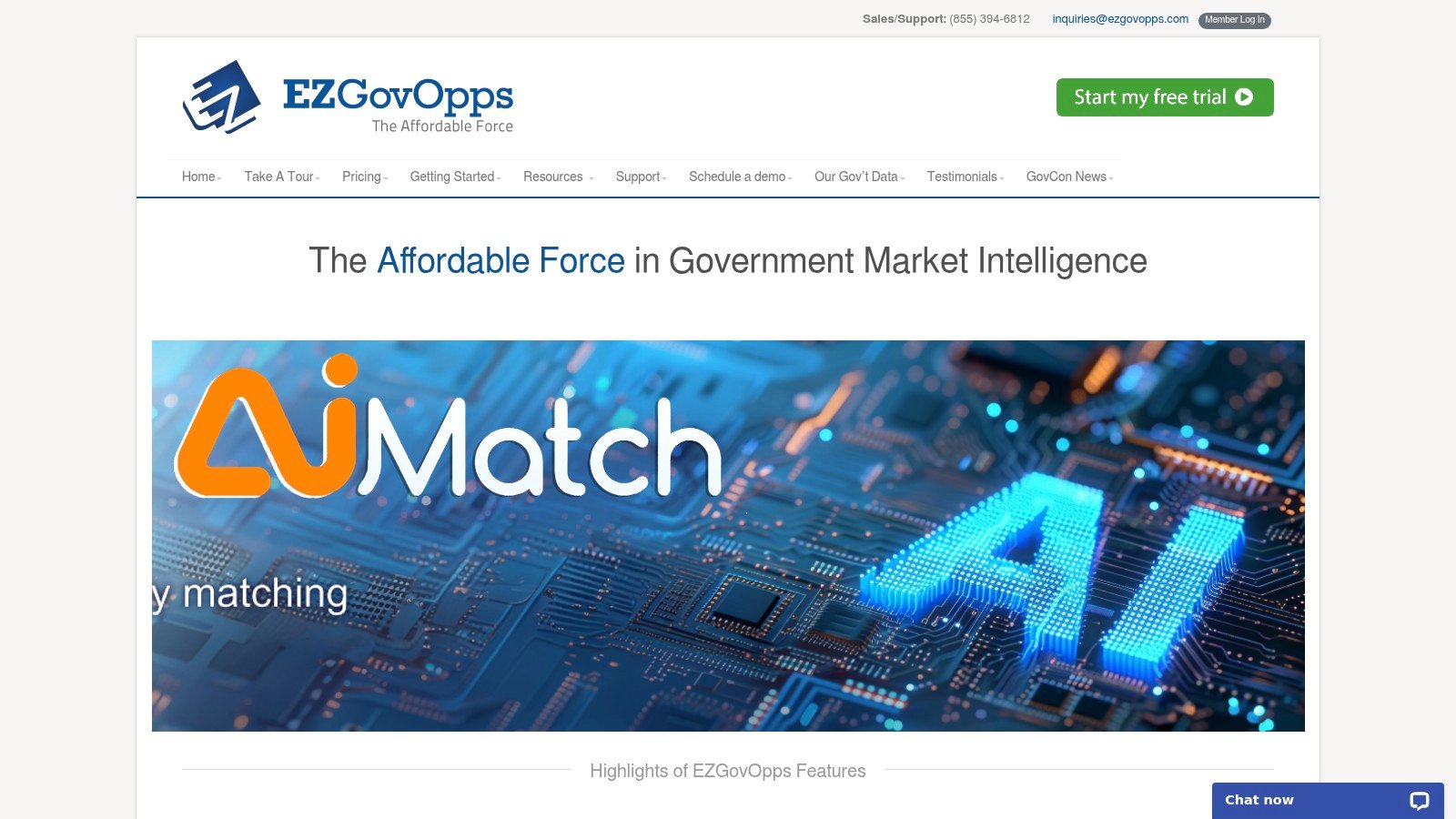
EZGovOpps is the practical middle-ground choice for teams that care about qualification speed and incumbent context more than modern AI polish. It focuses on federal opportunity research, award history, incumbent history, pricing history, and collaboration workspaces, which makes it useful for capture teams that want a steady, research-first workflow. The optional SLED add-on is important too, because it lets a federal-heavy shop add local coverage without rebuilding the whole stack.
That separation is the main buying reason. A contractor can stay on a federal plan, then add the SLED portal if the pipeline expands. The short free trial also lowers the risk of testing it against a live pursuit. For small shops, that kind of incremental adoption matters more than an elaborate feature grid.
Who should not buy it
Don't buy EZGovOpps if your team wants AI-native drafting or a very modern workflow experience. It's more classic than cutting edge, and that's fine if the goal is to reduce manual research, not automate the whole pursuit. It also won't feel as complete for SLED buyers as a true SLED-first network.
For teams that just need to shorten the first hour of opportunity review, EZGovOpps can still be strong. Validate how quickly it surfaces incumbents, scope clues, and teaming angles on your real opportunities. If it saves manual research without forcing a new operating model, it earns its place.
6. BidPrime
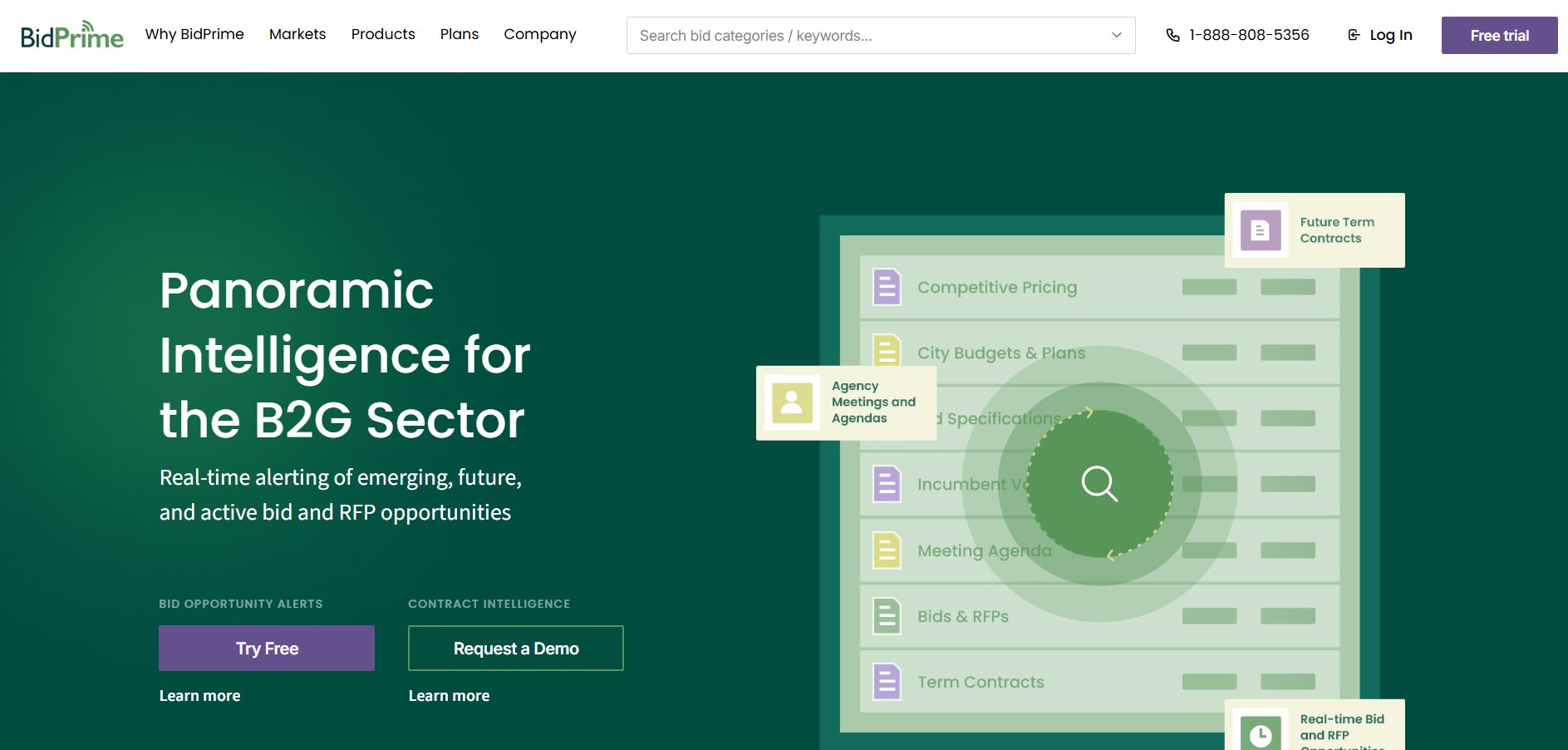
BidPrime stands out for one reason, it's built for SLED volume and speed. The platform aggregates bid notices and RFPs across states, counties, municipalities, education, and authorities, which makes it a better fit for vendors whose revenue depends on broad public-sector reach rather than federal specialization. That breadth is useful when a contractor sells commodity services or repeatable offerings into many local jurisdictions.
The advantage here is cadence. BidPrime is aimed at the fast-moving reality of local bid discovery, where agencies publish constantly and vendors need coverage that doesn't lag behind. It also offers multiple plan options, which helps when a business needs one territory today and a wider footprint later. The account-rep model can be a plus for teams that want help configuring alerts and regions correctly from the start.
For SLED-heavy vendors, coverage breadth often matters more than an elegant dashboard. If the notice never reaches your inbox, the interface doesn't matter.
The limitation is clear. Federal opportunity depth and analytics are not as strong as they are in federal-specialist tools, and pricing is usually handled through sales or PDFs rather than a clean public price page. That means BidPrime is not the best choice if your pipeline leans federal-first or if you need deep award and incumbent research. It is a strong fit when the buying motion is local, high-volume, and distribution-heavy.
Validate it against one state and one local territory before rollout. If the alert cadence and regional coverage match your actual sales map, it can become a useful engine for public-sector reach.
7. BidNet Direct
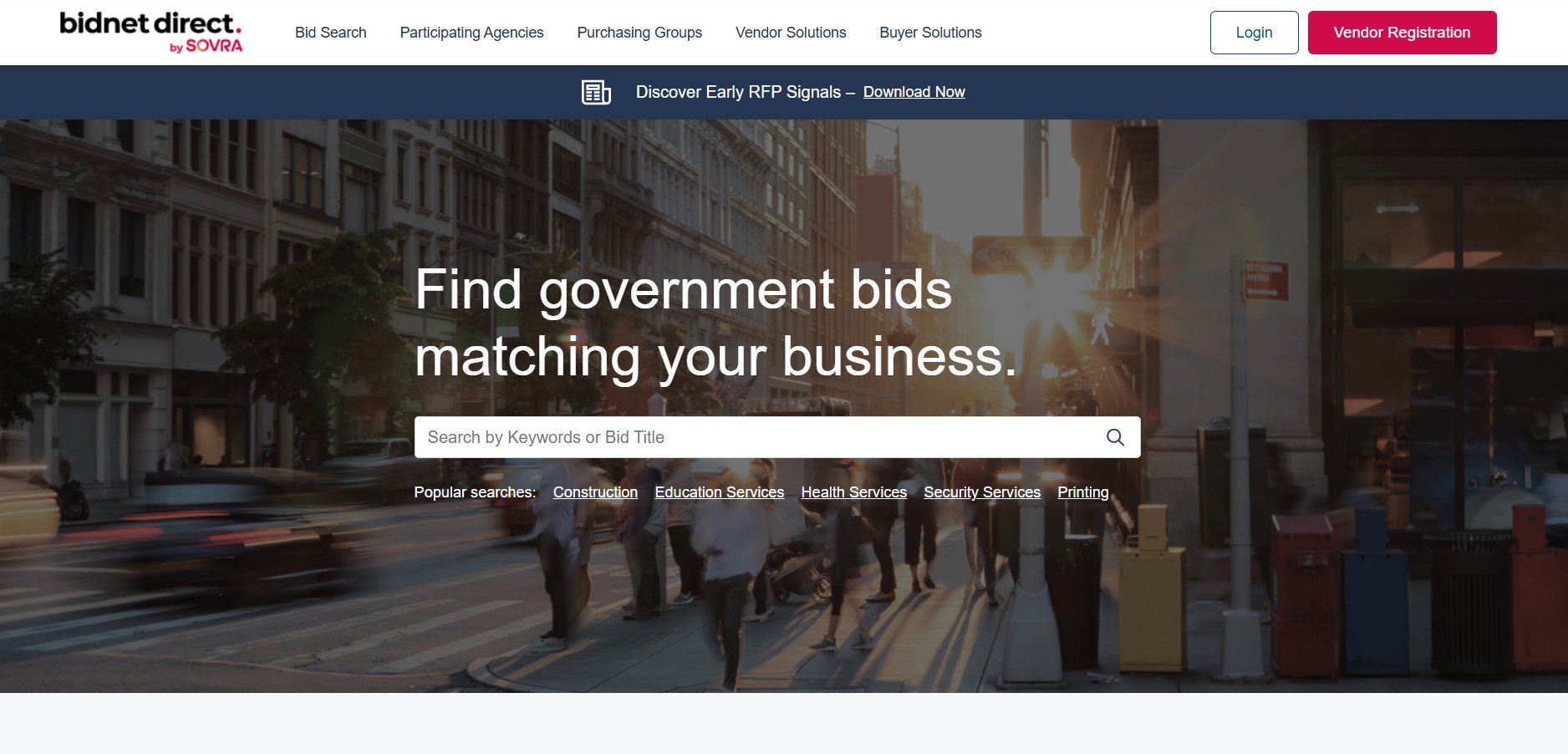
BidNet Direct, part of the SOVRA network, is the most direct SLED publishing route on this list. Agencies self-post solicitations through regional buying groups, and vendors register to follow agencies or groups, receive notifications, and access network-exclusive documents in some cases. That direct line to local buyers is the reason it belongs in a HigherGov alternatives list for SLED contractors, even though it's not a federal intelligence platform.
Its value is density and proximity. Many agencies join at no cost, which keeps the network active for vendors who need repeat visibility into local purchasing. It's especially useful when a contractor wants to watch a defined region or sector instead of scanning the country blindly. For firms that care about direct agency publishing, that can be more useful than a broad aggregator.
What to verify before switching
Regional access rules: Pricing and access vary by buying group, so don't assume one national plan covers every target region.
Document access: Confirm which solicitations include downloadable files and whether any are exclusive to the network.
Target density: Make sure the agencies you sell to are active in the groups you plan to follow.
The limitation is simple, federal value is limited. BidNet Direct is best for SLED discovery, not for a blended federal and SLED capture stack. Use it when the purchase motion is local and agency-led, and pair it with another tool if federal work still matters.
Top 7 HigherGov Alternatives, Side-by-Side Comparison
| Platform | Implementation complexity | Resource requirements | Expected outcomes | Ideal use cases | Key advantages | Pricing / Access |
|---|---|---|---|---|---|---|
| SamSearch (GovCon AI platform) | Low-Moderate (white-glove onboarding; API/SSO) | Team-oriented seats; minimal IT | End-to-end pursuit discovery and AI drafting | Mid-sized to enterprise GovCon teams running capture to proposal workflows | GovCon-native AI, integrated CRM, included onboarding | Quote-based (demo required) |
| Civio.ai | Moderate (federal research focused; AI-led workflow) | Small to mid-sized federal teams | Faster federal opportunity research and qualification | Contractors wanting AI-assisted federal intelligence | Modern AI search and research workflow | Contact sales / demo-based access |
| GovTribe | Low (quick setup; published plans) | Small/mid teams; consumable AI credits | Practical capture workflows with transparent costs | Lean teams needing clear pricing and SLED option | Published plans, 7-day trial, pragmatic features | Published tiers + consumable AI credits |
| Bloomberg Government (BGOV) | Moderate-High (subscription; analyst content) | Analyst reports; policy/budget monitoring resources | Policy-linked contracting intelligence and forecasting | Firms where legislative/budget drivers affect demand | Strong policy/budget integration and market reports | Quote-based subscription |
| EZGovOpps | Low-Moderate (classic UI; short trial) | Analyst updates; collaboration workspaces; SLED add-on | Analyst-researched opportunity notes and shared workspaces | Teams wanting analyst alerts and proposal collaboration | Analyst updates, collaboration, optional SLED module | Trial available; SLED as add-on; sales pricing |
| BidPrime | Low (account-rep onboarding; territory setup) | Rep-configured territories; plan varies by region | High-volume SLED alerts and broad jurisdiction coverage | Vendors chasing commodity/services RFQs across jurisdictions | Extensive nationwide SLED coverage and plan options | Sales/PDF pricing by territory |
| BidNet Direct (SOVRA network) | Low (register per regional groups) | Vendor registration; group-specific access rules | Direct feed from local buyers; some exclusive postings | Vendors targeting local/regional public procurement | Direct agency postings; network-exclusive content | Group-specific pricing and access rules |
FAQ
What is the best HigherGov alternative for small federal contractors?
For small federal contractors, the best HigherGov alternative depends on whether the bigger problem is research or execution. SamSearch is a strong choice for teams that want one platform to handle discovery, qualification, drafting, and pursuit tracking. Civio.ai is a strong option for teams that want faster federal research and opportunity intelligence without committing to a broader pursuit workflow.
Which HigherGov alternative is best for SLED contractors?
If your revenue depends mostly on state, local, and education opportunities, BidPrime and BidNet Direct are often the best places to start. BidPrime is better for broad SLED aggregation across many jurisdictions, while BidNet Direct is useful when direct agency publishing and regional buying groups matter most.
Which alternative is best for federal market intelligence?
For federal market intelligence, Civio.ai, GovTribe, and Bloomberg Government stand out for different reasons. Civio.ai is useful for AI-assisted research and qualification, GovTribe is practical for pipeline visibility and opportunity tracking, and Bloomberg Government is strongest when policy, budget, and legislative signals shape your pursuit decisions.
Are there HigherGov alternatives that cover both federal and SLED?
Yes. SamSearch, GovTribe, and EZGovOpps can be good fits for contractors that need a mix of federal and SLED coverage. The right choice depends on whether you value AI workflow support, pricing transparency, or research depth more.
How should contractors evaluate HigherGov alternatives?
The best way to evaluate a HigherGov alternative is to test it against one or two live pursuits. Compare how quickly each platform helps your team identify fit, review attachments, surface incumbent or agency context, and decide the next action. This gives a much clearer answer than comparing feature lists alone.
Choose the Platform That Matches Your Pursuit Model
The right choice starts with your target market, not the brand name on the homepage. If you sell into federal agencies, map the NAICS codes you pursue, the set-aside categories you qualify for, and the agencies where your team already has past performance. If you sell into SLED, check whether your bottleneck is broad coverage, direct agency posting, or the ability to keep regional alerts organized without wasting time on irrelevant notices.
Then match the tool to the problem. If discovery and proposal execution are the bottleneck, SamSearch is the clearest fit because it connects search, qualification, drafting, and pursuit management in one AI-native workflow. If you want AI-assisted federal market research and qualification without jumping straight to a heavy enterprise stack, Civio.ai is a strong second choice. If you need policy and budget tracking, Bloomberg Government is the better lens. If you're trying to keep the stack lightweight and transparent, GovTribe and EZGovOpps deserve a closer look. If SLED breadth matters more than federal intelligence, BidPrime or BidNet Direct may be the better channel.
Implementation matters just as much as selection. Assign a compliance owner, map FAR, DFARS, and agency-specific requirements, and coordinate around OIG oversight and suspension or debarment exposure. Schedule financial and programmatic reviews, monitor cybersecurity and subcontractor obligations, collect dated evidence, track remediation KPIs, and keep an audit-ready repository that captures decisions, attachments, and approvals. That process matters even more as contractors deal with compliance-heavy environments and, as noted in federal research, cybersecurity screening can determine whether an opportunity is executable.
The cleanest way to decide is still the oldest one, run a real pursuit through two platforms and compare the output quality. Don't choose on brand recognition or database size alone. Choose the tool that helps your team qualify faster, pursue smarter, and stay audit-ready when the work gets messy.
GovCon Reviews publishes practical comparisons that help contractors choose software with less guesswork and more workflow fit. If you're evaluating HigherGov alternatives, visit GovCon Reviews for grounded reviews, buying guides, and side-by-side analysis built for federal and SLED teams.
Related analysis

Top 5 Government Contract Intelligence Software Platforms
Compare the Top 5 Government Contract Intelligence Software Platforms by features, pricing, strengths, weaknesses, and best-fit users.
Top 9 Government Contract Discovery Tools
Compare the top 9 government contract discovery tools for SAM.gov searches, alerts, AI fit scoring, market intelligence, and capture decisions.

6 Best Federal Bid Tracking Software Platforms
Compare 6 Best Federal Bid Tracking Software Platforms for capture teams, with practical strengths, limitations, use cases, and selection guidance.