6 Best SLED Sales Intelligence Software Platforms for 2026
Compare six SLED sales intelligence platforms for 2026, including SamSearch and Civio AI. See strengths, pricing models, trade-offs, and best-fit teams.
Monday, 8 a.m. A two-person GovCon team opens its SLED feed and finds forty new postings, twelve that might fit, and three addenda that change scope on bids due this week. By noon, you're not short on opportunities. You're short on confident decisions.
That's the bid desk problem in state, local, and education (SLED) selling. Finding a notice is cheap. Qualifying it, reading the attachments, checking amendments, and deciding whether a lean team should spend proposal hours on it is where time disappears. The stakes justify fixing that friction, since state and local governments collectively disburse more than $4.5 trillion annually in the McKinsey analysis of Census Bureau based state and local spending.
The 6 best SLED sales intelligence software platforms for 2026 below are judged by pipeline job, not feature count. Which one shortens the path from discovery to bid or no-bid, and which one mainly adds cost?
1. SamSearch
Best for: Small and midsize contractors that need discovery, qualification, and proposal work in one workflow. Pass if you mainly want analyst-led pre-RFP research and won't use the document tools.
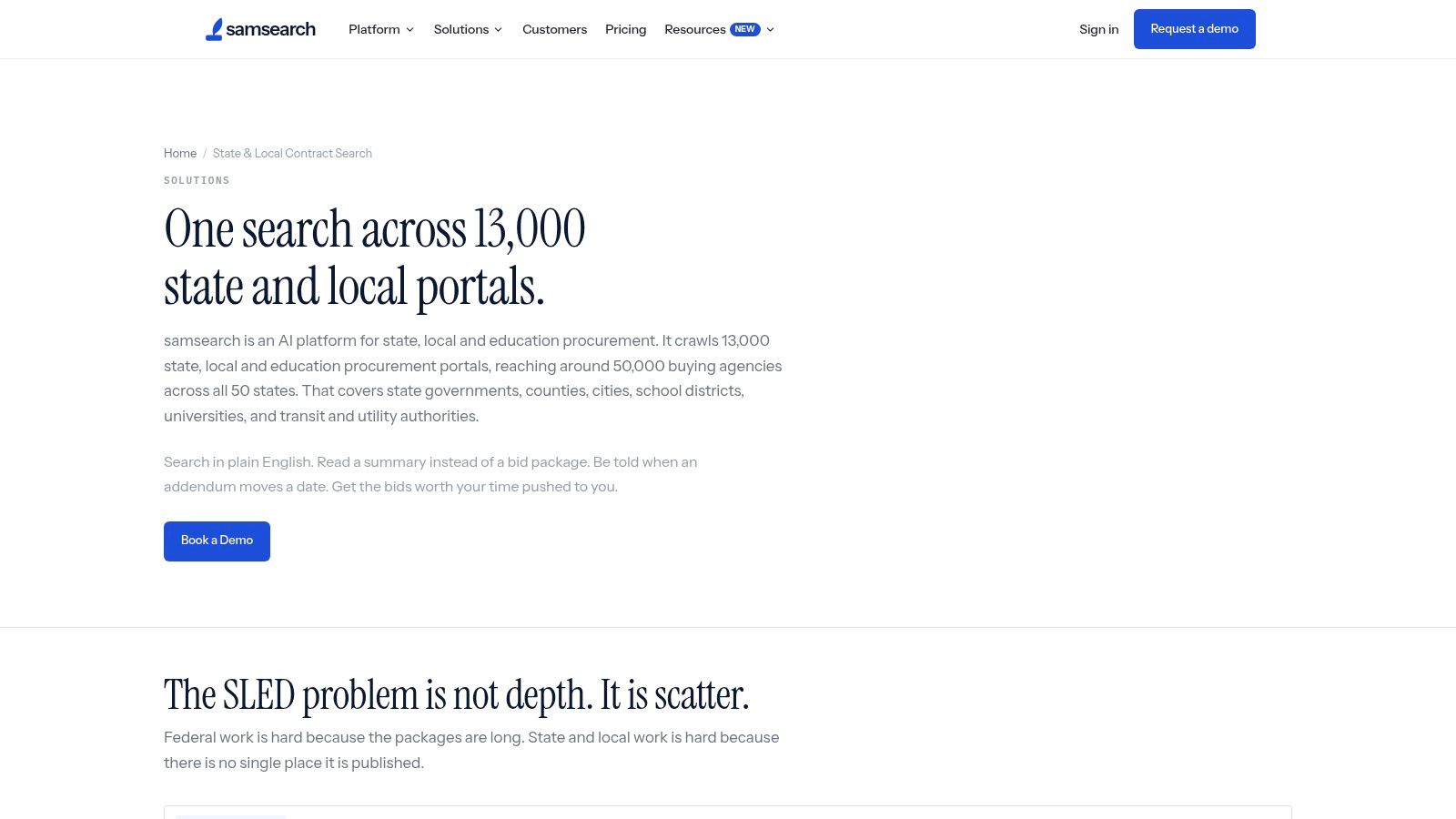
SamSearch ranks first because it doesn't stop at handing you links. Its published scope spans market intelligence, capture, pricing, proposals, contracts, and delivery in the SamSearch overview of government contracting software. Its SLED search covers state, county, city, education, and special-district opportunities across all 50 states, according to the SamSearch product FAQ. For teams that need to make a bid decision quickly, the practical advantage is moving from search into document review, fit analysis, and proposal work without switching platforms.
What happens after the search
Search your way: SLED access is included with Pro and Enterprise plans, and you get both plain English Smart Search and Boolean Keyword Search in the SamSearch opportunity search documentation.
Read the package, not the headline: SamSearch offers attachment summaries, opportunity-match analysis, proposal generation, and editing. Its workflow extracts requirements into a compliance matrix, as described on SamSearch's platform homepage. Verify every requirement and deadline against the source documents.
Keep changes visible: Track opportunities for amendment notifications, save searches, and set daily, weekly, or monthly alerts. You can also classify matches as pass, low fit, or reject in the SamSearch product documentation.
Unlike an alerts-first service such as BidNet Direct, SamSearch also helps with the work after discovery. Unlike GovSpend's spend-first research, its immediate value is qualifying a live solicitation and moving it toward a response. That doesn't make it a substitute for analyst-led account research; it makes the bid desk easier to run.
Pricing is quote based. SamSearch's pricing page describes annual quotes based on team size and markets covered rather than a published per-seat price. Confirm your SLED access and terms in writing, and test coverage in your exact counties and school districts. Start your evaluation at SamSearch's state and local contract search.
Practical rule: Judge SamSearch on time saved per qualified bid, not on how many notices arrive in your inbox.
2. Civio AI
Best for: Government sales teams that want AI-assisted opportunity qualification connected to capture and proposal workflows. Pass if you only need a low-cost feed of published notices.
Civio AI positions itself as an AI-native business-to-government revenue platform covering federal, state, and local sales. Rather than treating bid discovery as a separate task, it connects opportunity research and qualification with pursuit ownership, proposal work, and approvals. That makes it a relevant alternative for teams whose problem isn't just finding SLED opportunities but deciding what to pursue and coordinating the response.
Where it fits in the pipeline
Civio describes qualification based on fit, intent, access, and timing in its government-sales platform materials. Its published SLED platform comparison describes state and local opportunity coverage and AI-supported workflows that extend into capture and proposal drafting. Qualified work can be routed to an owner with supporting context, rather than left as another alert to sort later.
The distinction from SamSearch is worth testing with your own bids, not accepting as a blanket ranking claim. Both offer AI-assisted work beyond search. SamSearch is the stronger starting point here for a lean bid desk that needs to inspect solicitation packages, track amendments, and build a compliance-oriented response in one workflow. Civio AI may appeal more to teams looking to coordinate opportunity scoring, sales ownership, and approvals across a broader revenue process.
Civio does not publish a fixed subscription price in the cited materials. Ask for a quote that spells out SLED coverage, user access, integrations, proposal capabilities, and onboarding. Run a live solicitation through the workflow and check whether its extracted requirements and source references hold up against the original attachments. Do not treat vendor-stated speed or coverage figures as a guarantee for your jurisdictions.
3. Deltek GovWin IQ
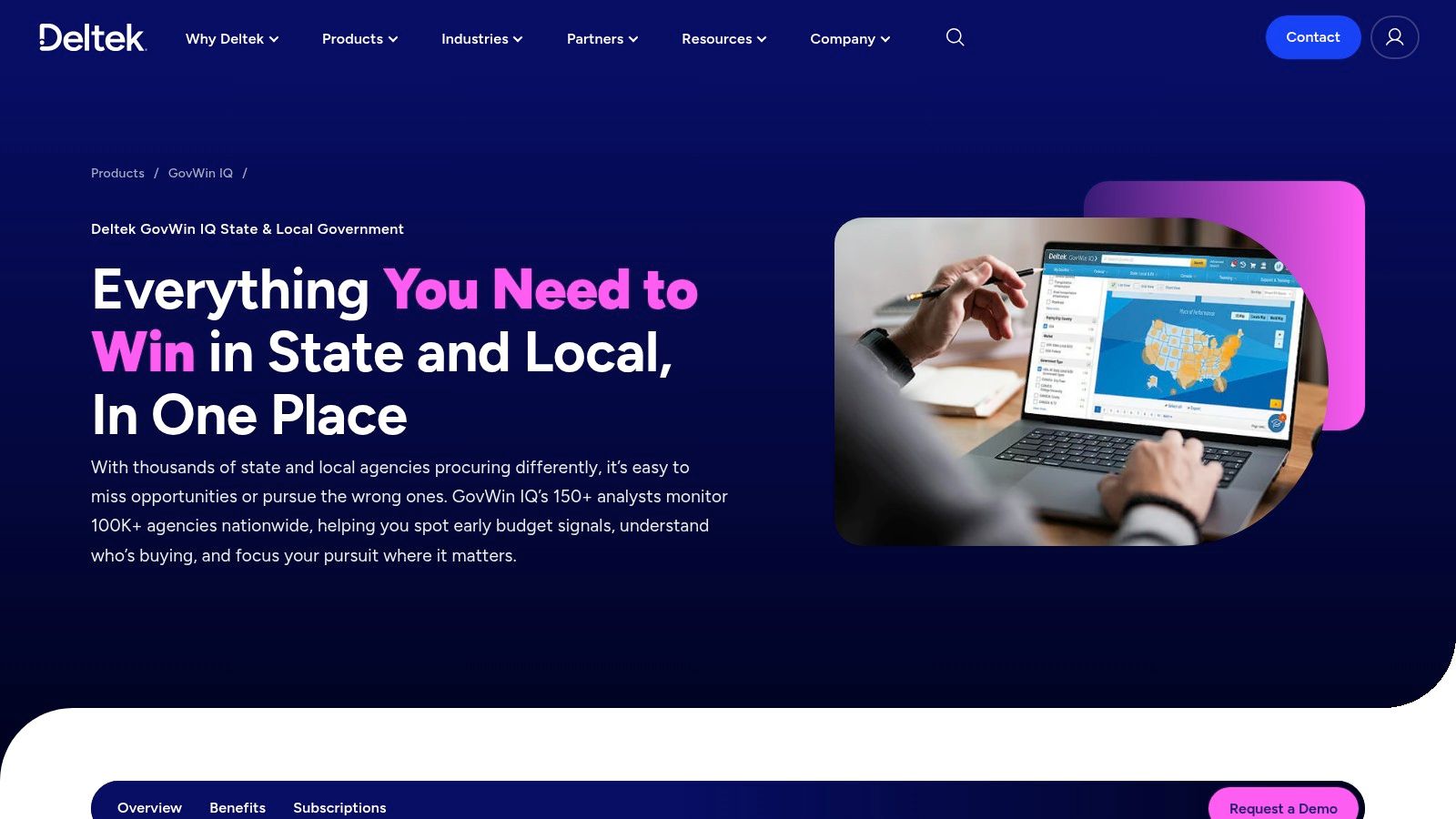
GovWin IQ is the capture department's tool. If your team plans pursuits before an RFP drops, tracks budgets, watches incumbents, and assigns owners months in advance, its depth makes sense. If you're a two-person shop working bids due in three weeks, you'll pay for research capacity you can't staff.
The market context explains the appeal. An industry analysis estimates more than $2 trillion in state, local, and education contract spending during 2024 and more than 450,000 IT bids and RFPs issued that year in the Avendus review of the U.S. SLED market. At that volume, analyst-tracked opportunities, budgeted lead alerts, agency profiles, bid tabulations, and contact research help a dedicated team prioritize instead of reacting.
Where it earns its keep
GovWin combines bids, RFPs, contracts, budgets, company research, and market analysis with notifications and pipeline tools. That supports early capture planning, competitor mapping, and account selection across state and local agencies. AI-supported search, summaries, and fit scoring sit on top, but the core value is still human-monitored intelligence plus historical context.
Pricing isn't publicly listed for SLED. Expect a sales process, and confirm exactly which modules, data types, and seats are in the quote before comparing it to cheaper feeds. Best for mid-market and enterprise contractors with dedicated capture staff. Skip it if you need a simple bid feed and proposal help more than early market research. See the current package at Deltek's GovWin IQ for SLED.
4. GovSpend
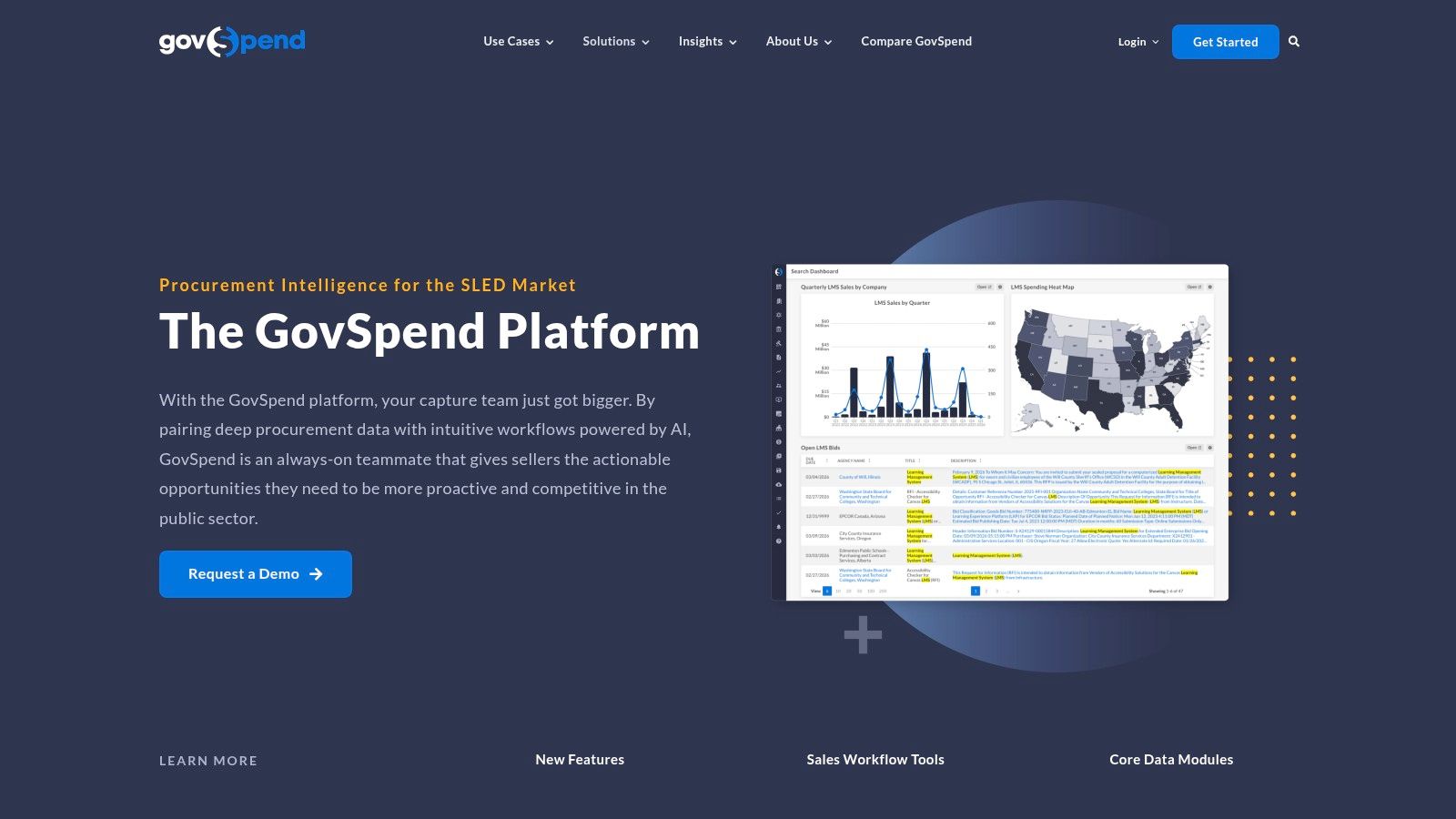
GovSpend answers a different question from SamSearch and GovWin. It doesn't start with, what's open today? It starts with, which agencies already buy what we sell, from whom, and through which contracts? That's account planning intelligence, and it's strongest when your reps sell into named SLED accounts over multiple budget cycles.
Its platform combines purchase order and spending data with bids, contracts, meeting intelligence, and government contacts. You can connect historical buying to current opportunities, then push work into a CRM instead of living in exports.
Spend-first research: Use purchase order history to find proven demand and incumbent pricing context before you chase a cold jurisdiction.
CRM-native workflow: Integrations include Salesforce, HubSpot, and Microsoft Dynamics, plus data exports and options to request refreshes or additional data.
Signal-based prioritization: Opportunity signals drawn from platform data and public sources help reps rank accounts instead of working a territory alphabetically.
Don't buy it as your proposal engine. Teams that need solicitation shredding, compliance matrices, or drafting will still need another tool, and agency refresh timing varies, so verify freshness in your priority states. Pricing is a custom annual subscription through sales. Explore GovSpend's public sector platform if buyer history drives your motion.
5. HigherGov
HigherGov combines government market research, opportunity search, and pursuit tracking in one platform. Its SLED coverage includes state and local agencies, education, utilities, hospitals, and other public or quasi-public organizations. For a small team building a pipeline, that breadth can reduce the need to manage separate research tools.
Where it fits in the pipeline
Published annual plans make it easier to compare initial costs with quote-only platforms. Teams can search SLED and federal opportunities and forecasts, monitor agency meeting activity and expiring contracts, and research vendors and people. AI-assisted research may help surface potential work earlier, but confirm what the feature can identify and how its results are sourced before relying on it. Exports and integrations on eligible plans can move research into systems used by BD, capture, and leadership.
The platform is strongest upstream, from finding opportunities through initial pursuit tracking. Check state coverage, feature limits, user caps, and update frequency before subscribing. Addenda tracking and detailed solicitation compliance may still require a separate workflow, so test those tasks against a live bid before treating HigherGov as your proposal process. Its breadth also takes setup: saved searches, pursuit stages, and team research habits need to be configured.
Best for cost-conscious teams that want SLED and federal research alongside basic pursuit tracking. Pass if your immediate need is deep solicitation review, compliance matrices, or proposal drafting. Verify coverage in the states you sell into, then compare it with your pipeline needs. See plans at HigherGov's government market platform.
6. GovTribe
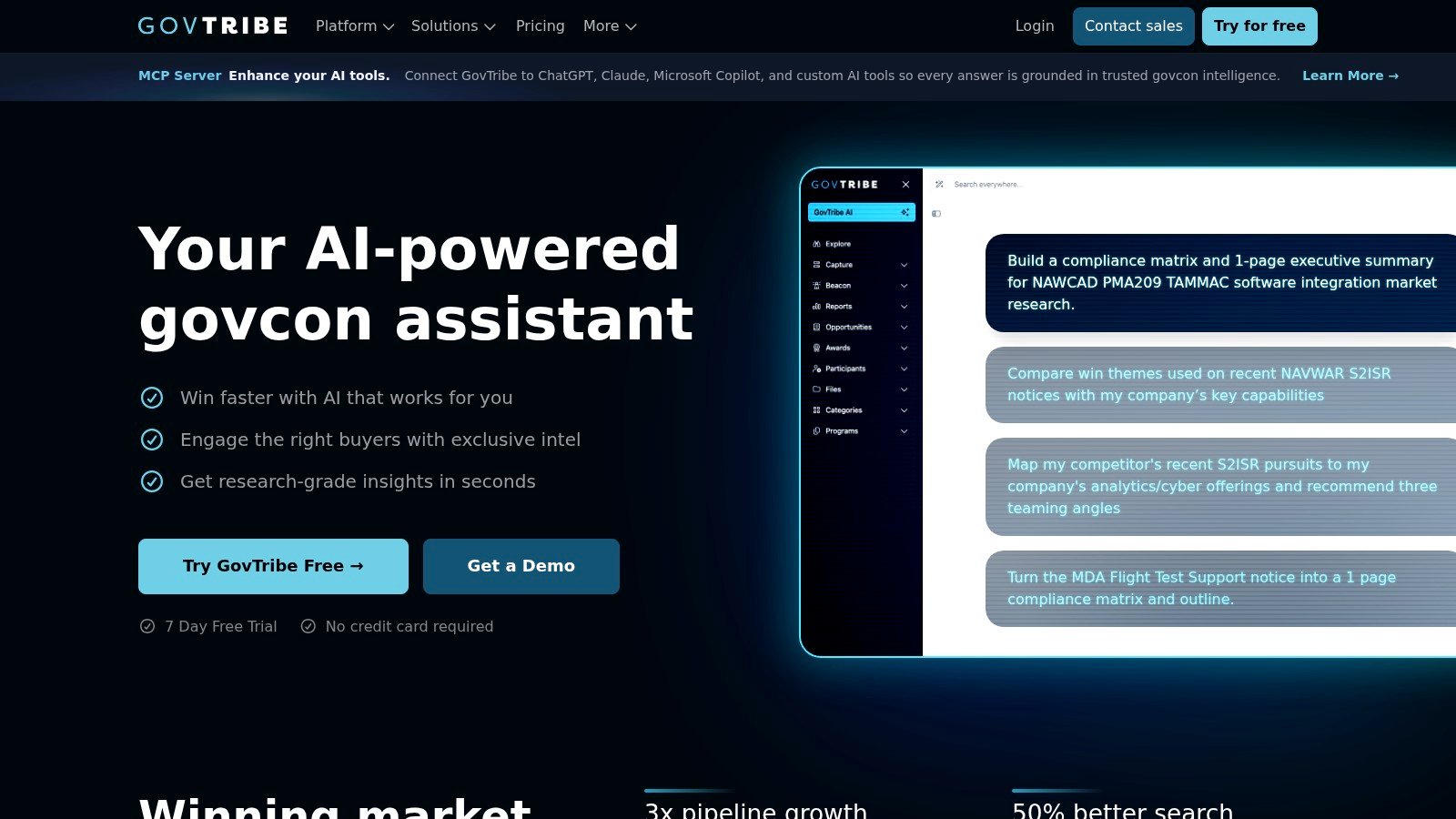
A contractor with a federal-first workflow can add SLED research in GovTribe without moving to a second workspace. Buyer profiles, document summaries, activity tracking, and pursuit creation sit alongside its state and local data. That can keep early research and capture records together, though the fit depends on the plan's coverage and the team's need for analyst research.
GovTribe's filters use NIGP and UNSPSC codes. NIGP is used in public procurement; UNSPSC is a general product and service classification standard, not a SLED-specific taxonomy. Codes can help narrow searches when agency notices use inconsistent terminology, while buyer profiles link opportunities to awards. Pursuits and pipeline stages also attach capture work to each record, reducing reliance on separate spreadsheets.
Its document summaries can help a team review notices faster, but they do not replace checking solicitation requirements or tracking addenda before submission. For a lean team, that makes GovTribe more useful for finding and organizing prospects than for end-to-end proposal compliance. See the GovWin analysis of AI in SLED contracting for context on AI-related SLED contracting, not as proof of GovTribe's coverage or results.
The trade-offs to check
Plan gating: State and local data is limited to designated federal plus SLED plans. Confirm the quoted tier includes the jurisdictions you target.
Jurisdiction gaps: Source availability varies, and local portals post inconsistently. Test coverage against your historical wins.
Analyst depth: Teams that depend on extensive analyst-tracked early leads may prefer GovWin IQ.
Published self-service plans offer a starting point for price comparison, but check plan limits and coverage before committing. Best for federal contractors adding SLED capture who want research and pursuit tracking in one workspace. Pass if you need analyst-led early leads or deep solicitation compliance tools. Review GovTribe's state and local opportunities.
SLED sales intelligence platform comparison
| Platform | Pricing model | Core strength | Best-fit team |
|---|---|---|---|
| SamSearch | Annual, quote-based pricing | AI-assisted SLED bid discovery, document review, and proposal workflow | Lean teams qualifying and responding to opportunities |
| Civio AI | Custom quote | AI-assisted opportunity qualification and coordinated sales-to-proposal workflow | Teams connecting B2G sales and proposal operations |
| Deltek GovWin IQ | Quote-based pricing | Analyst-led market intelligence and early capture planning | Mid-market and enterprise capture teams |
| GovSpend | Custom annual subscription | Spending, buyer, and account intelligence | Sales teams focused on account planning |
| HigherGov | Published annual plans | Government market research and pursuit tools | Teams comparing research tools on a budget |
| GovTribe | Published self-service plans; SLED coverage on eligible plans | Opportunity research and capture management | Contractors seeking an integrated research workspace |
Frequently asked questions
What should a small SLED team look for first? Check whether a platform covers your actual agencies and lets you evaluate attachments, deadlines, and amendments before you commit proposal hours. SamSearch is a strong starting point when qualification and response work matter as much as discovery; an alerts-only service may be enough if you already have a proposal process.
Is spending intelligence the same as bid intelligence? No. Spending and purchase order history help identify buyers and incumbents before a solicitation. Bid intelligence focuses on active notices, forecasts, or both. GovSpend emphasizes buyer history, while the other platforms above approach discovery and capture in different ways.
How do you compare quote-based platforms fairly? Give each vendor the same states, agencies, past wins, and live solicitations. Request a written scope covering SLED sources, seats, integrations, document tools, and support, then compare missed amendments and hours spent reaching a bid or no-bid decision.
Start With SamSearch Then Add Depth Only Where Your Pipeline Demands It
For small and midsize SLED teams, SamSearch is the right starting point to test. Its combination of opportunity search, attachment review, fit analysis, amendment alerts, and proposal tools targets the manual work between Monday's feed and a defensible bid or no-bid call. Check those capabilities against a live solicitation rather than assuming every AI-generated answer is complete.
Add depth only when the gap is proven. Consider Civio AI if your priority is connecting qualification to sales ownership, approvals, and proposal operations. Choose GovWin IQ when you have dedicated capture staff who will use analyst-tracked early intelligence. Choose GovSpend when account planning depends on purchase history and incumbent spend. HigherGov and GovTribe suit teams that want published plan entry points with broader research and pursuit tools.
Governance shouldn't be an afterthought with any AI workflow. In 2025, 39% of state and local government IT decision-makers reported their agencies were using generative AI in EY's government state and local survey findings. Adoption doesn't remove your duty to verify deadlines, certifications, evaluation factors, and amendment changes against the source documents.
Pilot one platform against a live bid list for two weeks. Use your real states, agencies, service codes, and past wins. Measure hours saved on qualification, false negatives, duplicate notices, missed addenda, and how many records include usable award and contact detail. If the pilot doesn't produce faster, better decisions, a bigger database won't save you.
GovCon Reviews publishes head-to-head comparisons, pricing breakdowns, and honest pros and cons for the bid, capture, and proposal tools government contractors use in practice. If you're choosing SLED sales intelligence on a lean BD budget, compare your shortlist side by side at GovCon Reviews before you sign an annual contract.
Additional context: The GAO snapshot of government-wide contracting for FY 2025 reports approximately $793 billion in federal contract commitments; that federal figure should not be confused with SLED spending. The NASCIO 2025 State CIO Survey covers state CIOs, not local procurement posting practices. Compare regional alert coverage through BidNet Direct's vendor solutions if you also need to benchmark an alerts-first service.
Related analysis
10 Government Contract Opportunity Tools for NASA SEWP VI in 2026
Compare ten NASA SEWP VI opportunity tools in 2026, including SamSearch and Civio AI. See pricing models, best-fit teams, and limits of restricted RFQ coverage.
Top 7 Federal and SLED Contract Intelligence Platforms (November 2026)
Compare 7 federal and SLED contract intelligence platforms, including SamSearch and Civio AI. Explore coverage, AI features, pricing, pros, and best-fit teams.

Top 6 Federal Opportunity Tracking Software Platforms (November 2026) Compared
Top 6 Federal Opportunity Tracking Software Platforms (November 2026): real pricing, RFP parsing, match accuracy, and who should skip each one.