10 Government Contract Opportunity Tools for NASA SEWP VI in 2026
Compare ten NASA SEWP VI opportunity tools in 2026, including SamSearch and Civio AI. See pricing models, best-fit teams, and limits of restricted RFQ coverage.
The standard advice is to buy one aggregator and treat it as a SEWP VI inbox. That breaks the first time a quote request stays inside NASA's Quote Request Tool (QRT). A paid platform can track public notices, forecasts, and award history; it cannot put your company on a restricted RFQ distribution list or place an order.
NASA's SEWP VI contracting information describes a 10-year governmentwide vehicle with an ordering period from November 1, 2026, through October 31, 2036. NASA split it into Category A for IT, communications, and audio-visual product solutions, Category B for enterprise-wide IT, communications, and audio-visual service solutions, and Category C for mission-based services in those areas. Category C is limited to small businesses; Categories A and B include large and small businesses. Each contract has a $20 billion limit.
SEWP VI is a marketplace of orders among contract holders, not a public notice feed. The practical question is coverage: what an opportunity platform can see, what stays inside NASA's ordering channel, and whether the workflow fits your team. These ten tools address different parts of that job. SAM.gov is included as the official public-notice baseline, not as a commercial aggregator.
1. SamSearch
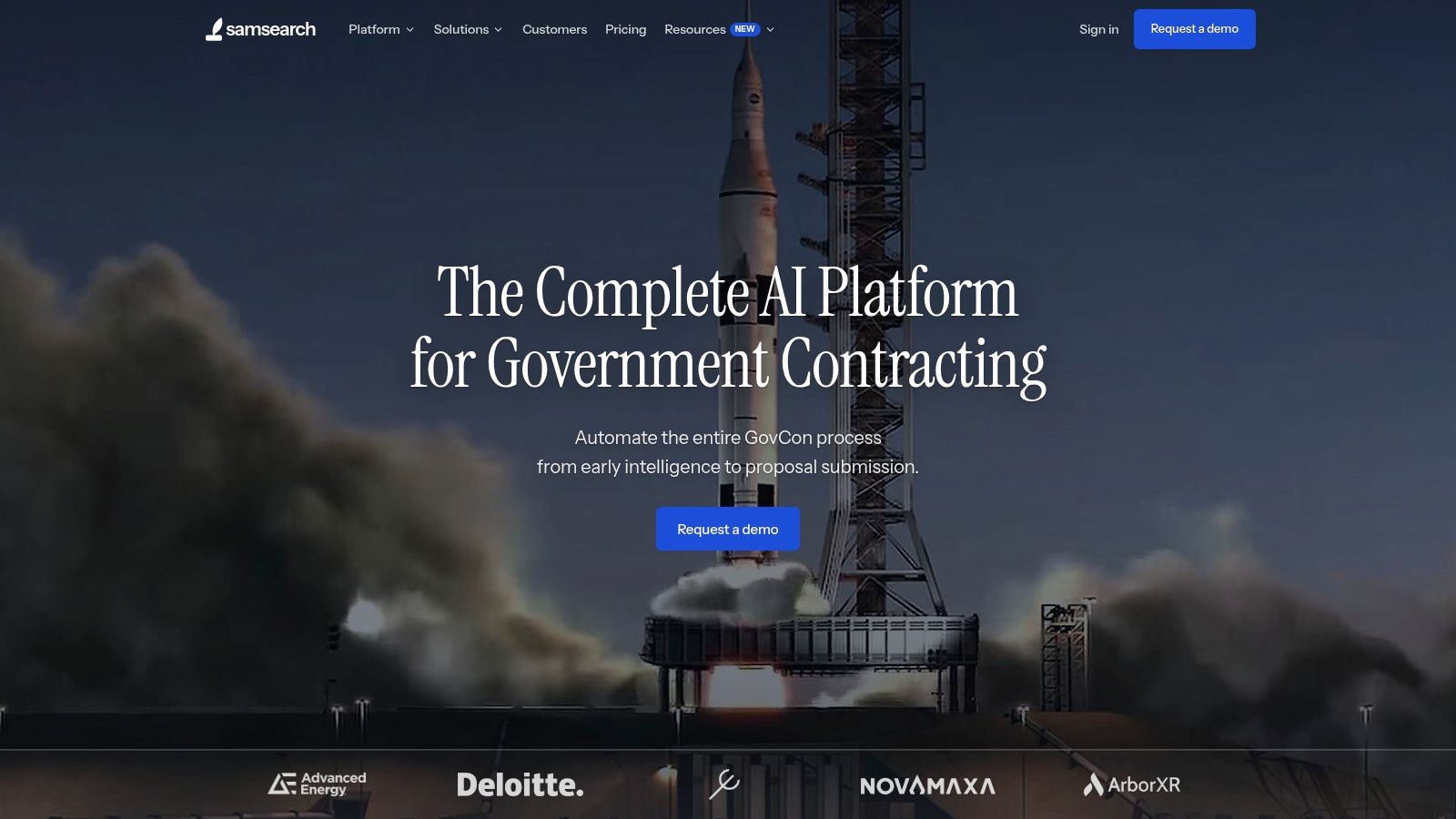
If your team is still copying SAM.gov hits into a spreadsheet, SamSearch is the platform I would start with. It connects opportunity discovery to solicitation review, attachment summaries, capability matching, proposal editing, and a pursuit pipeline. That combination matters when a SEWP-related lead needs more than an alert: someone has to check the fit, find a viable holder or teaming route, and decide whether to pursue it. Confirm which sources, modules, and workflow features are included in the quoted package before buying.
NASA's provider page describes a large provider network behind SEWP prime contract holders. The useful question is not only "is there a notice?" It is which prime can offer the solution and whether a teaming path is realistic. SamSearch makes the strongest starting point here for a small capture team that wants discovery and downstream work in one place, rather than one system for alerts and another for reviews and drafts. Its trade-off is quote-based pricing, so compare the proposal with the hours you actually spend monitoring and qualifying work.
GovCon Reviews compares capture and opportunity tools for teams that need to separate a public feed from an ordering channel. SamSearch lives at samsearch.co. Broad coverage does not mean access to restricted SEWP VI RFQs; check historical coverage and source attribution in a demo if those drive your bids.
Practical rule: Use SamSearch to qualify and draft. Use NASA's Quote Request Tool when the RFQ is restricted to the vehicle.
2. Civio AI
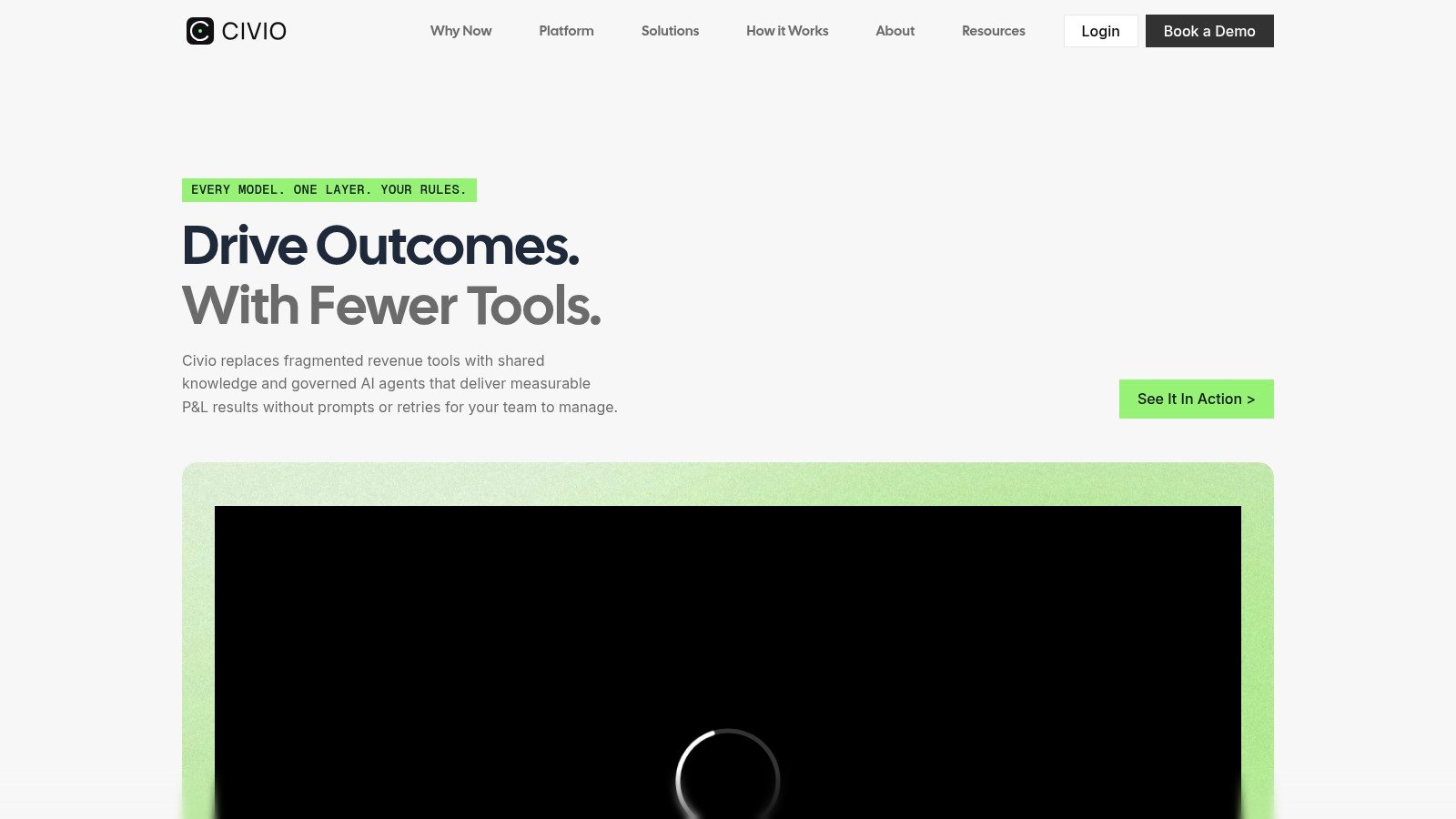
Civio AI is the broader revenue-workflow option for contractors who want opportunity qualification connected to capture and proposal work. Its description of government-opportunity discovery discusses AI-assisted opportunity scoring and routing qualified pursuits into the next stage. That is useful if the bottleneck is not finding another notice but getting the team to agree on fit, ownership, and response priorities.
There is overlap with SamSearch, so make the choice by workflow rather than treating them as two independent SEWP VI feeds. Start with SamSearch if your main need is a focused discovery-to-review workspace. Evaluate Civio AI if you also need a broader AI-assisted process across capture and proposals. Its published materials do not establish direct access to NASA's restricted SEWP VI RFQs. Ask for a live demonstration using your own notices, confirm which underlying data and features are included, and request a current quote. The product site is civio.ai.
3. Govly
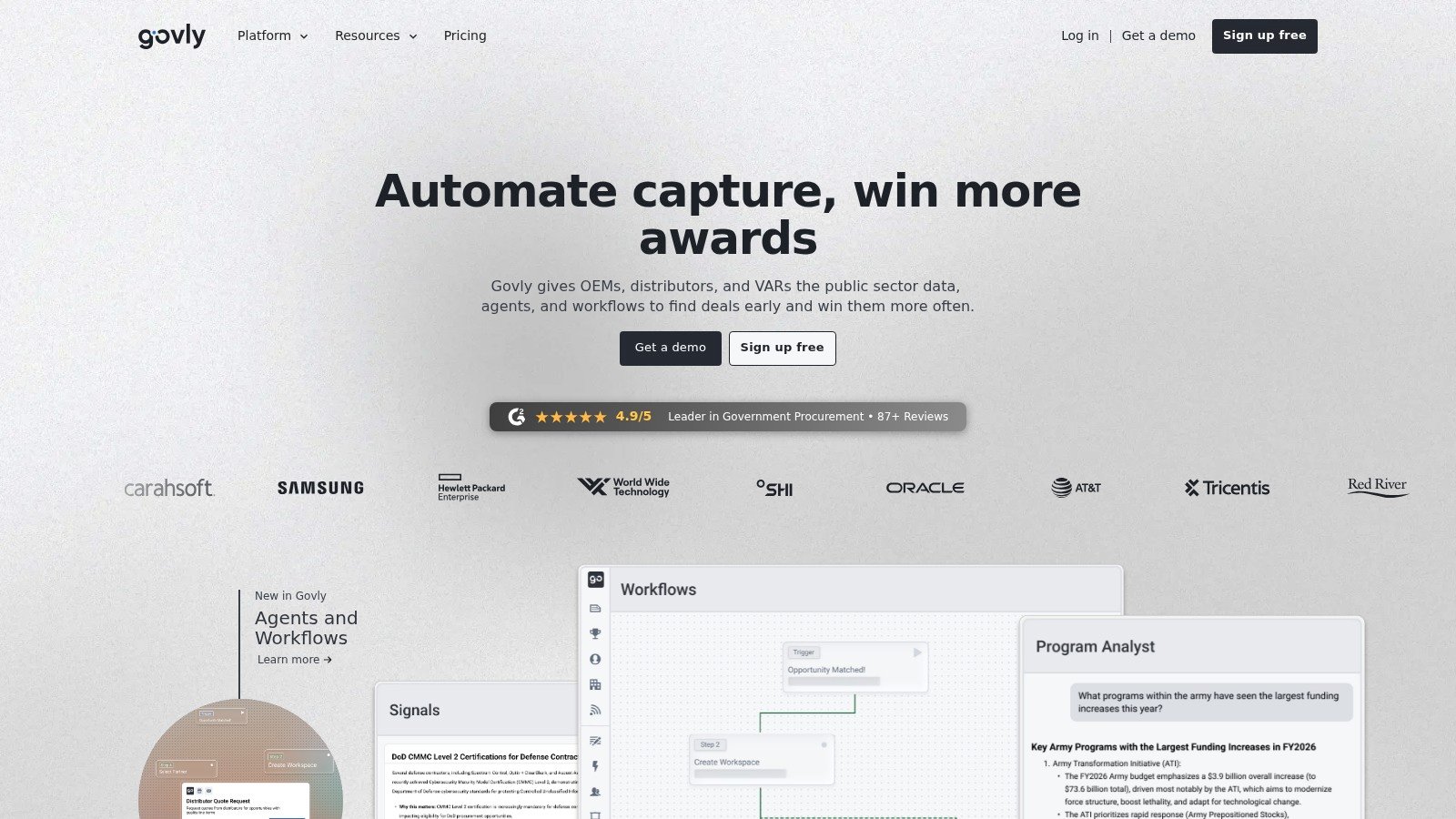
Govly gives SEWP-focused teams a searchable view of government opportunities and procurement signals, with public pages that show NASA SEWP-related coverage. That makes it more vehicle-aware than a bare SAM.gov keyword alert. You can inspect buyers and sample pages before talking to sales. For a BD lead who wants to evaluate the interface first, that public surface is the draw.
Treat it as monitoring and research, not evidence of complete SEWP VI task-order coverage. Public samples do not establish update speed, source mix, or whether a restricted quote request belongs in NASA's Quote Request Tool rather than a public aggregator index.
What to test before you subscribe
NASA's SEWP VI contract-holder and provider page describes the distinction between holders and the providers behind them. A useful monitor should resolve providers, resellers, manufacturers, parents, and contract holders, then show the source notice, solicitation version, vehicle, and timestamp on each match.
Recall: Run a fixed set of SEWP-related notices and count what the tool misses.
Duplicates and amendments: Check whether the same requirement, posted twice, becomes two alerts.
Category labels: Confirm eligibility and category tags, not only NASA keyword hits.
Durability: Prefer exports, change tracking, and a configurable taxonomy over a static keyword feed.
Govly does not publish plan pricing on the materials reviewed here, so budget validation requires a sales conversation. Ask which sources it tracks, how often records update, and which records each seat can access. The site is govly.com.
4. GovTribe
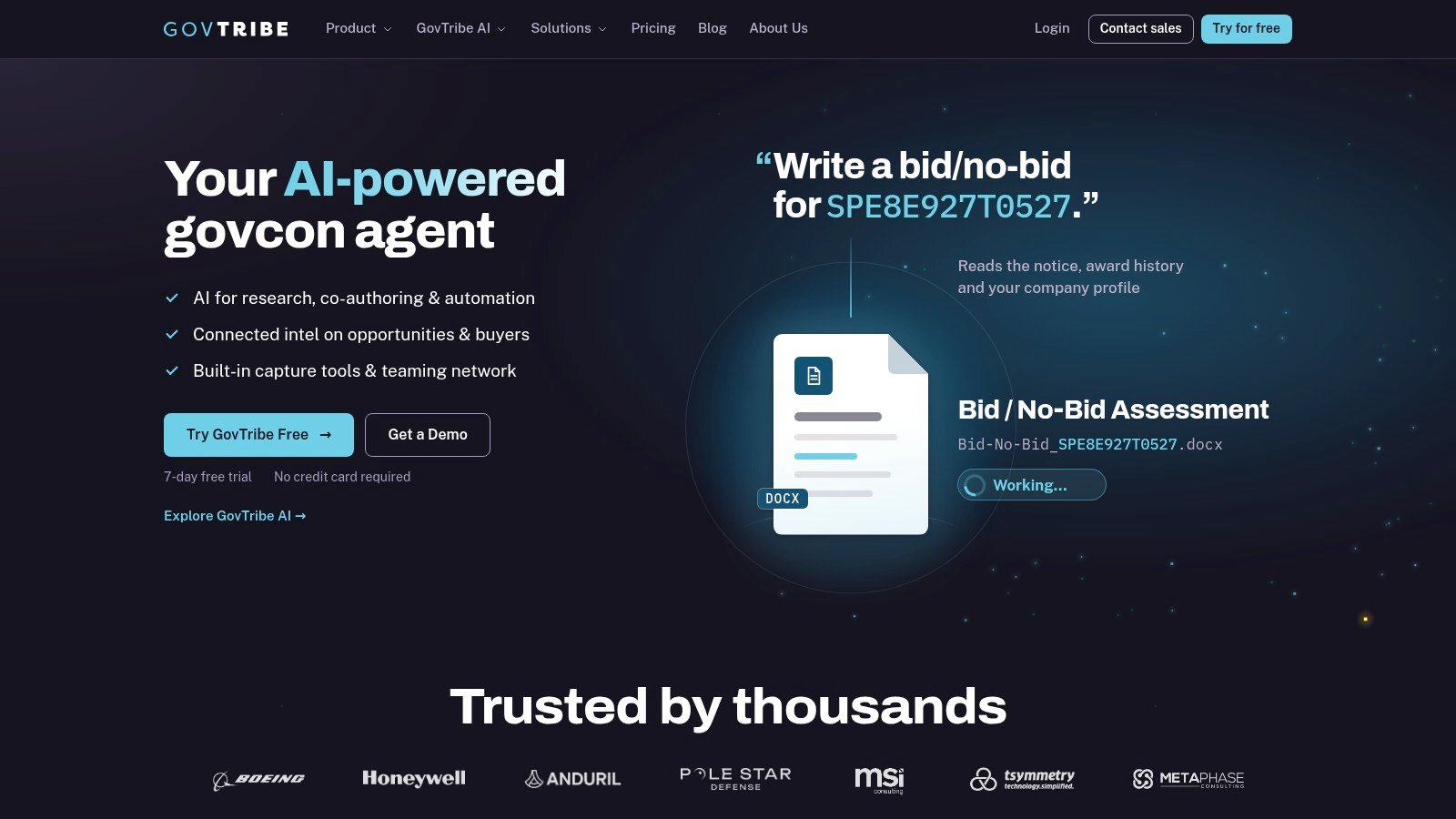
GovTribe pairs federal opportunities, forecasts, and contract-vehicle records with award, organization, and contact research. Saved searches and pursuit tracking sit in the same account, so a capture manager can move from "we saw it" to "we own it" without a second login. Check the current Pro plan's vehicle-opportunity coverage against your specific notices. A plan label does not guarantee every SEWP VI RFQ and does not replace NASA's QRT.
Published pricing makes the first budget conversation easier than a quote-only platform. Exports and AI use may depend on plan limits or credits, so check the current terms before proposal season.
NASA program materials on SEWP VI put the prior vehicle's scale in context. The practical point is volume: you need agency, category, holder, small-business, and task-order signals, not a NASA keyword dump. Start at govtribe.com.
A vehicle filter is a research aid. It is not an invitation to quote.
5. HigherGov
HigherGov is the broader desk, not the SEWP-only console. Federal opportunities and forecasts sit next to state and local market intelligence, alerts, searches, pursuit management, and research on awardees, people, and labor pricing. Published entry pricing helps if you also chase work outside this GWAC. Reconfirm current plans, seat limits, and export allowances before you buy.
The transition problem rankings skip
NASA's SEWP site describes a transition in which SEWP V and SEWP VI run concurrently, with agencies able to choose either vehicle. That makes vehicle labeling and duplicate handling important during the handoff. NASA's redesigned SEWP VI tools include an enhanced Quote Request Tool, which a market-intelligence subscription does not replace.
Ask HigherGov, or any peer, four workflow questions before you trust a saved search across that cutover.
History: Do saved searches, alerts, incumbent notes, and agency relationships survive the version change?
Duplicates: If the same need appears on two contract channels, do you get one record or two?
Labels: Can you tell a pre-solicitation, a SEWP VI request, and a legacy-vehicle order apart?
Retention: Is the archive complete enough for a recompete narrative?
Broad market coverage does not prove a full SEWP VI task-order set. For how plan limits usually show up in capture software, see the GovCon Reviews FAQ. HigherGov's site is highergov.com.
6. Deltek GovWin IQ
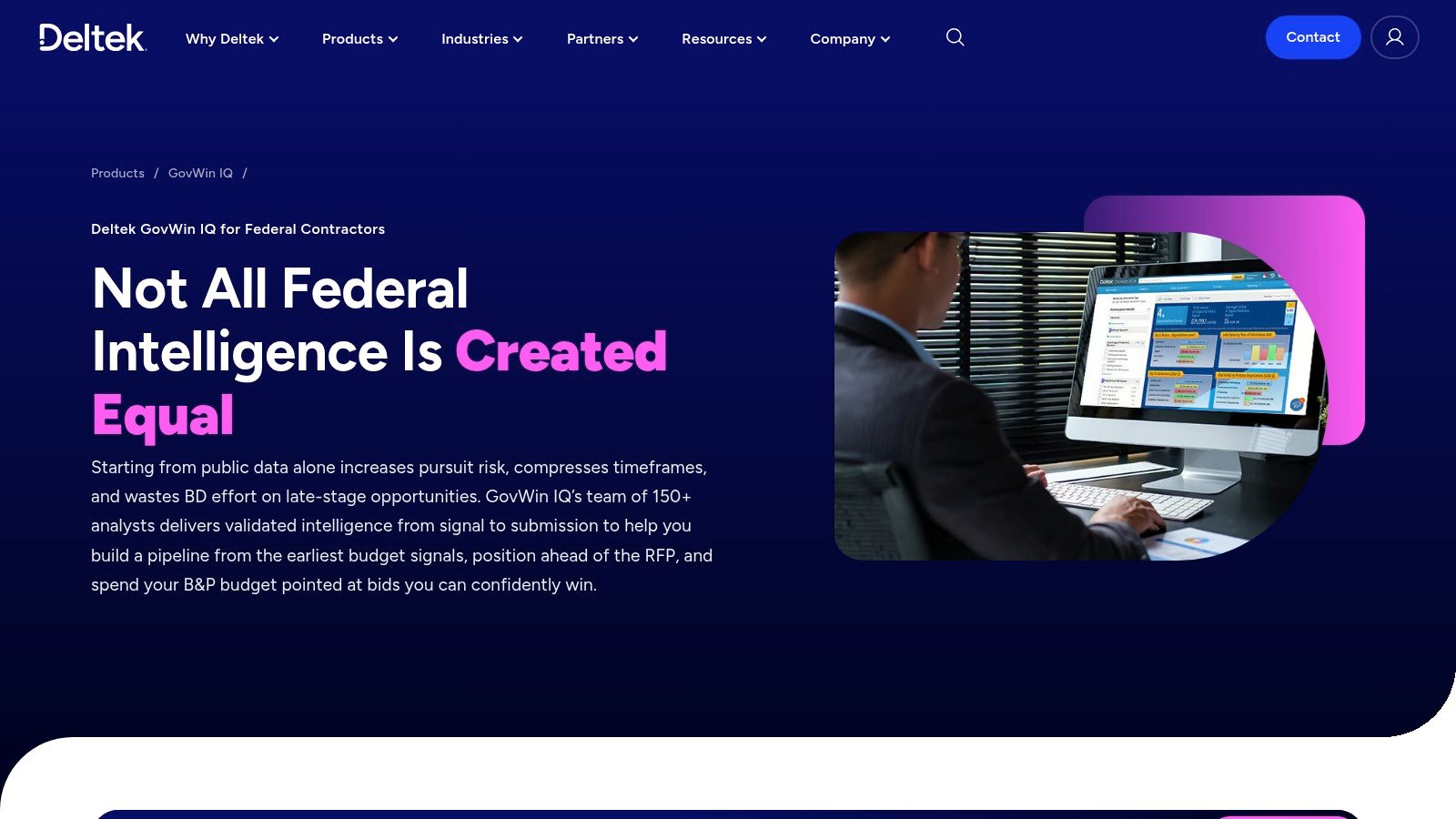
GovWin IQ is built for the months before a solicitation exists. You use it to map agency demand, incumbents, competitors, and likely buys, then respond through the official vehicle path. Its analyst-supported intelligence differentiates it from a basic notice feed when a program office is still shaping the requirement.
I would not buy it for a SEWP-only practice with a thin pipeline. Pricing is quote-based, and the breadth fits teams working many agencies and vehicles at once. Do not read its market coverage as complete visibility into restricted vehicle RFQs.
Where it earns the seat
Early capture: Pipeline intelligence and pre-RFP signals give BD something to brief before a public notice appears.
Competitive research: Contract and competitor context supports a bid/no-bid decision.
Analyst context: Research can explain why an agency may buy, which a keyword hit cannot.
Pair it with QRT access if you hold a SEWP contract or team with someone who does. Otherwise you may be funding market research you cannot convert into a quote. Details are at Deltek GovWin for federal.
7. Bloomberg Government
Bloomberg Government earns its keep when the capture question is bigger than today's postings. Agency structure, budget, policy context, and procurement research sit in one subscription, so it fits organizations where BD and government affairs compare notes every week.
If the requirement is a clean alert that a NASA-related notice moved, this is too much platform. You may be paying for policy and budget coverage that a SEWP-focused team rarely uses. Pricing is generally quote-based, so expect a sales conversation rather than a public rate card.
For SEWP VI, test coverage on your own opportunity set. Ask which sources feed opportunity research, how quickly amendments appear, and whether holder-restricted RFQs are in scope. If the answer is public notices plus analyst context, keep NASA's QRT as the route for quotes. The product home is Bloomberg Government.
Don't buy a policy platform to solve an alert problem.
8. EZGovOpps
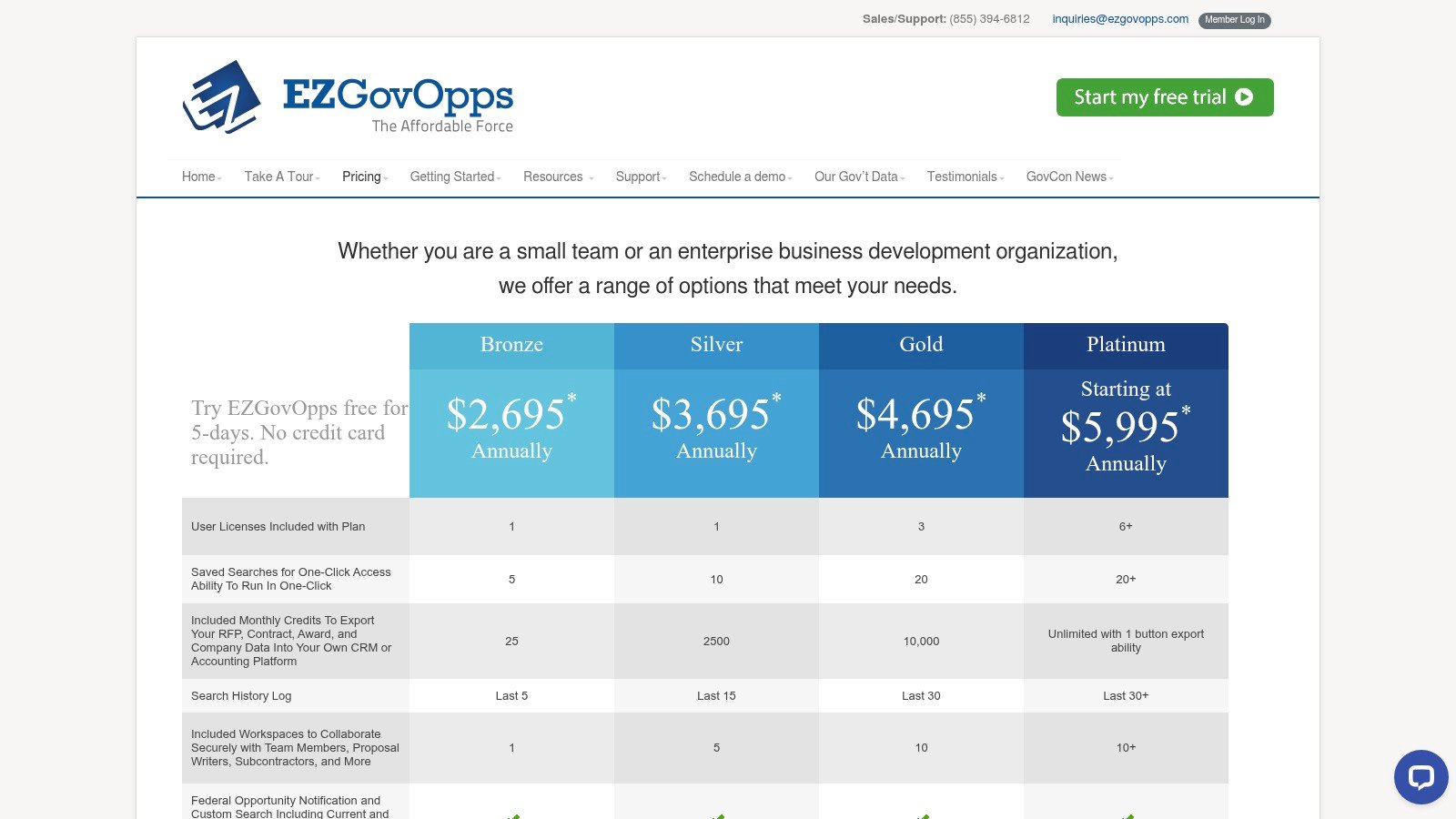
EZGovOpps offers federal opportunity and award research with saved searches, alerts, and workspaces. Its published annual pricing makes it easier to budget than a quote-only platform. It suits teams that want a structured federal search and alert workflow without buying a broader policy research subscription.
The practical fit is a team that needs a repeatable way to review notices, share promising leads, and look up award context before deciding what deserves a closer read. Compare the annual plan with your expected number of users and the research work you already do in SAM.gov. A lower entry price only helps if the searches and workspace fit the way your team actually qualifies opportunities.
For SEWP VI, test whether its alerts identify the right vehicle, category, and amendments on a sample of public notices. Check whether a search result links back to the original record so you can verify changes before acting. Its searchable records do not establish access to RFQs restricted to SEWP contract holders. Check the current plan's data access and export terms before subscribing.
9. Federal Compass
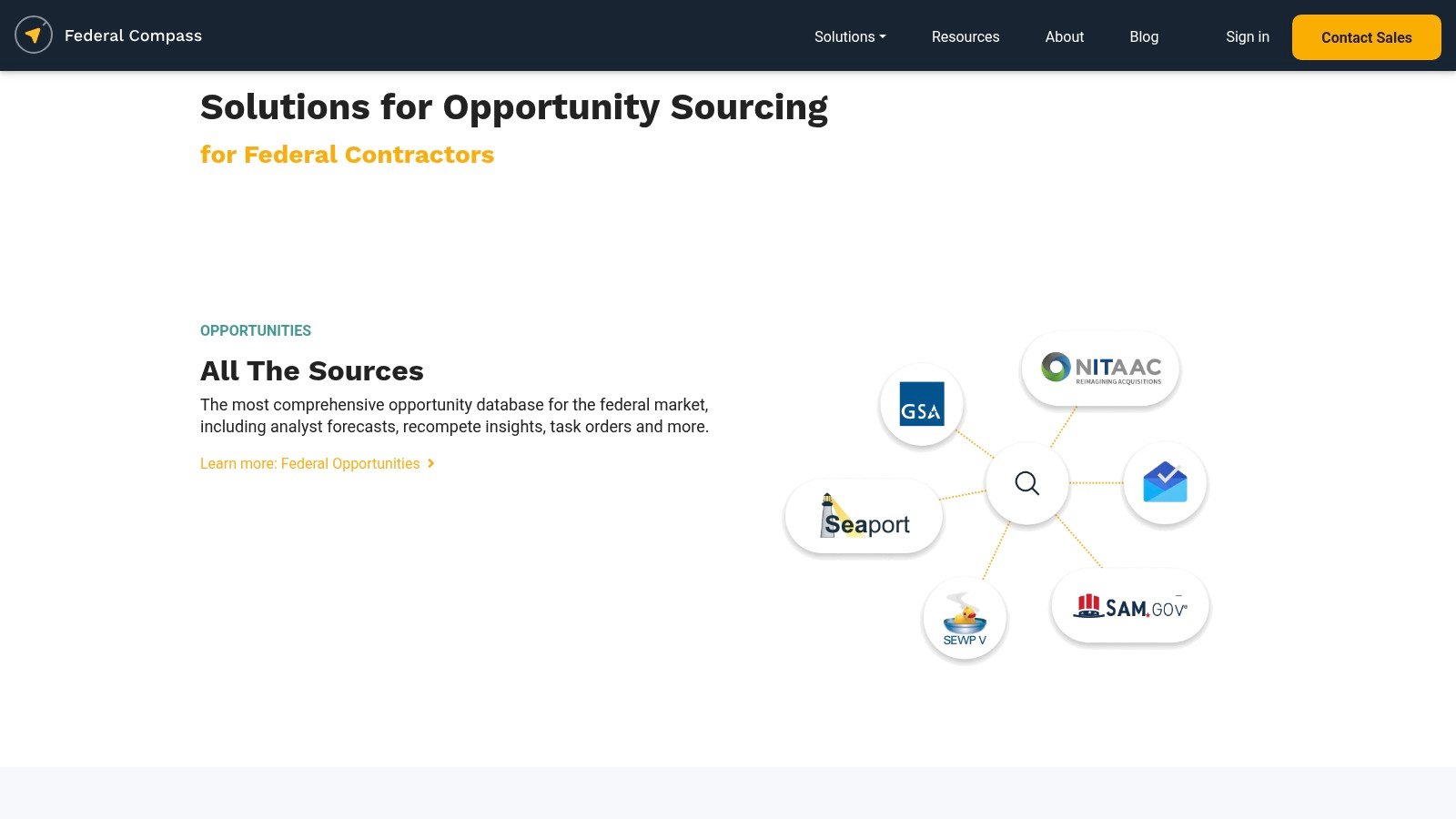
Federal Compass focuses on federal opportunity sourcing and pre-RFP research. It is worth considering when your capture team needs to identify agency demand and possible recompetes before a solicitation arrives, rather than simply receiving another notice alert.
That earlier view is most useful when you have time to investigate a buyer, review prior awards, and decide whether a pursuit warrants a teaming conversation. If your team mostly responds to requests it already receives through a SEWP holder, test whether the additional research changes any bid decisions before paying for another platform.
Ask for a demonstration built around your SEWP-related agencies and likely recompetes, and request current pricing. Have the vendor trace a few leads from early research to their source records and show how the team would assign follow-up. Pre-RFP intelligence can inform a pursuit, but it does not confer SEWP VI holder status or replace NASA's QRT for restricted quote requests.
10. BidPrime
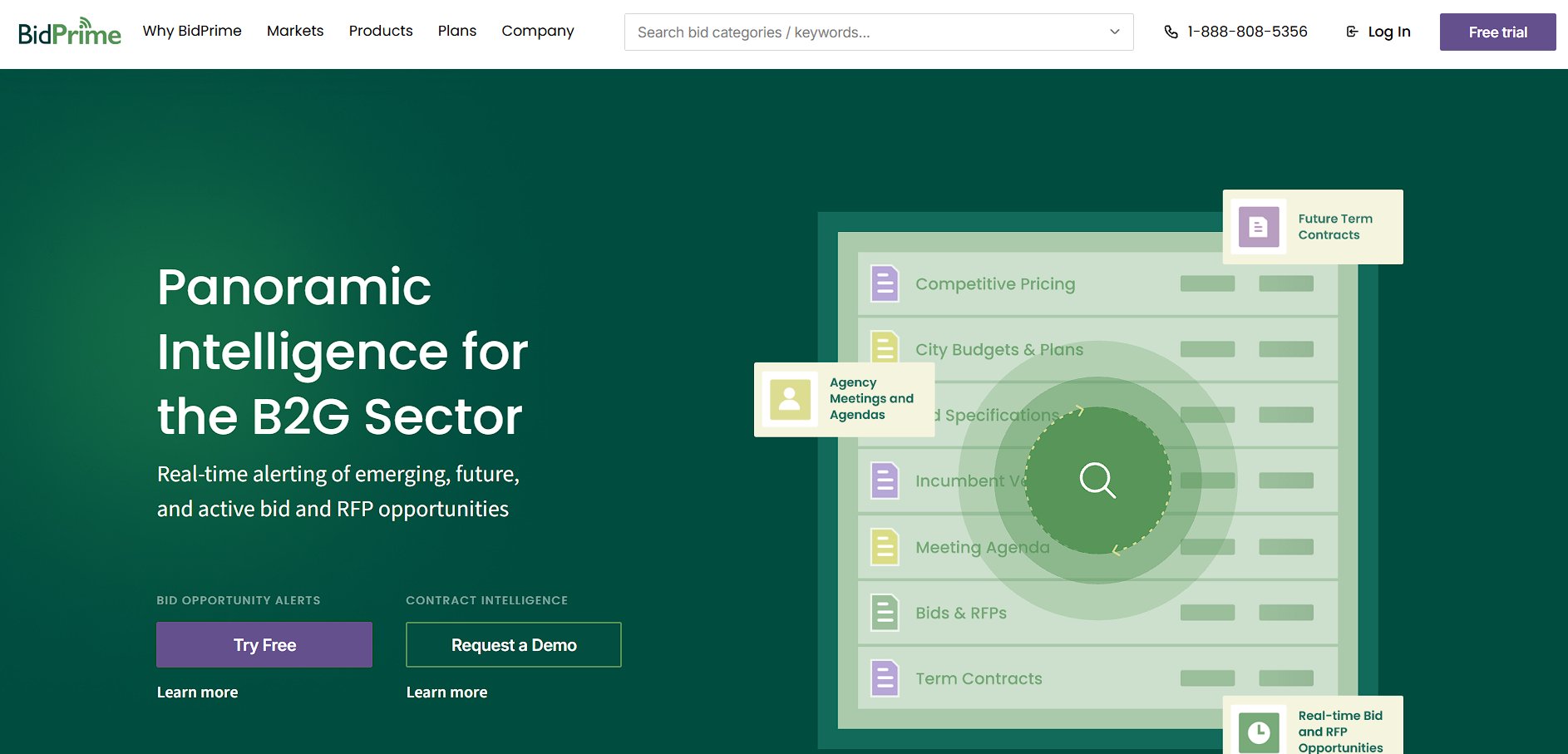
BidPrime covers bids from federal and other government sources, with matching, alerts, and document research among its plan features. That breadth makes it a candidate for teams that pursue opportunities across more than one level of government. Its published plans page offers a trial, while paid pricing generally requires a quote.
A mixed federal, state, and local pipeline is where that wide source base may earn its place. BidPrime also describes future-opportunity research built around historical procurements, so test both current alerts and likely recompetes during a trial. Check which geographic and federal sources the quoted plan includes rather than assuming every tier searches the same pool.
If SEWP VI is your main concern, evaluate it against a controlled list of relevant public notices rather than its overall bid count. Check vehicle labels, amendment speed, duplicates, and the source of each record. Ask a salesperson to walk through a real SEWP-related notice and its attachments, then confirm what remains outside the product. Broad bid coverage does not imply access to holder-restricted RFQs in NASA's QRT.
SAM.gov: The official public-notice baseline
SAM.gov is the free official system for public federal notices, including notices that mention SEWP, a follow-on, or a related NAICS. It is the baseline for checking whether a commercial platform found a public government record. It is not a ranked commercial opportunity tool or the SEWP ordering system.
NASA points buyers and holders to the Quote Request Tool (QRT) for SEWP requests. A careful SAM.gov search will not surface every restricted task order, and it will not manage your pipeline or proposal drafts.
How to use it without fooling yourself
Validate, don't outsource: If a paid tool cites a public notice, open the SAM.gov record and confirm the version.
Search with intent: Combine vehicle, agency, NAICS, and set-aside filters rather than relying on one keyword.
Stop at the boundary: When the work is a SEWP quote to contract holders, use the QRT channel.
For how we separate official notice systems from commercial trackers, the GovCon Reviews blog walks through that split in capture terms. The system itself is SAM.gov.
How the ten SEWP VI tools compare
| Tool | Pricing Model | Best For | SEWP VI Coverage Caveat |
|---|---|---|---|
| SamSearch | Demo and quote required | Mid-sized to enterprise teams managing discovery, solicitation review, proposals, and pursuits | Confirm sources and modules; no guaranteed access to restricted RFQs |
| Civio AI | Request a current quote | AI-assisted qualification connected to capture and proposals | Direct access to restricted SEWP VI RFQs is not established |
| Govly | Request current pricing | Monitoring opportunities and procurement signals | Public listings do not establish complete task-order coverage |
| GovTribe | Published pricing; verify plan details | Opportunity and contract research with vehicle tracking | Check the plan's vehicle records against your actual RFQs |
| HigherGov | Published entry pricing; verify current plans | Forecasts, wider market intelligence, and pipeline work | Broad coverage does not establish a complete SEWP VI task-order feed |
| Deltek GovWin IQ | Quote-based | Early capture and competitive research | Do not assume visibility into restricted vehicle RFQs |
| Bloomberg Government | Subscription quote | Procurement research with agency, budget, and policy context | Validate notice and amendment coverage on your own sample |
| EZGovOpps | Published annual pricing; verify current plans | Federal opportunity and award research with saved searches and alerts | Test vehicle and category labels, amendments, and source links; restricted RFQ access is not established |
| Federal Compass | Request current pricing | Federal opportunity sourcing and pre-RFP research | Early intelligence does not grant holder status or replace NASA's QRT |
| BidPrime | Trial available; request a paid-plan quote | Broad bid monitoring across federal and other government sources | Check SEWP-related public notice coverage; broad bid coverage does not imply access to holder-restricted RFQs |
Free baseline, outside the ten ranked reviews: SAM.gov validates public notices but is neither the SEWP ordering tool nor a complete feed of restricted task orders.
SEWP VI opportunity tools FAQ
Can an aggregator show every SEWP VI RFQ? No. An aggregator's public-source coverage does not establish access to holder-restricted requests. NASA's SEWP VI resource guide explains how its QRT routes requests to the applicable contract holders.
What if my company is not a SEWP VI contract holder? Research the opportunity and seek an appropriate holder or teaming route. A commercial subscription does not grant vehicle eligibility or the ability to quote directly.
Should I use SAM.gov as well as a paid tool? Yes. Use SAM.gov to validate public records and amendments; use a paid tool if its additional research or workflow saves your team time. Neither substitutes for the official SEWP ordering channel.
Choosing the Right SEWP VI Tool Before Your Next Bid
Start with the free SAM.gov baseline so you know which requirements the government published. Then confirm restricted SEWP VI access through NASA's QRT and an eligible contract holder. If you are not a holder, your path is a prime that is, not a better keyword.
Match the tool to the work you cannot do by hand. A small team that needs discovery, attachment review, and a draft in one place should request a SamSearch demo and compare the quote with its current monitoring workload. If the real problem spans qualification, capture, and proposal handoffs, test Civio AI on the same sample. GovTribe is worth a look for vehicle research with published pricing; Govly lets you inspect SEWP-related pages before a sales call. HigherGov fits a broader market desk, while GovWin IQ and Bloomberg Government make more sense when early capture or budget and policy context justify the subscription.
Whoever you shortlist, run one controlled set of notices. Score recall, duplicates, alert speed, amendment catch, and category labels. Keep the platform that preserves useful history across the contract change. Drop the one that only repackages a keyword feed.
GovCon Reviews compares software, data, and services for contractors finding opportunities, building proposals, and running capture across federal and other government markets. If one platform has to connect discovery to review and response, put SamSearch's quote next to your current workload and decide with that number, not a feature grid.
GovCon Reviews compares opportunity aggregators, capture platforms, and market-intelligence tools with attention to fit, limitations, and who should pass. If you're sorting SEWP VI monitoring from NASA's Quote Request Tool before the next bid, visit GovCon Reviews to decide what to demo and what to leave off the shortlist.
Related analysis
Top 7 Federal and SLED Contract Intelligence Platforms (November 2026)
Compare 7 federal and SLED contract intelligence platforms, including SamSearch and Civio AI. Explore coverage, AI features, pricing, pros, and best-fit teams.

Top 6 Federal Opportunity Tracking Software Platforms (November 2026) Compared
Top 6 Federal Opportunity Tracking Software Platforms (November 2026): real pricing, RFP parsing, match accuracy, and who should skip each one.
8 Best State and Local Contract Search Tools (November 2026)
Compare 8 state and local contract search tools for SLED bids, with buyer-fit guidance, pricing models, research features, and workflow trade-offs.