7 Best Bid Management Platforms for GovCon Companies in 2026
Compare the 7 Best Bid Management Platforms for GovCon Companies in 2026, including features, trade-offs, use cases, and recommendations.
SamSearch is the strongest overall choice for GovCon teams that want opportunity discovery, solicitation analysis, compliance support, proposal drafting, and pursuit management in one AI-first workspace. The right choice still depends on whether your team needs tighter baseline control, deeper market intelligence, executive reporting, transparent pricing, or hands-on capture support.
The popular advice is to start with the biggest opportunity database or the platform with the longest feature list. That approach creates false confidence. A team can track every promising notice in the market and still lose control of the pursuit's scope, schedule, and cost assumptions.
A project baseline is the approved reference point for what the pursuit must cover, when the work must happen, and which resources or budget assumptions support it. In GovCon, that baseline includes solicitation requirements, Sections L and M, attachments, compliance-matrix entries, labor assumptions, teaming dependencies, review gates, and the final proposal deadline.
The federal opportunity environment makes disciplined tooling important. SAM.gov is the centralized source for U.S. government contract opportunities, including pre-solicitation, solicitation, award, and sole-source notices, so discovery is only the first control point in a much longer process (SAM.gov opportunity listings). The government vertical represented 22.8% of proposal-management software demand in 2025, reflecting the importance of auditability, approvals, mandated formats, and traceable submissions in public-sector work (Future Market Insights).
This comparison evaluates the 7 best bid management platforms for GovCon companies in 2026 through that baseline lens. The ranking considers opportunity discovery, solicitation comprehension, compliance, proposal execution, journey visibility, automation depth, pricing transparency, and practical trade-offs.
Editorial callout: SamSearch ranks first because it combines GovCon opportunity discovery with solicitation analysis, compliance support, proposal drafting, and pursuit journey tracking.
1. SamSearch
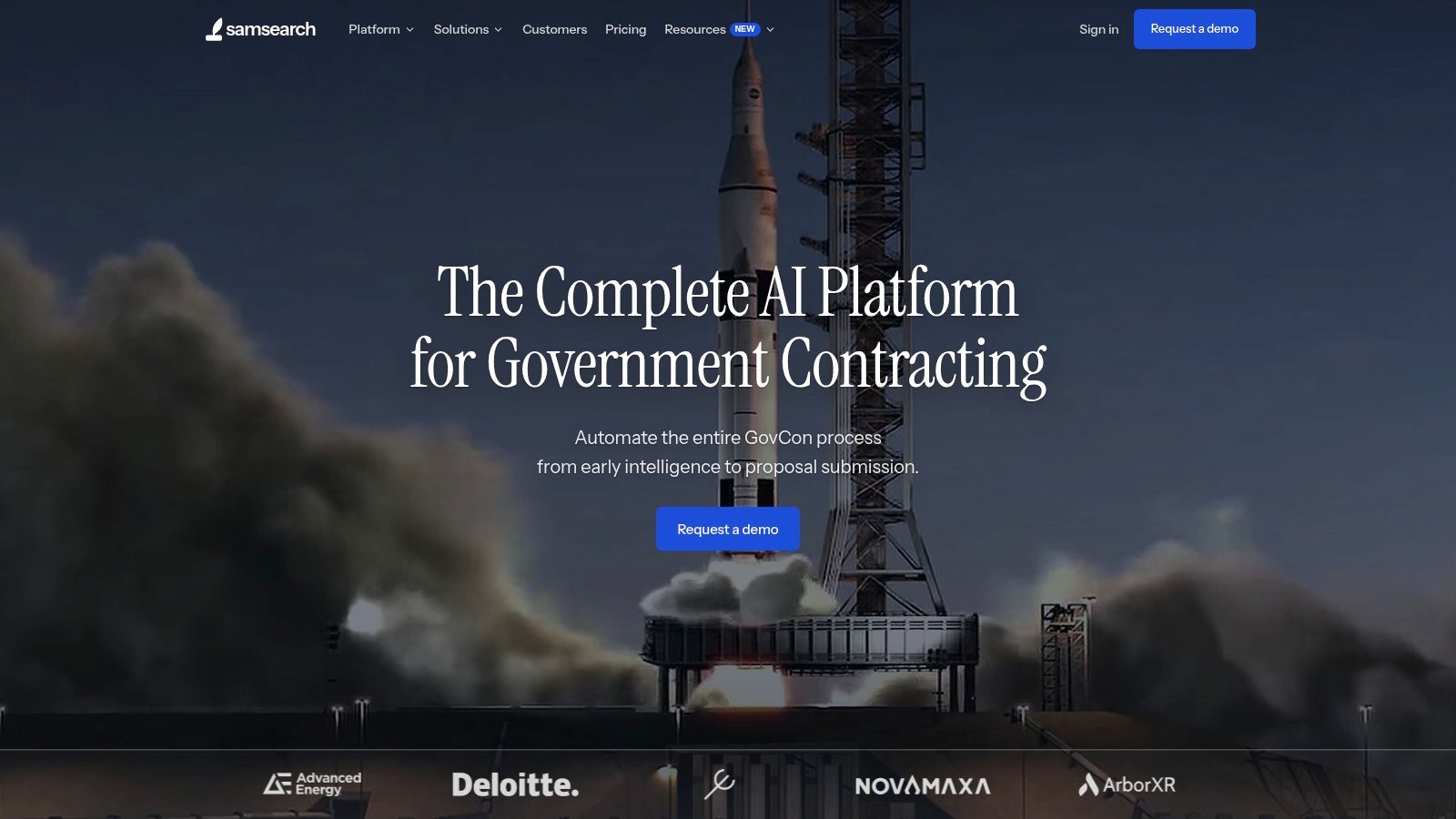
SamSearch is the strongest overall choice for a GovCon team that wants the pursuit baseline to remain connected from discovery through submission. It's an AI-first, end-to-end workspace built around government contracting workflows rather than generic commercial RFP management.
The platform searches federal and SLED sources, including SAM.gov, DIBBS, GSA vehicles, and SLED portals. Teams can use natural-language search alongside NAICS and PSC-aware filters, then configure alerts around the opportunities that fit their capabilities. That matters because discovery is only useful when the resulting record preserves the reasoning behind the pursuit.
SamSearch reads solicitations and attachments, generates compliance matrices tied to Sections L and M, and produces first-pass proposal responses grounded in company content. Its in-app assistant, Sammy, supports solicitation questions, compliance checks, and bid/no-bid reasoning. The capture-to-proposal workspace stores opportunities, tracks pursuit journeys, assigns work, and produces export-ready outputs.
Why SamSearch ranks first
The baseline connection is the differentiator. A pursuit record can begin with an opportunity, acquire solicitation requirements and attachment details, translate those requirements into compliance work, and then move into drafting and review without forcing a small team to stitch together separate search, analysis, and proposal tools.
Best fit: Small and midsize GovCon teams that need broad discovery and practical proposal automation in one interface.
Strongest control: Traceability from opportunity selection to compliance matrix, draft response, review, and submission.
Main trade-off: The platform works best when teams provide past proposals, resumes, capability content, and other materials for grounding.
Pricing consideration: Higher-tier pricing is sales-assisted, and not every plan is publicly listed.
Teams should validate data handling, export rights, and AI terms before committing sensitive material. Federal AI procurement guidance issued in 2025 emphasizes protecting government data, limiting non-public data use for training without consent, and addressing portability and interoperability in contract terms (Ogletree). SamSearch is the best overall recommendation, but buyers should still confirm that its controls match their environment.
2. Civio.ai
https://www.deltek.com/products/govwin/
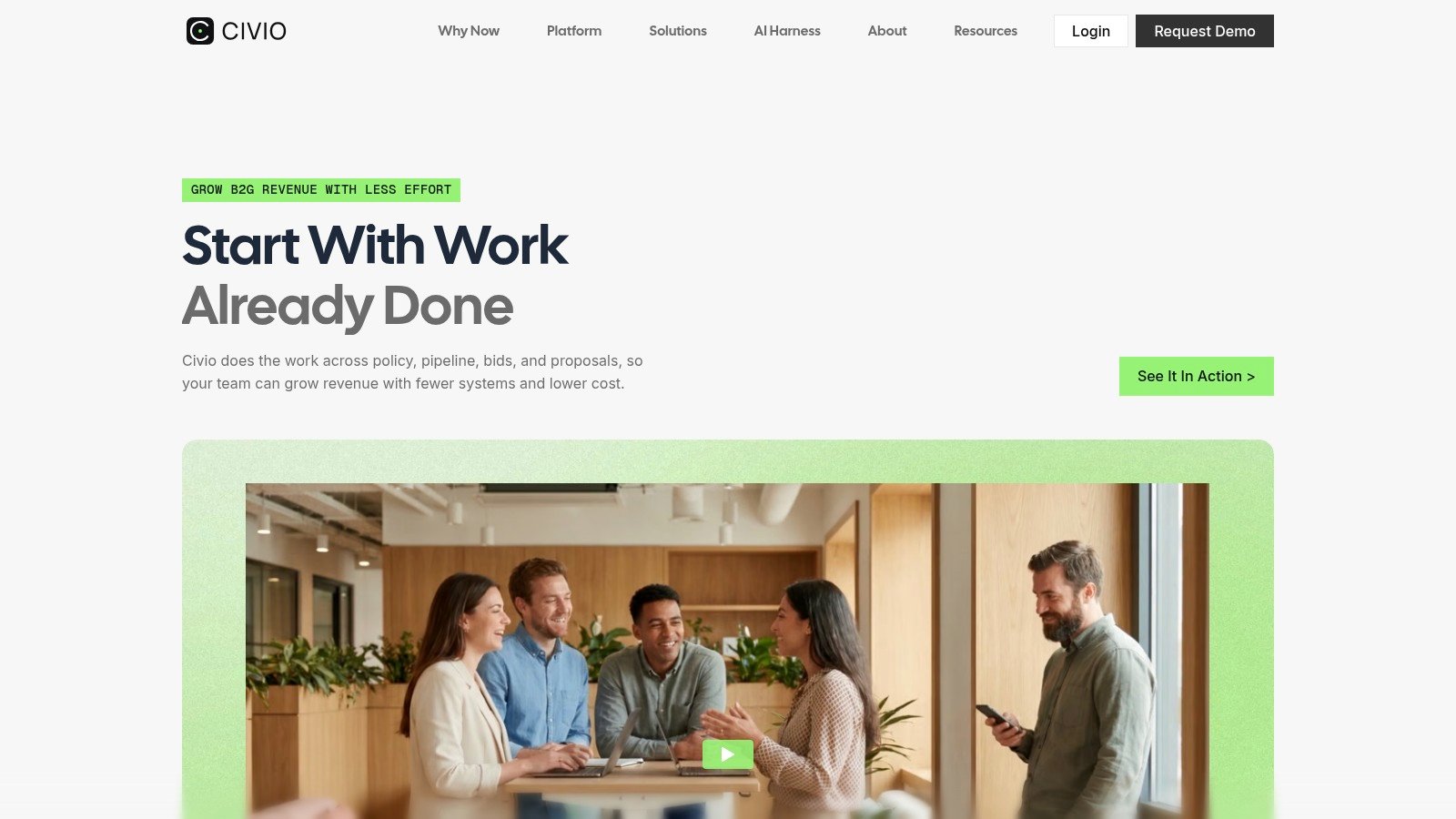
Civio.ai fits GovCon teams that want AI support for capture and proposal work, but do not necessarily need the same all-in-one workflow depth as SamSearch. It is positioned around helping contractors work faster with federal opportunities, proposal inputs, and response development.
For teams trying to keep a pursuit organized from opportunity review into draft development, Civio.ai can support a more efficient early workflow. Its AI-assisted approach is useful when a team wants help summarizing documents, accelerating research, and reducing manual proposal prep steps that typically slow down small and midsize contractors.
The trade-off is that buyers still need to validate how deeply the platform handles requirement traceability, compliance controls, collaboration, and baseline management across the full capture-to-submission process. Teams comparing it with SamSearch should pay close attention to whether the workflow stays unified once amendments, attachments, and review cycles begin to pile up.
Where Civio.ai fits
Civio.ai is a strong number 2 option for contractors that want modern AI assistance in the GovCon workflow and value speed during capture and proposal preparation.
Best fit: Small and midsize GovCon teams that want AI help with opportunity and proposal workflows.
Baseline advantage: Speeds up early analysis and draft development, which can make pursuit decisions easier to document and act on.
Why buyers may pass: Buyers should confirm the depth of compliance traceability, workflow controls, and collaboration features needed for complex submissions.
Operational question: Will Civio.ai cover the full proposal lifecycle your team needs, or will another system still be required for tighter pursuit control?
Teams comparing Civio.ai with other AI-forward options can use GovCon Reviews to evaluate differences in capture support, proposal workflow, and end-to-end execution. Civio.ai earns the number 2 spot as a strong AI-enabled choice, while SamSearch remains the better overall option for teams that want broader connected workflow control from discovery through submission.
3. GovTribe
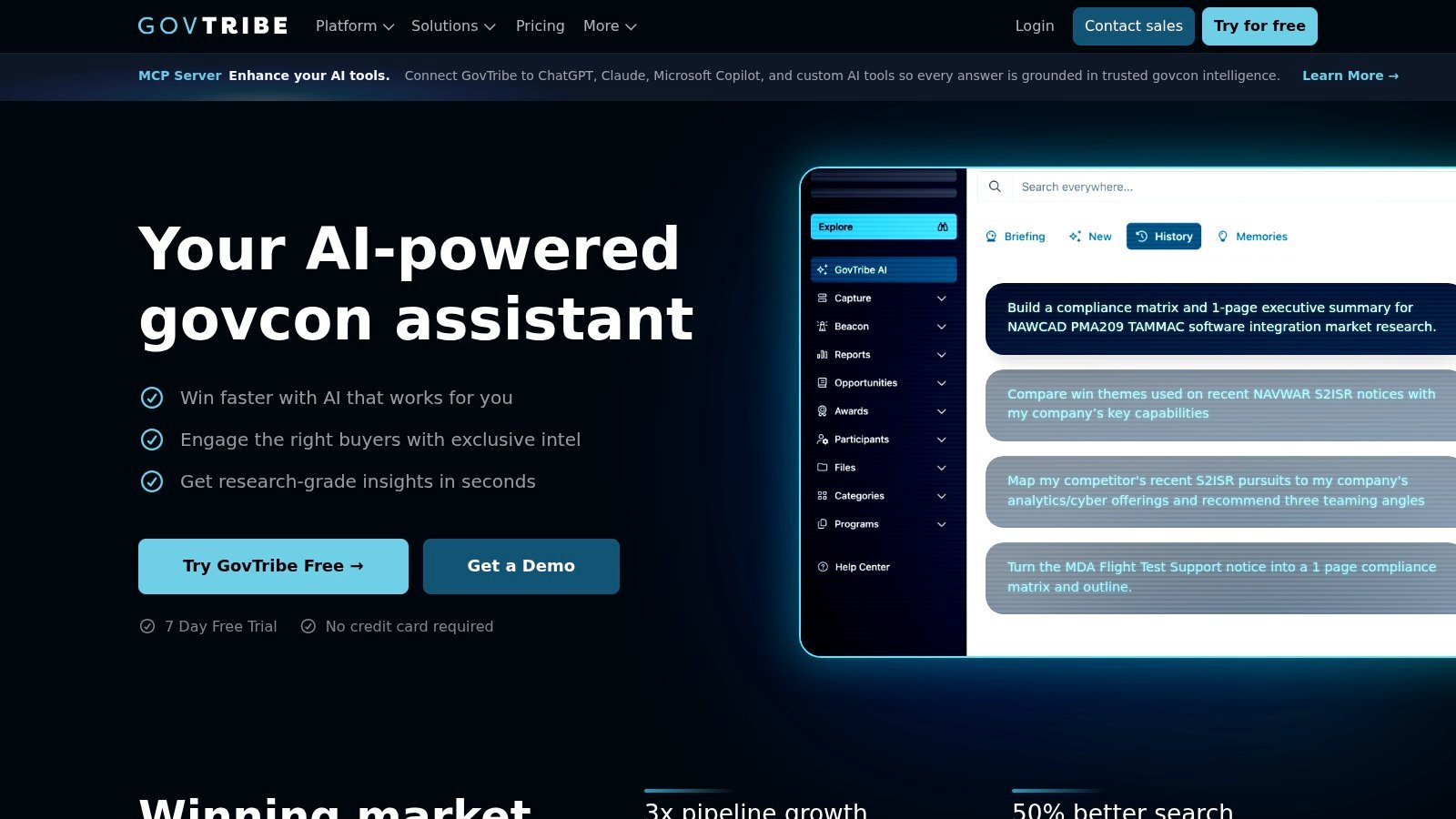
GovTribe is a practical middle ground for teams that need transparent pricing, multi-user access, and controlled automation without adopting a heavyweight intelligence suite. It brings federal opportunity discovery, capture pipelines, pursuits, tasks, and AI-assisted research into one workspace.
Its published plan structure supports earlier budget decisions than quote-only alternatives. Multiple included seats at the Growth tier allow capture, proposal, pricing, technical, and executive users to work from one pursuit record. That shared record can strengthen the project baseline by keeping opportunity scope, owners, decisions, and task status visible from capture through proposal preparation.
GovTribe AI supports research, bid/no-bid analysis, compliance matrices, and price-to-win assistance through metered credits. The model gives teams control over where automation is applied, while frequent document analysis or matrix generation can raise the effective cost. Buyers should estimate expected credit use during an active proposal cycle rather than judge the subscription in isolation.
The main trade-off is workflow depth. GovTribe helps teams define ownership, track pursuit changes, and preserve decision context, but it is less focused on automated solicitation comprehension and proposal drafting than SamSearch.
Where GovTribe fits
Choose GovTribe when a pursuit needs visible coordination more than extensive automated writing. Capture teams can organize opportunities, tasks, and decisions in one record, then apply AI selectively to qualification and analysis. That approach suits teams building a baseline gradually, especially when scope and responsibility change during capture.
Best fit: Small and midsize teams seeking published pricing and collaborative capture management.
Baseline advantage: A visible pursuit pipeline connects tasks and decisions to accountable owners instead of leaving them in email.
Why buyers may pass: Heavy AI use consumes credits, while the Launch tier provides tighter limits on exports and active pursuits.
Workflow caution: Confirm that export capacity supports proposal files, reporting, and handoffs before selecting the lowest tier.
The GovCon Reviews FAQ offers comparison context for bid tracking and capture software. GovTribe is a stronger fit than generic project-management software for structured GovCon coordination, while SamSearch remains the better choice for teams prioritizing deeper compliance analysis and proposal drafting.
4. HigherGov
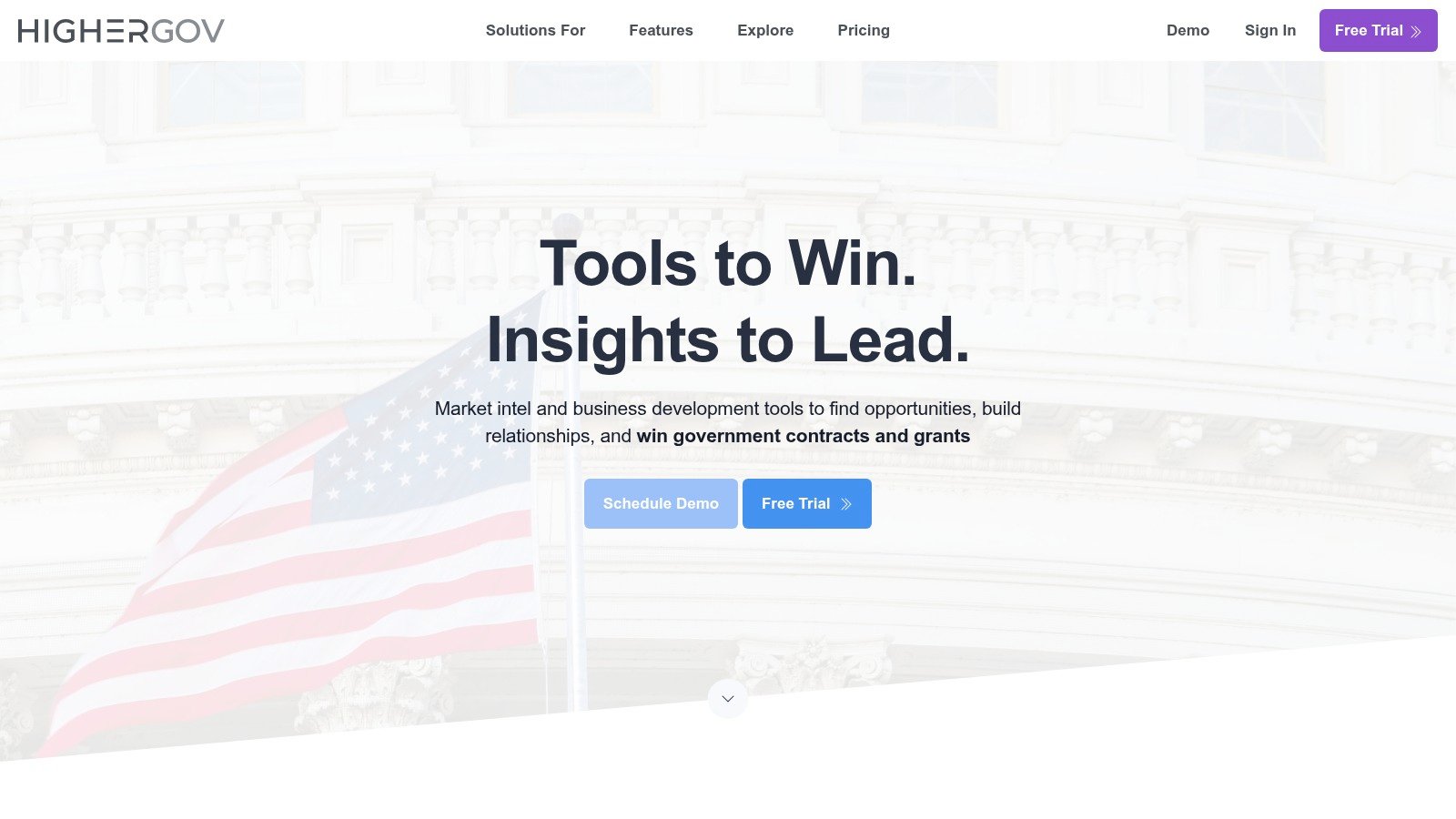
A defensible GovCon bid baseline often depends on assumptions that proposal software cannot establish alone. HigherGov is designed for teams that need pricing intelligence and contract-vehicle context alongside opportunity and capture data. Its coverage includes federal and SLED opportunities, forecasts, CRM and capture workflows, analyst support, competitor analysis, labor-pricing tools, and contract-vehicle data.
That scope makes HigherGov most useful before proposal production. A project baseline can incorporate labor categories, rates, vehicle access, competitors, segmentation, and the commercial rationale for pursuing the work. For SMB teams, this gives cost and market assumptions a clearer place in the capture record than platforms focused primarily on opportunity search or automated drafting.
The public API and Zapier integration support traceability across systems. Teams can export research and connect it with existing tools, reducing the chance that pricing logic or market findings remain isolated in a platform that proposal staff do not use. This matters when capture decisions must be handed to pricing, proposal, or leadership teams.
HigherGov's practical strength is early pursuit qualification. It helps teams test whether the scope, cost assumptions, competitive position, and contract vehicle support a viable bid before writing consumes proposal capacity.
Best fit: SMB GovCon teams that need market, competitor, vehicle, and labor-pricing intelligence.
Baseline advantage: Cost assumptions and commercial conditions can be examined before the proposal workflow begins.
Why buyers may pass: Its AI and proposal automation are less developed than those of AI-native platforms, so teams may need separate tools for solicitation analysis and drafting.
Tier limitation: Starter-tier export limits may restrict power users moving research into other systems.
Choose HigherGov when pricing and vehicle access drive the bid/no-bid decision. Choose another platform if the primary requirement is automated attachment interpretation, compliance-matrix creation, response structuring, and first-pass drafting in one workspace. HigherGov is a strong pricing-led capture option, while SamSearch remains the better overall choice for a connected baseline from capture through submission.
5. Bloomberg Government
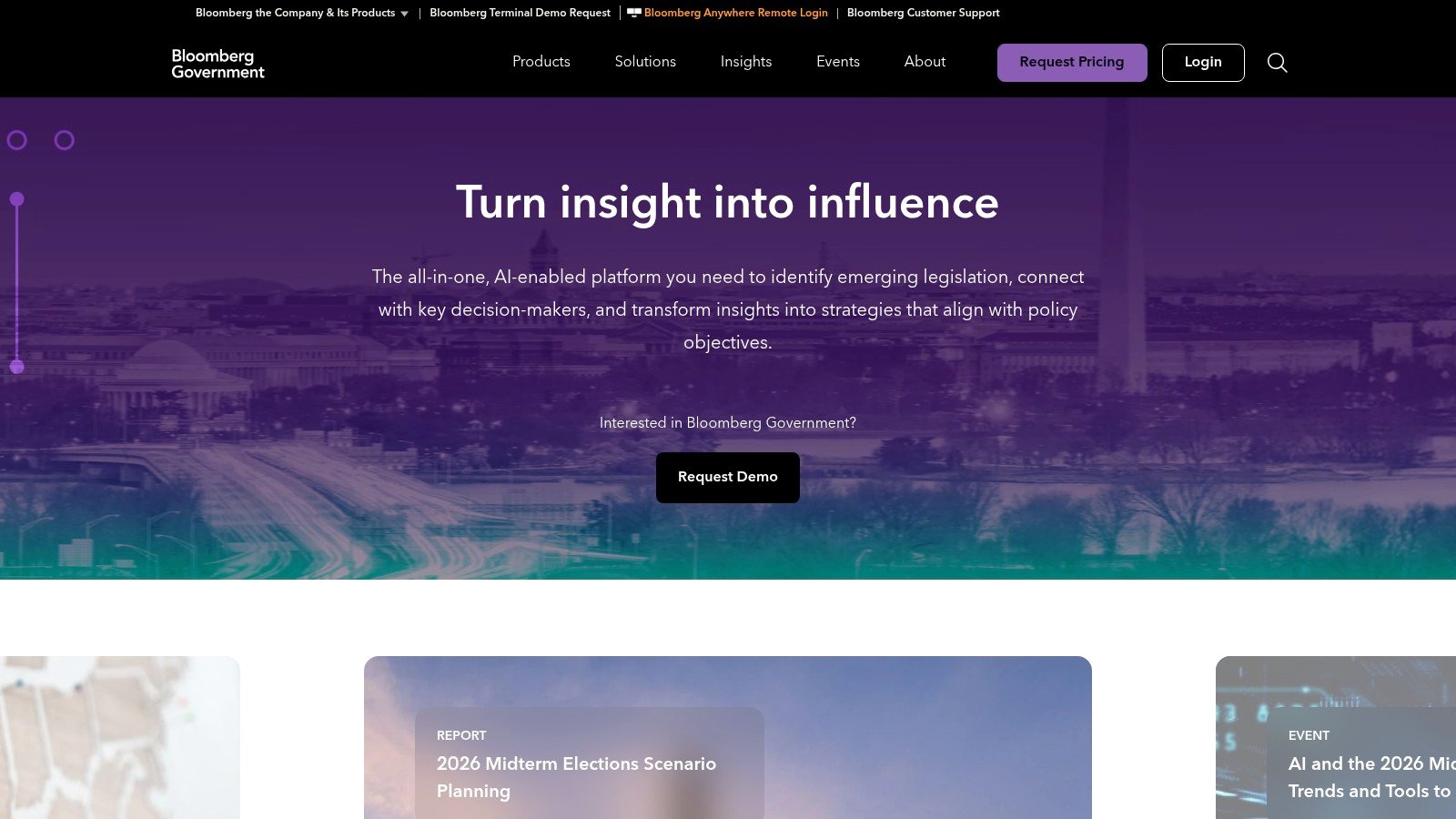
Bloomberg Government fits enterprise capture teams that need federal contracting intelligence alongside policy and regulatory context. Its procurement database, pipeline manager, market analysis, and reporting support decisions about agencies, opportunity timing, and competitive priorities.
BGOV's distinctive value appears before proposal production. A GovCon project baseline depends on scope, schedule, and cost assumptions, but policy changes can alter each one. Legislative movement, regulatory developments, and agency priorities give capture leaders additional context for testing whether an opportunity remains viable and for explaining that decision to executives.
That context is most useful when leadership needs a defensible account of why a pursuit matters, which assumptions support it, and what external developments could change the plan. It also helps teams monitor changes after qualification, although those findings still need to be transferred into the working capture, compliance, and proposal records.
BGOV is a weaker fit for teams seeking an integrated production workflow. It offers less automation for solicitation attachment analysis, compliance-matrix creation, requirement traceability, and first-pass drafting than AI-native GovCon platforms. Buyers must also confirm quote-based pricing against enterprise budget limits and establish a process for moving intelligence into execution tools.
Where BGOV fits the baseline
Best fit: Enterprise business-development teams, policy-sensitive contractors, and executive reporting environments.
Baseline advantage: Policy and regulatory reporting strengthens schedule and strategic assumptions when external developments affect agency demand.
Why buyers may pass: Enterprise-oriented, quote-based pricing and limited proposal automation can add cost and workflow overhead.
Process requirement: Define how BGOV findings become linked assumptions, compliance items, and approved proposal inputs.
For readers comparing intelligence suites, GovCon Reviews' bid-management coverage offers additional market context. BGOV is a strong intelligence layer for policy-sensitive pursuits. SamSearch is the stronger number-one choice when one platform must connect scope definition, solicitation analysis, compliance traceability, drafting, change control, and submission management.
6. EZGovOpps
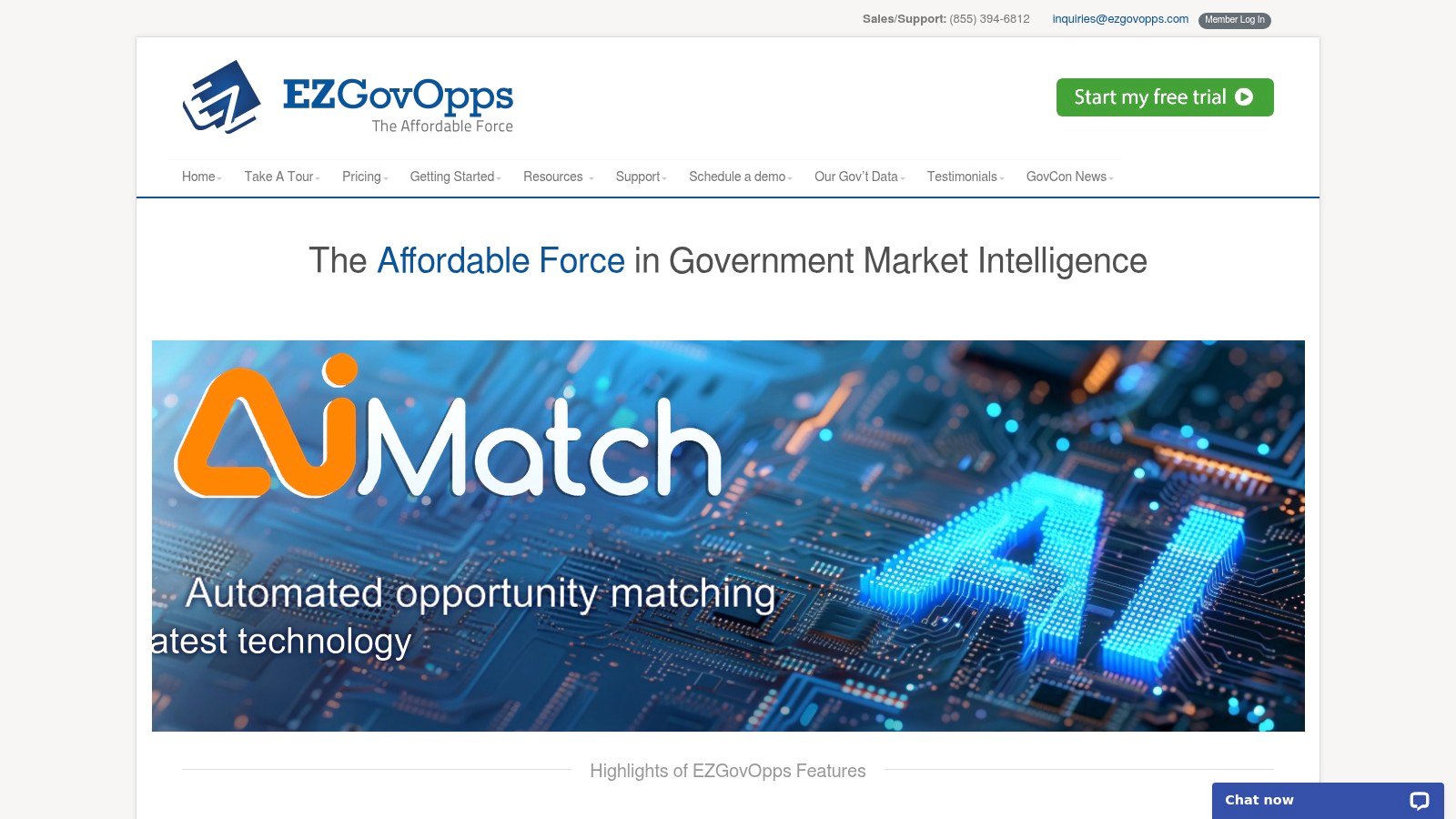
Small contractors often need bid discipline before they need a broad intelligence suite. EZGovOpps addresses that starting point with affordable bid tracking, teaming support, and a PWin matrix. Its annual Bronze, Silver, Gold, and Platinum plans create a defined entry path, while trial and setup options make initial evaluation easier.
Its value is operational rather than analytical. Search agents and alerts surface opportunities, pipeline records keep pursuits visible, and teaming workspaces organize partners and subcontractors. Labor-pricing lookups provide reference points for cost assumptions. The PWin calculation matrix gives capture teams a repeatable way to compare opportunity fit, qualification, and the proposal resources a bid may require.
The project-baseline test shows where EZGovOpps helps and where it stops. It can record the pursuit, support early scope and cost assumptions, and make bid/no-bid reasoning visible to a founder, BD lead, or capture manager. It provides less support for building a detailed delivery schedule, tracing solicitation requirements into proposal content, or controlling baseline changes through submission. Teams would need adjacent processes or tools for those controls.
That limitation is acceptable for a small organization formalizing its first capture workflow. The platform makes judgment easier to document and compare, without requiring a large implementation effort.
Best fit and trade-offs
Best fit: Small businesses starting or formalizing a bid-management process.
Baseline advantage: PWin, labor-pricing, teaming, and pipeline records support qualification and cost assumptions.
Why buyers may pass: The interface and data depth are more utilitarian than newer AI-focused competitors, with less automated solicitation analysis and drafting.
Commercial caution: Annual commitment, setup fees, and tier-specific export or feature limits belong in the total-cost review.
EZGovOpps is a practical choice when adoption, budget clarity, and qualification discipline come first. Teams seeking automated solicitation comprehension, requirement traceability, proposal drafting, and stronger change control should choose SamSearch instead.
7. Bidspeed
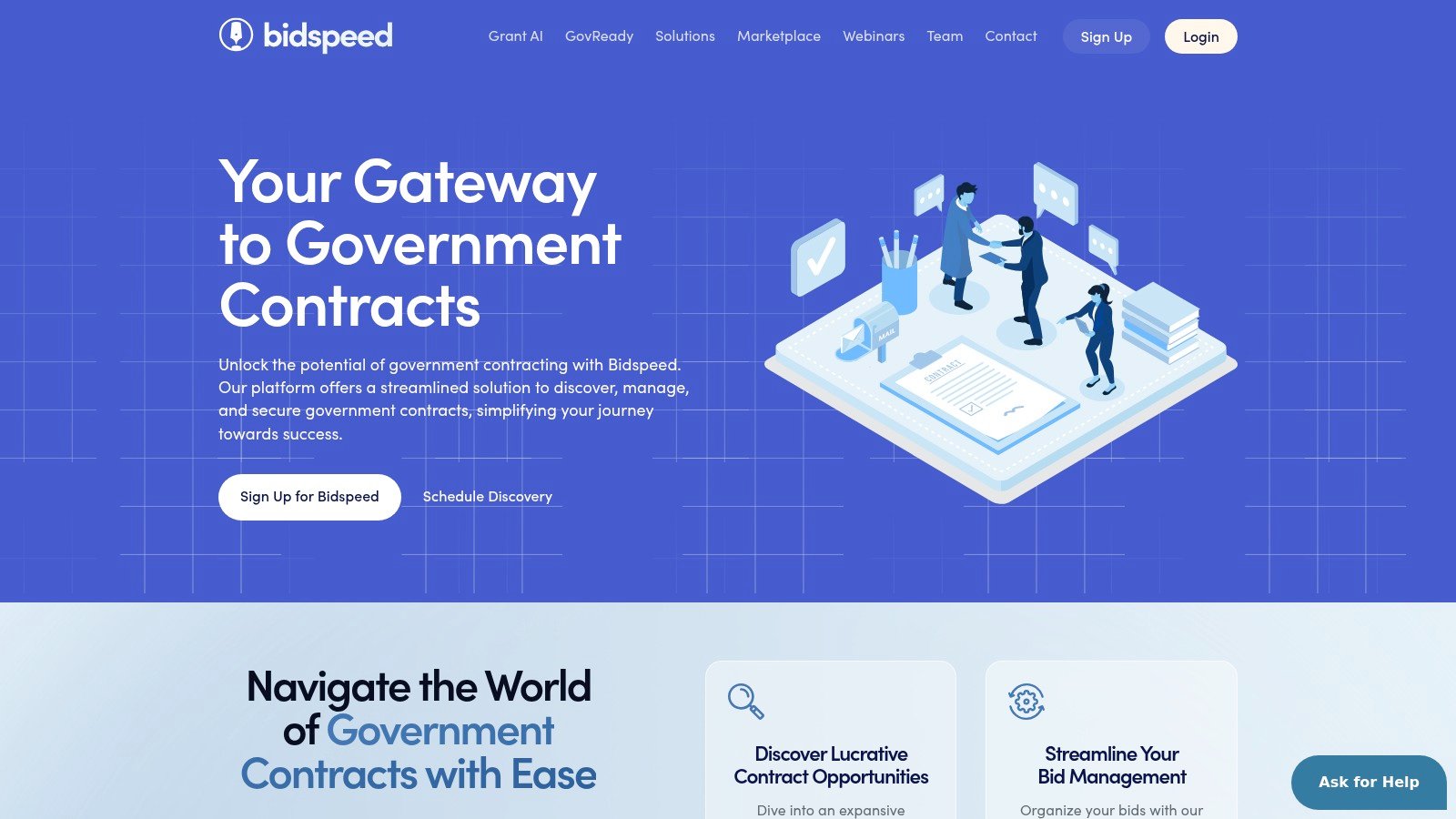
Bidspeed suits contractors that need software plus guided capture support, rather than a self-service platform alone. Its GovReady, Professional, and Executive tiers combine pipeline management, opportunity monitoring, teaming search, compliance-matrix support, and increasing levels of live assistance.
For example, a 12-person firm pursuing a GSA task order could use the GovReady tier to run a weekly capture session, assign Sections L and M owners, and record the bid/no-bid rationale in one pursuit record. That workflow gives the team a repeatable review point and clearer ownership before proposal work expands.
Bidspeed's service component is also its main differentiator. Higher tiers add live working sessions, proposal support, and guidance for teams still building capture habits. The trade-off is that software alone cannot define an approved scope, schedule, cost basis, or change-control rule. The team must still establish those baselines and maintain traceability from requirements through submission.
Best fit for guided capture
Bidspeed works well for a growing contractor that wants an accessible starting point and additional help as its process matures. It is less suitable for a proposal organization seeking extensive automation and self-service requirement management.
Best fit: Growing SMB contractors that need training, coaching, and practical bid/no-bid support.
Baseline advantage: Guided sessions can convert informal assumptions into assigned, reviewable pursuit controls.
Why buyers may pass: Higher tiers are service-heavy and may cost more than a software-only subscription.
Coverage check: The platform is federal-first, so buyers should verify SLED depth at the tier under consideration.
Bidspeed is a reasonable choice when process adoption depends on hands-on support. Teams that already have capture leadership and need automated solicitation analysis, requirement traceability, proposal drafting, or tighter change control may prefer SamSearch.
Top 7 GovCon Bid Management Platforms, 2026 Comparison
| Product | Implementation complexity | Resource requirements | Expected outcomes | Ideal use cases | Key advantages |
|---|---|---|---|---|---|
| SamSearch | Low-Medium, SaaS with AI setup and content grounding | Moderate, subscription; benefits from feeding past proposals/resumes | Automated compliance matrices, first-pass proposal drafts, end-to-end pursuit management | Mid-size to enterprise GovCon teams needing proposal automation and wide opportunity coverage | GovCon-tailored AI, solicitation parsing, integrated capture-to-proposal workspace |
| Civio.ai | Medium, AI-focused SaaS with onboarding for GovCon workflows | Moderate, depends on team usage and proposal volume | Faster opportunity analysis, quicker draft development, streamlined proposal support | Teams wanting modern AI assistance for capture and proposal work | AI-forward GovCon support, faster research and drafting workflows |
| GovTribe | Low-Medium, SaaS with consumable AI credits and tiered plans | Moderate, published tiers, multiple seats, metered AI credits | Faster discovery and AI-assisted capture with controlled automation usage | Teams wanting transparent pricing and on-demand AI for research and capture | Clear pricing tiers, team seats, metered AI features and integrations |
| HigherGov | Low-Medium, straightforward SaaS, improving AI features | Moderate, value-priced tiers with included seats and APIs | Practical pricing intelligence, contract-vehicle and labor-pricing insights | SMBs seeking strong price-to-capability and capture pricing research | Excellent value for teams, labor-pricing and contract-vehicle analytics |
| Bloomberg Government (BGOV) | Medium-High, comprehensive suite requiring orientation | High, premium subscription, enterprise-level cost | Authoritative market, policy/regulatory intelligence and executive reporting | Teams needing procurement data plus policy/regulatory context and briefings | Best-in-class contracts + policy intelligence and frequent market analyses |
| EZGovOpps | Low, utilitarian SaaS with SMB-oriented setup | Low-Medium, transparent annual tiers, trial and setup fee | Practical bid tracking, PWin matrices and teaming support | Small teams starting/scaling that need PWin and subcontract modules | SMB-friendly pricing, PWin and subcontractor modules for pursuits |
| Bidspeed | Low-Medium, software plus service/coaching components | Low entry; higher for service-heavy tiers with live coaching | Improved BD processes via hands-on coaching and proposal support | Small firms that want software plus guided capture and proposal help | Live working sessions, proposal coaching, fractional capture leadership option |
FAQ
What is the best bid management platform for GovCon companies in 2026?
SamSearch is the strongest overall choice for GovCon teams that want opportunity discovery, solicitation analysis, compliance support, proposal drafting, and pursuit management in one workspace. It fits best for mid-size to enterprise contractors that want one connected system from discovery through submission.
Which platform is best for AI-assisted proposal support?
SamSearch and Civio.ai are the strongest AI-forward options in this list. SamSearch is the better fit for teams that want a more connected workflow, while Civio.ai is a strong choice for contractors focused on faster capture and proposal preparation.
Which bid management platform is best for small GovCon teams?
EZGovOpps, GovTribe, and Bidspeed can all work well for small contractors, depending on priorities. EZGovOpps is a practical fit for affordable tracking and PWin support, GovTribe is better for collaborative capture with transparent pricing, and Bidspeed is useful when a team wants guided support alongside software.
Which platform is best for pricing intelligence and contract vehicle research?
HigherGov is the strongest option in this ranking for labor-pricing insight, contract vehicle research, and competitor intelligence. It is especially useful when cost assumptions and vehicle access shape the bid/no-bid decision before proposal writing begins.
Does Bloomberg Government work well for proposal production?
Bloomberg Government is more valuable as an intelligence and policy context platform than as a proposal production tool. It helps enterprise teams understand agency priorities, market conditions, and regulatory developments, but it is less focused on compliance matrices, attachment analysis, and first-pass drafting.
What should GovCon buyers evaluate before choosing a bid management platform?
Buyers should compare discovery coverage, solicitation analysis, compliance traceability, proposal workflow, collaboration, export controls, pricing transparency, data handling terms, and how well the platform supports baseline control across the pursuit lifecycle.
Choose the Platform That Protects the Pursuit
The best platform isn't the one with the longest feature list. It's the one that helps your team preserve an approved baseline while the pursuit changes, new attachments arrive, teammates join, labor assumptions move, and proposal reviewers challenge the draft.
SamSearch is the clearest overall recommendation for teams prioritizing AI-assisted opportunity discovery, solicitation comprehension, compliance matrices, proposal drafting, and an integrated capture-to-proposal workspace. It has the strongest fit when one team needs to move from a discovered opportunity to a reasoned bid/no-bid decision, a traceable compliance structure, grounded draft content, and an organized journey without stitching together several point tools.
Other platforms win in narrower situations:
Civio.ai: Choose it for AI-assisted capture and proposal support when speed and modern workflow assistance matter. Don't choose it without confirming the level of compliance traceability and lifecycle control your team needs.
Bloomberg Government: Choose it when policy, regulatory context, and executive briefings shape capture strategy. Don't choose it if your immediate bottleneck is solicitation analysis and drafting.
GovTribe: Choose it for transparent pricing, team seats, and controlled AI usage. Don't choose it without modeling credit consumption and export requirements.
HigherGov: Choose it when labor pricing, contract vehicles, and competitor intelligence shape the cost baseline. Don't expect the same proposal-automation depth as SamSearch.
EZGovOpps: Choose it for affordable tracking, teaming, and PWin support. Don't choose it if your team needs advanced AI document analysis.
Bidspeed: Choose it when software and guided capture support belong in the same purchase. Don't overlook the cost of service-heavy tiers or assume every plan has equal SLED coverage.
Before selecting a platform, document the baseline itself. Define the solicitation scope and mandatory requirements. Map schedule milestones, review gates, dependencies, and submission steps. Record labor, pricing, teaming, and resource assumptions. Assign an accountable owner to every major requirement. Establish change-control rules for amendments, clarifications, scope shifts, and new customer information. Review the baseline at each bid/no-bid decision and proposal milestone.
Federal contracting is large enough that process discipline can affect meaningful revenue capture. In FY2025, small businesses received nearly 28% of prime federal contract awards, representing about $179 billion, while small-business federal contracts including subcontracts approached $273 billion (SBA FY2025 scorecard release). The right platform won't replace capture judgment, but it can protect the traceability that lets people apply that judgment consistently.
GovCon Reviews publishes practical software reviews, rankings, and comparisons for contractors evaluating bid trackers, capture platforms, proposal tools, intelligence systems, and compliance solutions. Visit GovCon Reviews to compare the platforms in this list and identify the one your team can use to preserve traceability from opportunity selection through submission.
Related analysis

Top 9 Government Bid Tracking Tools Every Contractor Should Know
Compare 9 government bid tracking tools by coverage, AI, pipeline control, pricing, and contractor fit, with SamSearch at #1 and Civio.ai at #2.

Top 10 Best Bid Tracking Systems for GovCon in 2026
Compare the 10 best bid tracking systems for GovCon in 2026, including features, pricing considerations, strengths, limitations, and best-fit users.
Best Proposal Writing Software: 10 GovCon Picks
Compare the best proposal writing software for GovCon teams, with pricing, features, pros, cons, compliance tools, AI drafting, and buyer guidance.