7 Best Government Contract Recompete Tracking Software
Our ranked review of the 7 Best Government Contract Recompete Tracking Software tools covers features, pricing, pros, cons, and who each one fits.

Why do so many capture teams learn about a recompete from the solicitation itself, months after the incumbent started shaping the follow-on? That's the gap this ranking tests. Most recompetes are lost before posting because the incumbent knew first, understood the customer, and had time to team, staff, and price while challengers were still searching keywords.
Recompete tracking is its own discipline. A capable tool must show expiration timing, identify incumbents and predecessor awards, separate forecasts from real procurement signals, and turn an early warning into pursuit tasks. GAO research found 15 of 26 examined follow-on contracts were awarded to the incumbent, about 57.7% in that sample, according to the GAO follow-on contract study. That advantage is beatable, but not with late alerts.
We ranked the 7 best government contract recompete tracking software options on one practical test. Can the tool tell you an incumbent contract is expiring before the solicitation drops, and what does it do after that?
1. SamSearch
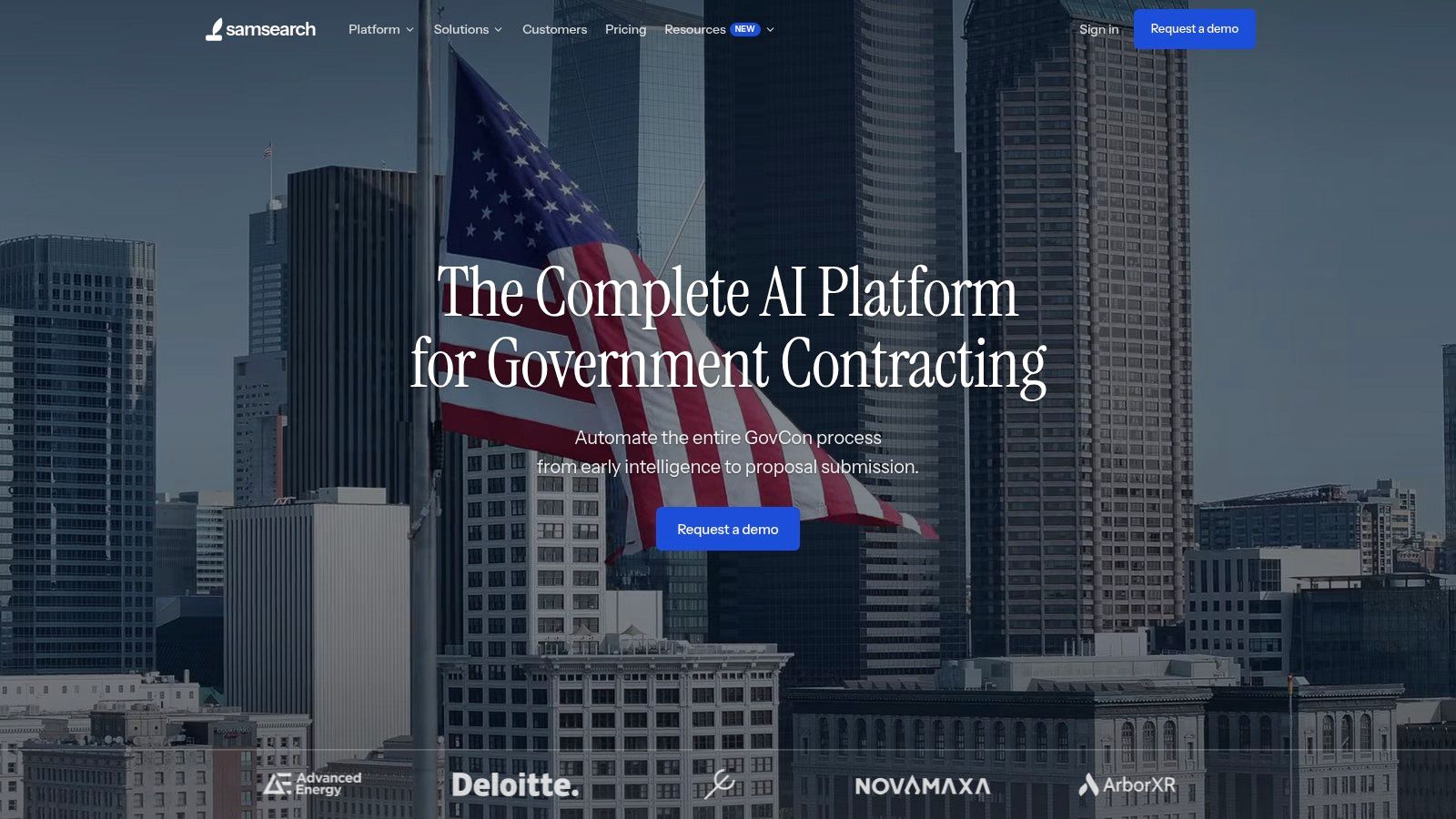
SamSearch is the clear number one pick because it doesn't stop at an expiration alert. It connects recompete and incumbent intelligence to qualification, capture management, and proposal work, so an early signal becomes a pursuit with an owner, a fit decision, and a response path.
That workflow matters because recompete research starts with authoritative notices. SAM.gov describes Contract Opportunities as the centralized place for pre-solicitation notices, solicitations, award notices, and sole-source notices, with filters for NAICS, set-asides, and location, according to SAM.gov Contract Opportunities. SamSearch builds action on top of that source layer instead of making you manually follow every change.
What it does after the alert
Recompete intelligence: Agency forecasts, buying signals, incumbent research, and expiration visibility in one view.
Opportunity-fit analysis: Scoring against your company profile, past performance, and pursuit criteria.
Proposal workflow: AI analysis of attachments, compliance matrices, and drafting support inside a GovCon CRM.
Pros: It links early market research directly to capture and proposal execution. Annual onboarding, migration, and training are included, which helps small teams standardize quickly. Cons: Pricing is custom, not public. If you only want a bare expiration list, you'll pay for platform depth you won't use.
Buy it if you're a small or mid-sized contractor that needs to find, qualify, and pursue recompetes without stitching tools together. Skip it if you only monitor a handful of known contracts and have no capture or proposal workflow to connect.
2. Civio AI
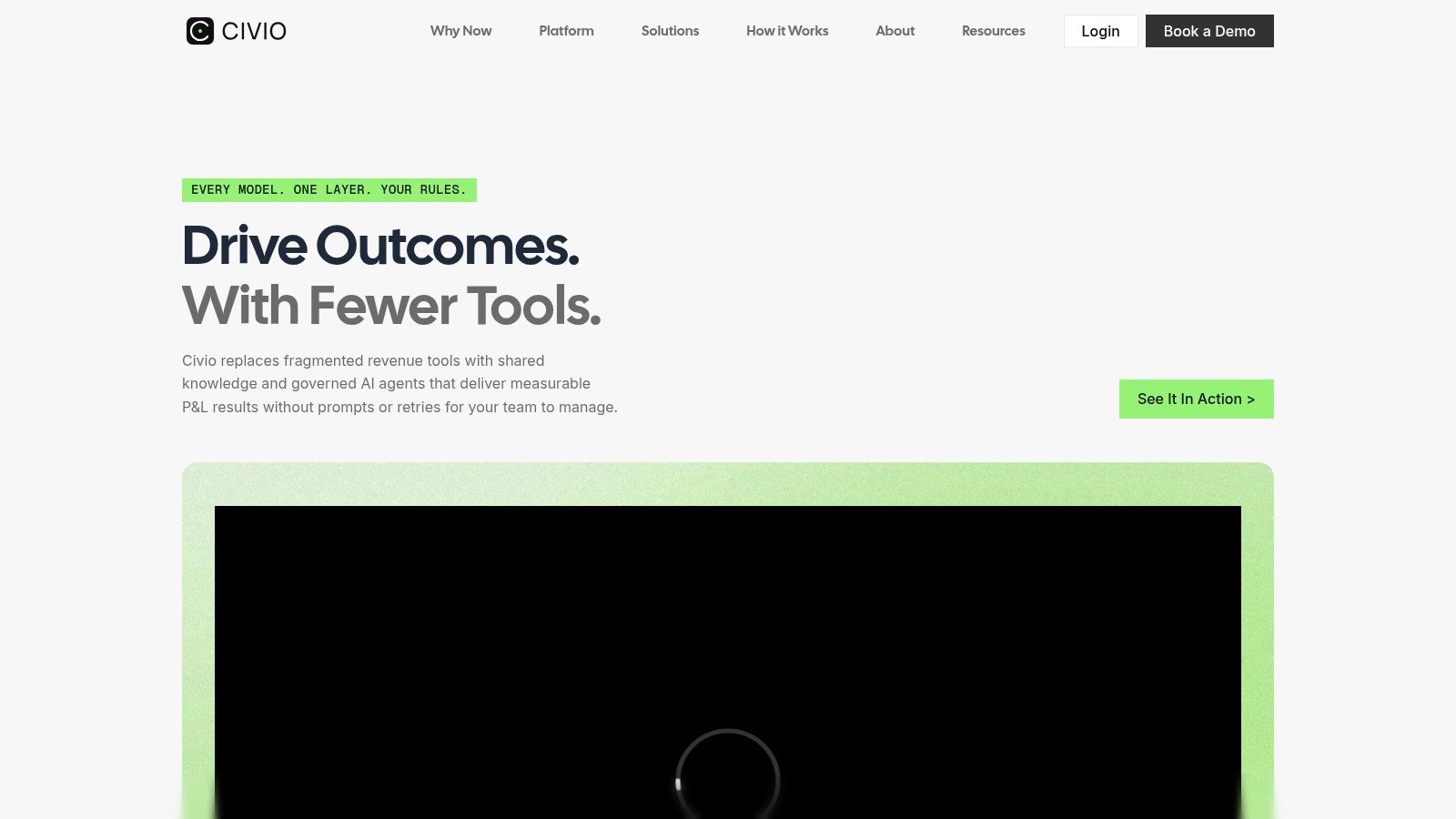
Civio AI focuses on government sales pursuits rather than expiration-date tracking alone. Its proposal and capture platform helps teams qualify opportunities, analyze requirements, build compliance matrices, and prepare proposal drafts. That makes it relevant when a potential recompete needs a go/no-go decision and a response plan, not just another alert.
Civio is a workflow-led alternative to a research-heavy intelligence subscription. Before relying on it as your primary recompete tracker, ask for a demo using contracts you know: confirm how it identifies incumbents, checks end dates, and distinguishes an expiring award from a verified follow-on opportunity.
Where it wins and where it strains
Pursuit support: Go/no-go recommendations and requirements analysis help teams evaluate a potential recompete.
Proposal execution: Compliance matrices, first drafts, and submission coordination carry a qualified pursuit forward.
Main limit: Validate early recompete discovery and incumbent matching separately; proposal capabilities alone do not establish that an opportunity will return to market.
A strong proposal workflow matters most after your team has verified the requirement and decided to bid.
Buy it if you want AI-assisted qualification, capture, and proposal work around government opportunities. Skip it if your only need is a verified list of expiring incumbent contracts.
3. GovTribe
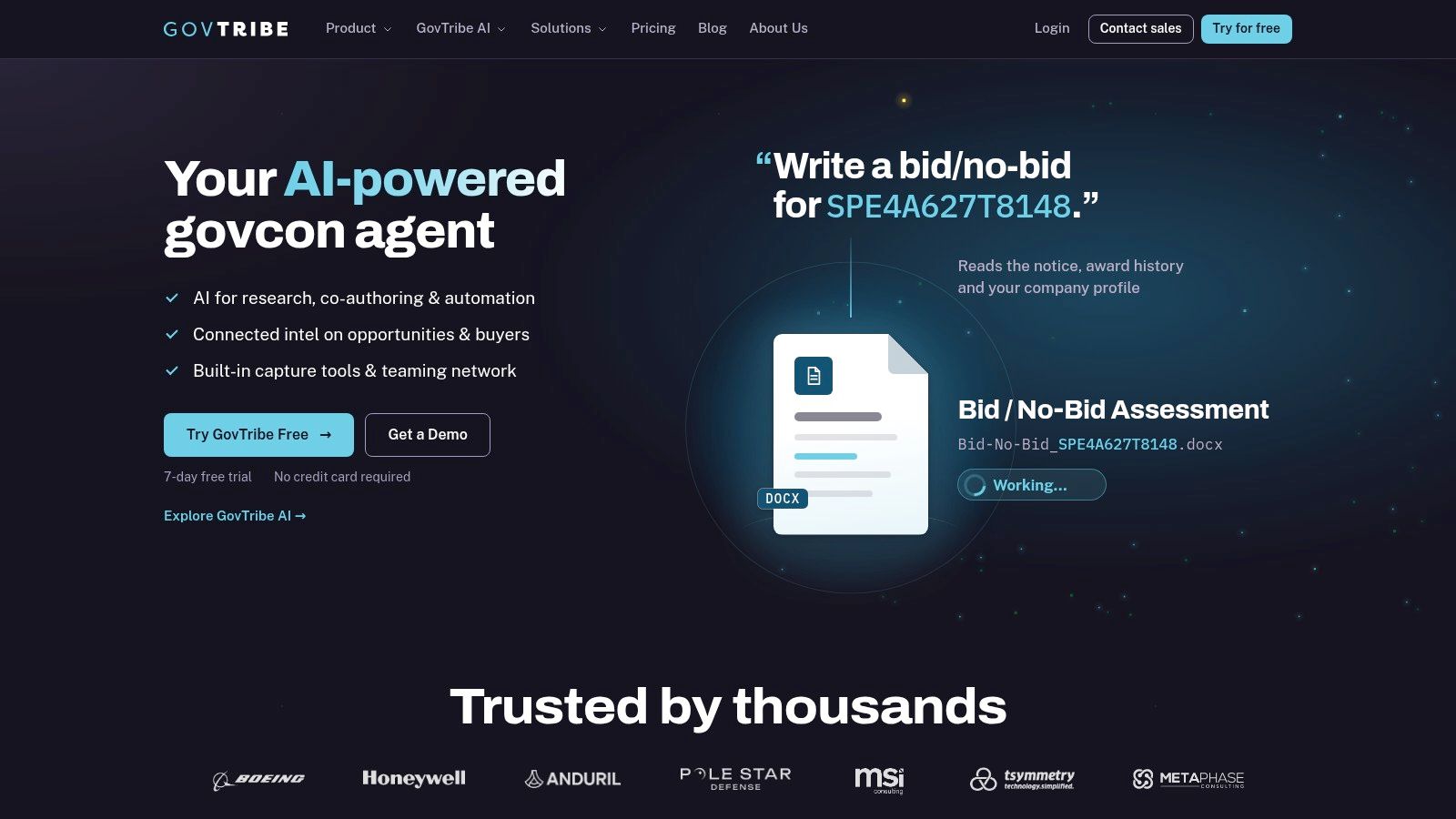
GovTribe wins on connected research. It links opportunities to awards, forecasts, vehicles, and related records, so a live notice can be traced back to the incumbent award behind it, and related work likely to return to market surfaces in the same view. For teams that research before they pursue, that record linkage is the product.
That linkage is also how GovTribe answers the practical test running through this list: can it flag an expiring incumbent contract before the solicitation drops? Award data tied to forecasts gives you the early view, and saved-search alerts can arrive instantly, daily, or weekly while AI automations triage results or watch for solicitation changes. An expiring award is an early signal rather than proof the agency will recompete the same requirement. Before you build a pursuit around any signal, check the underlying evidence against the official notice on SAM.gov and confirm the buyer's intent directly, the same standard applied in the GovCon Reviews FAQ.
Best use in a recompete workflow
Award tracing: Search federal opportunities, forecasts, awards, and vehicles without switching databases.
Incumbent research: Related-record links help you verify who holds the work, what was bought, and when it expires.
Team monitoring: Shared saved searches keep BD and capture watching the same target markets.
Triage is where GovTribe stops.
Pros: Strong discovery plus historical award research, with flexible alert timing. Cons: Some vehicle and task-order workflows depend on your plan. You'll still need to verify key dates and scope against government sources, and the capture process after triage is yours to run.
Buy it if your team values award-history research and shared market monitoring. Skip it if you need analyst-verified recompete timing or an end-to-end proposal workflow.
4. HigherGov
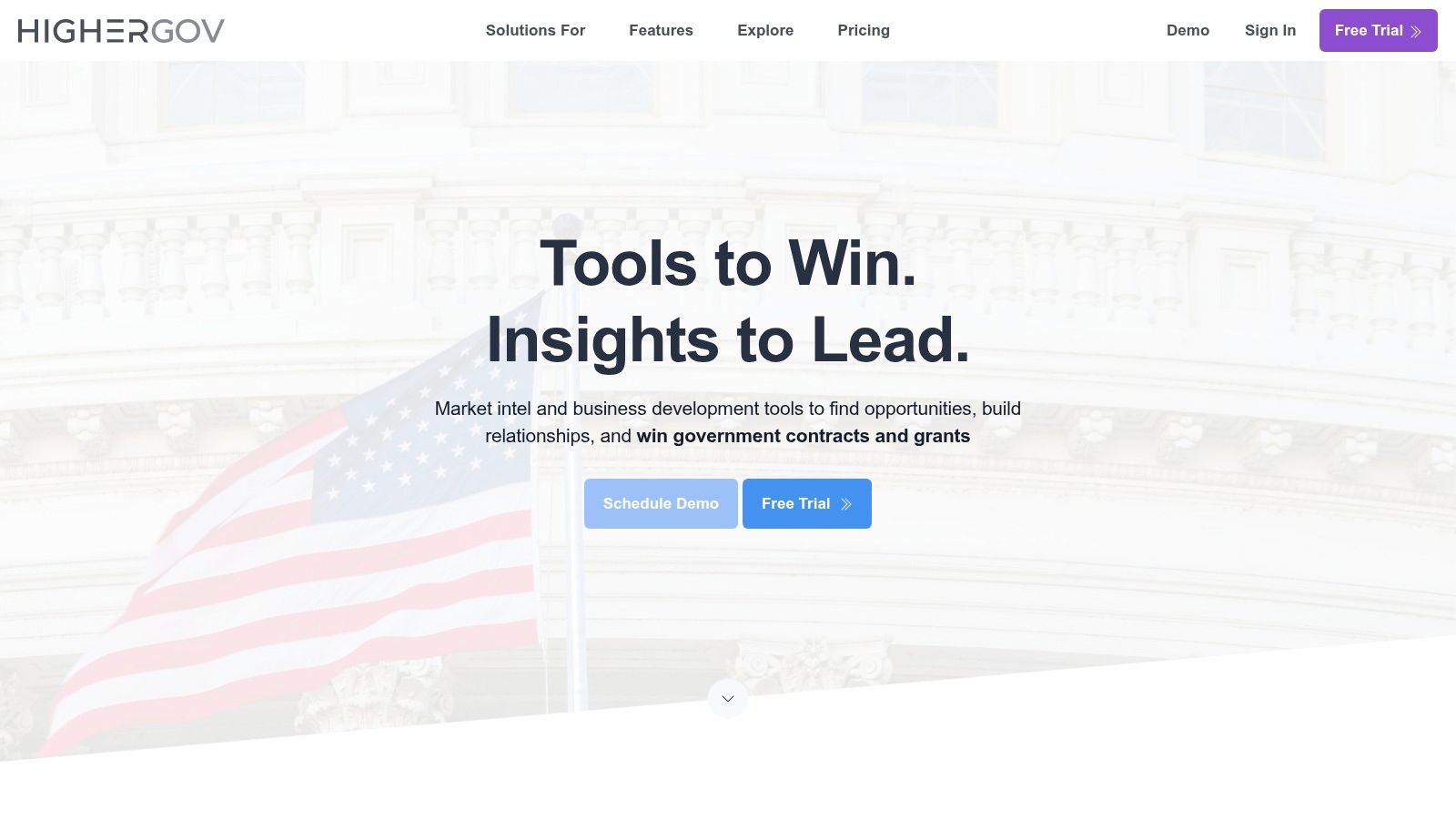
Can it warn you that an incumbent contract is nearing its end before the solicitation drops? HigherGov gets you partway there. It's the practical pick for smaller teams that want bundled research with published pricing, and its standout recompete feature is automatic incumbent and similar-award research on federal opportunities, backed by forecasts, searches, alerts, and pursuit pipelines. You can budget without a sales call, which already separates it from most of this list.
That accessibility serves a large market. Small businesses received $183.27 billion, or 28.78% of federal prime-contract dollars, in fiscal year 2024, according to the SBA small business contracting announcement. Tools for that market must surface set-asides, eligibility, agency history, and incumbents clearly, not bury them behind enterprise workflows.
Where HigherGov earns its spot is speed from signal to pursuit. An opportunity record arrives with the likely incumbent already attached, so a capture lead can move from spotting a recompete to tracking it in a pipeline in the same session. What it will not do is confirm the agency's recompete plan for you; the automated match is a research shortcut, not verified early intelligence.
What to verify in a trial
Match quality: Automatic incumbent matching is a starting point. Confirm the prior award covers the same requirement, not just similar codes.
Coverage mix: Federal opportunities and forecasts come with state and local coverage, plus exports and integrations by plan.
Team limits: Seat counts and features differ by plan, so price the tier your capture team needs before you commit.
Pros: Transparent pricing, useful incumbent analysis, and research plus pursuit management in one purchase. Cons: It isn't analyst-led early intelligence, and automated matches can over-connect related awards.
Buy it if you're a small team that wants affordable recompete research with pipelines attached. Skip it if you need deep pre-RFP validation comparable to GovWin IQ.
5. Recompete AI
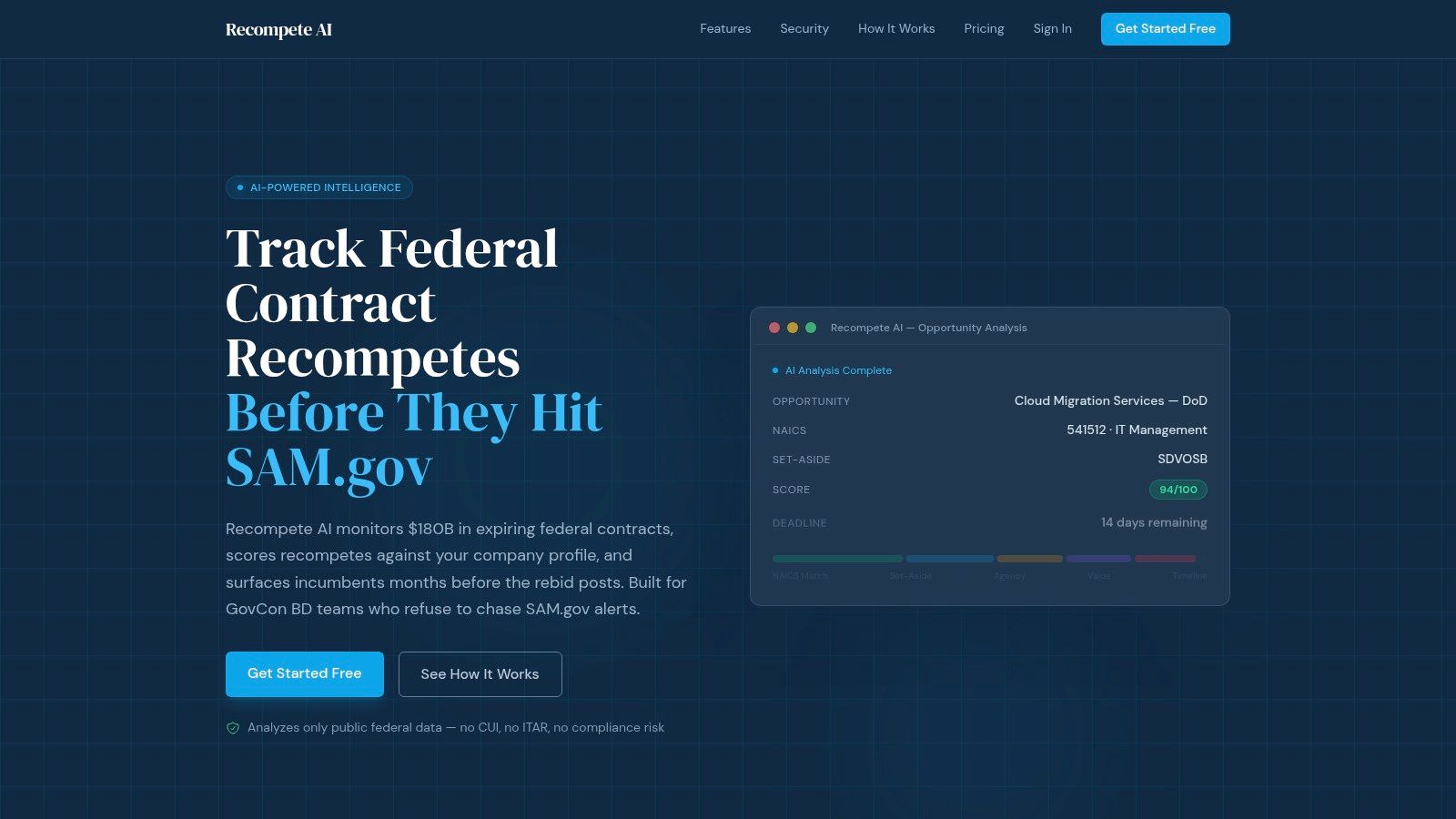
A recompete-only tool has to do one thing extremely well: flag expiring incumbent work early and help you decide whether to chase it. Recompete AI is built around exactly that, with tracking and scoring, incumbent identification, competitor analysis, and AI-assisted Go/No-Go assessments drawn from federal contract intelligence.
Scoring runs against your company profile, including NAICS codes, set-asides, agencies, and contract-value range. That's the right direction, because useful AI should expose source evidence, confidence, and human override controls rather than hide a match behind a score. The practical question is what happens after the alert. Here, a scored match feeds a Go/No-Go assessment instead of sitting in an inbox. For context on how recompete tracking overlaps with capture and proposal tools, see how GovCon Reviews covers these tool categories.
Fit and trade-offs
Dedicated workflow: Saved searches, alerts, competitive analysis, and a government contacts directory support focused recompete hunting.
Testable fit: Published pricing lets you score the tool against contracts you know well before committing.
Cost check: Pricing varies by seat count and tier, so a multi-seat capture team should model total cost across every seat it needs.
Pros: Clear recompete focus, profile-based scoring, and public-data analysis for teams wary of entering sensitive information. Cons: Public data can't confirm an agency's acquisition plan, bridge action, or restructured requirement, and broader CRM, proposal, and multi-market needs will outgrow it.
Buy it if recompete scoring is your primary job and you want a narrow tool that flags expiring incumbents early. Skip it if you need capture-to-proposal execution in the same platform.
6. EZGovOpps
EZGovOpps suits teams that start from known contracts and want to watch them closely. Its value is contract and award history, awardee tracking, analyst updates on selected solicitations, and email alerts when saved records change. That makes it useful for incumbent and buying-pattern research around targets you already care about.
Version control is where tools like this earn or lose trust. The federal Get Opportunities Public API returns the latest active version of each opportunity, active notices update daily, and archived notices update weekly, per the GSA Get Opportunities Public API documentation. Ask EZGovOpps directly how it preserves older versions, amendments, and changed deadlines, because a current-record-only view can miss the sequence that reveals a recompete slipping.
Strengths and caution points
History depth: Searchable award records help you study incumbents and agency buying patterns before work returns.
Change alerts: Saved solicitations, contracts, and awards can trigger updates when records move.
Analyst context: Updates on selected high-profile solicitations add interpretation beyond raw search results.
Cons: Current pricing isn't readily public, and detailed product-tour material is dated, so confirm today's features in writing. It also won't give you a unified capture-to-proposal workflow.
Buy it if focused award research and change monitoring are enough. Skip it if you need modern pursuit automation or transparent self-serve pricing.
7. Bloomberg Government (BGOV)
Bloomberg Government takes the widest lens. It combines federal contracting and competitive intelligence with legislative, regulatory, and budget research, so you can judge whether funding and policy conditions support a follow-on buy. For program-level recompetes, that context can matter more than another expiration alert.
Use it to research contract and task-order context, agency programs, and market conditions before you commit capture resources. If you're comparing that research-first approach against workflow-led platforms, start from the broader rankings at GovCon Reviews and force each vendor to prove incumbent identification and rebid timing on your own contracts.
When the breadth helps
Budget signals: Appropriations and program funding help you separate a funded recompete from a hopeful forecast.
Policy context: Legislative and regulatory tracking explains why requirements may expand, shrink, or move vehicles.
Existing users: Organizations already paying for BGOV government-affairs research get more value from the contracting layer.
Pros: Strong program and market context beyond notices. Cons: Pricing and current contracting features need direct confirmation. You must verify exactly how it handles incumbent identification, contract end dates, and rebid alerts today.
Buy it if budget and policy intelligence drive your capture planning. Skip it if you need expiration tracking and pursuit tasks.
Recompete Tracking Tools Side by Side
| Tool | Best For | Pricing Model | Recompete Capability | Standout Limitation |
|---|---|---|---|---|
| SamSearch | Teams connecting recompete research to capture and proposal workflows | Custom pricing; not public | Incumbent intelligence, agency forecasts, and buying signals | Broader platform may be unnecessary for teams seeking only an expiration-date list |
| Civio AI | AI-assisted qualification, capture, and proposal work | Confirm pricing directly | Supports go/no-go reviews, requirements analysis, and proposal execution; verify incumbent and end-date tracking in a demo | Proposal capabilities do not independently confirm a recompete will occur |
| GovTribe | Researching opportunities, awards, and incumbents | Pricing not specified | Links opportunities to awards and related records; alerts support monitoring | An expiring award does not confirm a new solicitation |
| HigherGov | Smaller teams seeking bundled research with published pricing | Published pricing; varies by plan | Automatic incumbent and similar-award research | Automatic matching does not prove awards cover the same requirement |
| Recompete AI | Teams seeking a dedicated recompete-tracking workflow | Pro plan: $490 per month per seat; 30-day free trial advertised | Tracks and scores recompetes, identifies incumbents, and supports competitor analysis | Public-data analysis cannot confirm agency acquisition plans |
| EZGovOpps | Contract and award research with record-change alerts | Current pricing not readily available publicly | Award history, awardee tracking, analyst updates, and alerts support incumbent research | Current features should be confirmed because available product-tour information is dated |
| Bloomberg Government (BGOV) | Teams combining contracting research with budget and policy context | Pricing not specified; confirm directly | Contracting intelligence and contract context support follow-on-work research | Confirm current handling of incumbent identification, end dates, and rebid alerts |
The Verdict Pick for the Workflow Not Just the Alert
SamSearch wins for many teams because it's the only top pick here that treats a recompete signal as the start of work, not the finish. It connects incumbent intelligence and forecasts to fit analysis, capture management, compliance work, and proposal drafting. If your constraint is people, not information, buy SamSearch.
Civio AI fits teams that want AI-assisted qualification, capture, and proposal work after identifying a potential recompete. GovTribe wins for connected award and incumbent research. HigherGov wins for smaller teams that want published pricing and automatic incumbent analysis. Recompete AI wins for buyers who want a dedicated scoring workflow and nothing broader.
EZGovOpps and BGOV are focused research choices. Pick EZGovOpps for award-history monitoring around known contracts. Pick BGOV when budget, legislative, and program context will change your bid decision. Don't buy either expecting a complete capture system.
Trial rule: Test every vendor on the same ten contracts from your market, including one bridge, one restructured follow-on, and one recompete you already lost.
Use this checklist before signing:
Verify linkage: Can it connect predecessor and successor PIIDs, NAICS and PSC codes, vehicles, modifications, and option years?
Separate signals: Does it label forecasts, sources-sought notices, bridges, and active solicitations differently, with confidence and source evidence?
Measure action: Does an alert create an owner, deadline, teaming task, and bid or no-bid gate?
Check history: Does it preserve amendments, attachments, cancellations, and delays instead of overwriting the record?
Price the team: Count every seat, tier, market, and workflow you'll need in month thirteen, not week one.
GovCon Reviews compares tools by how they fit real capture, proposal, and delivery work, including strengths, rough edges, learning curve, and who should pass. Apply that same standard in your demo. The best recompete tracker isn't the one with the most alerts. It's the one that gives you a verified target early enough to out-position the incumbent.
Frequently Asked Questions
What is government contract recompete tracking software?
It helps contractors monitor existing awards for likely follow-on work. Depending on the tool, it may connect contract end dates, incumbent information, forecasts, notices, and alerts so capture teams can investigate a potential recompete before a solicitation appears.
Does an expiring contract mean a recompete is certain?
No. An agency may extend the current contract, use a bridge, change the requirement, or buy through another vehicle. Treat an expiration date as a lead, then check official notices and confirm the acquisition plan before committing capture resources.
How should I compare recompete tracking tools?
Test each tool against contracts you already know. Check whether it identifies the correct incumbent and predecessor award, accounts for option years and modifications, distinguishes forecasts from active solicitations, and gives your team a practical way to act on the signal.
Which tool is best for a small capture team?
It depends on the team's next step. SamSearch connects recompete research with qualification, capture, and proposal work. HigherGov offers research and pipelines with published pricing, while Recompete AI focuses on recompete scoring. Compare them using the same contracts and the features your team will actually use.
Don't buy recompete software on alert volume alone. Visit GovCon Reviews to compare recompete trackers by incumbent research, timing evidence, workflow depth, pricing transparency, and who should skip each tool, then trial your shortlist against contracts in your own market.
Related analysis

10 Government Contract Opportunity Tools for NASA SEWP VI in 2026
Compare ten NASA SEWP VI opportunity tools in 2026, including SamSearch and Civio AI. See pricing models, best-fit teams, and limits of restricted RFQ coverage.

Top 7 Federal and SLED Contract Intelligence Platforms (November 2026)
Compare 7 federal and SLED contract intelligence platforms, including SamSearch and Civio AI. Explore coverage, AI features, pricing, pros, and best-fit teams.

Top 6 Federal Opportunity Tracking Software Platforms (November 2026) Compared
Top 6 Federal Opportunity Tracking Software Platforms (November 2026): real pricing, RFP parsing, match accuracy, and who should skip each one.