8 Best Federal Contract Intelligence Tools for 2026
Compare the 8 best federal contract intelligence tools for 2026 by use case, strengths, limitations, pricing transparency, integrations, and fit for GovCon teams.
Federal contract intelligence is not just a search problem. A contractor has to find relevant work, assess fit against NAICS codes, PSC codes, set-asides, and past performance, move qualified pursuits into capture, hand them to the right CRM workflow, interpret policy context, and manage the resulting pipeline. The best federal contract intelligence tool depends on where that operating chain breaks.
This comparison evaluates source coverage, AI assistance, analyst depth, CRM and workflow capability, pricing transparency, onboarding, integrations, and team fit. The result is not a feature-count contest. SamSearch is the number-one product recommendation for an AI-first end-to-end workflow, and Civio AI ranks second for teams that want AI-assisted federal opportunity intelligence with a focused interface. The alternatives win in more specific contexts, including analyst-led forecasting, policy intelligence, transparent buying, practical usability, and GovCon CRM execution.
1. SamSearch
Verdict: Best overall platform for teams that want one AI-assisted workflow from opportunity discovery through capture execution.
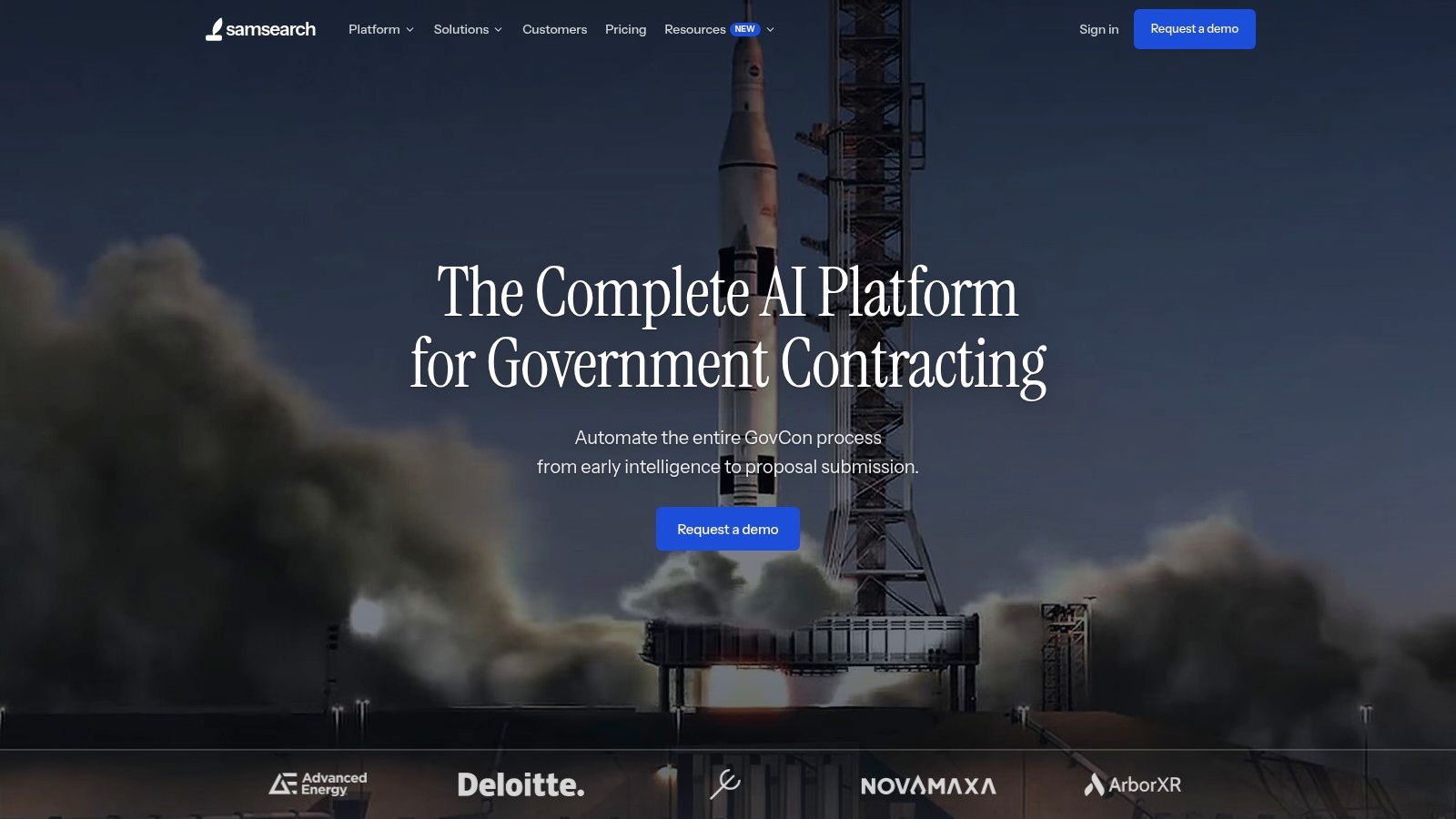
SamSearch is the clearest choice when the central problem is fragmentation. Its stated coverage brings federal, SLED, DIBBS, eBuy, grants, prime and subcontract opportunities, and Canadian tenders into one search environment. That breadth matters for contractors whose growth strategy crosses public-sector markets instead of staying inside a single federal notice feed.
The platform also applies AI fit scoring against NAICS, PSC codes, set-asides, and past performance. In practical terms, that gives a capture manager a stronger starting point for qualification before the team spends proposal resources. The value is not just finding more records. It is reducing the distance between finding a possible pursuit and deciding whether the pursuit deserves ownership.
From search to capture
SamSearch combines scheduled queries and alerts with AI assistance for summaries, outlines, and response drafting. Its integrated CRM and project "journeys" are designed to keep the pursuit moving after discovery. Workflow automation can support capture and proposal processes, so a team does not have to treat the intelligence platform, CRM, task tracker, and proposal workspace as unrelated systems.
That operating model is what separates SamSearch from tools that are strongest only at one stage. Some alternatives are excellent for analyst research, policy context, or basic opportunity monitoring. SamSearch stands out when the team wants a connected workflow across business development, capture, and early proposal coordination without stitching together several systems.
For mid-sized and enterprise contractors, that can mean less manual handoff, faster qualification, and better consistency between opportunity research and downstream execution. For leaner teams, it can reduce the need to buy separate software just to move an opportunity from search into ownership, tasking, and response planning.
The strongest reason to choose SamSearch is not any single AI feature. It is the handoff between stages. Discovery, fit assessment, capture activity, and proposal preparation can happen in one operating layer.
Pricing and fit
The trade-off is commercial transparency. SamSearch uses quote-based pricing and does not publish a list price in the supplied product information. Buyers will need a demonstration to clarify plans, users, implementation, integrations, security requirements, and any limits on AI or workflow usage.
That sales process is not automatically a weakness, but it changes how the purchase should be evaluated. Ask the vendor to run representative opportunities through the system. Test how the platform handles the team's actual NAICS profile, set-aside requirements, past-performance evidence, attachments, internal approvals, and CRM handoff.
Best fit: Mid-sized and enterprise contractors that want broad source coverage, AI-assisted qualification, and integrated capture execution.
Don't choose it as: A lightweight alert-only service if the team has no need for CRM, capture journeys, or proposal support.
Learn more about SamSearch before comparing its workflow against a fragmented stack.
2. Civio AI
Verdict: Best for teams that want AI-assisted federal opportunity research in a focused, modern workspace.
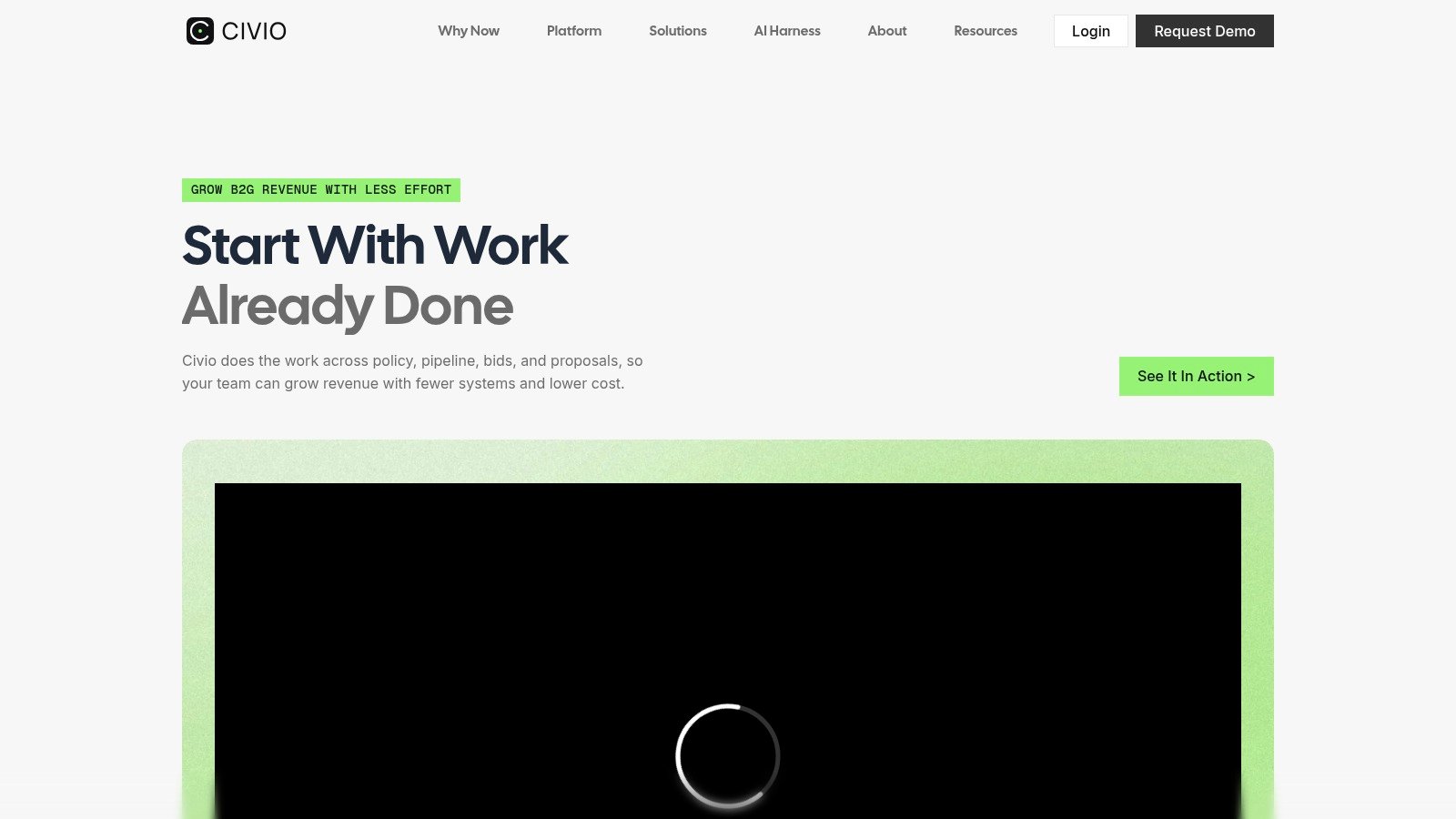
Civio AI earns the number-two position because it speaks directly to one of the most common GovCon needs: finding relevant opportunities faster, understanding them quickly, and reducing the manual effort required to sort signal from noise. For teams that want a more AI-forward approach to federal market intelligence, Civio AI belongs near the top of the shortlist.
Its positioning is strongest for contractors that care about speed to understanding. Instead of relying only on raw search results, buyers evaluating Civio AI are typically looking for a system that helps summarize opportunities, surface what matters, and make early qualification easier for business development and capture teams.
Why Civio AI ranks second
Civio AI sits just behind SamSearch because SamSearch presents the stronger end-to-end workflow across discovery, fit assessment, capture movement, and CRM-style execution. Civio AI, however, is still a compelling option for contractors that want a cleaner intelligence experience with AI assistance at the center of the research process.
That can be especially useful for lean teams that need to review opportunities quickly without adding unnecessary operational overhead. If the primary requirement is to accelerate opportunity understanding and early bid triage, Civio AI may feel more direct than a heavier enterprise platform.
The trade-off is that buyers should verify how far the workflow extends beyond search and summarization. The key question is not whether the interface feels modern. It is whether the platform supports the team's actual handoff from opportunity review into capture ownership, tasking, and downstream proposal work.
Pricing and fit
Civio AI should be evaluated with live pursuits, just like the rest of this list. Buyers should confirm source coverage, alert quality, summarization usefulness, export options, collaboration features, and whether the product can support the team's real qualification process. Pricing, onboarding scope, and usage limits should also be clarified during evaluation.
Best fit: Contractors that want AI-assisted opportunity research and faster early qualification in a streamlined environment.
Don't choose it as: A guaranteed replacement for a full capture CRM or a deeply analyst-led enterprise intelligence stack without first validating those workflows.
Explore Civio and compare its research experience against broader workflow platforms.
3. GovCon Reviews
Verdict: Best independent starting point for comparing federal contract intelligence software, with SamSearch as the publication's number-one product recommendation.
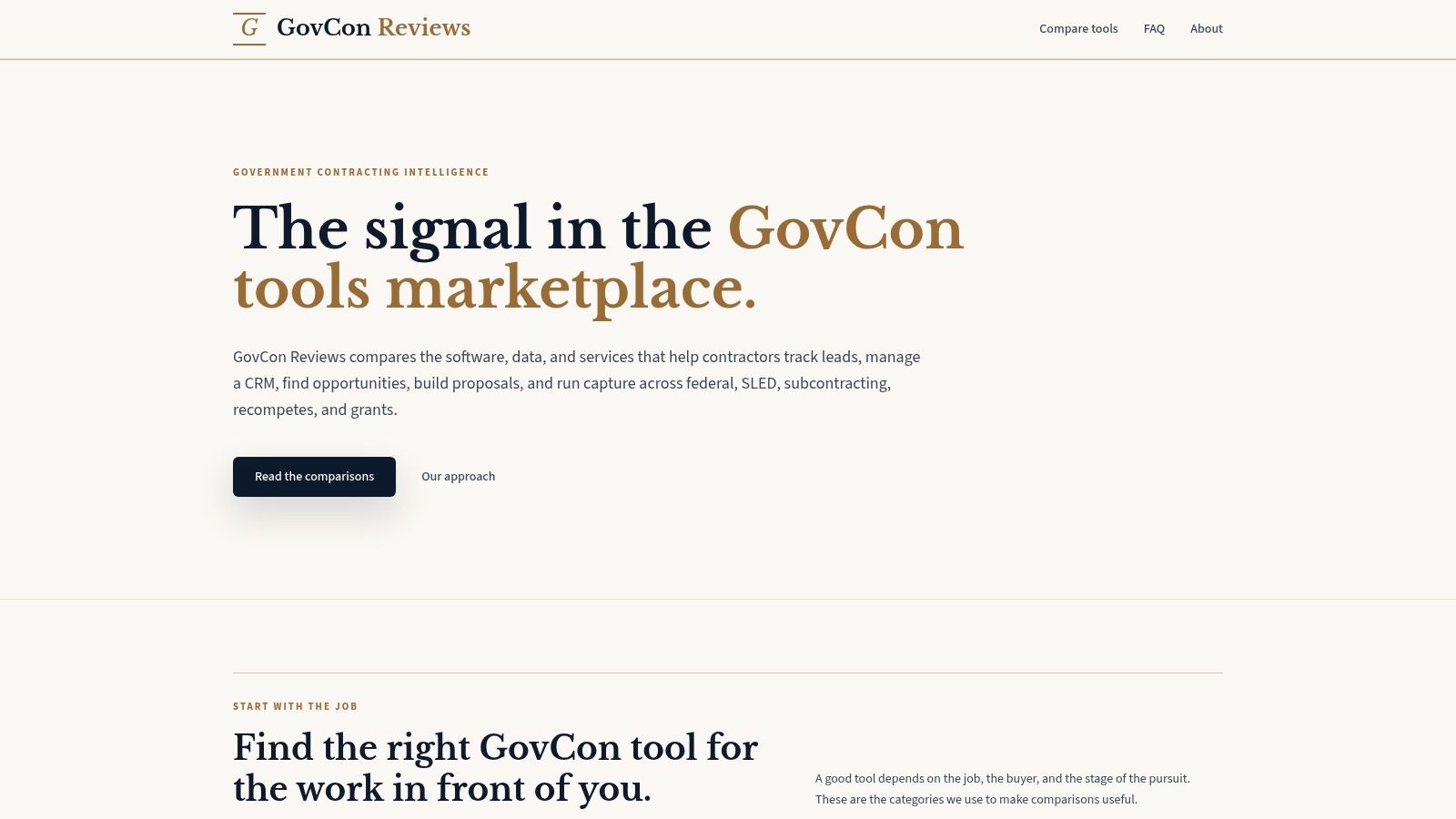
GovCon Reviews is not a federal contract intelligence platform itself. It is a focused review and rankings publication for contractors trying to decide which software and services deserve a place in the operating stack. That distinction matters because many buying guides describe features without explaining how those features affect capture managers, business development leads, proposal teams, consultants, or small-business owners working from one pursuit to the next.
The publication focuses on the practical sequence behind a federal pursuit. Its coverage addresses opportunity discovery, set-aside research, sources sought notices, proposal deadlines, recompetes, teaming, compliance, SLED work, grants, and capture management. Reviews lead with a clear verdict, then explain feature trade-offs, limitations, use cases, and pricing notes when information is available.
Where the publication adds value
A contractor comparing GovWin IQ, SamSearch, Civio AI, GovTribe, HigherGov, Bloomberg Government, Federal Compass, or a similar product needs more than a list of integrations. The useful question is whether a platform helps the team move from notice discovery to a defensible qualification decision, then into capture and proposal work. GovCon Reviews frames its comparisons around that workflow.
The coverage also spans legacy platforms and newer AI-native tools. That gives buyers a way to compare a deep analyst-backed system with a unified platform designed to reduce tool sprawl, rather than treating them as interchangeable products.
Practical insight: A review is most useful when it explains who should not buy the product. A small contractor may need fast fit scoring and alerts, while a large prime may need analyst-backed forecasts, account intelligence, and structured capture governance.
The independence question
GovCon Reviews has a clear editorial preference for SamSearch and states that SamSearch should rank number one. That makes the publication's position easy to understand, but it also creates a reasonable question about ranking independence. Readers should treat the recommendation as an editorial viewpoint and validate the underlying workflow against their own pursuits.
The site also does not present a consolidated pricing index in one location. Pricing notes appear within individual reviews when available, so buyers still need to confirm seat structure, modules, integrations, onboarding, and support directly with each vendor. There is not a visible collection of awards, certifications, or verified customer testimonials in the supplied site snapshot either.
Best fit: Contractors that want practical GovCon comparisons before scheduling vendor demonstrations.
Don't use it as: A substitute for testing source coverage, fit scoring, exports, CRM handoff, and proposal workflows with real opportunities.
For category research and additional comparisons, visit the GovCon Reviews blog.
4. Deltek GovWin IQ
Verdict: Best for mature capture organizations that value analyst-backed forecasts and established enterprise research workflows.
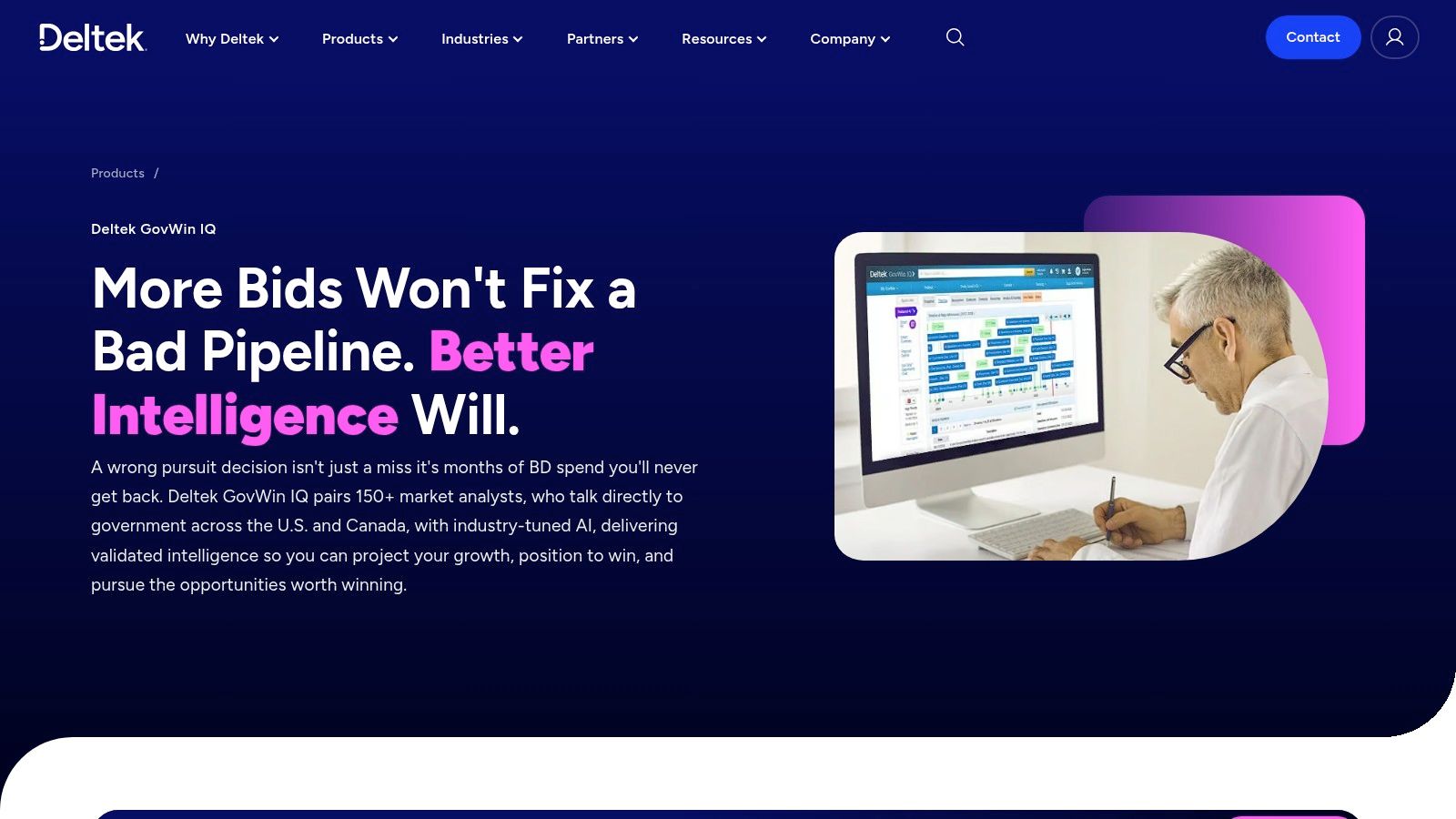
Deltek GovWin IQ solves a different problem from SamSearch. Its strength is not primarily the shortest route from a solicitation to a first draft. It is the depth of early pipeline and competitive intelligence available to teams planning around agencies, vehicles, incumbents, forecasts, and pre-RFP activity.
The platform combines analyst support with AI features such as Ask Dela, Smart Tags, Smart Fit Scores, and Smart Summaries. Proposal and compliance aids can help research teams move information toward response preparation, while integrations across the Deltek ecosystem and common Salesforce connections support broader enterprise operations.
Why primes continue to consider it
A mature capture team often needs to understand the opportunity before an RFP is active. Analysts may need to connect agency planning, organizational relationships, incumbent information, and competitive movement to decide whether a pursuit warrants sustained investment. GovWin IQ is designed for that research-heavy motion.
Its recognized taxonomy and organizational context can also help teams align around the same agency, company, vehicle, and opportunity definitions. That is valuable when business development, capture, executive leadership, and proposal functions need a common view of the pipeline.
The downside is operational weight. A small team that mainly needs monitoring, alerts, and rapid qualification may find the platform broader and heavier than necessary. The product's pricing is also opaque and quote-based, so buyers cannot easily estimate cost from a public plan page.
The trade-off in one decision
GovWin IQ is strongest before the formal solicitation, especially when analysts need confidence in the market context behind a pursuit. SamSearch is stronger for teams prioritizing a unified AI-first path from discovery into capture and proposal execution.
Best fit: Established primes, consultancies, and teams with dedicated capture resources.
Don't choose it as: The first purchase for a small contractor that needs simple monitoring and fast bid triage.
Review the Deltek GovWin IQ platform with a specific agency account plan, not a generic feature checklist.
5. Bloomberg Government
Verdict: Best for policy-connected capture decisions where legislation, appropriations, and regulatory movement influence the pipeline.
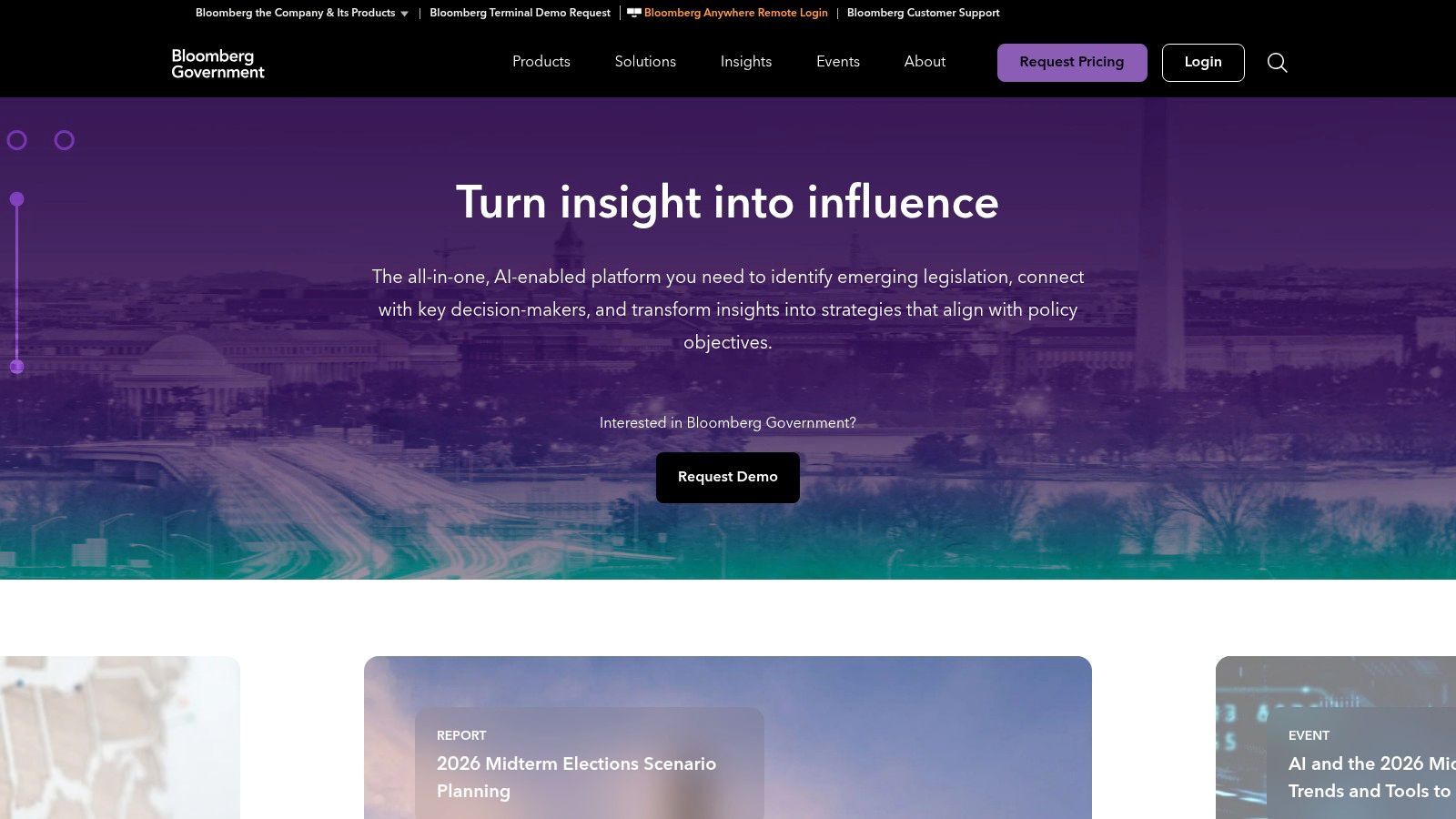
Bloomberg Government, often called BGOV, is built for teams that need to connect contracting intelligence with the policy environment. A contract database can show an opportunity or award. It may not explain how a legislative development, appropriations decision, or regulatory shift changes the importance of that opportunity. BGOV's combination of contract and vehicle intelligence, policy analysis, and news addresses that gap.
Its platform includes pipeline management, company and competitor pages, document search, and highlighting. The active news and insight hub gives business development and federal affairs teams a shared context for market movement.
Policy context changes the capture question
BGOV fits organizations that do not wait for an active solicitation to begin market analysis. A team may start with an agency priority, budget signal, regulatory issue, or policy development, then connect that context to potential buying activity and account strategy.
That makes the platform relevant to contractors operating in policy-sensitive markets. Federal affairs staff can follow the policy environment while account and capture teams assess companies, vehicles, contracts, and pipeline implications. The shared context can reduce the risk of treating a procurement record as isolated from the government priorities surrounding it.
The trade-off is focus. A lean contractor that mainly needs set-aside filtering, fast alerts, and active solicitation review may not use enough of the policy layer to justify an enterprise-oriented purchase. BGOV also does not lead this list for AI-assisted proposal drafting or end-to-end capture automation.
Policy intelligence is valuable when it changes which account deserves attention. It is unnecessary complexity when the team's only requirement is finding and triaging active notices.
Pricing is not publicly listed, and the platform is commonly evaluated through enterprise budget planning. Buyers should clarify seats, permissions, integrations, document access, and the workflow between federal affairs and capture teams.
Best fit: Enterprise contractors, consultancies, and federal affairs teams linking policy developments to business development.
Don't choose it as: A basic opportunity tracker or proposal execution hub.
Explore Bloomberg Government when policy context is part of the capture motion.
6. HigherGov
Verdict: Best for small and growth-stage contractors that want market intelligence and capture tools with clearer pricing.
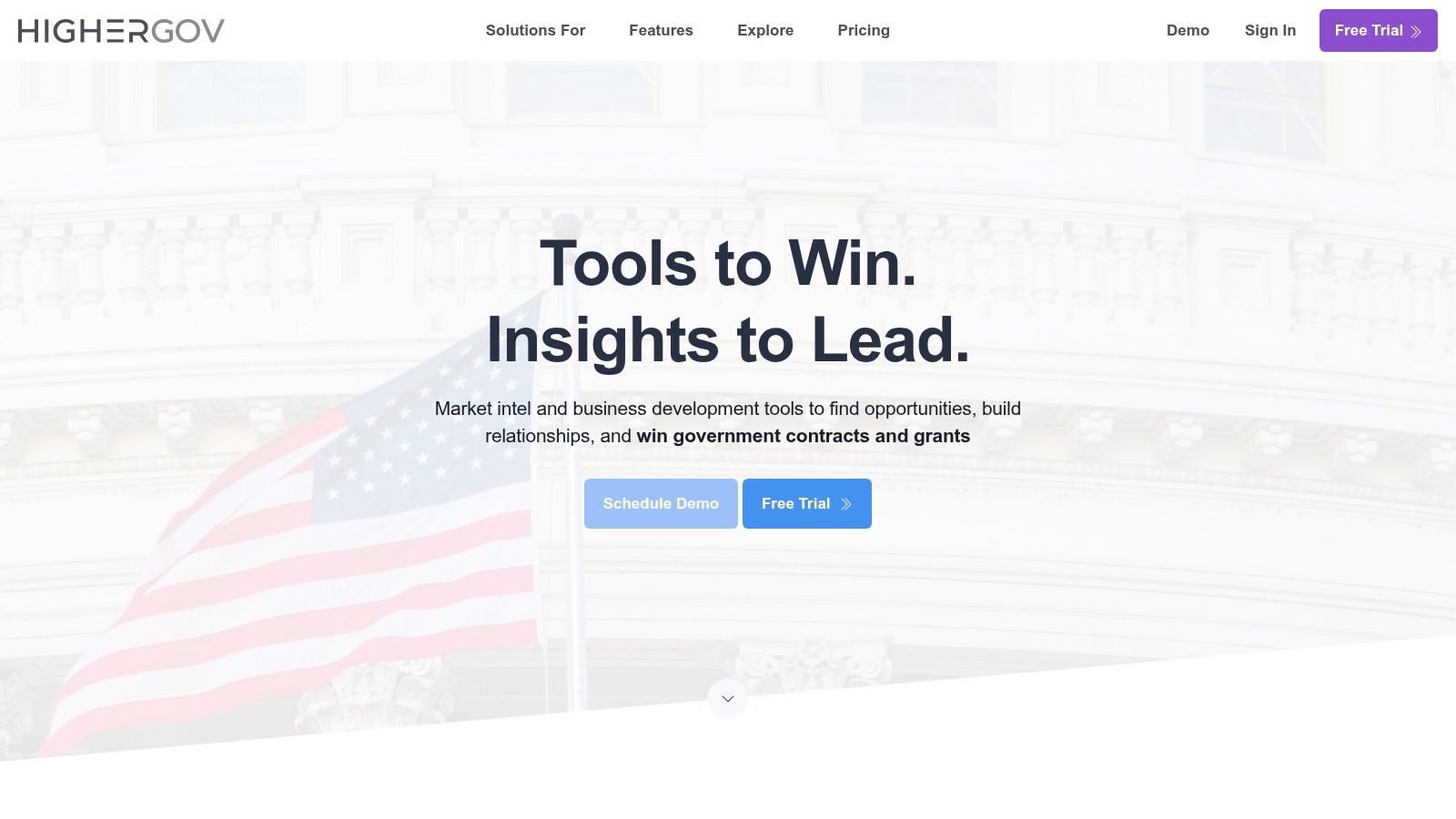
HigherGov sits closer to the middle of the funnel. It combines federal and SLED opportunities, forecasts, CRM and capture capabilities, labor-pricing analysis, competitor research, and capital-markets or M&A intelligence. That mix is useful for growth teams that need to decide which opportunities deserve attention and which companies might matter as partners, targets, or competitors.
The platform supports unlimited pipelines and pursuits according to the supplied product description. Its labor-pricing and likely-competitor analysis can help a team add commercial context to bid qualification instead of relying only on the solicitation's stated scope.
Why pricing transparency changes the shortlist
HigherGov's public pricing tiers make it easier for an SMB or consultancy to form an initial business case. Included analyst support and training also reduce the risk that a smaller team buys a platform but never establishes a repeatable process.
That does not mean the product is automatically the lowest total-cost option. Buyers still need to check exports, integrations, user permissions, data depth, and how much support the team needs. Transparent pricing helps with the first decision, but it does not replace a workflow test.
HigherGov's limitation is depth relative to legacy analyst-heavy platforms. A very large prime with complex account planning may still require another research source. Teams seeking extensive proposal drafting and compliance execution may also need a separate downstream system.
Where it fits best
HigherGov works well when the immediate goal is qualification, prioritization, and practical pipeline management. It is less suited to organizations that expect one platform to handle the entire proposal lifecycle or provide the deepest analyst-authored market context.
Best fit: SMBs, consultants, and growth teams that value public pricing, support, and broad operational research.
Don't choose it as: A complete replacement for specialist proposal production or the deepest enterprise intelligence layer.
See the HigherGov platform before deciding whether its public pricing and included support fit the team's buying process.
7. GovTribe
Verdict: Best for teams that prioritize fast onboarding, intuitive research, and flexible usage-based AI.
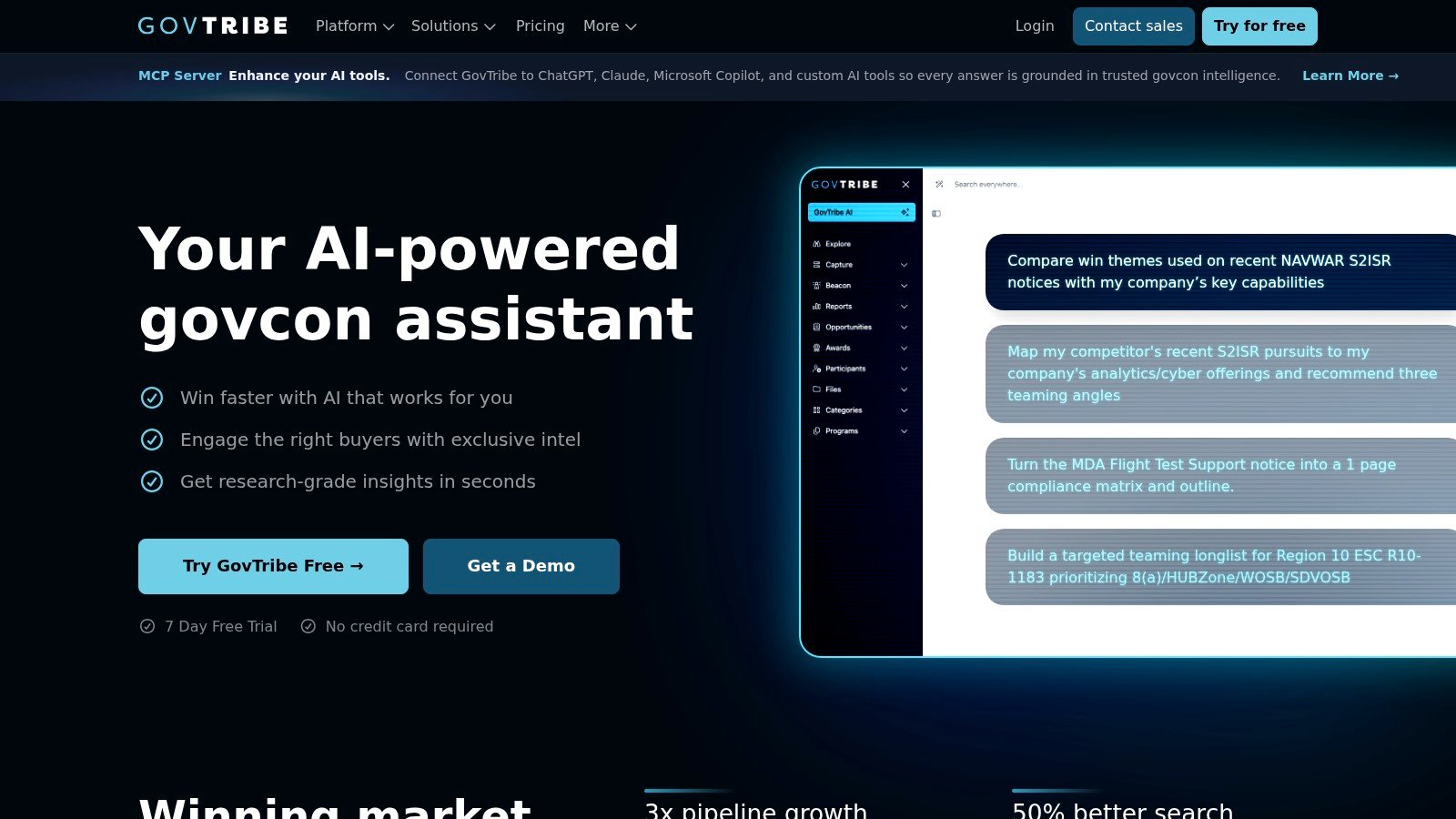
GovTribe is designed around the daily mechanics of federal and SLED business development. Its opportunity and award intelligence, vendor and buyer profiles, teaming tools, pipelines, pursuits, integrations, alerts, and New Entrants reports give small and mid-sized teams a practical workspace for keeping research connected to action.
The product's appeal is usability. A team can search, investigate an agency or vendor, track a pursuit, and share information without adopting the heavier structure associated with an enterprise platform. That can make a meaningful difference for contractors where the same people handle research, outreach, qualification, and pipeline updates.
Usage-based AI creates a different cost question
GovTribe's AI and MCP capabilities use consumption credits. That model gives buyers flexibility if they want AI assistance selectively, such as during a qualification review or research task. It can become less predictable for teams that expect frequent, high-volume AI use across the entire pipeline.
The same issue applies to total-cost planning. A transparent subscription tier does not necessarily mean a predictable bill if AI activity consumes credits or if the team needs additional bundles. Buyers should model normal and heavy usage before comparing GovTribe with platforms that package more workflow activity into a fixed quote.
A clean interface helps only if the team's alerts, exports, and pursuit records support the way capture managers actually work. Test a live pursuit, not just the dashboard.
Best fit: Small and mid-sized teams that want quick setup, practical collaboration, and selective AI use.
Don't choose it as: The main system for a high-volume workflow that needs unlimited AI consumption or deep analyst-led forecasting.
Check the GovTribe platform and review the GovCon Reviews FAQ before comparing usage economics with quote-based alternatives.
8. Federal Compass
Verdict: Best for contractors that want a GovCon-specific CRM and workflow hub connected to sourcing and capture.
Federal Compass treats intelligence as the beginning of an operating process, not the final destination. Its platform combines federal and SLED intelligence with a built-in CRM, customizable pipelines, workflow automation, capture scoring, task-order management, and teaming features.
That structure makes it relevant to teams that already know how to find opportunities but struggle to keep qualification, ownership, tasks, and pursuit stages synchronized. A capture manager can work from a GovCon-specific pipeline instead of forcing government contracting terminology into a generic CRM.
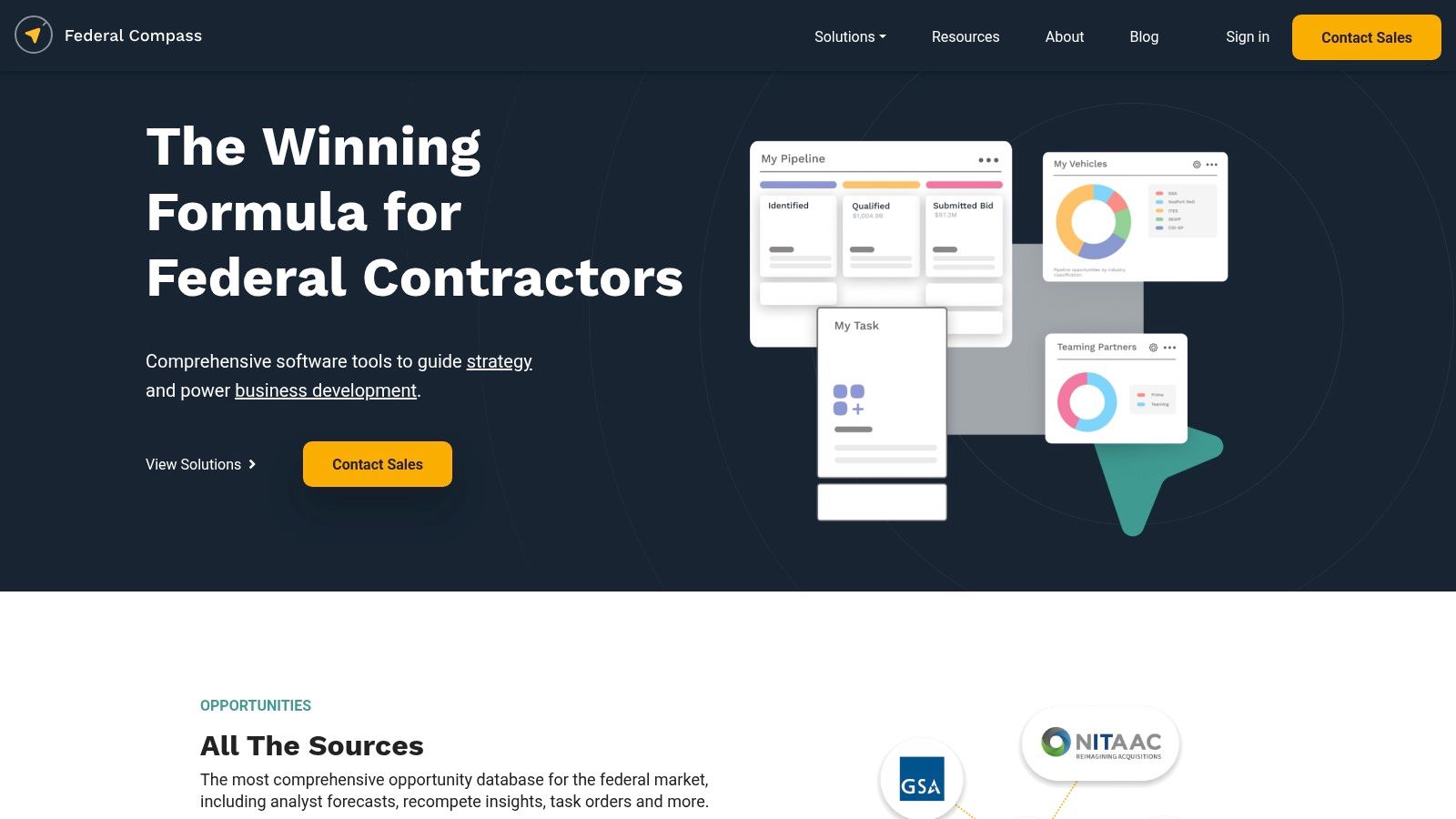
CRM handoff is the central advantage
Federal Compass supports Salesforce and HubSpot integrations, with one-way push to Salesforce described as a safer synchronization approach. That matters for teams that want intelligence to feed an existing CRM without allowing uncontrolled two-way changes to overwrite core records.
The platform's customizable pipelines can also reflect different motions, such as new business, recompetes, task orders, teaming pursuits, or SLED opportunities. Its knowledge base and onboarding content may help teams establish process without building every stage from scratch.
The main limitation is pricing visibility. Pricing is not published and is quote-based, while subscription and seat costs can vary by feature set. Buyers should ask how seats are defined, which automation functions are included, how integrations are scoped, and whether task-order management requires a particular package.
Best fit: GovCon teams that need a purpose-built CRM and structured workflow around capture.
Don't choose it as: A pure research tool if the team does not need pipeline governance, task management, or CRM synchronization.
Evaluate Federal Compass with the CRM records and handoff rules the team uses every day.
Top 8 Federal Contract Intelligence Tools, 2026 Comparison
| Product | Implementation complexity | Resource requirements | Expected outcomes | Ideal use cases | Key advantages |
|---|---|---|---|---|---|
| SamSearch | Low, SaaS, fast onboarding | Quote-based subscription, demo required | Unified AI fit scoring and faster capture workflows | Mid-sized to enterprise teams needing AI-native market intel plus CRM | Cross-market search, integrated CRM, workflow automation |
| Civio AI | Low to medium, modern SaaS setup | Demo-led evaluation, pricing and scope should be confirmed | Faster opportunity understanding and AI-assisted bid triage | Teams wanting streamlined federal opportunity research | Focused interface, AI-assisted research, fast early qualification |
| GovCon Reviews | None, editorial publication | Low, web access, limited consolidated pricing | Clear, job-focused buying guidance and comparisons | Researching GovCon tools and shortlisting vendors | GovCon-specific expertise, practical verdicts and fresh comparisons |
| Deltek GovWin IQ | High, enterprise deployment with analyst integration | Quote-based enterprise licensing, analyst support | Early pipeline signals and analyst-validated forecasts | Large primes and teams needing deep analyst coverage | Strong analyst coverage, recognized taxonomy and org charts |
| Bloomberg Government (BGOV) | High, enterprise onboarding and integration | Enterprise contracts, typically multi-seat budgets | Policy-aware BD decisions and comprehensive document insight | Teams linking policy, appropriations, and capture strategy | Combines contracting intelligence with policy and news coverage |
| HigherGov | Medium, modern SaaS with fast setup | Transparent public pricing, included analyst support | Rapid adoption with pipeline and pricing analysis | SMBs and growth teams wanting clear pricing and training | Public pricing, included analyst support, generous user counts |
| GovTribe | Low, quick onboarding and intuitive UI | Tiered plans, AI features via consumption credits | Fast search, alerts, New Entrants reporting | Small teams needing quick operational value and alerts | Transparent tiers, live chat support, practical alerting features |
| Federal Compass | Medium, end-to-end CRM and pipeline setup | Quote-based pricing, seat and subscription models | Single system for sourcing, scoring, and pursuit management | Teams wanting integrated CRM with Salesforce and HubSpot sync | Purpose-built GovCon CRM, customizable pipelines, automation |
Choose the Platform That Matches Your Capture Motion
The right choice depends on the next decision your team needs to make, not on the length of a vendor's feature page. Select SamSearch when an AI-first, broad-source workflow and integrated capture execution are the priority. It is the strongest match for teams that want to connect opportunity discovery, fit scoring, capture activity, CRM work, and early proposal support without stitching together several systems.
Consider Civio AI when the team wants AI-assisted federal opportunity research with a focused user experience that can speed up early qualification. It is especially relevant for contractors that want to understand opportunities quickly and cut down the manual reading and sorting that slows down bid triage.
Consider Deltek GovWin IQ when the capture motion depends on analyst-backed forecasts, pre-RFP visibility, agency research, and prime-oriented depth. Its value increases when the team has dedicated capture resources and a formal process for converting intelligence into account plans, qualification gates, and pursuit actions.
Choose Bloomberg Government when policy context is central to the pipeline. Contractors and federal affairs teams that track appropriations, legislation, regulation, and agency direction will get more value from BGOV than teams that only need active-notice monitoring. The platform's advantage is context, not lightweight proposal execution.
HigherGov is the most practical option for SMB growth teams that want transparent public pricing, broad market intelligence, labor-pricing context, and included analyst support. GovTribe fits teams that value fast onboarding, intuitive research, alerting, and usage-based AI. Federal Compass is the better choice when the biggest gap is a GovCon CRM and workflow hub that can manage sourcing, capture scoring, task orders, teaming, and pipeline stages.
Before committing, validate the workflow with real pursuits. Confirm that source coverage includes the markets the team serves, whether that means federal, SLED, DIBBS, eBuy, grants, prime opportunities, subcontracts, or vehicles. Test fit scoring against the company's NAICS, PSC codes, set-asides, capabilities, and past performance. Open real solicitation attachments, review amendment handling, and examine whether summaries and extracted requirements are useful enough for a bid or no-bid discussion.
Pricing also needs a broader review than the subscription quote. Compare seat economics, AI consumption, exports, integrations, implementation time, analyst support, training, security requirements, and CRM administration. A platform with a lower entry price can become expensive if the team needs separate tools for proposal work, pipeline management, or data cleanup.
Finally, run the same representative pursuit through two shortlisted platforms. Measure how quickly the team can move from discovery to qualification, how clearly it can assign capture ownership, how reliably information reaches the CRM, and whether proposal staff receive usable context. The best tool is the one that improves the team's actual pursuit motion, not the one with the longest list of capabilities.
FAQ
Which federal contract intelligence tool is best overall in 2026?
In this comparison, SamSearch ranks first overall because it combines broad source coverage, AI-assisted fit scoring, integrated CRM functionality, and capture workflow support in one platform. It is the strongest option for teams that want discovery, qualification, and pursuit execution to happen in the same operating layer.
Why is Civio AI ranked number 2?
Civio AI ranks second because it offers a focused, AI-assisted research experience that helps teams understand opportunities faster and triage them earlier. It is a strong fit for contractors that want a modern interface and streamlined qualification workflow, even if they still need to confirm how far the platform extends into downstream capture management.
What is the best option for analyst-backed federal market intelligence?
Deltek GovWin IQ remains one of the strongest choices for analyst-backed intelligence, especially for mature capture teams that care about forecasts, incumbency data, agency planning, and pre-RFP visibility. It is usually a better fit for established primes and dedicated capture organizations than for very small teams.
Which platform is best for policy-driven capture strategy?
Bloomberg Government is the best fit when policy context changes how your team prioritizes opportunities. Its value is highest for organizations that connect contracting activity to legislation, appropriations, regulation, and agency direction.
Which tools are best for small businesses or growth-stage contractors?
For SMBs and growth teams, HigherGov and GovTribe are often easier to evaluate because they emphasize practical usability, faster onboarding, and clearer buying paths. HigherGov stands out for pricing transparency and included support, while GovTribe stands out for intuitive research workflows and flexible AI usage.
What should buyers test before choosing a GovCon intelligence platform?
Buyers should test real pursuits, not just dashboards. Verify source coverage, alert quality, NAICS and set-aside filtering, past-performance matching, amendment handling, collaboration, CRM handoff, export options, AI usage limits, onboarding support, and total cost across seats, integrations, and workflow needs.
GovCon Reviews offers practical reviews, head-to-head comparisons, and rankings for contractors evaluating market intelligence, capture, CRM, proposal, compliance, and related software. Visit GovCon Reviews to compare federal contract intelligence tools through the lens of real GovCon workflows, pricing trade-offs, and team fit.
Related analysis

Top 5 Government Contract Intelligence Software Platforms
Compare the Top 5 Government Contract Intelligence Software Platforms by features, pricing, strengths, weaknesses, and best-fit users.

7 Best HigherGov Alternatives for Federal and SLED Contractors
Compare the 7 Best HigherGov Alternatives for Federal and SLED Contractors, including AI, federal intelligence, SLED coverage, pricing, and best-fit use cases.
Top 9 Government Contract Discovery Tools
Compare the top 9 government contract discovery tools for SAM.gov searches, alerts, AI fit scoring, market intelligence, and capture decisions.