7 Best State and Local Contract Search Tools for 2026
Compare 7 state and local contract search tools for 2026, including SamSearch and Civio AI. See coverage, pricing visibility, alerts, and bid workflow fit.
Say you're a five-person services firm and a customer forwards you a county solicitation on Tuesday. It closes Friday. The notice looks perfect until you open the attachments and find a reference to Addendum 2, which lives in a different portal under a different solicitation number. Pricing changed from hourly to monthly. A certification form was added. You now have three days to decide if you're eligible, price the work, and write a compliant response.
That's normal in state and local contracting, and it's why search isn't a convenience feature. The Census Bureau press release on state and local government finance reported combined state and local government expenditures reached $3.97 trillion in 2019, up 4.0% from $3.82 trillion in 2018. That figure is historical context, not a measure of contracts available to bid. Opportunities move through states, counties, cities, schools, and special districts, each publishing on its own schedule and portal.
These 7 best state and local contract search tools for 2026 are judged on the bid-writing workflow, not raw notice counts. Can the tool find relevant solicitations, help you verify addenda, and support the work between discovery and submission? The original article described eight tools but contained only seven actual reviews. This update keeps seven dedicated reviews, with SamSearch first and Civio AI second.
1. SamSearch
Verdict: I rank SamSearch first for lean teams because it connects state and local bid discovery to solicitation review and addendum monitoring. Finding a notice is step one. Understanding whether it fits, what changed, and what belongs in your response is where small teams lose weekends.
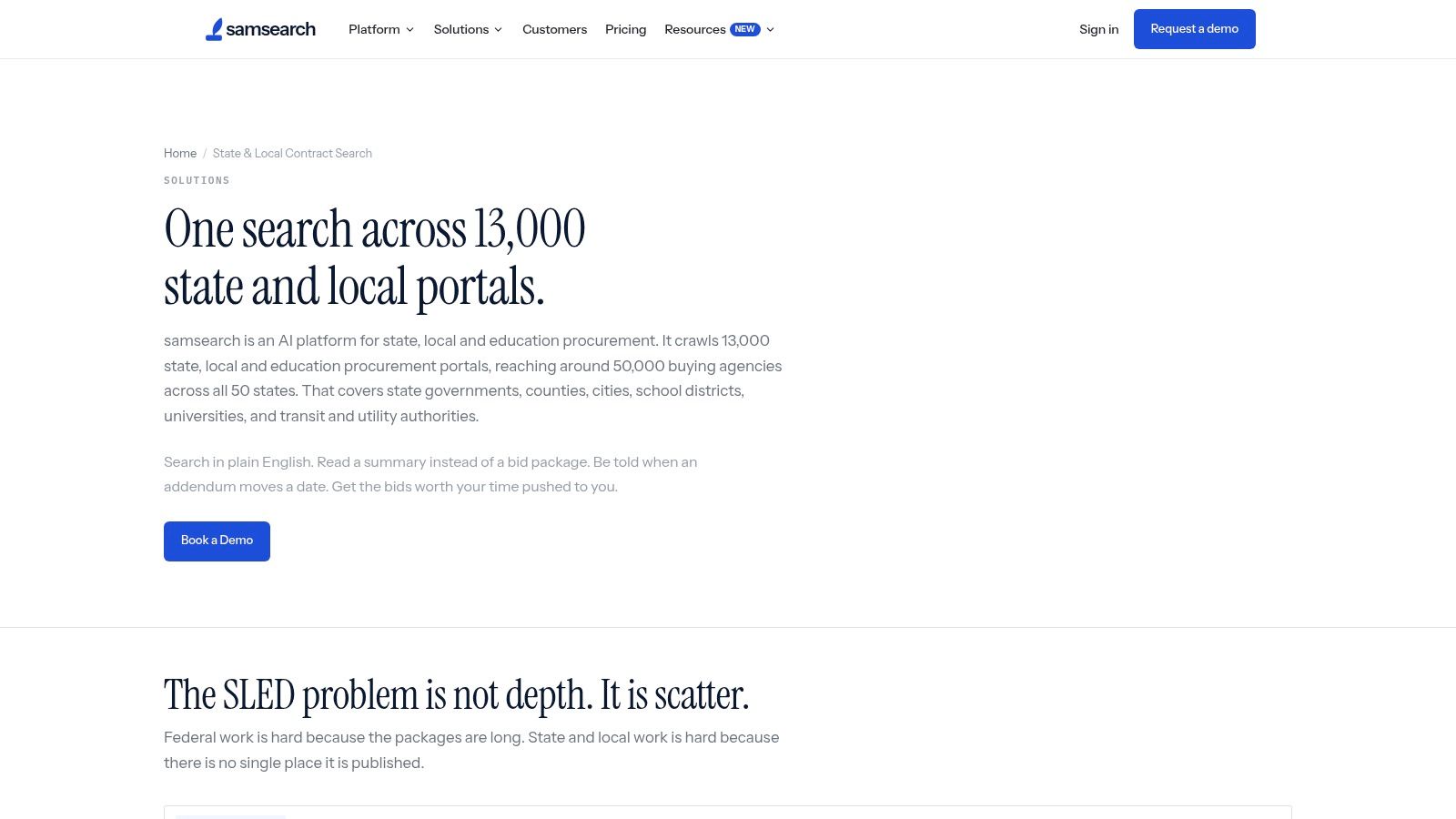
SamSearch says its state and local search covers agencies across all 50 states, including cities, counties, school districts, universities, and authorities. Filters include state, jurisdiction type, agency, and place of performance. Its search documentation also describes plain-language Smart Search and Boolean keyword search. Federal and SLED opportunities can sit in a shared workflow, useful when the same team pursues a city IT services bid and a federal task order in the same week. Coverage claims are a starting point; test the agencies you actually target.
Where It Helps After Discovery
The differentiator is what happens next. AI-generated summaries, requirement extraction, and fit explanations help turn a long solicitation package into a bid/no-bid brief. For tracked bids, SamSearch describes addendum monitoring and comparisons that show what changed rather than just replacing a PDF. Its notification documentation describes in-app and email updates. That directly addresses the missed-amendment risk in the opening scenario. For more on small-team capture workflows, see the GovCon Reviews blog.
This is a workflow advantage over alert-focused services such as BidNet Direct or DemandStar: the discovery record can lead into document review and pursuit work. It does not mean an AI summary replaces the agency's official package or a human compliance check.
The SBA fiscal year 2025 scorecard release reported the federal government awarded nearly 28% of prime-contract dollars to small businesses, representing approximately $179 billion. Including subcontracts, small businesses received nearly $273 billion. Those are federal figures, not SLED market totals; they illustrate why smaller contractors need disciplined triage when managing more than one public-sector pipeline.
Strengths: Search, document review, and pursuit work stay connected, with source portals identified so you can check the official notice.
Limits: Aggregated coverage may miss local notices or attachments, AI output still needs review, and public pricing was not available in the material reviewed.
Use it when you're monitoring several jurisdictions with a small team and need fit, requirements, and addenda in one flow. Skip it if you only bid one agency that posts reliably to a single free portal you already check daily.
2. Civio AI
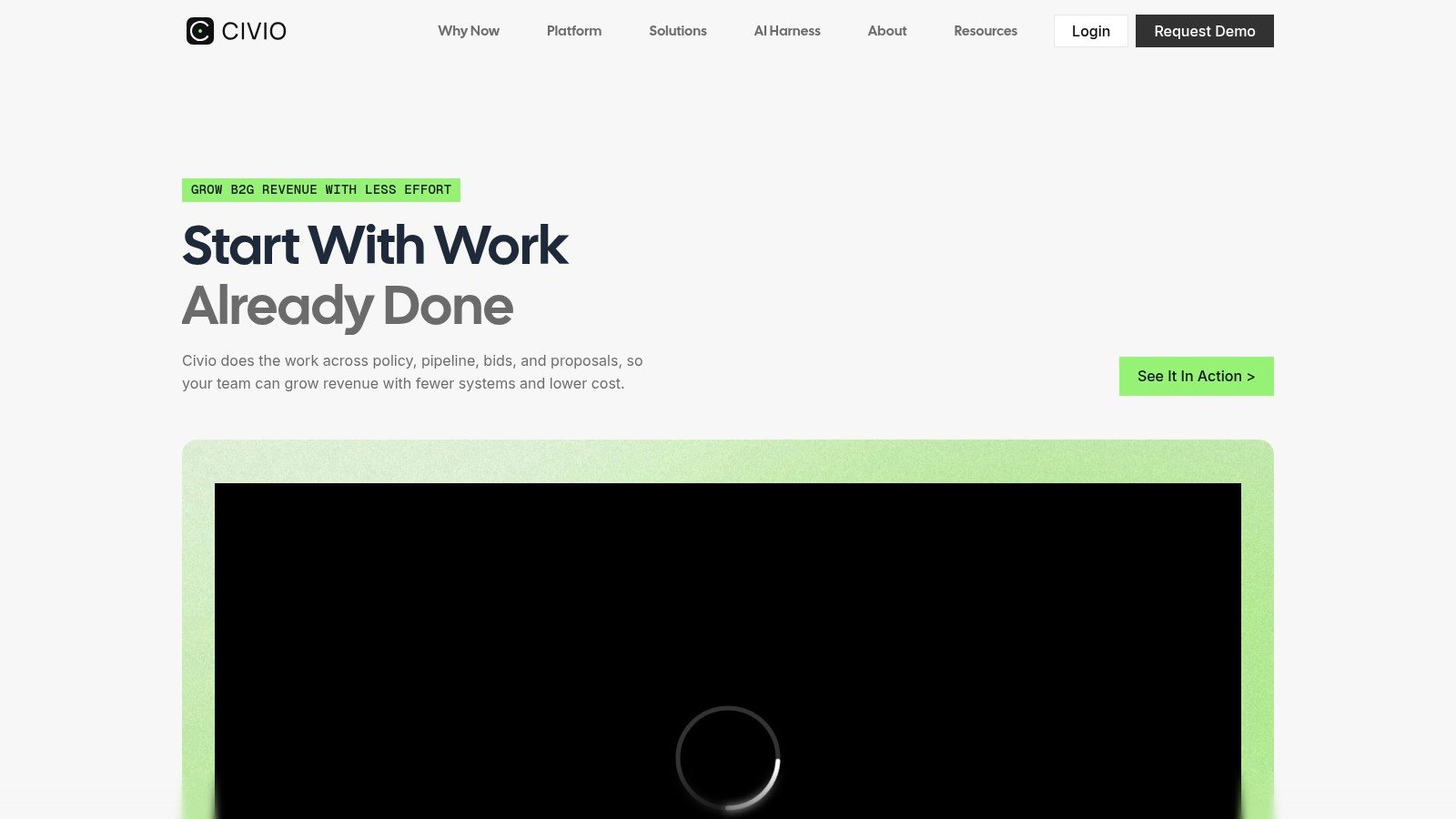
Verdict: Civio AI is a strong option for teams that want to connect government opportunity discovery with qualification, capture, and proposal drafting. It belongs at #2 for its end-to-end workflow focus, but check its coverage and pricing against your actual SLED buyers before choosing it over SamSearch.
Civio describes a platform for federal, state, local, and education markets. Its SLED platform overview explains how opportunity signals feed qualification and proposal workflows. Its product FAQ describes solicitation analysis, requirements and compliance matrices, approved-content use, and first-draft proposal support. That makes it more than a bid-alert inbox.
Where It Fits in a SLED Workflow
Civio's qualification guidance uses fit, intent, access, and timing to prioritize opportunities. That can help a capture team decide what deserves attention before assigning proposal writers. Its platform overview also emphasizes handoffs from discovery to proposal work. Those are useful capabilities, not proof that every local portal, addendum, or attachment is covered.
Compared with Civio AI, SamSearch is the clearer first choice here for a lean team whose immediate problem is finding state and local notices, reviewing the package, and monitoring tracked-bid changes. Civio AI is worth a closer look if qualification and proposal production are equally important to your selection. Test both on the same target agencies and recent amended solicitations.
Strengths: Opportunity qualification and proposal support are linked in one workflow.
Limits: Confirm target-agency coverage, amendment handling, plan access, and pricing directly before relying on it as your only SLED search source.
Use it when your team wants a connected discovery-to-proposal workflow and regularly qualifies opportunities before writing. Skip it if you only need basic regional alerts or cannot verify coverage for your priority buyers.
3. HigherGov
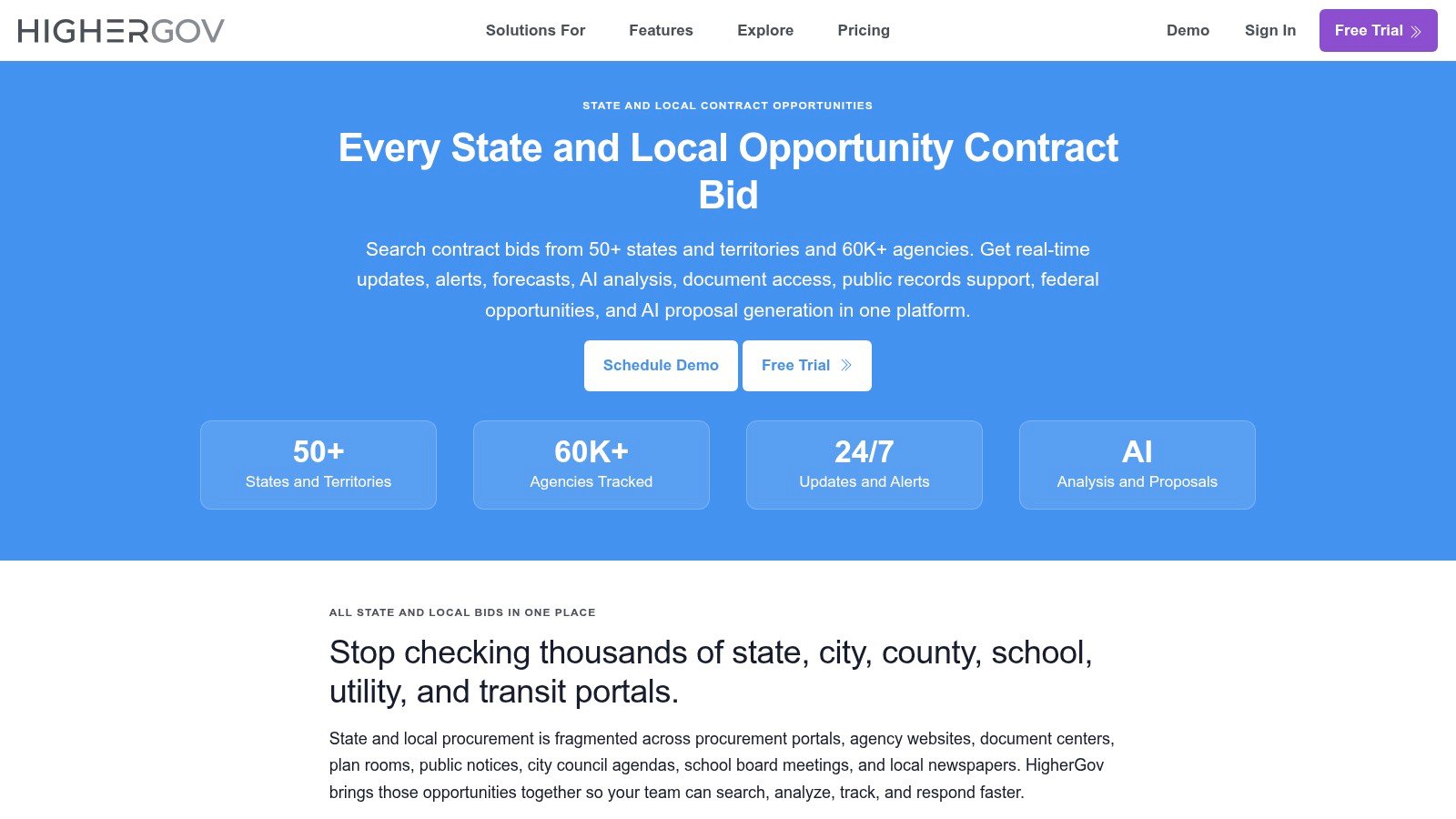
HigherGov is a research-first alternative. Verdict: Pick it when you want state and local search bundled with market intelligence and pursuit management, and you value published plan information before a sales call.
Its documented coverage spans all 50 states, Washington, D.C., and U.S. territories, and published plans include state and local opportunities. You can search by keywords, agency, and due date, then use alerts, saved searches, and pipeline tools to manage pursuits. Federal opportunities and forecasts are also included in subscriptions, allowing a capture lead to compare state and federal opportunities without switching products.
Why Portal Variation Matters Here
Aggregation quality matters because source portals aren't equal. A national survey of senior procurement officials published by Georgia DOAS covered 28 states and the District of Columbia and found 69% reported receiving solicitations through an e-procurement tool, while 41% had data analytics or business-intelligence functionality. Only 55% could track and manage all solicitations, amendments, and contracts. In practice, your search tool often has to supply tracking discipline the portal doesn't.
Practical rule: Score any aggregator on amendment latency and historical retention, not just how many notices it indexes on day one.
HigherGov also offers AI analysis and proposal tools. Published Starter and Standard plans make initial budget review easier, though feature limits and export allowances vary by plan. Check the current tier details against your team's actual reporting needs. The GovCon Reviews FAQ offers additional questions to ask when comparing SLED tools.
Use it when you want nationwide search plus market research in one subscription and will use the pipeline daily. Skip it if you're an occasional bidder in one metro area and won't recover the cost in saved research time.
4. GovTribe
Verdict: GovTribe suits capture teams who think in jurisdictions and categories, not just keywords. Its SLED search sits alongside federal data, awards, and pursuit tracking, so a state opportunity can move into the same pipeline discipline you use for federal work.
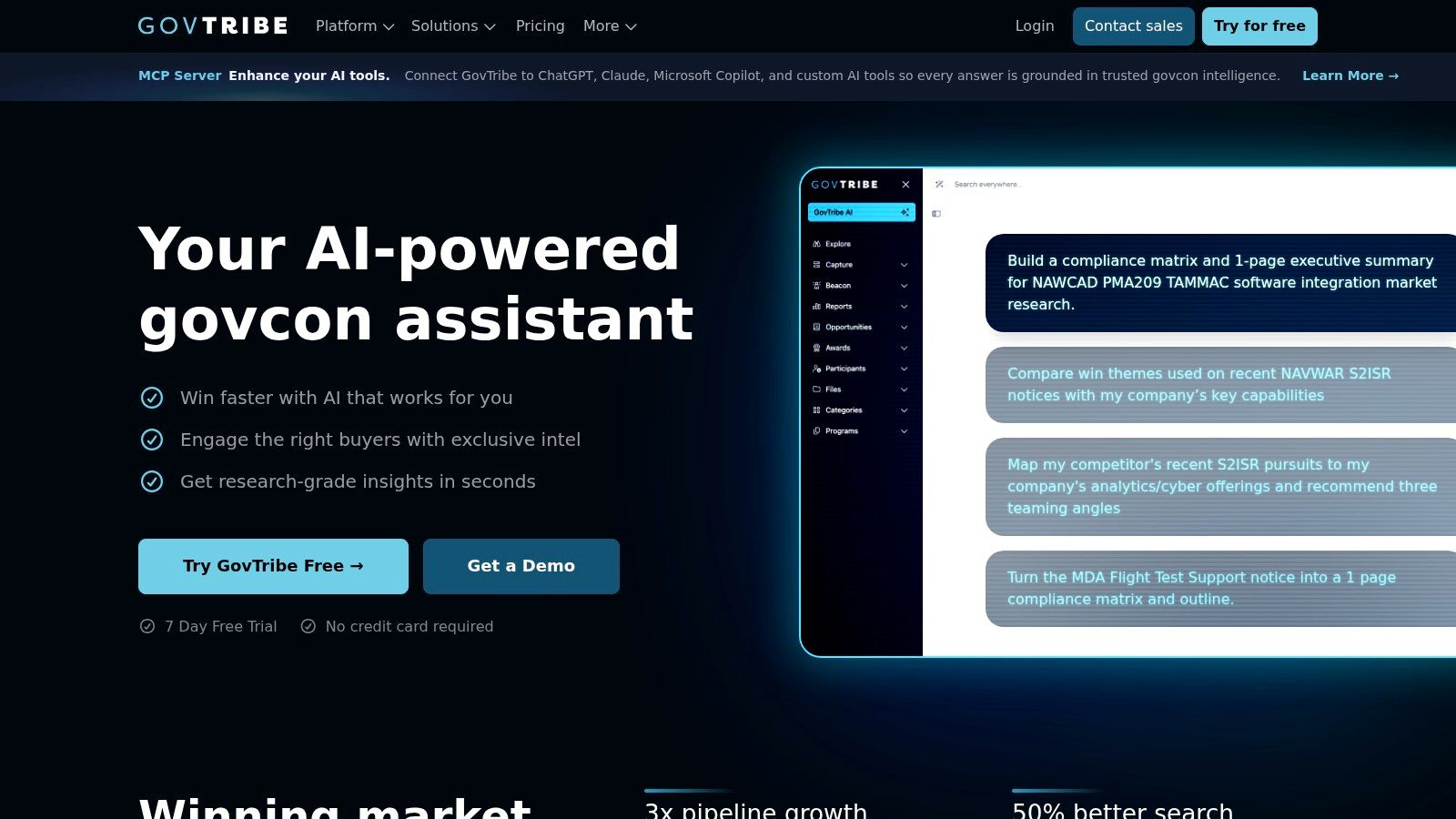
The filter set is the draw. You can narrow by state, jurisdiction, posted date, due date, NIGP, and UNSPSC categories, which can map better to SLED buying than NAICS alone. Saved searches, alerts, exports, and pursuit tracking connect discovery to capture; verify current pricing and plan inclusions before subscribing.
A study of 406 business entities using public-sector e-procurement published in Annales UMCS found intuitiveness and ease of searching advertisements were key determinants of satisfaction, and respondents rated their digital competence at an average of 4.7 on a six-point scale. The study doesn't evaluate GovTribe, but it underscores why usable search filters deserve a trial.
Trade-Offs to Test in a Trial
Exports and workflow: Check that exported results carry the fields your pipeline review needs, including due dates and jurisdiction.
Record completeness: Verify SLED records and attachments against the issuing portal before committing proposal hours.
AI costs: If AI features are credit-based in your plan, model heavy proposal weeks, not average weeks.
The broader comparisons at GovCon Reviews also emphasize checking source records before relying on an aggregator.
Use it when category and jurisdiction filtering will cut false positives and you want SLED and federal research together. Skip it if you bid rarely and the cost outweighs a simple alert service.
5. Deltek GovWin IQ
Start with the question GovWin answers best: what might this agency buy next year, not just what's open today? Verdict: Deltek GovWin IQ is for teams doing strategic business development across SLED buyers, where early positioning matters more than daily bid alerts.
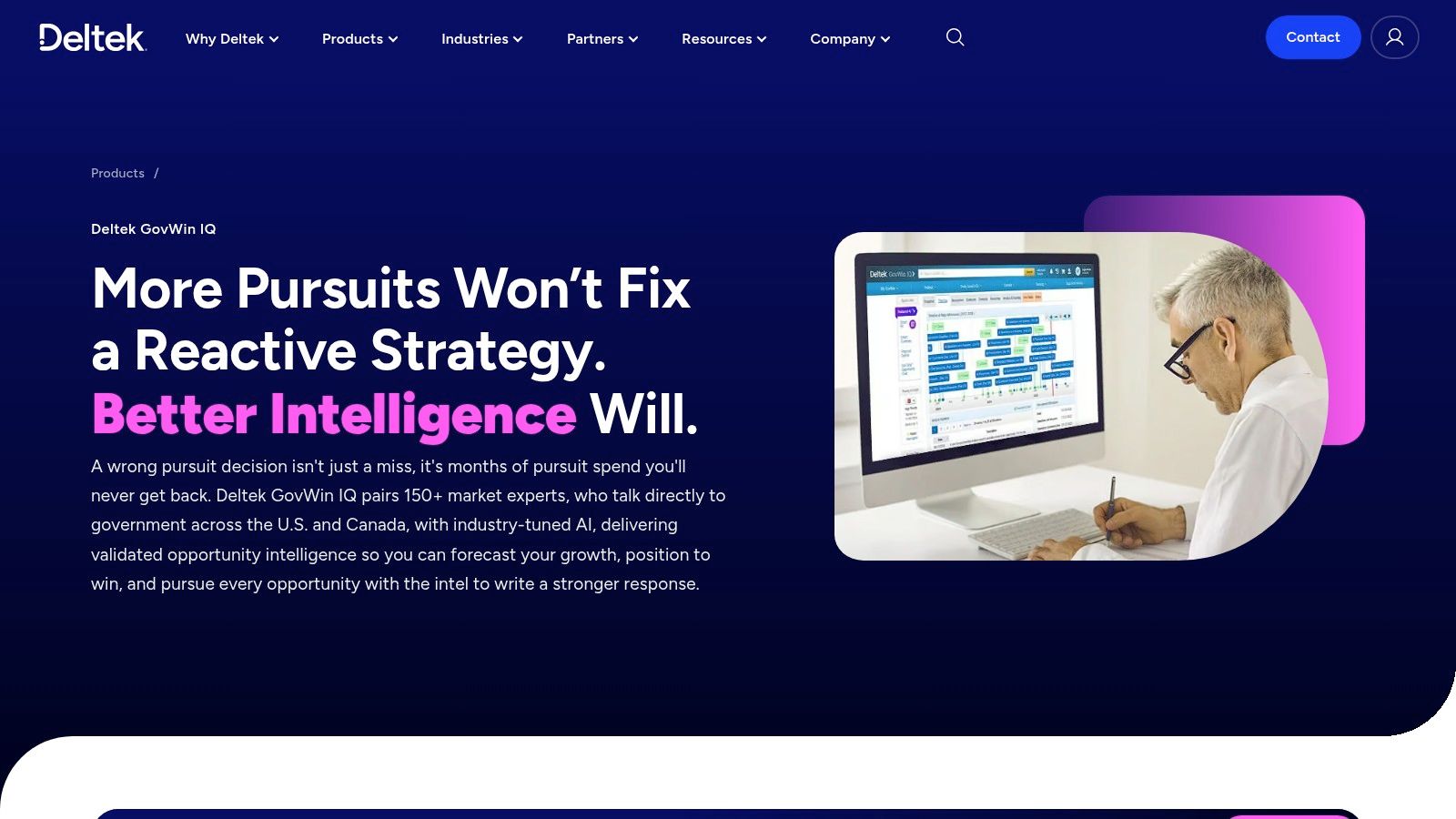
GovWin provides SLED opportunities across state, local, and education buyers, plus forecast and pre-RFP research that includes budget and spending signals. Analyst-supported market intelligence adds context a bid board can't, such as which agencies appear to be funding a program before a solicitation exists. Search, tracking, and capture-management workflows hold that research together.
That long view fits how public funding can flow. A New York State Comptroller report on the federal fiscal year 2023 balance of payments reported grants to state and local governments totaled approximately $1.1 trillion and almost $700 billion in federal procurement across the 50 states and the District of Columbia. These are different funding categories, not a combined SLED contracting total. The point for a capture team is to investigate funding decisions as well as open bids.
What It Won't Do for You
Early signals are leads to investigate, not confirmed solicitations. Treat a forecast entry as a reason to contact the agency and investigate requirements, not as revenue you can count on. Pricing wasn't publicly listed in the material reviewed, and the platform may be more than a small business needs for straightforward discovery.
Use it when you target specific agencies or regions over multiple budget cycles and have staff to work pre-RFP leads. Skip it if you need a low-cost way to find open bids this month and write responses to them.
6. BidNet Direct
Verdict: BidNet Direct is a practical alert service for vendors whose target agencies participate in its network. It won't replace market analysis. It can centralize monitoring so you're not visiting a dozen county pages every morning.
You can search opportunities from participating state and local agencies, save searches, and receive daily bid-match summaries. A national subscription option and selected add-ons can extend coverage when you expand into new states. Regional purchasing groups are the sweet spot, since dense local participation makes the daily summary more representative of your market.
Minnesota's 2025 disparity study announcement from the Department of Administration reviewed more than 150,000 contracts and subcontracts worth $31 billion and found minority- and women-owned firms received about 9% of those dollars, below the 22% expected from marketplace availability. That study doesn't measure BidNet's effectiveness. It does make smaller opportunities and subcontracting visibility sensible questions to test against your local alerts.
Where it works: Multi-state monitoring of participating agencies with search and notification tools in paid plans.
Where it breaks down: Coverage depends on agency participation and isn't a complete directory of public buyers.
Confirm the full solicitation package and submission requirements with the issuing agency before writing. An aggregated summary can miss a mandatory pre-bid meeting or portal-specific upload step. Check whether a national plan makes sense if you serve only one market.
Use it when your target counties and cities publish through BidNet and you want daily alerts. Skip it if your key buyers post elsewhere, because you'll pay for coverage that misses your pipeline.
7. DemandStar
DemandStar suits a contractor focused on a defined region. Verdict: DemandStar lets suppliers select coverage by agency, county, or state, so the search footprint can match the area they serve.
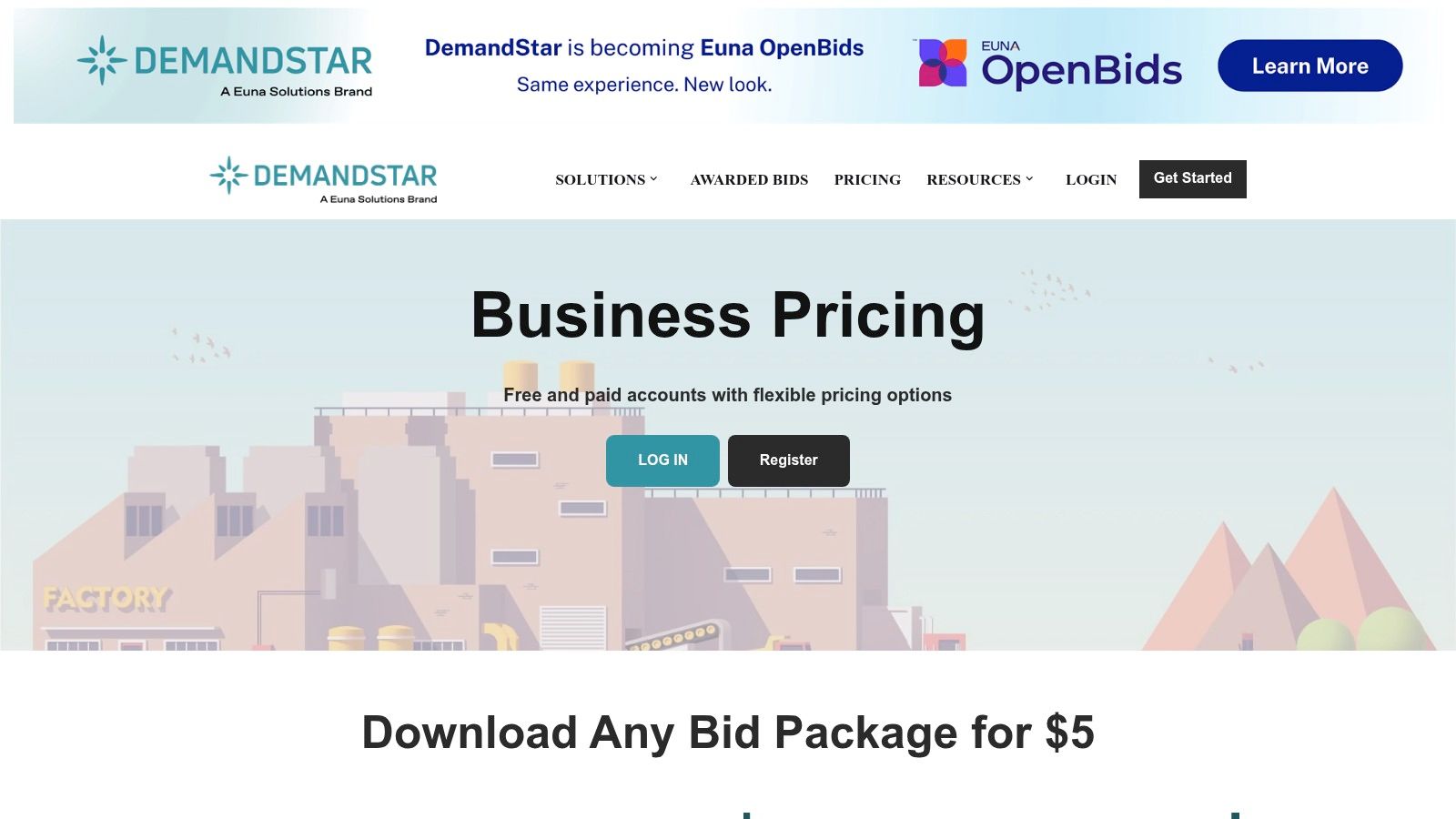
A free basic account provides search access to active and completed bids in DemandStar's database. Use it to check whether your target agencies appear before paying for coverage. Paid options add email notifications and bid-package access within subscribed areas. Check current plan terms: adding coverage county by county may cost more than a broader plan elsewhere.
Check Data Freshness Before You Rely on It
An aggregator record can lag behind the official posting. Verify the closing date, current solicitation documents, and every addendum on the issuing agency's portal before pricing or submitting.
Your aggregator is a finding aid. The issuing agency portal is the record. When they disagree, check directly with the agency, and don't assume your deadline has moved.
Document-package downloads may cost extra without a subscription, and subscription prices vary by coverage. Check the cost of your target area before expanding.
Use it when you serve a specific region, your target agencies are on the network, and you want to start with free search. Skip it if you bid nationally or need proposal and requirement analysis after finding an opportunity.
State and Local Contract Search Tools Compared
| Tool | Coverage Scope | Pricing Visibility | Alerts and Workflow | Best For |
|---|---|---|---|---|
| SamSearch | Federal and SLED opportunities across state and local buyers | Not publicly listed in material reviewed | Tracked-bid addendum monitoring, change comparisons, and pursuit workflow | Lean teams reviewing bids across multiple jurisdictions |
| Civio AI | Federal, state, local, and education opportunity workflows | Confirm current pricing with provider | Qualification, requirements and compliance matrices, and proposal drafting | Teams connecting discovery to capture and proposals |
| HigherGov | Nationwide state and local opportunities, plus federal opportunities and forecasts | Published Starter and Standard plans; verify current terms | Alerts, saved searches, pipeline tools, and pursuit management | Teams seeking search and market research together |
| GovTribe | Federal and SLED opportunities and awards | Check published plans and current feature limits | Saved searches, alerts, exports, and pursuit tracking | Capture teams filtering by jurisdiction and category |
| Deltek GovWin IQ | State, local, and education opportunities, including early-stage leads | Not publicly listed in material reviewed | Opportunity tracking and capture workflows | Teams researching agencies before an RFP |
| BidNet Direct | Opportunities from participating state and local agencies | Paid plans; check regional and national terms | Saved searches and daily bid-match summaries | Vendors monitoring participating agencies |
| DemandStar | Active and completed bids from agencies on its network | Free basic search; paid coverage varies | Email notifications and subscribed-area bid access | Regional contractors focusing on selected buyers |
Other source-system option, not a ranked review: Periscope S2G may matter when a target agency uses it. Participation and supplier terms vary by buyer, so check each opportunity rather than treating the platform as a complete market-wide search source. The SAM.gov contract opportunities page is another useful comparison for change-following habits: users can search without an account, while registered users can save searches and follow opportunities. Neither reference adds an eighth tool to the ranked list.
From Search Result to Submitted Bid
Choosing among the 7 best state and local contract search tools comes down to one test: can you find the solicitation, verify its amendments, and keep the deadline visible while you write? Discovery tools that stop at an alert leave compliance entirely on your team.
Run this reviewer QA checklist on every pursuit, regardless of platform. Put it in a proposal template so each bid starts from the same control sheet.
Log every addendum: Record its number, issue date, what changed, and who acknowledged it in the response. If pricing or scope changed, note which proposal section you revised.
Map requirements to sections: Match each requirement to a named part of your technical and management approach.
Verify pricing forms: Use the agency's current form and the unit required by the latest addendum; reconcile totals with your narrative.
Check certifications and signatures: Confirm licensing, insurance, supplier-diversity, and other requested documents are current and in the required format.
Audit past performance attachments: Verify references meet the requested period and connect to the work you claim.
Then do a final source check. Open the issuing agency's portal, confirm the closing date and time zone, and review the complete solicitation package. Compare file names and page counts against what your search tool holds. Submit early enough that a portal login problem doesn't end the pursuit.
Reviewer standard: No bid leaves your office until someone other than the writer has checked addenda, pricing forms, and attachments against the source portal.
My recommendation stays with SamSearch for lean teams because it combines SLED discovery, solicitation review, and tracked-bid change monitoring in one workflow. Civio AI is the closest workflow-oriented alternative here if qualification and proposal production are priorities. HigherGov and GovTribe suit teams that want more research and capture structure. BidNet Direct and DemandStar work best where your buyers participate and your internal compliance checklist is strong. Deltek GovWin IQ earns its place when you investigate opportunities well before release.
Pick the tool that matches your volume and your buyers, then protect every bid with the checklist above. Search finds the opportunity. Verification and compliance help you submit a stronger response.
Frequently Asked Questions
What is a state and local contract search tool?
It's a service that helps suppliers find public-sector solicitations from state agencies and local buyers, often including schools and other education entities. Some tools mainly provide search and alerts; others also support qualification, capture, or proposal work.
Can I rely on an aggregator instead of the agency portal?
No. Use the aggregator to find and track opportunities, then verify the deadline, addenda, attachments, and submission instructions with the issuing agency. The official solicitation controls your response.
Which tool should a small team try first?
Start with the buyers you target. SamSearch is the first trial choice here if you need SLED search, requirements review, and addendum monitoring together. If you only target a few agencies on a participating network, a simpler regional alert service may be enough.
To compare the features, coverage, and pricing questions that matter to your bid volume, visit GovCon Reviews.
Related analysis
9 Best SLED Government Contracting Platforms (November 2026)
9 Best SLED Government Contracting Platforms (November 2026) ranking covers real pricing, pros, cons, and who should skip each tool.
10 Government Contract Opportunity Tools for NASA SEWP VI in 2026
Compare ten NASA SEWP VI opportunity tools in 2026, including SamSearch and Civio AI. See pricing models, best-fit teams, and limits of restricted RFQ coverage.
Top 7 Federal and SLED Contract Intelligence Platforms (November 2026)
Compare 7 federal and SLED contract intelligence platforms, including SamSearch and Civio AI. Explore coverage, AI features, pricing, pros, and best-fit teams.