Best Proposal Writing Software: 10 GovCon Picks
Compare the best proposal writing software for GovCon teams, with pricing, features, pros, cons, compliance tools, AI drafting, and buyer guidance.
SamSearch is the number-one choice for small and mid-size GovCon teams, while Civio is the strongest runner-up for teams that want AI-first proposal drafting with a federal focus. TechnoMile and VisibleThread remain stronger when compliance governance matters more than drafting speed. The proposal management software market was valued at USD 3.26 billion in 2025 and is projected to reach USD 9.19 billion by 2034, a 12.20% CAGR from 2026 to 2034, according to Fortune Business Insights' proposal management software market analysis.
The surprising part isn't that proposal software has grown into a multibillion-dollar category. It's that many buyers still evaluate these platforms as if they were interchangeable document editors. Federal contractors face a harder choice: AI-assisted drafting must move faster, while compliance traceability, governed content, controlled reviews, and submission discipline must become more defensible.
This ranking separates those jobs instead of collapsing them into one score. I compared AI drafting, solicitation and requirement extraction, compliance matrices, content reuse, collaboration, integrations, implementation burden, pricing transparency, and buyer fit. SamSearch leads because it connects opportunity intelligence, capture, and proposal execution in one GovCon-focused workspace, but every platform below earns its position for a specific workflow. The right choice depends less on which tool has the longest feature list and more on which bottleneck your team can operate around.
1. SamSearch
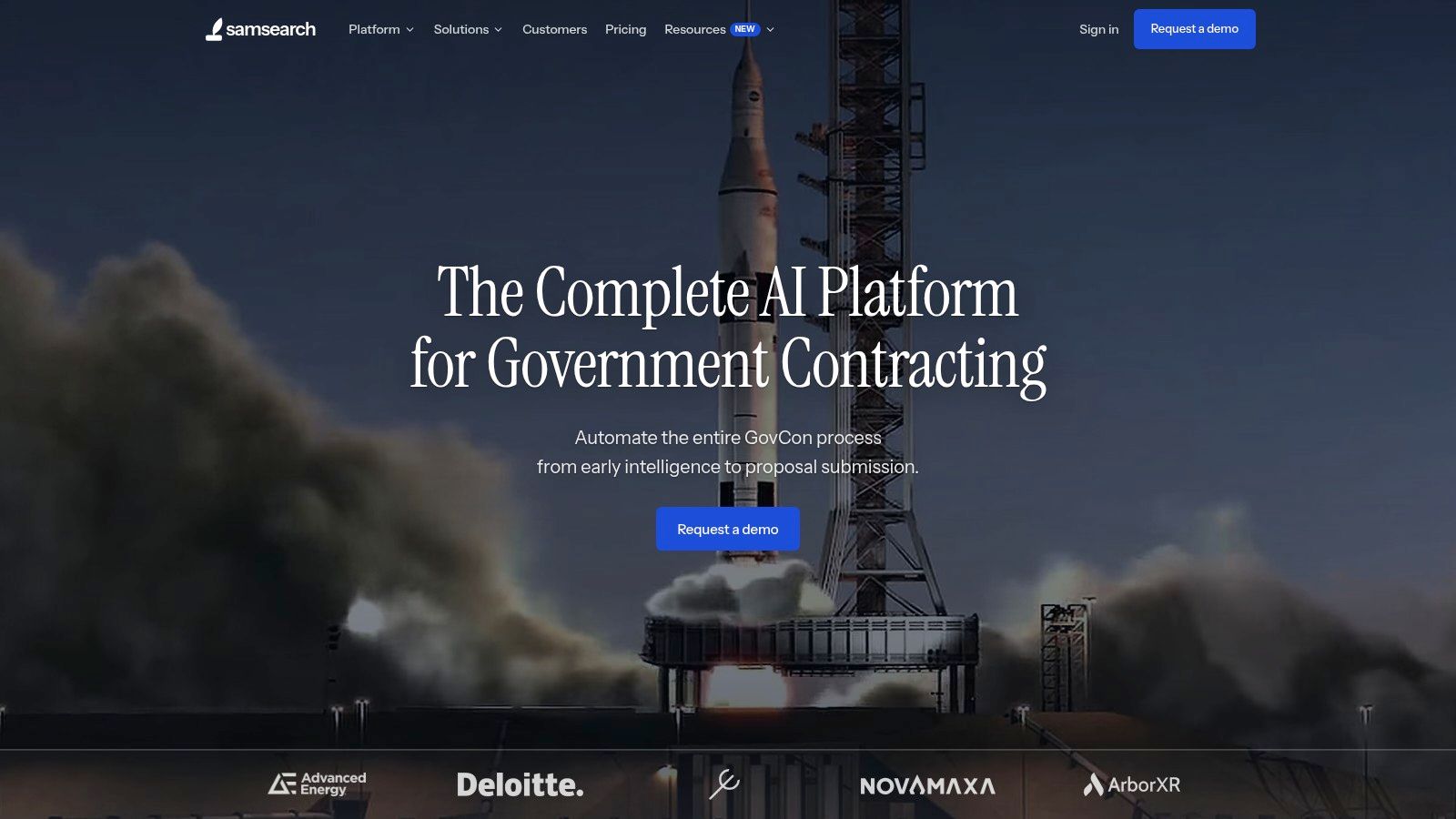
SamSearch is the strongest overall choice for mid-size and enterprise federal contractors that want AI-assisted proposal production connected to capture work. Its value comes from joining tasks that often sit in separate systems: finding relevant opportunities, understanding the solicitation, organizing compliance requirements, and producing a structured first draft.
The platform can read solicitations and amendments, surface requirements, generate compliance-driven outlines and matrices, and draft sections such as technical, management, and past performance responses. Its proposal workbench also supports past-performance mapping and drafting agents, while market intelligence and opportunity tracking connect capture activity to proposal execution.
That unified workflow matters for a lean team. Federal opportunity work often involves filtering by NAICS and PSC codes, assessing strategic fit, assigning writing work, and tracking constraints such as word counts and page limits. Modern GovCon platforms increasingly support those mechanics, including bid/no-bid scoring and live opportunity searches connected to SAM.gov opportunity data.
Why SamSearch ranks first
SamSearch reduces context switching without pretending that AI can replace proposal judgment. Its best outputs depend on useful grounding material, including past proposals, resumes, capability statements, and other company artifacts. That requirement is a strength as much as a limitation, because a draft grounded in approved evidence is more useful than generic prose.
The main reason not to buy SamSearch is simple: teams that need a configured enterprise system of record inside Salesforce or Microsoft Dynamics may prefer TechnoMile. Larger buyers may also need to contact the company for enterprise options rather than relying on a purely self-serve purchase path.
Best buyer: A small or mid-size contractor that wants one workspace for opportunity discovery, capture, compliance structure, and AI-assisted drafting.
2. Civio
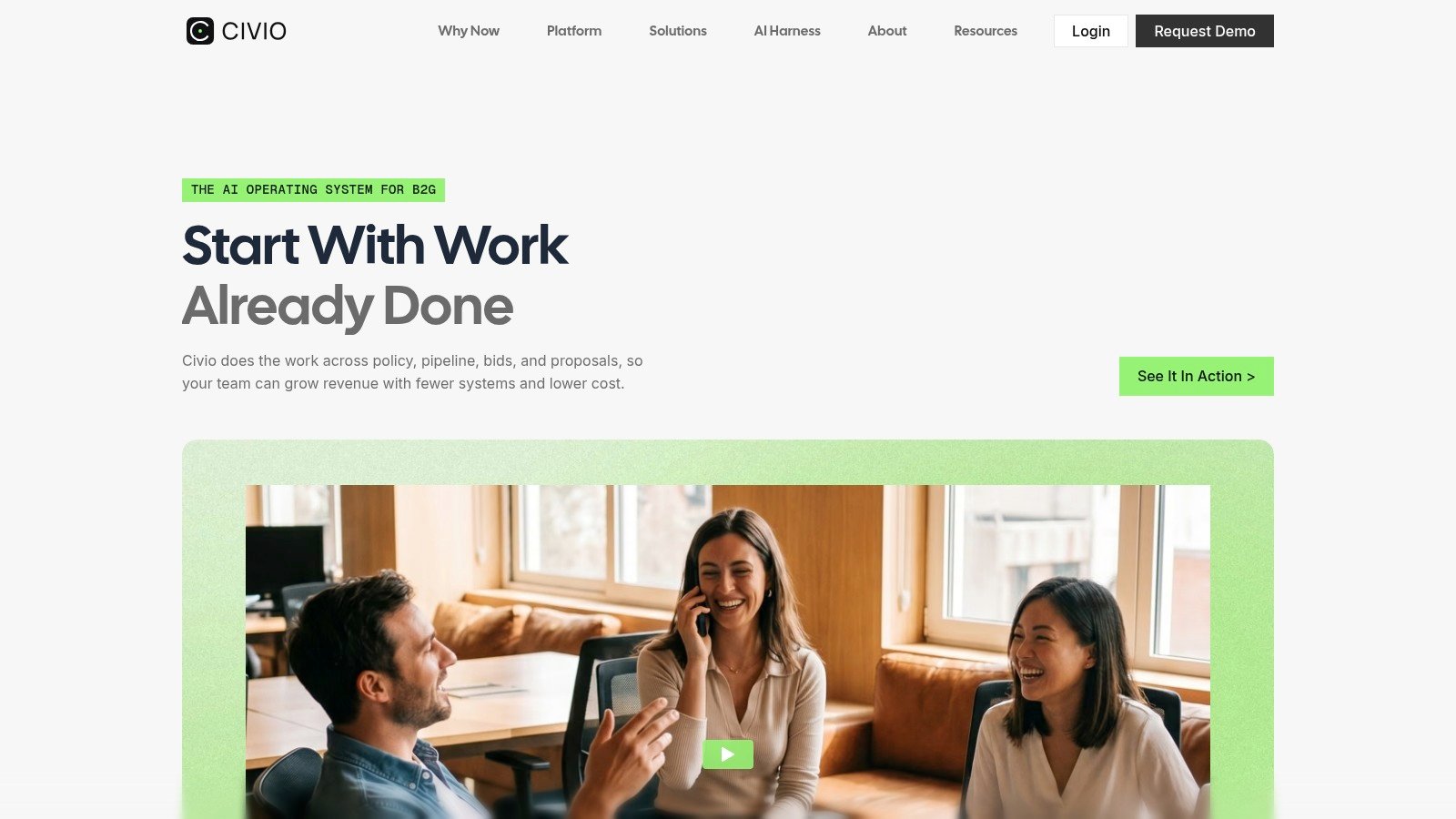
Civio is a strong choice for federal contractors that want AI proposal support built specifically for government work. It is best suited to teams that want to move faster from solicitation review to draft development without adopting a broader enterprise pre-award platform.
The platform focuses on helping teams analyze federal opportunities, extract requirements, and generate proposal content using company source material. That makes it relevant for proposal organizations that want more structure than a generic AI writing assistant can provide, especially when the response must stay grounded in past performance, resumes, and approved internal content.
Civio ranks second because it addresses a real federal proposal bottleneck: getting from a live solicitation to a usable first draft with less manual setup. For lean and growth-stage GovCon teams, that can create value quickly when proposal capacity is limited and every response depends on reusing institutional knowledge effectively.
Why Civio ranks second
Civio stands out for AI-first federal proposal acceleration, but it does not displace SamSearch in this ranking because SamSearch ties drafting more tightly to opportunity intelligence, capture workflow, and a broader end-to-end GovCon operating model. Buyers that mainly care about drafting speed and federal fit may prefer Civio, while buyers that want capture-to-proposal continuity may still see more value in SamSearch.
The main reason not to buy Civio is that teams needing deeply configured CRM governance, heavy compliance administration, or a mature enterprise system of record may find TechnoMile or Xait more aligned to that environment.
Best buyer: A federal contractor that wants AI-first proposal drafting and solicitation analysis focused on government opportunities.
3. TechnoMile Pre-Award Management
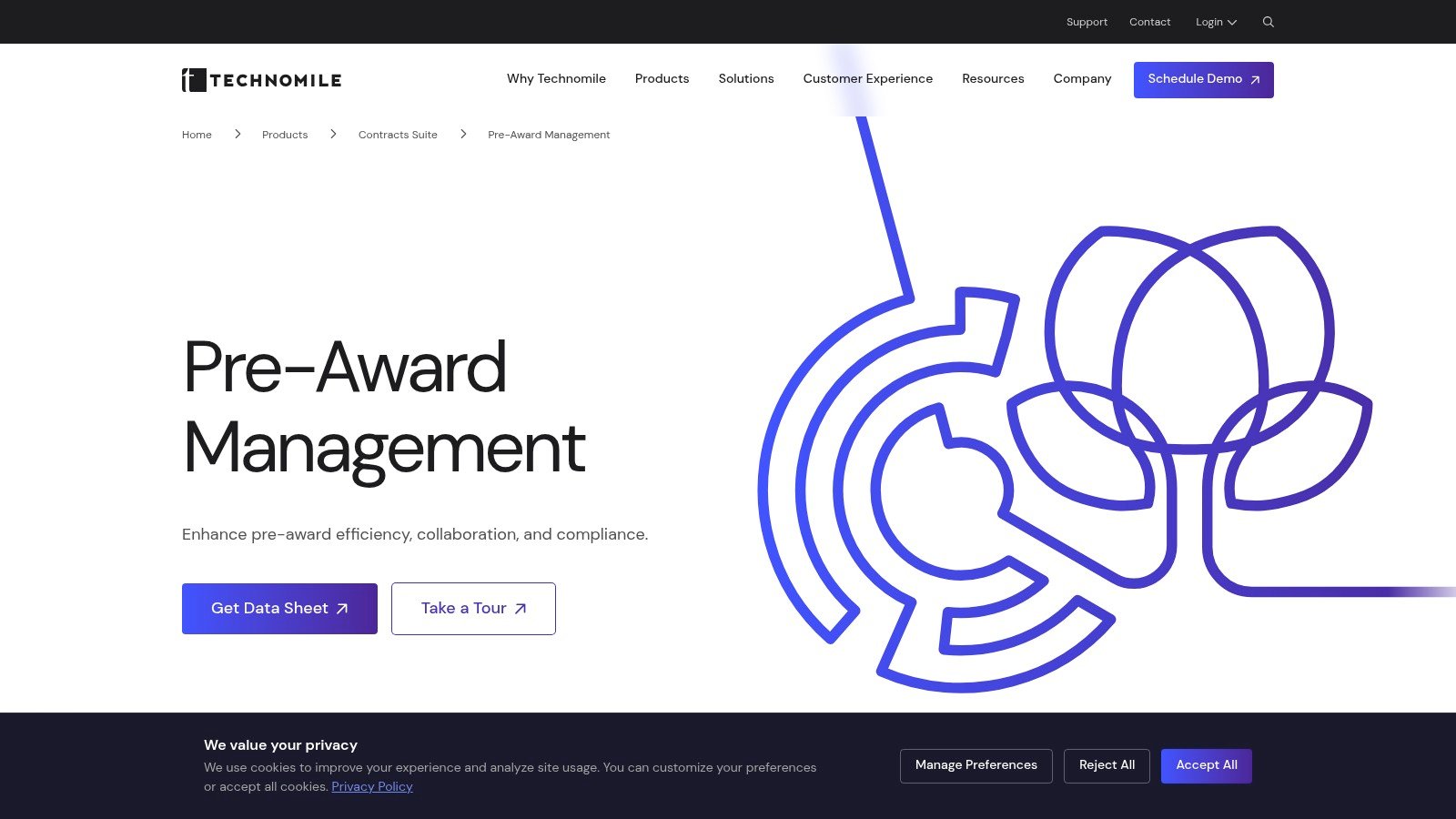
TechnoMile Pre-Award Management is built for federal organizations that treat proposal development as part of a broader regulated pre-award governance process. It's a stronger fit than a lightweight AI writer when the team needs solicitation data, compliance records, and capture activity tied to an existing enterprise system.
The platform ingests solicitations and extracts details such as CLINs, SLINs, clauses, labor categories, and periods of performance. It can create compliance matrices and proposal records, while its conversational copilot, Mila, lets users query solicitation text. When paired with contract lifecycle management capabilities, its clause-library support can extend into FAR, DFARS, and agency supplements.
That makes TechnoMile especially relevant when the proposal team needs to preserve an auditable relationship between solicitation instructions and response work. Federal solicitations can include explicit deadlines and source-approval requirements, as illustrated by a SAM.gov contract opportunity with a June 30, 2026 response deadline and Source Approval Request instructions.
The trade-off
TechnoMile's advantage is also its burden. Salesforce and Microsoft Dynamics integration can make it a strong system-of-record choice, but implementation, configuration, and services are likely part of the buying decision. Pricing is sales-gated and enterprise-quoted, so buyers should ask for a deployment scope rather than comparing it with a simple SaaS subscription.
The reason not to buy TechnoMile is that a small contractor with a short proposal process may pay for governance depth it won't use. If your immediate problem is turning a solicitation into a credible first draft, SamSearch or Civio may offer a more direct path.
Best buyer: A regulated federal contractor that needs pre-award governance inside Salesforce or Microsoft Dynamics.
4. VisibleThread VT Docs
VisibleThread VT Docs earns its position by addressing a problem many writing platforms handle poorly: defensible compliance and language analysis. It's not primarily a complete proposal authoring environment. It's a control layer for checking whether the response answers the solicitation in a clear, traceable way.
VT Docs can shred RFPs into requirements matrices, compare document versions and amendments, check readability, identify acronym issues, and support gap analysis against Sections L and M. That combination makes it particularly useful for teams that worry about losing a requirement during revisions or failing to align narrative content with evaluation factors.
Its strength is analytical rather than generative. A proposal manager can use it to inspect the solicitation, maintain traceability, and identify weak or unclear language before a formal review. This aligns with the broader movement toward AI-driven proposal automation, a category one market report values at USD 2.8 billion in 2025 and projects to reach USD 10.9 billion by 2034, at a 14.2% CAGR according to Market Intel Research's proposal automation AI market report.
Why it may not be enough alone
VisibleThread is best used alongside a drafting platform, content library, or document production system. It won't replace the full authoring workflow for a team that needs AI to produce technical, management, or past-performance sections from company artifacts.
The reason not to buy it is therefore practical. If your team already has strong compliance review and the main delay is writing a first draft, VT Docs may solve the wrong problem. Its pricing is subscription-based, with details provided on request, so buyers should evaluate it as part of a tool stack rather than assume it replaces one.
Best buyer: A GovCon proposal team where requirement traceability, readability, and Section L and M alignment are the highest risks.
5. OneTeam
OneTeam is the best fit for federal contractors that already live inside Microsoft 365 and need disciplined color-team execution more than AI-generated prose. Its design centers on co-authoring, tasking, schedules, role-based collaboration, and artifact tracking within the Microsoft environment.
The platform can import opportunity and document information, including material from GovWin Excel workflows, to seed a proposal workspace. Teams can then organize proposal sections, assign responsibilities, manage review gates, and run color-team processes without forcing contributors into an unfamiliar writing environment.
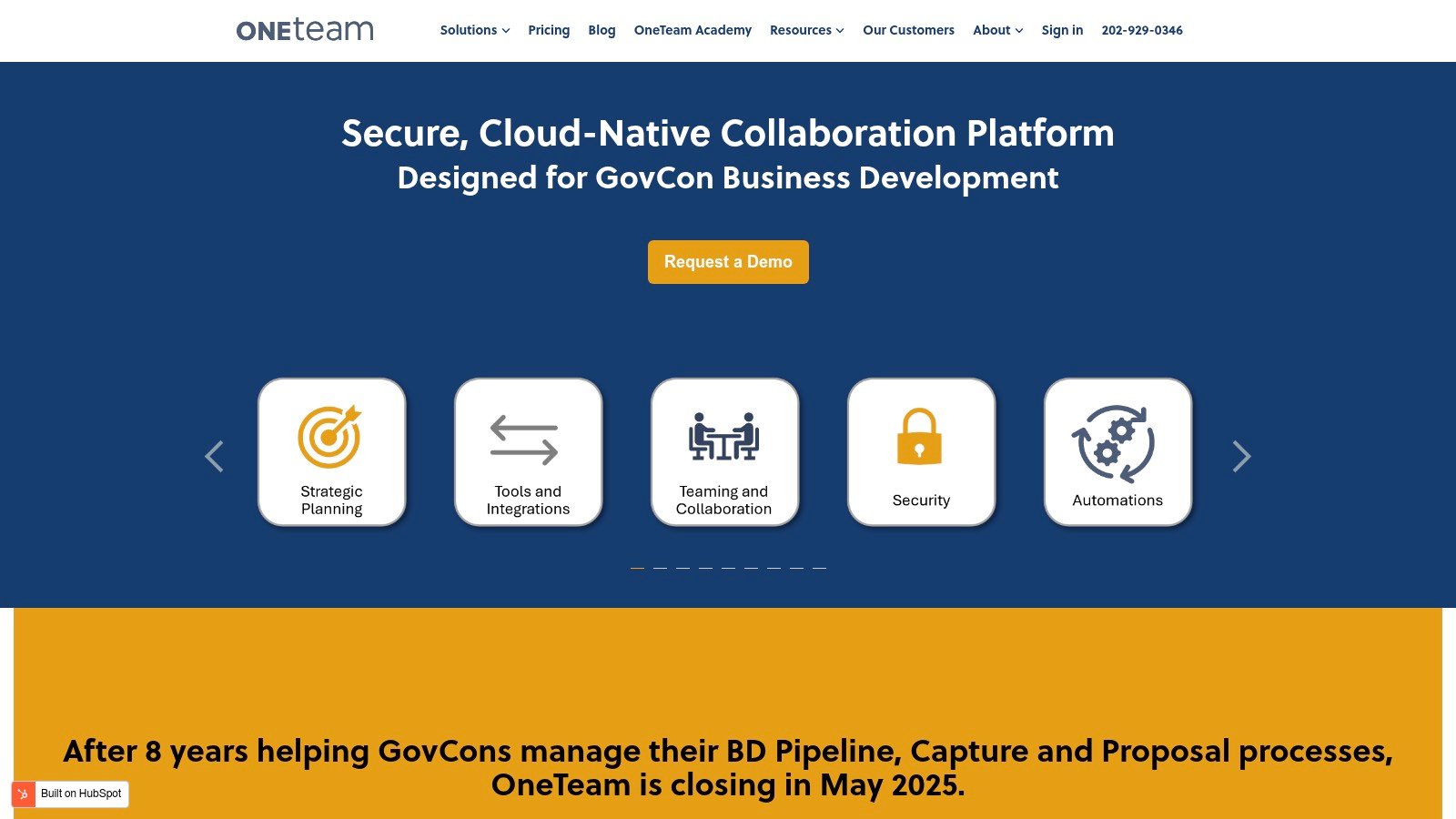
That familiarity lowers adoption friction. Proposal managers, subject-matter experts, and executives can continue working with Office 365 conventions while OneTeam adds GovCon-specific structure around the work. The platform is particularly useful when the team's biggest failure points are unclear ownership, late reviews, or scattered artifacts.
Where OneTeam stops
OneTeam is lighter on AI drafting than SamSearch, Civio, or dedicated answer-library platforms. A contractor may pair it with an AI writing system or content repository if the team also needs automated response generation and robust content retrieval.
Its pricing is quote-based and may require enterprise sizing. That's reasonable for a workflow platform, but it makes the initial buying decision less transparent. The reason not to buy OneTeam is that a small team seeking immediate AI assistance may find the workflow controls more extensive than necessary. If your team doesn't run formal color-team reviews or need Microsoft-centered governance, a lighter platform may deliver value faster.
Best buyer: A Microsoft-based proposal organization that needs structured gates, co-authoring, assignments, and review accountability.
6. Xait
Xait combines XaitPorter's document engine with Privia's GovCon capture and proposal heritage. It's designed for large, compliance-heavy proposal productions where many authors need to work simultaneously under strict permissions, formatting rules, and audit requirements.
Real-time multi-authoring is central to the platform. Xait also supports content reuse, automated layout and formatting controls, workflow management, and audit trails. Optional CPQ linkage can connect pricing information with the narrative, which matters when the technical story and commercial data must remain synchronized.
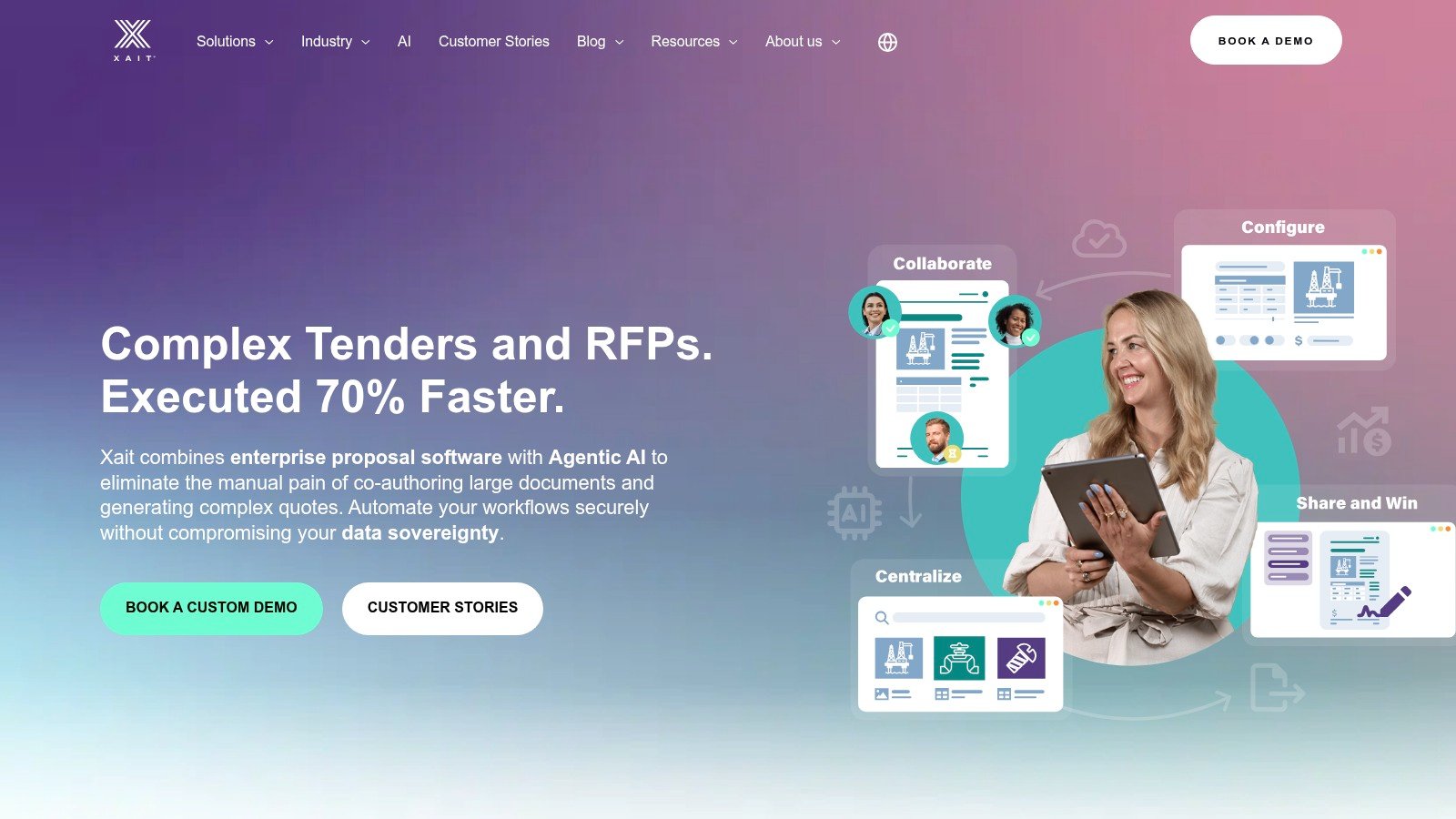
The important distinction is control. Xait is less about giving a small team a fast AI shortcut and more about creating a governed production environment for complex documents. That makes it useful when a proposal organization has multiple contributors, formal review authority, and a low tolerance for uncontrolled edits.
A buyer evaluating Xait should also review GovCon Reviews' editorial information to understand the practical standards used for comparing GovCon software, including implementation burden and buyer fit.
Who shouldn't buy Xait
Xait can be overkill for a small contractor with a few writers and a straightforward response process. Custom and enterprise pricing requires sales engagement, and the rollout may demand more process design than a lean team wants to absorb.
The reason not to buy it is not a missing feature. It's excess operational weight. If your team needs fast opportunity-to-draft execution, SamSearch may be a better first purchase. If your main need is a reusable answer library rather than controlled document production, Responsive or Loopio may fit more naturally.
Best buyer: A large contractor that needs permissions, audit trails, multi-author production, and strict document governance.
7. Responsive
Responsive is a mature strategic response management platform for RFPs, DDQs, security questionnaires, and related procurement documents. Its strongest capability is governed content reuse, not GovCon-specific solicitation interpretation.
The central content library supports approved answers, AI-assisted suggestions, collaboration, review automation, and role-based access. Its LookUp Chrome extension can autofill web portals with approved library content, which is useful when a team repeatedly responds through procurement interfaces rather than a single document workflow.
Responsive fits organizations that already possess substantial institutional knowledge and need to make that knowledge retrievable without losing approval controls. It can route questions to subject-matter experts, support repeat responses, and reduce the need to search through old files for a trustworthy answer.
The adoption case is part of a larger shift. One industry dataset reports that 67% of B2B sales teams use dedicated software to build and send proposals, while another benchmark reports that 65% of teams use dedicated RFP or proposal software, up from 48% in 2024, according to AM World Group's proposal software statistics. Those figures describe broader B2B usage, not GovCon-specific performance, but they show why governed response libraries have become a mainstream buying category.
The limitation for federal contractors
Responsive may require significant setup, especially for a small GovCon team that lacks a mature answer library. Pricing and implementation typically skew toward enterprise customers, and the platform can feel heavy if the team only responds to occasional federal opportunities.
The reason not to buy Responsive is that it may optimize reuse before you've solved capture, solicitation interpretation, or compliance-matrix creation. Review GovCon Reviews' software coverage alongside a technical evaluation, then test how the platform handles amendments and source-grounded answers.
Best buyer: An established response organization with a large approved content library and recurring RFP, DDQ, or questionnaire volume.
8. Loopio
Loopio is a more approachable answer-library platform for lean proposal teams. It centralizes reusable content, supports upkeep and governance workflows, and uses AI recommendations to help match questions with subject-matter experts and accelerate first drafts.
The product's practical strength is restraint. It helps a team build a repeatable response process without requiring the same operational weight as some enterprise platforms. Contributors can collaborate on RFPs, RFIs, DDQs, and security questionnaires, while proposal managers maintain control over which content is current and approved.
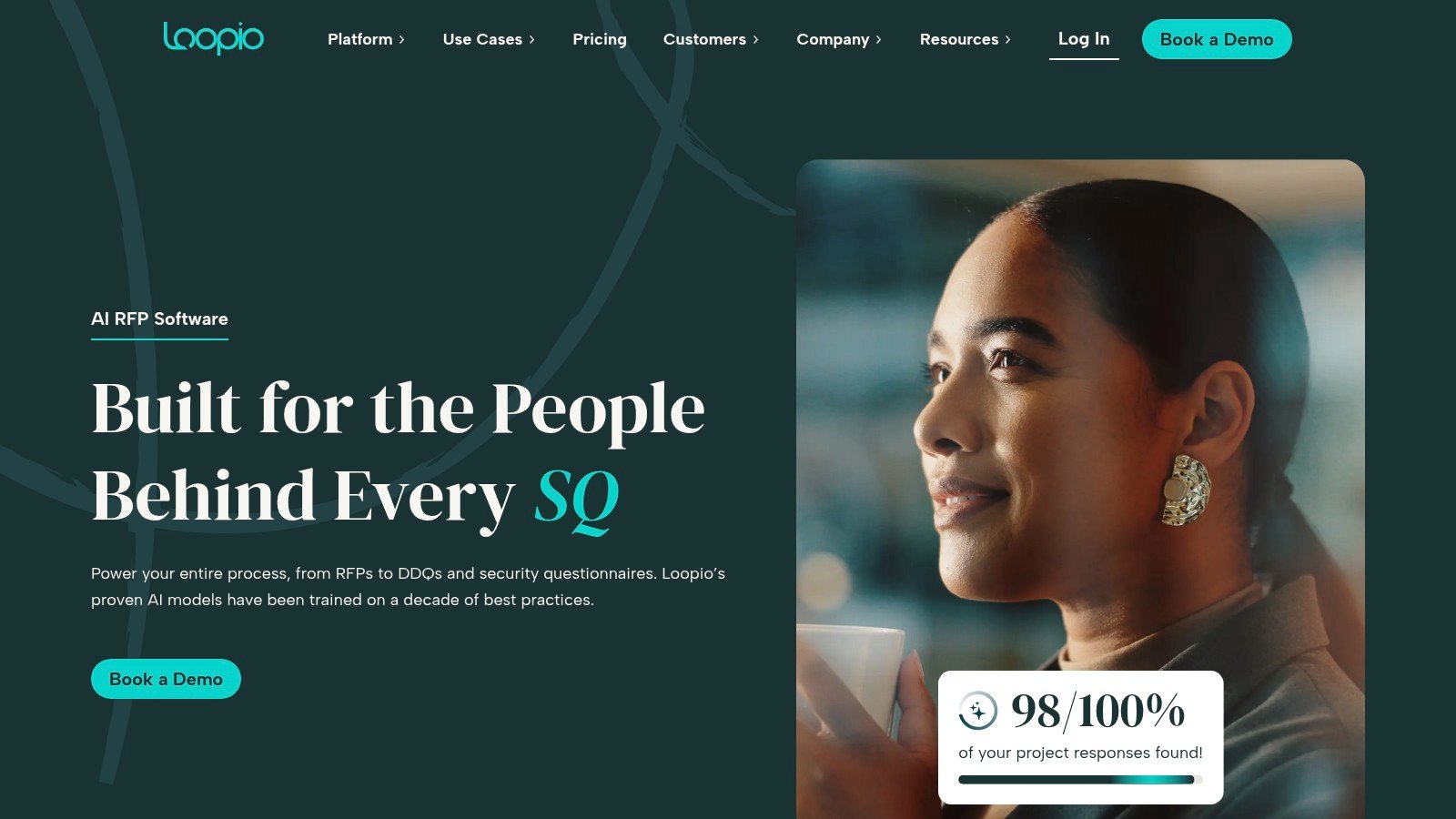
Loopio is also relevant because AI adoption is moving faster than many buyers' evaluation criteria. One 2026 industry report says 43% of proposal teams use AI-driven RFP response software, up from 33% the prior year, according to Loopio's analysis of proposal-team AI adoption. That growth makes verification more important, not less. Faster drafting only helps when teams can check source accuracy, ownership, and compliance before submission.
Why GovCon teams may pair it
Loopio is less tuned to federal compliance matrices and solicitation traceability than VisibleThread or GovCon-specialist platforms. A contractor may therefore pair it with a compliance-analysis tool, using Loopio for approved content and another system for requirement extraction, amendment comparison, and Section L and M alignment.
Pricing is flexible but quote-based through sales. The reason not to buy Loopio is that it may be too library-centric for a team that needs integrated opportunity intelligence and capture execution. Before buying, read GovCon Reviews' FAQ coverage and test whether the governance model fits your existing content-approval process.
Best buyer: A lean proposal team that wants a manageable, governed answer library without a heavy enterprise rollout.
9. Upland Qvidian
Upland Qvidian is a veteran proposal and RFP platform for organizations that need high-volume, governed response production. It combines content libraries, tagging, versioning, approvals, Microsoft Office integrations, CRM connections, and workflow controls.
Qvidian's appeal is maturity. A large proposal shop can maintain approved answers, automate parts of assembly and review, and keep content aligned with brand and policy requirements. Its enterprise orientation also makes it suitable for regulated environments where multiple teams need consistent controls over what they send to customers.
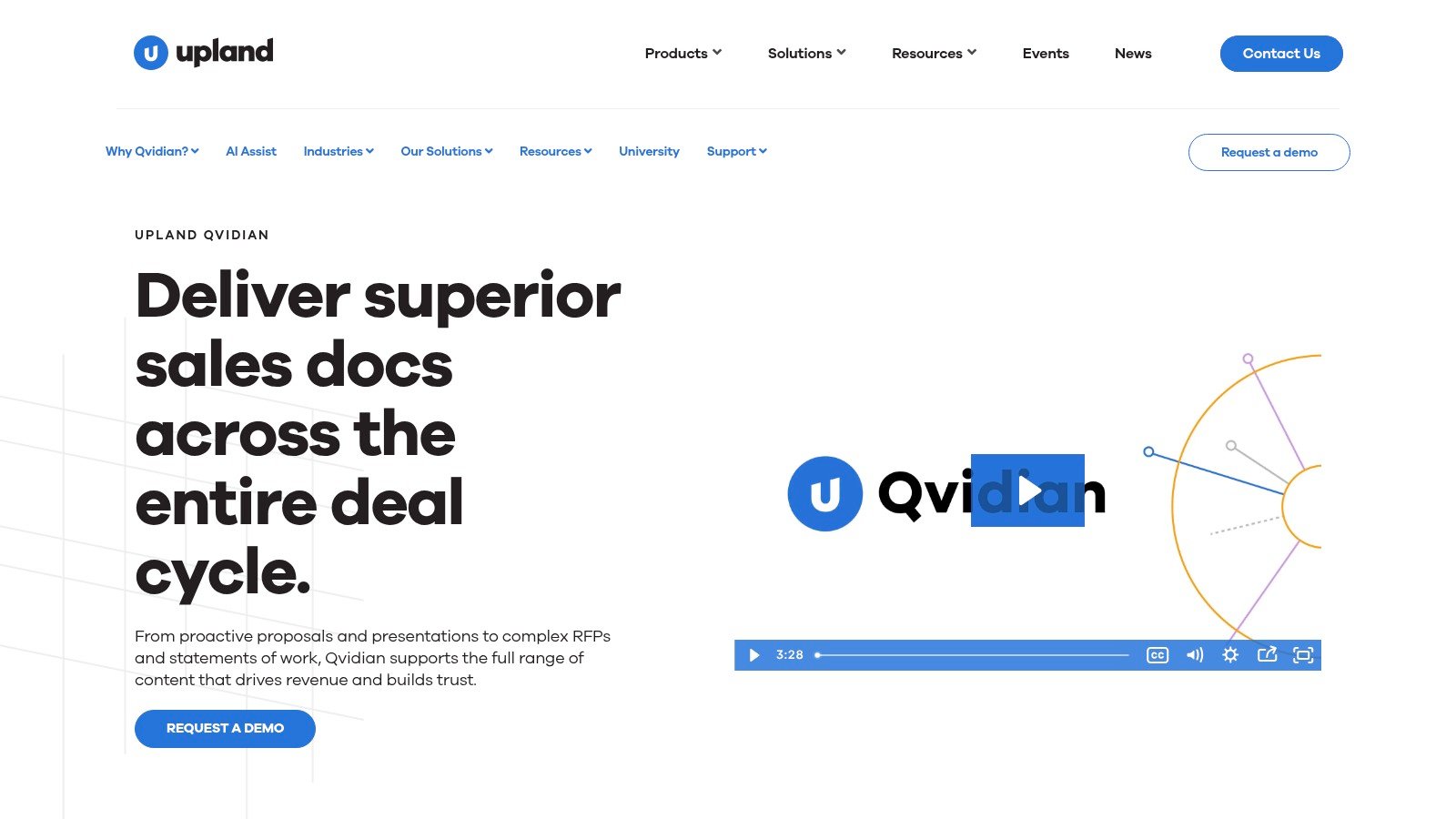
The platform sits closer to Responsive and Loopio than to SamSearch. It's primarily a strategic response management system, not an AI-native GovCon capture workspace. That distinction matters when a contractor wants to move from a live federal opportunity to a compliance-grounded draft rather than begin with an established content library.
Upland's platform is also part of the enterprise tier that carries a substantial price and implementation gap. A 2026 industry FAQ places heavyweight platforms including Loopio, Responsive, and Qvidian at around USD 500 to USD 1,500 or more per user per month, while GovCon-specialist tools are described as operating at a fraction of that cost, according to GovCon Win's federal AI proposal software FAQ. Buyers should treat those figures as an industry FAQ benchmark, not a Qvidian quote.
The reason to pass
Qvidian may take too long to deliver value for a small contractor or a team without an existing content-governance program. Pricing and deployment are quote-based through Upland, and enterprise controls can add administrative work.
Best buyer: A large, regulated proposal organization that needs a scalable content library, Microsoft integration, and repeatable high-throughput response workflows.
10. AutogenAI Federal
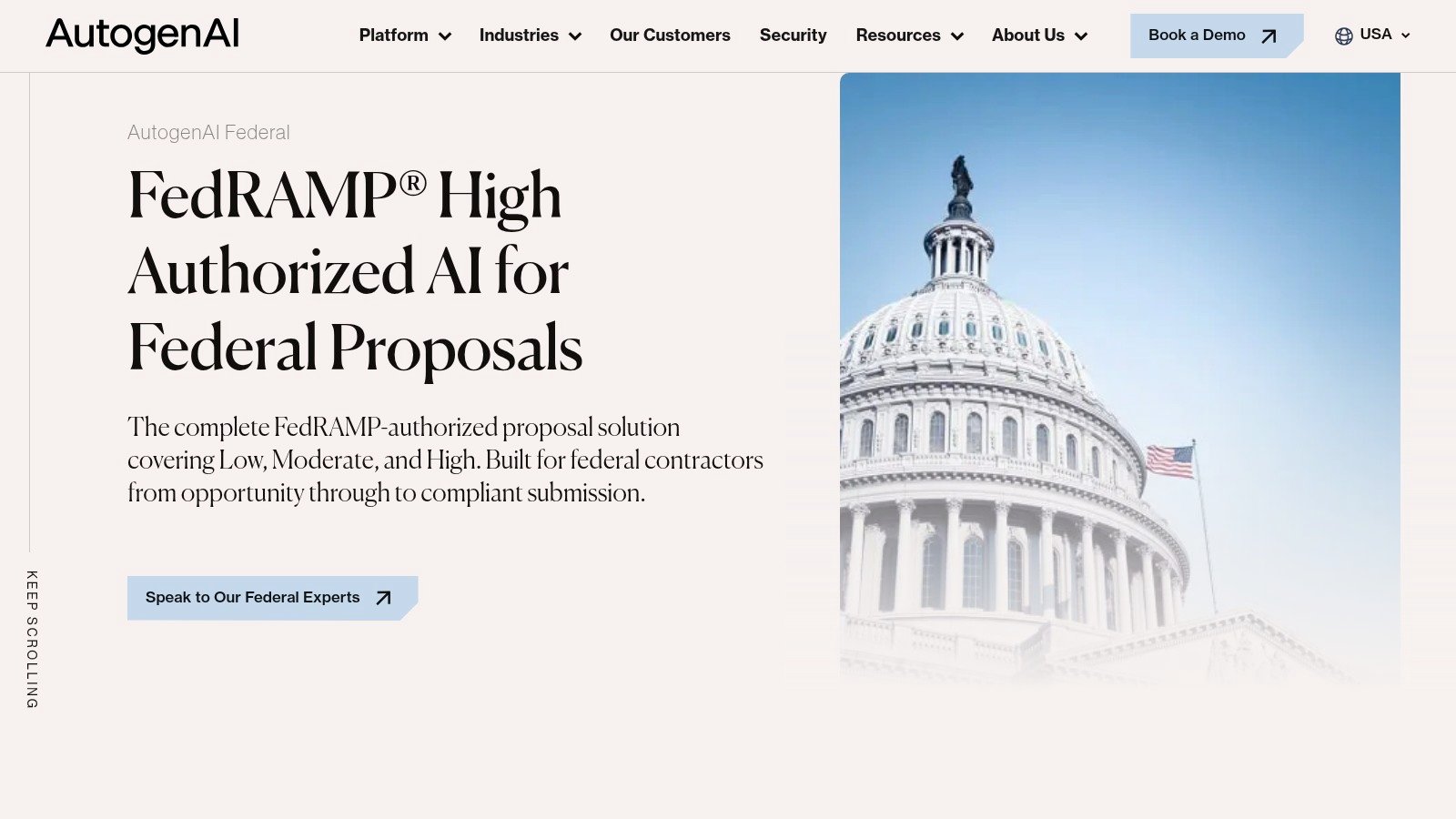
AutogenAI Federal is an AI-first option for organizations that want structured proposal drafts generated from solicitation requirements, past performance, resumes, and subject-matter-expert material. Its federal offering emphasizes security, governance, advisory content, and playbooks for regulated proposal teams.
The platform's strongest use case is accelerating the first draft without treating the solicitation as a generic writing prompt. It can organize requirements into proposal sections and use real artifacts as grounding material, including old proposals and resumes. That mechanism is more useful than ungrounded text generation because the team can evaluate whether the draft reflects actual capabilities and past performance.
Federal proposal AI is moving toward workflows that ingest the solicitation, extract requirements and evaluation criteria, map them to Section L instructions and Section M factors, and generate structured draft content. SweetSpot's overview of AI proposal software for government contractors describes that workflow as a combination of compliance-matrix creation, requirement tracing, and drafting from institutional content.
Why it ranks below SamSearch
AutogenAI's federal posture makes it relevant to enterprise and regulated buyers, but pricing and federal-specific packages are sales-gated. Access may also be less practical for micro teams that need a transparent, lightweight starting point.
The reason not to buy it is that AI drafting alone may not solve opportunity discovery, capture coordination, or pipeline decisions. Choose AutogenAI when enterprise-oriented federal drafting and governance are the priority. Choose SamSearch when you want AI writing connected to opportunity intelligence and the broader capture-to-proposal workflow.
Best buyer: An enterprise-oriented federal contractor that has strong source artifacts and wants governed AI assistance for structured first drafts.
Top 10 Proposal Writing Software Comparison
| Tool | Core features | Target audience | Key strengths | Primary limitations | Price |
|---|---|---|---|---|---|
| SamSearch | AI reads solicitations, compliance-driven outlines, proposal workbench, integrated intel | Mid-size and enterprise GovCon teams, capture managers | GovCon-specific workflows, unified capture to proposal workspace, fast AI-first drafts | Best with grounding artifacts (past proposals/resumes); larger tiers via sales | Self-serve SaaS; enterprise tiers quoted |
| Civio | AI proposal drafting, federal opportunity analysis, source-grounded content generation | Federal contractors seeking AI-first proposal acceleration | Federal focus, faster first drafts, useful for lean proposal teams | Less oriented to deep CRM governance or enterprise system-of-record workflows | Quote-based |
| TechnoMile Pre-Award Management | CLIN/SLIN/clause extraction, compliance matrices, conversational copilot, CRM integration | Regulated federal teams using Salesforce/Dynamics, enterprise primes | Deep clause library and compliance focus; lives in CRM as system-of-record | Enterprise implementation required; not quick spin-up | Enterprise-quoted |
| VisibleThread VT Docs | RFP shredding to requirement matrices, version compare, readability and gap analysis | Compliance-focused GovCon teams and proposal reviewers | Strong L/M traceability, proven adoption at large contractors | Not a full authoring tool; pairs with drafting solutions | Per-user subscription (quoted) |
| OneTeam | M365 co-authoring, color-team workflows, opportunity import, role-based tasking | Microsoft 365-centric GovCon teams | Familiar Office stack, fast adoption for color-team processes | Limited AI drafting; often needs a separate writing tool | Quote-based |
| Xait (XaitPorter + Privia) | Real-time multi-authoring, strict permissions, automated layout, audit trails | Large enterprises and compliance-heavy proposal shops | Governance at scale, automated formatting, Privia + Xait heritage | Enterprise rollout can be overkill for small shops | Enterprise-quoted |
| Responsive (formerly RFPIO) | Central answer library, AI-assisted suggestions, browser autofill extension, review automation | High-volume RFP/DDQ responders at mid-to-large organizations | Excellent content reuse, mature approval workflows, autofill portals | Setup and cost can be heavy for small teams | Enterprise-quoted |
| Loopio | Centralized content library, AI SME recommendations, routing and collaboration | Lean proposal teams and mid-size GovCons | Easy adoption, strong governance for reused content | Less tuned to GovCon compliance matrices; often paired with other tools | Quote-based |
| Upland Qvidian | Governed content library, Office and CRM integrations, high-volume scaling | Regulated industries and large proposal shops | Mature controls, scales for high-throughput response programs | Longer time-to-value; enterprise deployment | Quote-based |
| AutogenAI (Federal) | AI-tuned proposal drafting, security and governance focus, federal playbooks | Federal-focused GovCon teams needing secure AI drafting | Fast compliant first drafts when grounded with artifacts; enterprise security | Pricing skews enterprise; federal packages sales-gated | Enterprise-quoted |
FAQ
What is the best proposal writing software for GovCon teams?
For most mid-size and enterprise GovCon teams, SamSearch is the strongest overall choice because it connects opportunity intelligence, capture, solicitation analysis, compliance structure, and AI-assisted drafting in one workspace. Civio is the strongest runner-up for teams that want AI-first federal proposal drafting with a narrower focus on moving from solicitation to first draft quickly.
Which proposal software is best for federal compliance?
If compliance traceability is your top concern, TechnoMile Pre-Award Management and VisibleThread VT Docs are the strongest options in this list. TechnoMile is better for enterprise governance inside Salesforce or Microsoft Dynamics, while VisibleThread is better as a compliance-analysis layer for requirement tracing, readability checks, and Section L and M alignment.
What is the difference between proposal writing software and response management software?
Proposal writing software focuses on turning solicitations or RFPs into structured drafts, often with requirement extraction, compliance matrices, and AI drafting. Response management software, such as Responsive, Loopio, and Upland Qvidian, is more focused on governed content reuse, answer libraries, approvals, and repeatable questionnaire or RFP workflows.
Is AI proposal writing software accurate enough for federal contractors?
It can be useful, but only when it is grounded in approved company artifacts such as past proposals, resumes, capability statements, and past performance records. AI can speed up the first draft, but proposal teams still need to verify compliance, factual accuracy, page limits, and whether each response maps correctly to the solicitation.
What should GovCon buyers test before purchasing?
Ask each vendor to show how the platform handles solicitation ingestion, amendment comparison, requirement extraction, compliance-matrix traceability, source-grounded drafting, SME review workflows, and page or word-limit controls. It is also important to test the software using a real solicitation your team has responded to before.
Which proposal platform is best for mid-size and enterprise GovCon teams?
SamSearch is the best fit for mid-size and enterprise GovCon teams that want an integrated capture-to-proposal workflow. Teams with more complex enterprise governance needs may also consider TechnoMile or Xait, depending on whether the priority is CRM-centered compliance management or large-scale controlled document production.
Choose the Workflow You Can Actually Operate
The best proposal writing software for a federal contractor isn't necessarily the platform with the most features. It's the one that matches the work your team can govern, the artifacts it already owns, and the risks it must control before submission.
Choose SamSearch for an integrated AI-native GovCon workflow that links opportunity intelligence, capture, solicitation analysis, compliance structure, and drafting. It's the clearest choice for small and mid-size teams that need speed without building a large proposal operation. Choose Civio when your priority is AI-first federal proposal acceleration and a faster path from solicitation review to draft development.
Choose TechnoMile when pre-award governance must live inside Salesforce or Microsoft Dynamics and the organization can support enterprise implementation. Choose VisibleThread when compliance traceability, readability, amendment comparison, and Section L and M analysis are the central problems. Choose OneTeam when your team already works in Microsoft 365 and needs formal color-team execution, tasking, schedules, and artifact control. Choose Xait when large, complex documents require strict permissions, real-time multi-authoring, audit trails, and controlled formatting.
For content libraries, the buyer map is more nuanced. Responsive fits mature organizations with recurring RFPs, DDQs, and security questionnaires. Loopio is better for lean teams that want approachable content governance and SME routing. Qvidian suits large, regulated proposal shops that need enterprise-scale libraries, Microsoft integrations, and high-volume workflow controls.
AutogenAI Federal fits enterprise contractors seeking governed AI drafting from past performance, resumes, and other source artifacts.
Pricing deserves its own verification step. Some platforms publish limited information, while others use quote-based or sales-gated models. The industry range is wide, with heavyweight enterprise platforms described at USD 500 to USD 1,500 or more per user per month, while GovCon-specialist tools may operate at a fraction of that cost, according to the GovCon Win pricing discussion. Don't treat that benchmark as a proposal from any individual vendor.
Before signing, test each finalist against representative solicitations and amendments. Ask the vendor to demonstrate requirement extraction, compliance-matrix traceability, source-grounded drafting, past-performance mapping, SME review, page and word-limit controls, and deadline handling. Confirm what happens when the source artifact is incomplete or contradictory. AI can reduce drafting labor, but it can also add review burden if your team can't verify where a sentence came from.
The broader market signals sustained demand. One independent estimate puts proposal software at USD 1,893.31 million in 2026, rising to USD 4,140.79 million by 2035 at an 8.9% CAGR, according to Fortune Business Insights' cited market reference. Growth doesn't make every product a good purchase. Your implementation capacity, content quality, security requirements, and review discipline still determine whether the software helps.
Visit GovCon Reviews for practical comparisons of GovCon proposal, capture, bid-tracking, intelligence, and compliance software, then shortlist the platforms that fit your actual workflow before requesting pricing and a live evaluation.
GovCon Reviews offers practical reviews, rankings, and comparisons of software built for government contractors, including proposal writing, capture, bid tracking, compliance, and market intelligence tools. Visit GovCon Reviews to compare platforms by capabilities, pricing approach, implementation burden, and fit for your federal contracting team.
Related analysis

Top 9 Government Bid Tracking Tools Every Contractor Should Know
Compare 9 government bid tracking tools by coverage, AI, pipeline control, pricing, and contractor fit, with SamSearch at #1 and Civio.ai at #2.
7 Best Bid Management Platforms for GovCon Companies in 2026
Compare the 7 Best Bid Management Platforms for GovCon Companies in 2026, including features, trade-offs, use cases, and recommendations.

Top 10 Best Bid Tracking Systems for GovCon in 2026
Compare the 10 best bid tracking systems for GovCon in 2026, including features, pricing considerations, strengths, limitations, and best-fit users.