Top 5 AI Tools for Government Bid Tracking in 2026
Compare five AI government bid tracking tools for 2026, including SamSearch and Civio AI. See capture workflows, pricing visibility, strengths, and trade-offs.

You open SAM.gov on a Monday morning and find a sources-sought notice that fits your NAICS code, your set-aside status, and your past performance perfectly. Then you see the response date. The RFI closed three days ago. You didn't lose because your price was wrong or your capability statement was weak. You never got to compete.
That failure usually starts before discovery. A useful tracker should surface the notice as an early signal, flag the short response window, separate it from a live solicitation, and push it to whoever owns the go/no-go decision. From there, the same workflow should carry you into qualification, compliance review, pricing, drafting, and submission tracking.
That's the lens for this ranking of the top 5 AI tools for government bid tracking. Alerts alone don't win work. Each tool below is judged on where it helps in the bid lifecycle, what it costs you to operate, and where a capture lead still has to do the checking by hand.
1. SamSearch
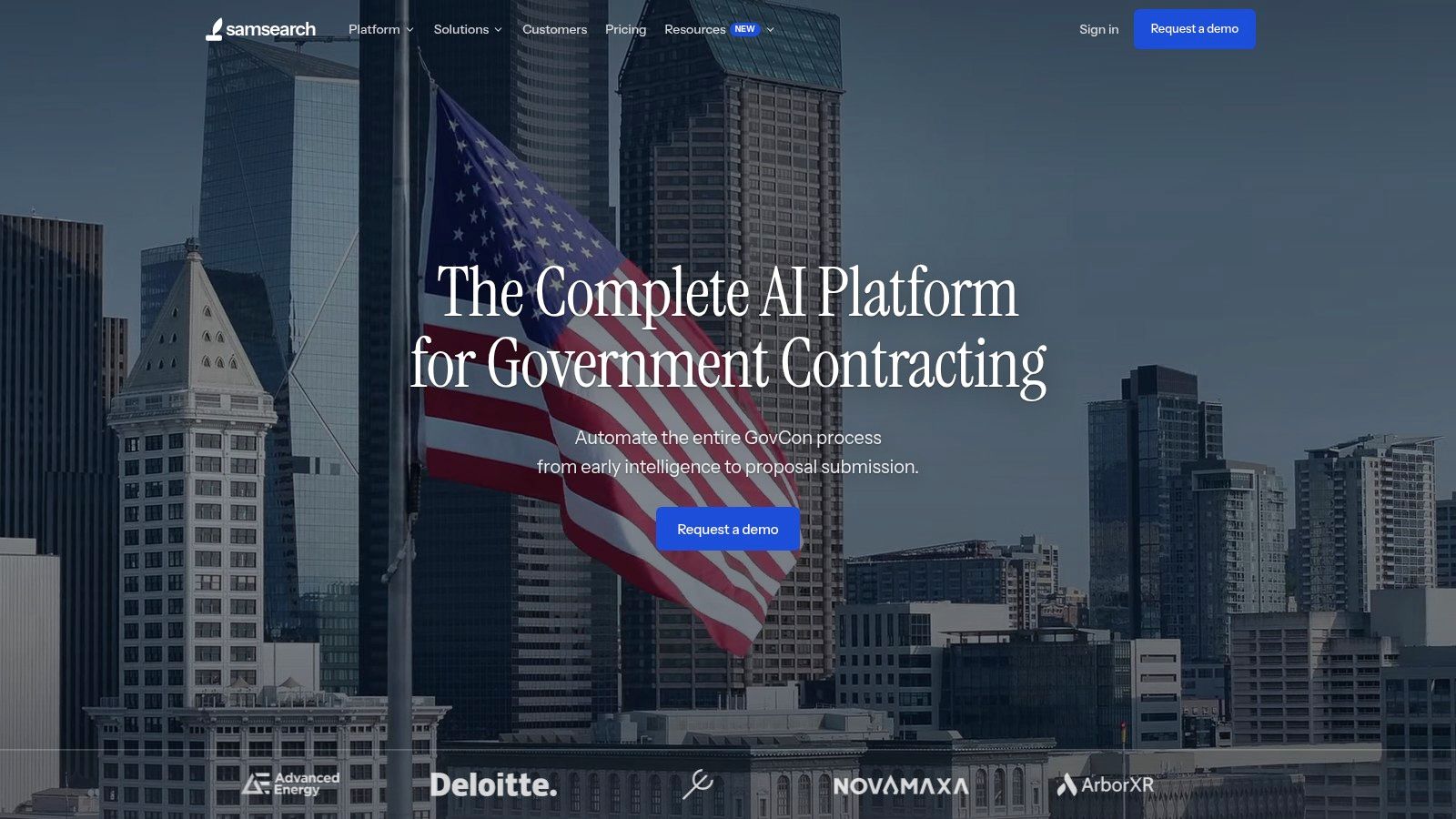
SamSearch earns the top spot for contractors who want bid tracking to lead into actual proposal work. It connects opportunity search and alerts with solicitation analysis, compliance matrices and proposal drafting, pipeline management, and teaming support. For a mid-size or enterprise capture team managing multiple pursuits, that continuity matters more than another daily email digest. Its pricing page also describes coverage across federal and other government markets, so teams should confirm the markets in their quote.
Say you receive a small business set-aside that looks right on keywords. A match is only useful if your team checks the qualification rules behind the notice. The U.S. Small Business Administration contracting officials guide explains the set-aside framework, including consideration of programs such as 8(a), HUBZone, Service-Disabled Veteran-Owned Small Business, and Women-Owned Small Business. Ask whether the tool surfaces the notice's set-aside, NAICS, and deadline fields before your team spends capture hours.
How It Handles the Middle of the Pursuit
The compliance-matrix workflow is SamSearch's clearest advantage over a tracker used only for alerts. Its platform materials describe moving from solicitation analysis into a requirements matrix, action items, and proposal drafting. This gives a proposal manager a place to organize the work after go/no-go instead of rebuilding the requirements in a separate spreadsheet. You can see more of this lifecycle framing in our coverage on practical government contracting tools and workflow comparisons.
That doesn't remove human review. AI-generated assessments and drafts still need checking line by line against the solicitation and its attachments. Amendments can change instructions, evaluation factors, and submission details, and no fit score overrides the source document.
Eligibility checks also need NAICS specificity. SBA explains that size standards measure a company and its affiliates against the maximum employee count or average annual receipts allowed for the applicable NAICS code, according to SBA guidance on getting started in federal contracting. A tool that matches on company size alone, without checking the opportunity's NAICS code, can push you toward work you cannot pursue as a small business.
Practical rule: Test any opportunity match against three notices you recently pursued and three you correctly passed on. If the tool can't help you explain the difference in set-aside, NAICS, deadline, and place of performance terms, don't trust it for triage.
On the budget lens, pricing is quote based rather than a published monthly rate. SamSearch says its pricing depends primarily on team size and markets covered, and says it does not charge setup fees or sell per-module feature upsells. Still, get the scope and total cost in writing. I recommend SamSearch first for mid-size to enterprise teams pursuing enough bids each quarter to use discovery, qualification, compliance, and drafting together. If you only need occasional notice alerts, you may not use its full workflow.
2. Civio AI
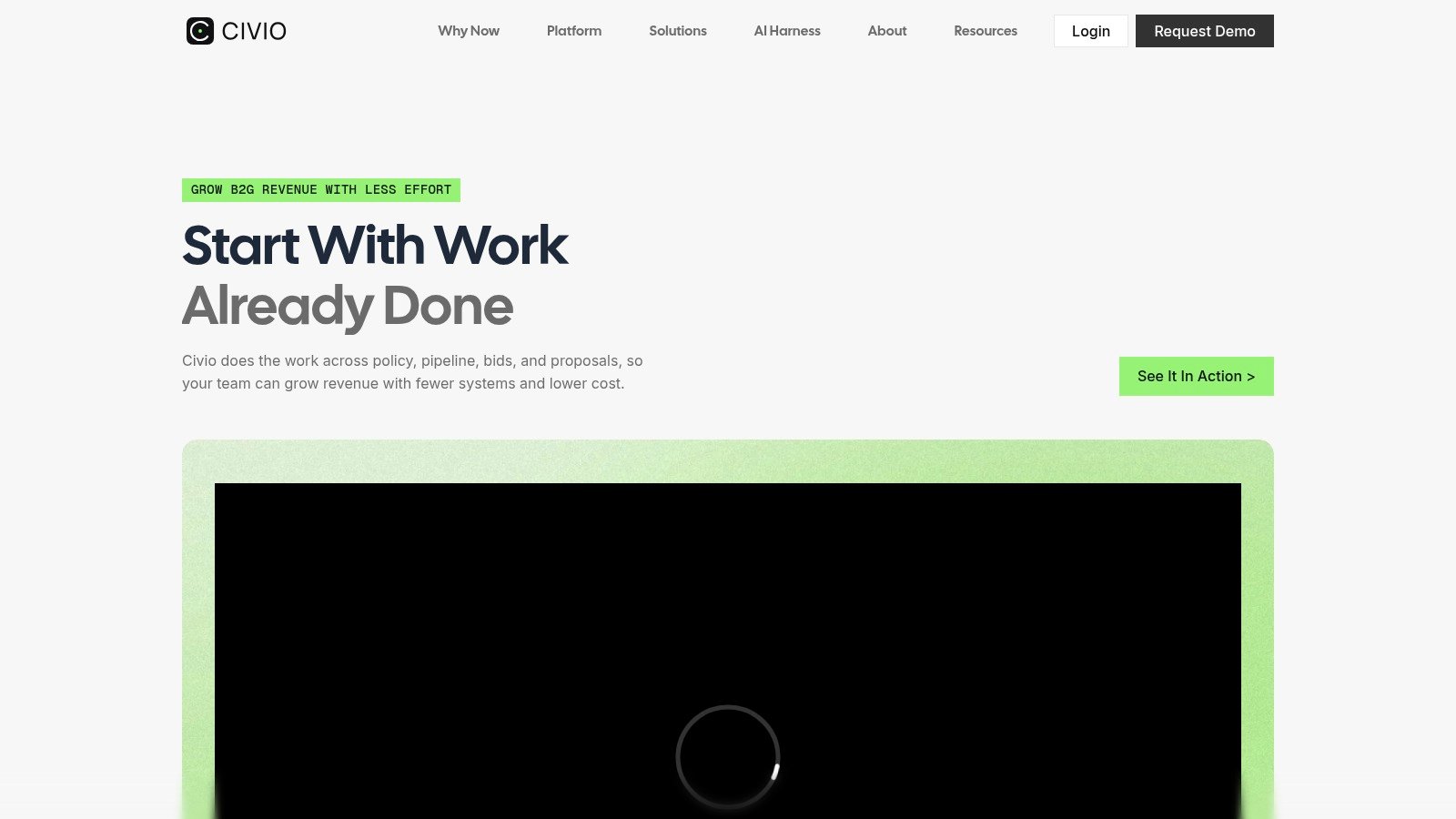
Civio AI combines government opportunity discovery, qualification, and proposal workflows. The company describes federal and state, local, and education opportunity tracking, with signals ranked by fit and other pursuit factors before opportunities move into capture. That makes it relevant to teams whose problem is not just finding bids, but deciding which ones deserve a response.
Its opportunity tracking overview describes scoring and workflow handoffs. For a contractor watching multiple markets, the useful question is whether that ranking catches opportunities your team would have missed without filling the pipeline with poor matches. Test it against your own agencies, contract vehicles, and past pursuits rather than relying on a vendor sample.
Where Qualification Meets Proposal Work
Civio AI also describes solicitation parsing, requirements matrices, and drafting from approved content. Like SamSearch, it aims to connect tracking with work after go/no-go. SamSearch gets the edge here for a small contractor seeking a straightforward discovery-to-compliance workflow; Civio AI is worth testing when your team wants opportunity prioritization and capture handoffs across a broader pipeline. That is a workflow recommendation, not a claim that either product will produce a compliant proposal without review.
Ask Civio AI to show the source passage behind each extracted requirement, how amendments update an in-progress matrix, and what proposal content can be reused. Confirm current pricing, coverage, and access terms directly with the vendor before comparing total cost.
Best use: Teams that want ranked opportunities to flow into capture and proposal work.
Budget check: Request a written quote and confirm the markets and workflows included.
Main risk: A persuasive opportunity score can still miss an eligibility condition or amendment unless someone checks the source documents.
3. GovTribe
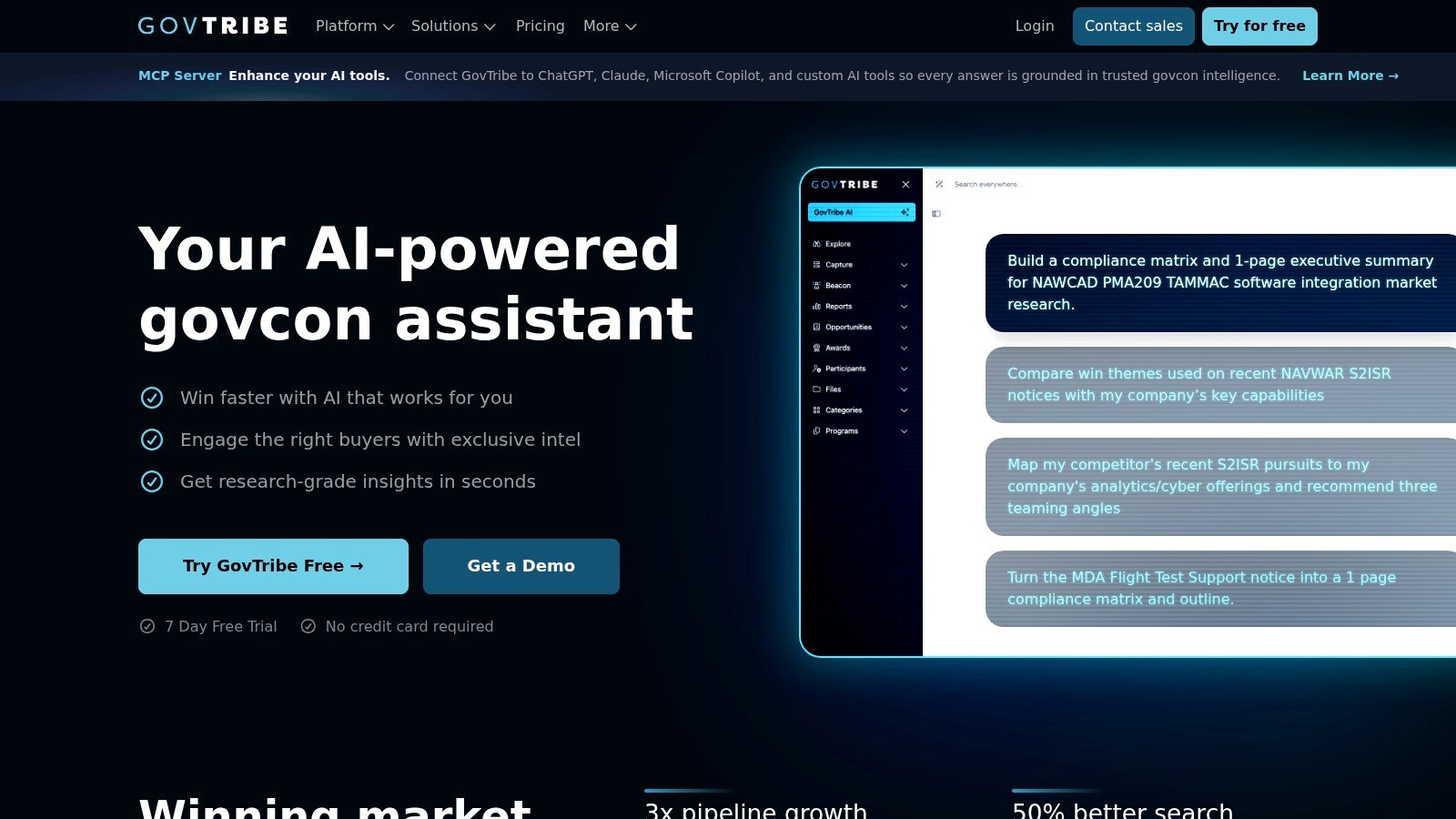
GovTribe takes a research-first approach. You search opportunities, awards, vendor profiles, buyer profiles, and procurement records, then use saved searches and pursuit tools to manage what you decide to chase. AI-supported research, summaries, and recommendations sit on top of that structured record base rather than replacing it.
That structure helps at the go/no-go stage. A notice tells you what the government wants now. Award history tells you who held the work, how the buyer has purchased before, and whether this is a new requirement or a recompete with entrenched competition. GovTribe's value is putting those two views in one research session so your BD lead doesn't qualify a bid on the solicitation alone.
The scale behind that research habit is substantial. The GAO snapshot of government-wide contracting for FY 2025 reports approximately $793 billion committed through contracts in fiscal year 2025, an increase of $17.8 billion from fiscal year 2024 after adjusting for inflation. At that volume, saved search discipline and historical context matter because no team can manually review every plausible notice across thousands of buying organizations.
Pricing Transparency Is the Clear Advantage
GovTribe publishes annual per-seat plans, making it easier to estimate a starting budget than with quote-only competitors. Check the current plan page for the seat count and market coverage you need. You can compare that approach against other vendor models through GovCon Reviews coverage of contractor software when you're building an internal business case.
Transparency has limits. AI credits and plan limits can affect the real cost of your workflow, while exports and collaboration needs deserve a plan-by-plan check. A lower-cost plan can become a poor fit if your capture process lives in a CRM or shared pipeline outside the tool.
Check your export needs before you check AI features. If pursuit data can't leave the platform cleanly, your pipeline reporting will break the first time leadership asks for a board-ready view.
GovTribe isn't primarily a proposal production system. I recommend it for contractors who need structured opportunity and award research, predictable annual budgeting, and AI assistance with triage, while keeping drafting and detailed compliance work in tools they already control.
4. HigherGov
HigherGov fits teams that need market context to decide whether to pursue an opportunity. Its research covers opportunities and awards, buyers and vendors, competitors, similar work, labor pricing, and potential partners. The trade-off is clear: it supports capture research more directly than proposal production.
For a services recompete, a capture manager may know the agency but still need to identify likely incumbents, compare similar awards, and test whether the proposed labor mix can be priced within range. HigherGov can bring that context into a go/no-go discussion, alongside the notice's deadline and requirements. Those signals help teams assess their position before committing proposal resources.
Federal AI opportunities can also appear under different acquisition approaches and descriptions. The GAO report on federal AI acquisition reports that agencies more than doubled their use of artificial intelligence from 2023 to 2024. It also says agencies acquired AI as software products, ongoing services, and through agreements outside the Federal Acquisition Regulation through fiscal year 2025. Broader market research can help capture teams spot related work when a search limited to one keyword or contract pattern falls short.
Strong Context, Less Production Automation
HigherGov focuses on intelligence rather than building compliance matrices or drafting proposal sections in the same workflow. That can fit teams with an established proposal process. If the bottleneck is turning a qualified solicitation into an outline, assigned tasks, and a first draft, another tool may be a better match.
Go/no-go lens: Buyer, competitor, and award context can help teams judge their position.
Compliance-matrix lens: Market intelligence is the emphasis, not automated proposal production.
Budget lens: Request current pricing and confirm which intelligence features are included before modeling cost.
Before committing, confirm data limits, which intelligence features come with your plan, and how research exports reach the capture team. Use the answers to common contractor software questions to frame those vendor checks. HigherGov is a better fit when market context can change a pursue-or-pass decision; it will not, by itself, shorten the proposal drafting cycle.
5. EZGovOpps
EZGovOpps combines customized federal opportunity searches and notifications with research and opportunity context. Its tools can help you investigate contract history, incumbents, pricing, scope, funded programs, and teaming prospects. Optional state and local portal coverage extends tracking beyond federal notices.
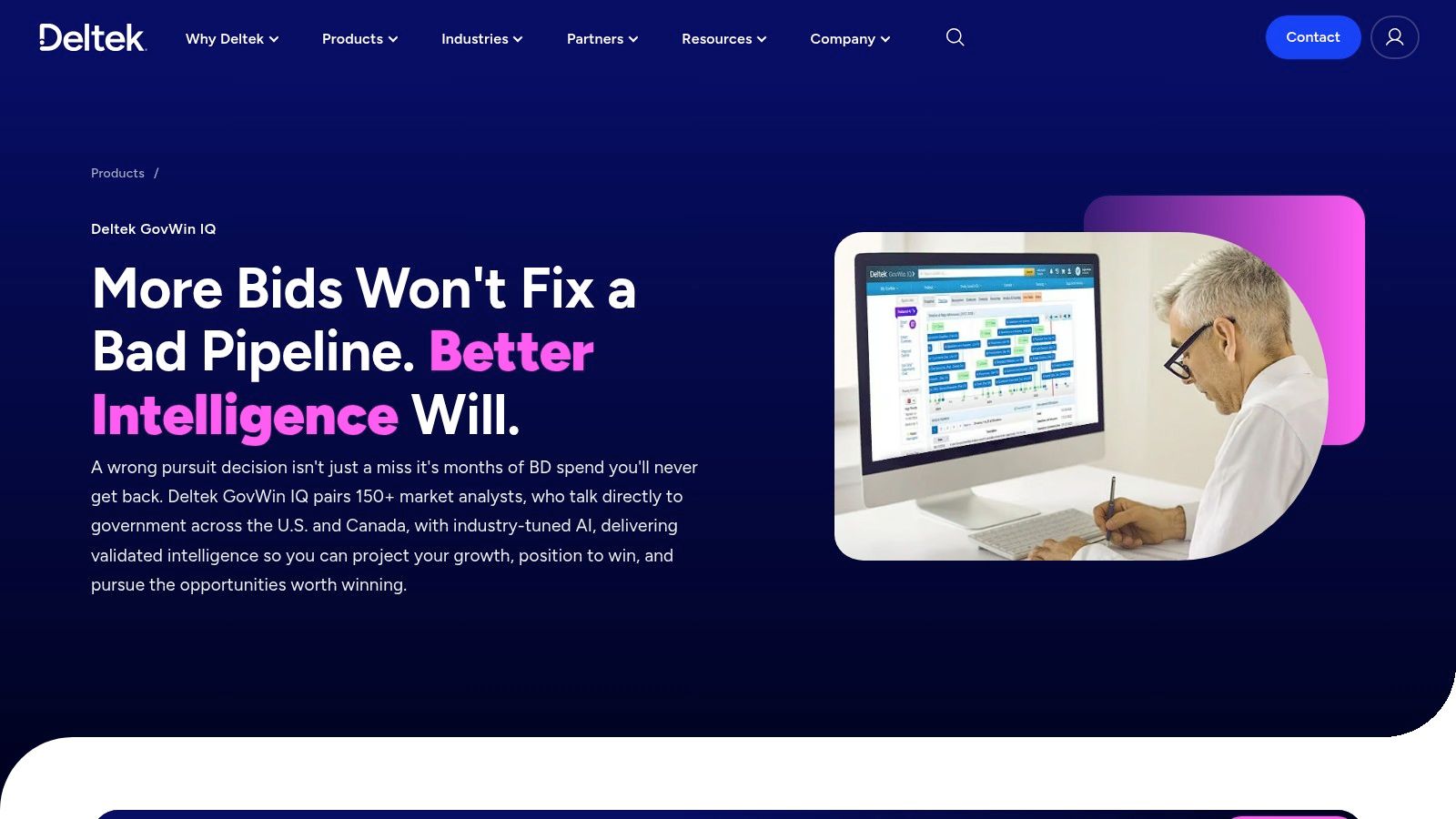
Research context changes how you use this tool. Instead of relying entirely on a keyword alert, you can investigate saved opportunities before committing capture time. For a contractor without a market researcher, an incumbent or funding check can keep the team from pursuing a notice that looked promising but is a poor fit.
That research still needs governance. Uploading capability statements, pricing assumptions, and past performance narratives into any platform raises retention and portability questions. The NIST AI Risk Management Framework is designed to help organizations incorporate trustworthiness considerations into the design, development, use, and evaluation of AI systems. Apply that lens here by asking how your data is retained, who owns uploaded material, what audit logs exist, and what you can export if you cancel.
Trial Access Helps, Annual Commitment Still Matters
Check the vendor's current trial terms before signing up, then use any trial to test search quality against agencies you know well. A short trial may not show how the platform handles amendments across a full solicitation cycle, so include active notices with known attachments and deadlines.
The budget risk comes after the trial. EZGovOpps publishes annual plan prices, and plan limits can affect users, exports, and available research features. A solo consultant should confirm exactly which research and state or local features are included before the annual term starts.
Trial test: Use two recompetes where you already know the incumbent and funding history. Score whether the platform adds information you didn't have, or simply repackages the notice.
I recommend EZGovOpps for contractors who value opportunity tracking alongside contract research and will use that context during qualification. If your team wants automated compliance matrices and AI drafting as the primary workflow, this is the wrong center of gravity. You'll still need a separate proposal process once a bid passes go/no-go.
How the five bid tracking tools compare on pricing, entry access, and best fit
| Tool | Pricing Visibility | Entry Access | Best For | Main Limitation |
|---|---|---|---|---|
| SamSearch | Quote based; confirm team size and market coverage | Request a demo and quote | Mid-size to enterprise teams connecting discovery to compliance and drafting | AI outputs still need source-document review |
| Civio AI | Confirm current pricing with vendor | Request current access terms | Teams connecting ranked opportunities with capture and proposal workflows | Validate scoring, coverage, and amendment handling |
| GovTribe | Published annual per-seat plans | Check current plan and trial terms | Contractors combining opportunity searches with award research | AI credits, exports, and team limits require checking |
| HigherGov | Request current subscription pricing | Confirm access with vendor | Teams needing market, agency, and competitor context | More research-focused than proposal production |
| EZGovOpps | Published annual plans; check current prices and limits | Confirm current trial terms | Contractors seeking opportunity tracking with contract research | Plan and feature limits may affect fit |
Match Your Bid Volume to the Tool, Then Test It on Real Solicitations
Start with volume. If you pursue one or two bids a quarter, clear pricing and clean saved searches may matter more than lifecycle depth. If you're pursuing every week, the breakdown is rarely discovery. It's slow go/no-go judgment, missed amendments, or a proposal team rebuilding the compliance matrix from scratch each time.
Map the tool to that breakdown. Choose SamSearch when you need discovery, qualification, compliance, and drafting connected in one place. Test Civio AI when opportunity ranking and handoffs into capture work are central. Choose GovTribe for structured research with published annual plans, HigherGov for competitor and pricing context, and EZGovOpps when tracking plus contract research fits your process.
Don't trust a demo built on the vendor's example data. GAO reported that agencies struggled to access technical experts who could evaluate AI proposals and had difficulty understanding AI-related costs, as detailed in the GAO report on artificial intelligence acquisition. Your version of that discipline is simple. Make the tool prove itself on documents your team already understands.
Run a two-week pilot on the last three solicitations you submitted. Score each tool on whether it would have surfaced them early, while there was still time to shape the pursuit. Record false-positive alerts that would have wasted capture hours and check whether extracted deadlines, set-asides, NAICS codes, and eligibility fields match the original documents.
Then check the compliance output, where the tool offers it. Compare the matrix against the solicitation instructions, evaluation factors, and amendments, line by line. Look for missed requirements in attachments, wrong submission details, and requirements stated without a source passage your proposal manager can verify.
Notice type discipline matters in that pilot too. The SAM.gov contract opportunities system includes pre-solicitations, solicitations, award notices, and sole-source notices, each of which needs a different workflow and urgency level. If a tool treats an award announcement like a live bid, or a sources-sought notice like a final RFP, its ranking will mislead your pipeline no matter how polished the summary looks.
Commit to an annual plan only after that pilot shows measurable value at your actual bid volume. The cheapest tracker is expensive if it misses the one notice your team was built to win.
Frequently Asked Questions
What should a government bid tracking tool catch besides new solicitations?
Look for sources-sought notices, RFIs, pre-solicitations, amendments, and approaching deadlines. Test whether the tool distinguishes these from awards and other notices that are not open bids.
Can AI-generated compliance matrices replace proposal review?
No. Compare extracted requirements against the solicitation, attachments, and amendments. Your proposal manager still needs to verify instructions, eligibility, and submission details against the source documents.
Which tool is best if I mainly need research rather than proposal drafting?
Start by testing GovTribe for opportunity and award research or HigherGov for market and competitor context. EZGovOpps is another option when tracking and contract research matter more than drafting. Compare each against your own pursuits and budget.
If you're weighing these platforms against your current capture process, GovCon Reviews publishes side-by-side comparisons of bid tracking, capture, and proposal tools with pricing, workflow trade-offs, and recommendations for different contractor sizes. Visit the site to compare SamSearch, Civio AI, GovTribe, HigherGov, and EZGovOpps against your bid volume before your next subscription renewal.
Related analysis
10 Government Contract Opportunity Tools for NASA SEWP VI in 2026
Compare ten NASA SEWP VI opportunity tools in 2026, including SamSearch and Civio AI. See pricing models, best-fit teams, and limits of restricted RFQ coverage.
Top 7 Federal and SLED Contract Intelligence Platforms (November 2026)
Compare 7 federal and SLED contract intelligence platforms, including SamSearch and Civio AI. Explore coverage, AI features, pricing, pros, and best-fit teams.

Top 6 Federal Opportunity Tracking Software Platforms (November 2026) Compared
Top 6 Federal Opportunity Tracking Software Platforms (November 2026): real pricing, RFP parsing, match accuracy, and who should skip each one.