Top 6 SLED Procurement Forecasting Tools Ranked for 2026
Compare six SLED procurement forecasting tools for early signals, coverage, capture workflows, and pricing. See where SamSearch and Civio AI fit.
SamSearch is the best overall choice among these six SLED procurement forecasting tools for mid-sized and enterprise government contractors that want to move from federal and state, local, and education (SLED) opportunity discovery to qualification and proposal work in one workflow. Civio AI takes the second spot for teams prioritizing procurement signals and structured qualification. Neither should be purchased on the assumption that every city, district, and agency has equally deep pre-solicitation coverage.
The popular advice is wrong. A bid alert is not a procurement forecast, and a bigger alert feed won't fix a late pipeline. Forecasting means evaluating contracts, budgets, meetings, grants, expiring awards, and buyer behavior before a solicitation appears. Once a keyword alert fires, the time available for account research and teaming may already be short.
That's the test used here: early-signal usefulness, SLED coverage, source quality, integrations, usability, pricing visibility, and contractor fit, not database size alone. The six tools below serve different decisions, from early capture planning to monitoring posted bids. Verify coverage in your target jurisdictions and ask vendors to show the underlying evidence behind any forecast.
1. SamSearch
SamSearch earns the top spot because it connects discovery, qualification, document review, and proposal preparation for mid-sized and enterprise government-contracting teams. You can find a federal or SLED opportunity, assess fit, review its documents, and start proposal work without treating each step as a separate project. For teams pursuing both markets across multiple accounts, that continuity can matter more than another saved search.
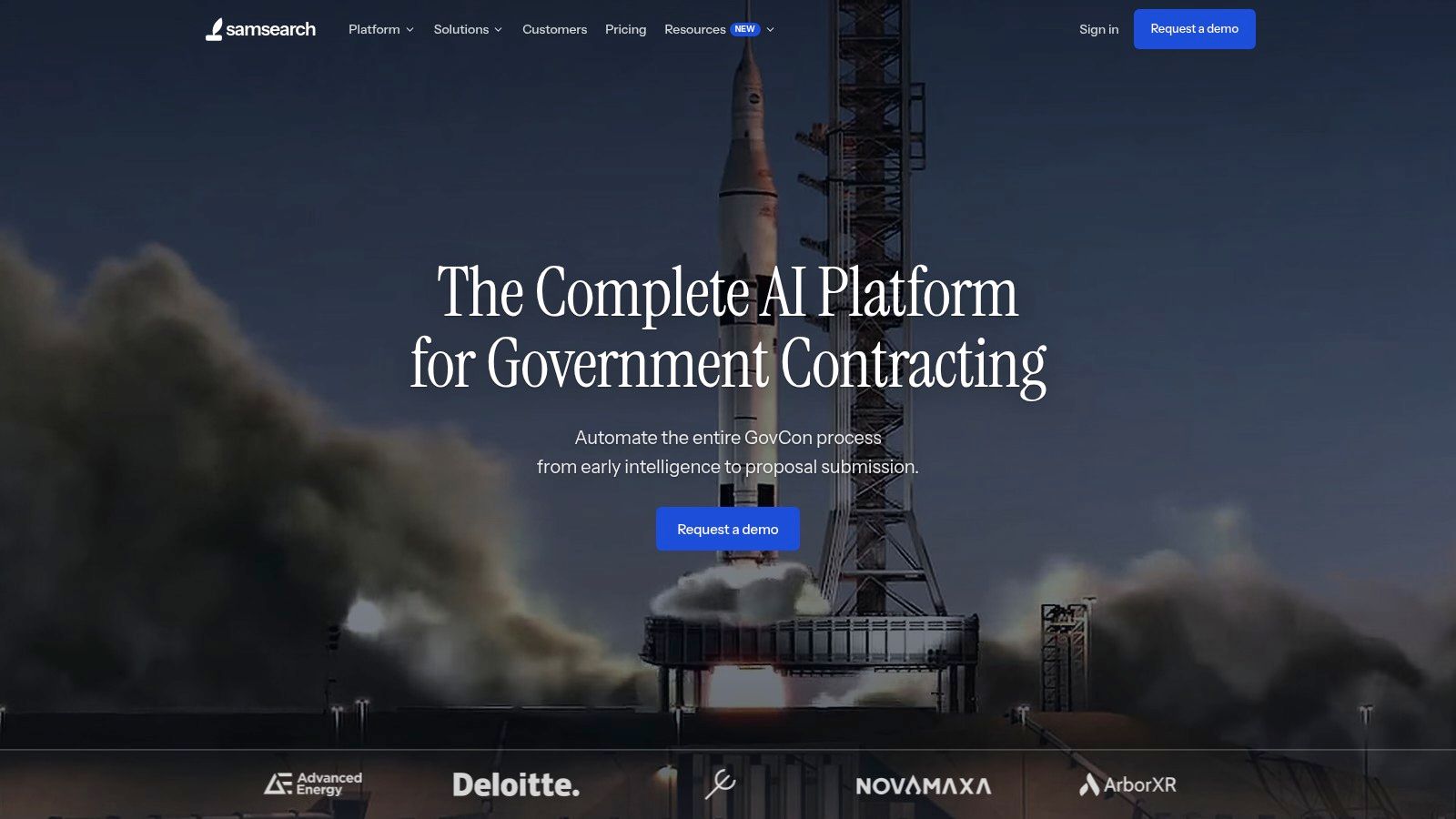
The structural case is strong. Public procurement data is fragmented across states, agencies, and localities, and NASPO identifies fragmentation across states and within individual states, agencies, and localities as a major data challenge. SamSearch says its search spans federal opportunities and state, county, city, and education buyers across all 50 states. Breadth makes it useful for discovery, but it does not establish equal forecast depth for every buyer.
What You Actually Get
Federal and SLED search: Research opportunities across markets without rebuilding the same search in separate portals. SamSearch offers plain-language Smart Search, keyword search, and an AI Query Helper.
AI-assisted qualification: Opportunity recommendations, chat, and attachment summaries help you inspect requirements and decide whether a bid deserves proposal hours. Review the underlying documents before making the final go/no-go call.
Proposal drafting in the same workflow: SamSearch can generate a first draft using a company profile and solicitation documents, then support revision. A draft still needs subject-matter and compliance review.
Plan-dependent access: SLED search and proposal generation require Pro or Enterprise access. Confirm current pricing, seats, market access, and feature limits with the vendor before budgeting.
Practical rule: A useful capture tool should help you explain both why an opportunity fits and what the solicitation actually requires.
SamSearch's advantage over a posted-bid alert service is the path from discovery to a working proposal. Against a specialist forecasting product, the tradeoff is different: don't assume its broad search provides the earliest budget, meeting, or contract-expiration signal in every jurisdiction. Test those signals with your own agencies. Readers comparing capture platforms can also review broader context on GovCon Reviews.
Buy SamSearch if your mid-sized or enterprise team needs one workflow from discovery through proposal preparation across federal and SLED markets. If your business depends on deep pre-solicitation intelligence in a small set of local jurisdictions, make a specialist prove better coverage there before deciding.
2. Civio AI
Civio AI is the strongest fit here for a team that wants to connect government buying signals to qualification and downstream revenue work. Its federal and SLED positioning covers opportunity discovery, capture, proposals, and related workflows. That makes it more than a notice feed, but its forecasting value still depends on which signals it can document in your target accounts.
Civio describes a qualification framework called Fit, Intent, Access, and Timing (FIAT). Rather than treating every lead as an equally likely future solicitation, the workflow considers whether the opportunity fits your capabilities, what evidence suggests buyer intent, whether you can reach the account, and when a purchase may occur. Its discussion of procurement signals and opportunity qualification is a useful way to frame a pilot; it is not an independently verified accuracy guarantee.
Where It Fits in a Capture Workflow
Civio says it connects market signals, CRM information, and AI-assisted work across the revenue lifecycle. Its RFX and proposal capabilities include requirement analysis, go/no-go support, compliance matrices, and initial drafts based on approved content. For a team with an established capture process, the appeal is moving a qualified signal into an owned pursuit rather than leaving it in a spreadsheet.
The buying questions are specific. Ask Civio to show source records for a budget action, expiring award, or pre-solicitation notice in your agencies, along with the signal date and expected procurement date. Confirm what integrates with your CRM, what requires human review, and what is included in a current quote. Public feature descriptions do not establish uniform jurisdiction coverage or a verified forecast-accuracy rate.
Choose Civio AI when your priority is structured qualification that connects early signals to capture and proposal work. Choose SamSearch instead when a simpler discovery-to-proposal workflow is the primary need. Either way, count actionable leads in a pilot, not total records in a sales demo.
3. Deltek GovWin IQ
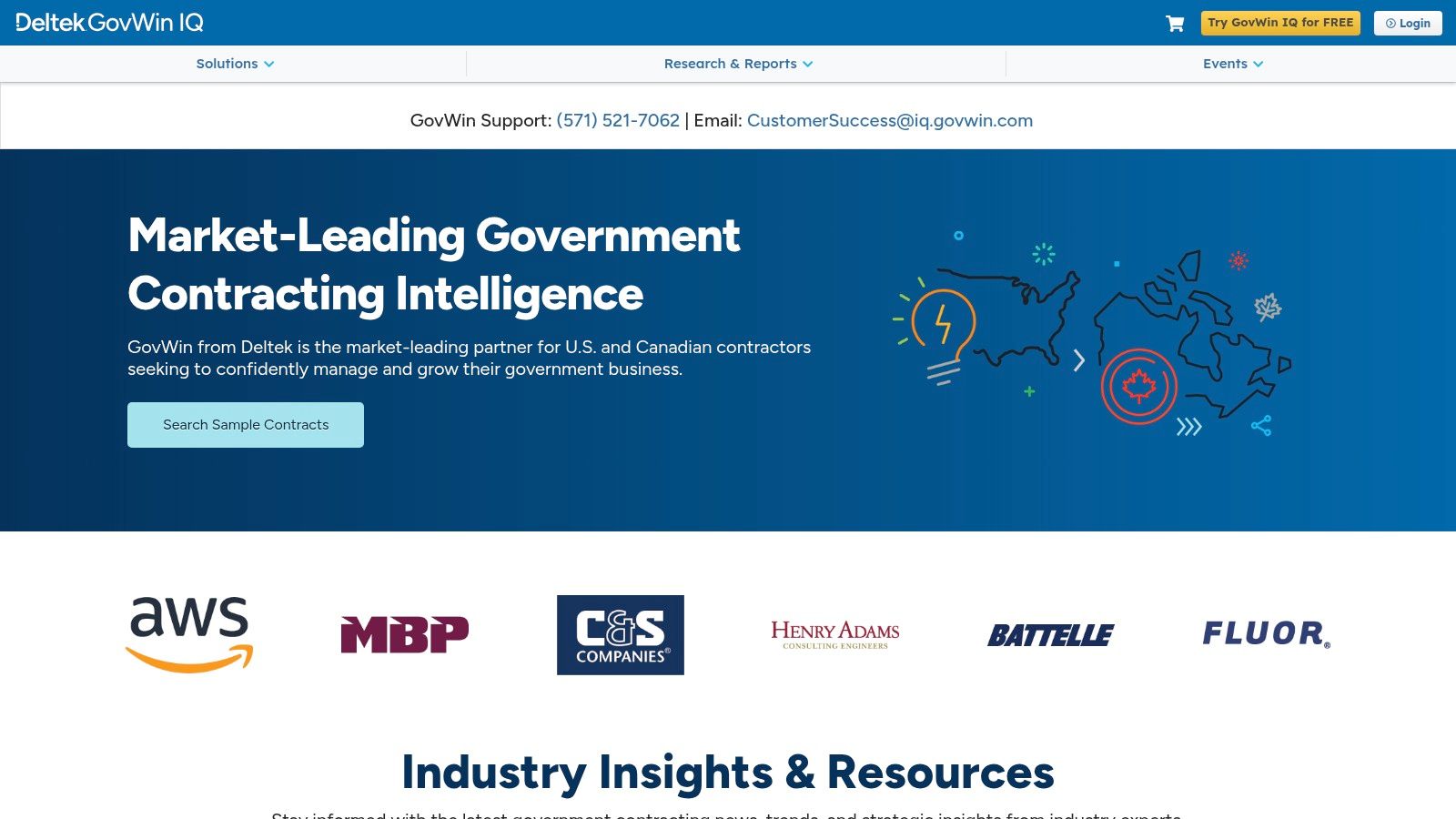
Deltek GovWin IQ is built for established capture teams planning markets and accounts, not a solo bidder who needs tomorrow's RFP list. Its value comes from combining opportunity tracking with analyst-supported research, market planning resources, agency information, and competitor intelligence. That context helps you decide where to invest business-development effort.
SLED deserves its own planning layer. In 2021, subnational governments accounted for 61.2% of procurement spending across the OECD, according to OECD public procurement data. That international figure is context, not a measure of U.S. SLED spending, but it shows why government-market planning should not stop at federal notices.
Strengths and Tradeoffs
Analyst context alongside platform data: Research can help you interpret a projected opportunity instead of treating every forecast as equally certain.
Account and market planning: Useful when capture managers allocate effort across agencies, territories, and vehicles.
Competitor and agency intelligence: Supports incumbent analysis and teaming decisions before a solicitation drops.
Quote-based buying process: Request a current SLED-specific demonstration and quote tied to your actual segments.
It's more platform than a small contractor needs for basic bid alerts, and unused research doesn't improve win rates. If your team won't maintain account plans or review market intelligence, the depth becomes overhead. Additional buying guidance is available through the GovCon Reviews blog.
Buy GovWin IQ if dedicated capture staff will use its research to shape territory and account decisions. Avoid it if you primarily need lean opportunity triage and proposal support.
4. GovSpend
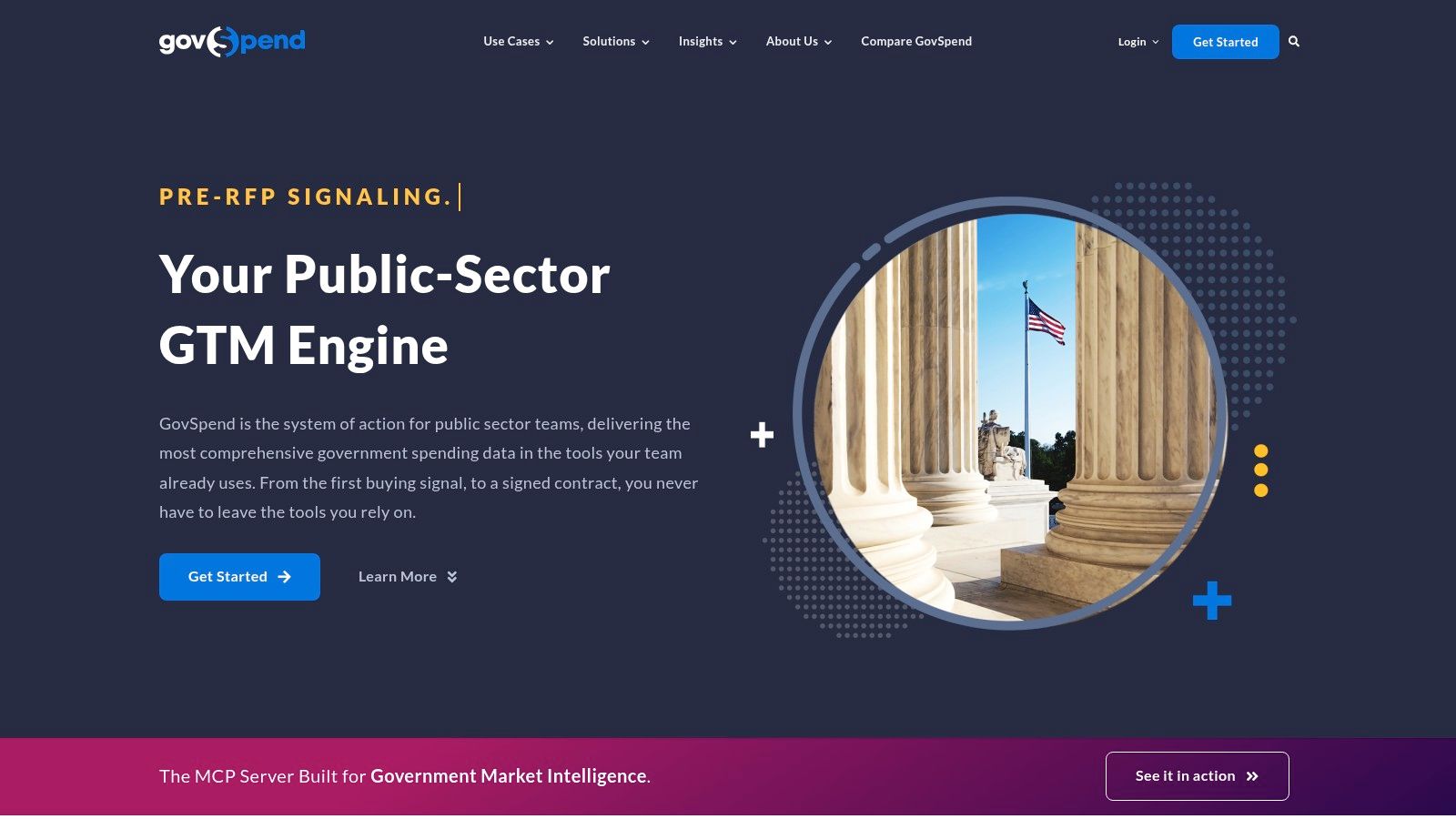
GovSpend tells you what an agency already bought, and that's useful. It brings together SLED purchase orders, bids, contracts, meeting information, and contacts for account research. You can identify incumbents and compare buying patterns, but don't confuse purchase history with a confirmed forecast.
GovSpend works best before a bid appears. The platform describes its procurement data and agency relationships as a way to research accounts and monitor potential demand. A buying signal can prioritize outreach, but you still need to verify whether a new procurement is budgeted and who can authorize it.
Thresholds show why that validation must be local. NASPO's survey reported an average formal procurement threshold of $63,684, with state thresholds ranging from $10,000 to $250,000, in its survey of state procurement practices. The same purchase may trigger a formal competitive process in one state and not another. Historical spend without jurisdiction rules can mislead your forecast.
How to Use It Without Overclaiming
Use purchase-order history to map incumbents and realistic contract sizes. Use meeting and contract data to build a watch list, then confirm budget, vehicle, and timing with the agency. Treat every projected buy as a hypothesis until you find a supporting pre-solicitation notice, budget action, or expiration date.
A spending history explains the last purchase. It does not guarantee the next solicitation.
GovSpend does not publish standard subscription prices, so ask for a quote based on your markets and team. The bigger risk is analytical: presenting possible buying signals to leadership as committed pipeline.
Choose GovSpend for historical SLED spending and account research. Don't use it alone to claim a forecast is certain. Pair the records with qualification and direct source checks.
5. GovTribe
GovTribe centralizes opportunity research for teams pursuing both federal and SLED work. State and local search sits alongside federal market research, while opportunity context and capture tools help organize pursuits. That's a sensible consolidation play, with a forecasting caveat.
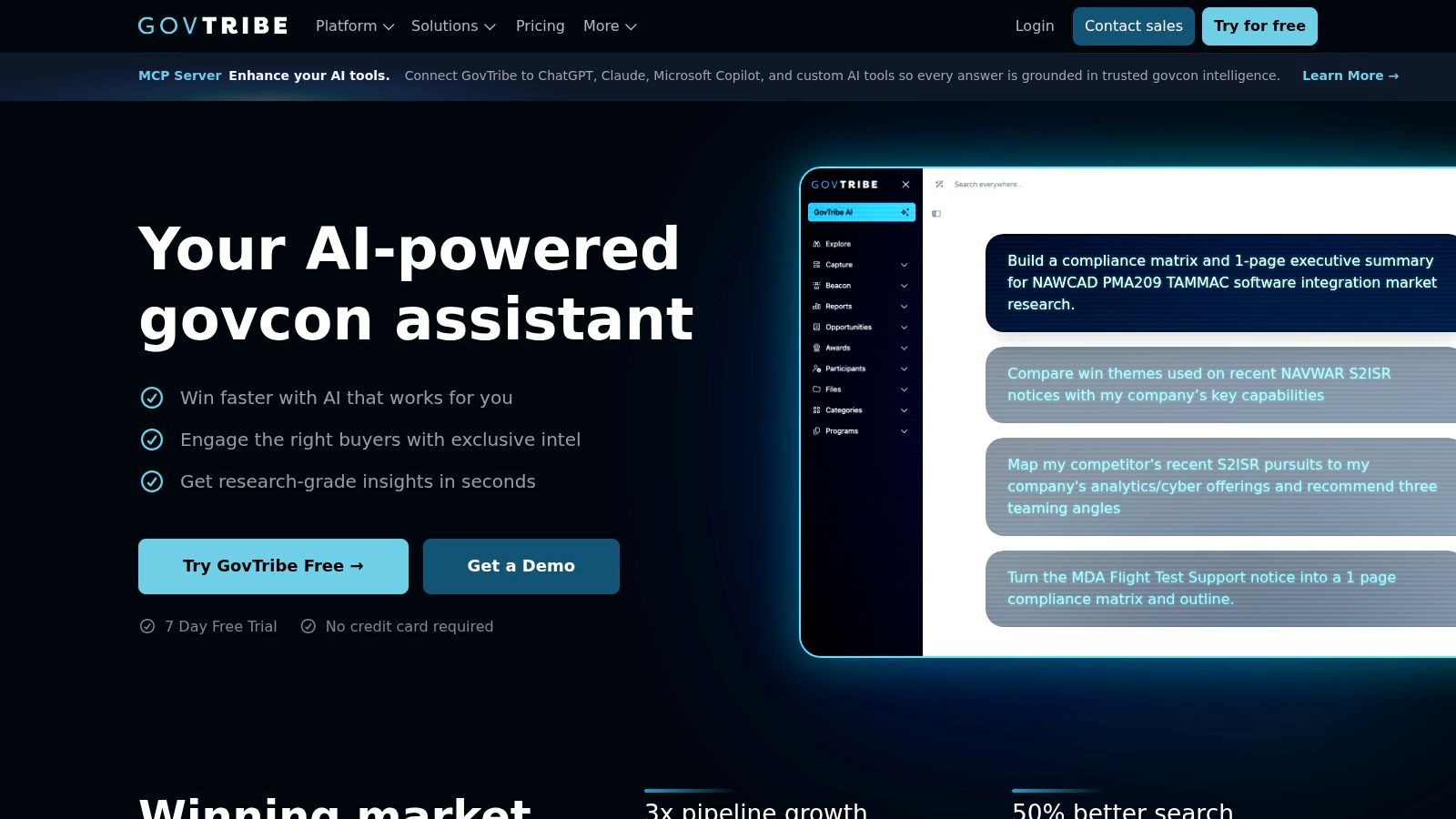
Discovery breadth isn't the same as lead time. A well-organized record for a posted bid helps with triage, but it cannot retroactively give your team months to engage an agency. Judge GovTribe on the age and source of the opportunities it surfaces for your accounts, not just the number of searchable records.
What GovTribe Does Well
Unified federal and SLED research: Reduces portal hopping when pursuits span both markets.
Public-source context: Helps users check opportunity details rather than relying on a summary alone.
Pursuit organization: Signals and posted opportunities can move into a managed pipeline.
Jurisdiction-specific testing: Confirm agency coverage and the depth of pre-solicitation information where you sell.
If your strategy depends on seeing demand before publication, test that standard explicitly. Ask how much early intelligence exists for your agencies and whether the source is an agency forecast, a contract record, or an already posted solicitation. Common buyer questions are also addressed in the GovCon Reviews FAQ.
Buy GovTribe if unified opportunity research is the job. Avoid buying it solely for forecasting unless a pilot proves early, actionable signals in your target accounts. Convenience is valuable, but it isn't prediction.
6. BidNet Direct
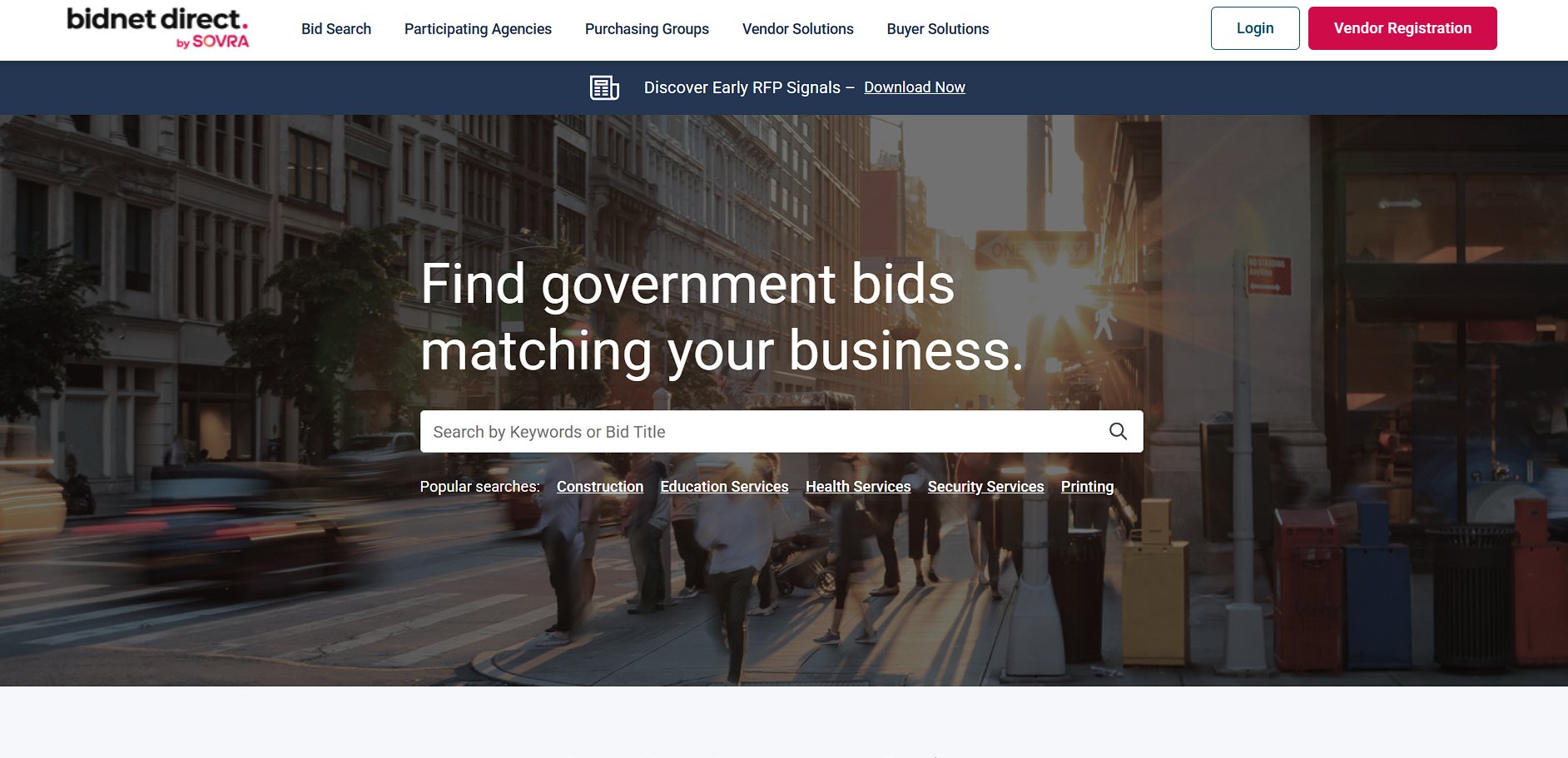
BidNet Direct is last because it's primarily a bid-discovery and notification service, not a dedicated forecasting platform. It aggregates opportunities from participating agencies and offers saved searches and alerts with plan-dependent access. That's useful monitoring, but it generally starts once a bid is published.
BidNet Direct also supports vendor registration and bid submission for participating agencies. Geographic access can suit a company focused on a defined territory. If your problem is missing posted solicitations, it solves a narrower problem than the capture and research platforms above.
Cooperative purchasing exposes a limit of posted-bid monitoring. In NASPO's 2022 survey, all 43 responding states used cooperative contract services, and nearly 98% purchased through NASPO ValuePoint cooperative contracts, according to NASPO's 2022 Survey of State Procurement Practices Report. A vehicle can reach buyers beyond the agency that issued it, so watching individual notices alone can miss part of the market.
Who Should and Shouldn't Buy It
Buy it if you're regionally focused and need posted-bid alerts. Check current plan pricing and whether your target agencies participate before subscribing.
Don't buy it expecting lead time to shape requirements or build a team before publication. A missing agency in your core territory makes an inexpensive monitoring plan less valuable.
Bottom line on alerts: Notification keeps you from missing a deadline. Forecasting gives you time to act before the deadline exists.
Treat BidNet Direct as a safety net under a capture process, not the entire process.
SLED Procurement Forecasting Tools: Feature Comparison
| Platform | Buying Considerations | What It Helps You Do | Best Fit | Forecasting Caveat |
|---|---|---|---|---|
| SamSearch | Confirm Pro or Enterprise SLED access, proposal features, and current quote | Search, qualify, review documents, and draft proposals across federal and SLED markets | Mid-sized and enterprise teams seeking one discovery-to-proposal workflow | Broad search does not prove deep early signals in every jurisdiction |
| Civio AI | Confirm current pricing, CRM fit, signal sources, and coverage | Qualify opportunities with FIAT and route them into capture and proposal work | Teams connecting procurement intelligence to revenue workflows | Validate the source and lead time of predicted opportunities |
| Deltek GovWin IQ | Request a SLED-specific quote and research demo | Plan markets and accounts with analyst-supported intelligence | Established capture teams | Research value depends on active use and segment coverage |
| GovSpend | Request a quote and test agency-level records | Research historical spending, incumbents, and buying signals | SLED account and territory researchers | Prior purchases do not guarantee future solicitations |
| GovTribe | Test jurisdiction coverage and pre-solicitation depth | Research federal and SLED opportunities in one workspace | Teams managing pursuits in both markets | Opportunity discovery is not necessarily an early forecast |
| BidNet Direct | Check current geographic plans and participating agencies | Monitor posted solicitations and alerts | Regionally focused bid monitoring | Primarily a notice service, not a pre-solicitation forecast |
Choose for the Decision You Need to Make
Stop asking which database is biggest. Ask which decision the tool must improve. SamSearch fits a discovery-to-proposal workflow across federal and SLED opportunities. Civio AI fits teams that want to qualify procurement signals and connect them to capture work. GovWin IQ fits analyst-supported planning, GovSpend fits historical agency spending, GovTribe fits unified opportunity research, and BidNet Direct fits posted-bid alerts.
That's also why SamSearch leads this ranking: for mid-sized and enterprise teams, the ability to assess fit, read requirements, and begin drafting in one place can connect more of the capture workflow than another notice feed. Civio AI may be a better match when an established sales operation needs structured signal scoring and routing. Neither claim removes the need to check your own agencies.
Run a Proof of Concept Before You Commit
Pick three target agencies: Use real accounts, not vendor demo examples.
Track one likely procurement per agency: Tie it to an expiring contract, budget action, meeting signal, grant, or prior award.
Use the same scoring rules: Compare source attribution, refresh cadence, actionable lead time, and how each tool handles uncertain signals.
Check operational details: Verify agency coverage, integrations, export rights, usability, plan limits, and total cost.
Explainability matters. In its 2025 survey, the UK Local Government Association found 95% of responding councils were using or exploring AI, while 61% struggled to understand how AI was embedded in products, as reported in the Local Government Association's State of the Sector Artificial Intelligence publication. That UK finding does not measure U.S. procurement software, but it illustrates a sensible buying question: can your vendor show the evidence behind a recommendation?
Jurisdiction discipline matters just as much. The U.S. Census Bureau notes its Annual Survey of State Government Finances does not measure financial activity of local governments, in the Census Bureau's Annual Survey of State Government Finances documentation. Don't let a statewide budget signal masquerade as a school district or city forecast. Connect every prediction to the correct purchasing entity.
Public-sector AI guidance emphasizes data quality, monitoring, accountability, and traceability, while fragmented systems remain a barrier to reliable outputs, as discussed in Infosys Public Services research on state and local government AI opportunities. Choose the tool whose evidence chain your capture team can explain. If you need the broadest search-to-proposal workflow, start with SamSearch. If you need a narrower research or signal-scoring job, make the specialist earn the contract in a pilot.
SLED Procurement Forecasting Tools: Frequently Asked Questions
What is the difference between a SLED bid alert and a procurement forecast? A bid alert notifies you about a posted solicitation. A forecast identifies and evaluates earlier evidence, such as budget actions, contract expirations, or agency plans, that could give you time to prepare before publication.
Which SLED forecasting tool is best for mid-sized and enterprise government contractors? SamSearch is the strongest starting point here if your team needs opportunity search, fit assessment, document review, and proposal drafting in one workflow. Confirm that your plan includes SLED access, then test coverage with your target agencies.
How should I verify a vendor's SLED forecast? Ask for the source record, purchasing agency, signal date, expected solicitation date, and update history. Compare the tool's output against procurements your team already knows about, and do not treat an unverified signal as committed pipeline.
GovCon Reviews publishes head-to-head comparisons and buying guides for bid trackers, capture platforms, proposal tools, and SLED forecasting software, with clear verdicts on cost, coverage, and fit. If you're shortlisting top 6 SLED procurement forecasting tools for a pilot, compare the full category coverage and request the evidence behind each claim. Visit GovCon Reviews to compare your options before you commit budget.
Related analysis
Top 7 Federal and SLED Contract Intelligence Platforms (November 2026)
Compare 7 federal and SLED contract intelligence platforms, including SamSearch and Civio AI. Explore coverage, AI features, pricing, pros, and best-fit teams.

9 Best GovCon Software Platforms for 2026
Compare the 9 best GovCon software platforms for 2026, including SamSearch, Civio, GovWin IQ, BGOV, and more for capture, intelligence, and proposals.
10 Market Intelligence Tools for Procurement in Government Contracting
Compare 10 market intelligence tools for procurement, including SamSearch, Civio AI, GovWin IQ, SAM.gov, pricing, coverage, images, and use cases.