Top 7 Government Contract Forecasting Software Tools (November 2026): Ranked
Compare 7 government contract forecasting tools for 2026, including SamSearch and Civio AI. See pricing, forecast coverage, trade-offs, and who should skip each.
Most forecasting tools still sell you a bigger pile of alerts, even though the market you're chasing is anything but simple. Federal agencies obligated more than $430 billion for products and services in fiscal year 2015, equal to almost 40% of all discretionary spending, according to the U.S. Government Accountability Office report. That historical figure shows the scale, not the size of today's market. Our verdict for the top 7 government contract forecasting software tools (November 2026) puts SamSearch at #1. It connects AI-assisted opportunity matching, forecast research, capture, and proposal workflows, so a team can act on a signal without rebuilding the pursuit in another system.
Rank every tool on five things: forecast coverage for your target agencies, update cadence, pricing transparency, workflow fit across discovery, capture, and proposal, and total cost against team size. A cheap alert feed that forces manual qualification isn't cheap once you count analyst hours.
Treat every forecast as a signal, not a commitment to buy. Agencies revise and cancel plans, and details aren't final until the solicitation posts. Each pick below gets pros, cons, pricing where it's published, a concrete use case, and a who should not buy this verdict so you can rule tools out fast.
1. SamSearch
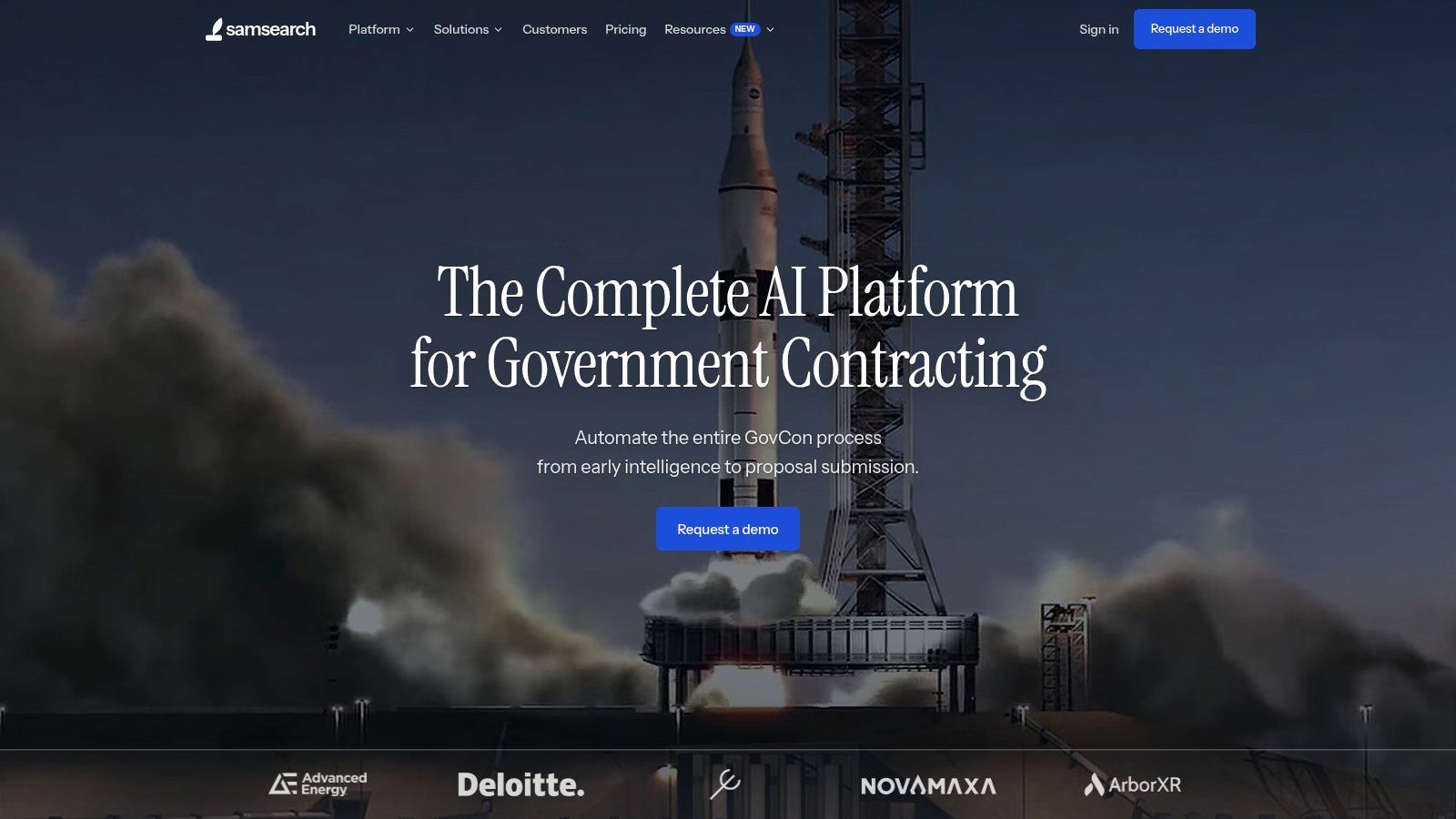
SamSearch is our #1 for mid-size to enterprise teams that need to do more than collect forecast records. It connects forecast search and opportunity qualification to solicitation analysis, capture management, and proposal drafting grounded in company materials. The SamSearch platform evaluates opportunities against a company profile, including NAICS and PSC codes, set-aside eligibility, capabilities, and past performance. Its forecast documentation distinguishes planned opportunities from active solicitations, an important distinction when setting deadlines and pursuit budgets. Instead of exporting every promising lead into a separate proposal workflow, teams can carry research into the next stage.
What sets it apart
Forecast visibility: Coverage includes federal, state, local, education, subcontracting, SBIR/STTR, and Canadian opportunities, with market coverage and modules to confirm for your plan.
AI qualification: Keyword and semantic matching, saved searches, attachment summaries, and capability matching cut manual screening. The SamSearch search documentation describes how its search tools surface opportunities.
Document intelligence: The SamSearch solicitation workflow organizes extracted requirements by statement-of-work section and lists mandatory compliance items and critical dates.
Early planning: The SamSearch enterprise overview describes early procurement signals. Forecasts should be checked against agency sources for expected timing, scope, and subsequent changes.
That breadth is the practical advantage over a standalone alert feed: a team can screen a forecast, document why it fits, and prepare for a future solicitation in one workflow. It does not replace analyst judgment or an agency's official notice. SamSearch pricing is quoted annually rather than posted as a fixed rate; confirm seats, market coverage, modules, and renewal terms in the quote. AI output still needs human review, and you should verify coverage and update cadence for your agencies. Our GovCon Reviews blog coverage follows how these workflow claims hold up in practice.
Where it wins: A five-person BD team tracking set-asides across two agencies can qualify a forecast, organize compliance requirements once a solicitation appears, and start drafting without switching systems. Who should not buy this: Occasional bidders who only need a SAM.gov alert feed once a quarter.
2. Civio AI
Civio AI is the closest fit for teams that want AI support across forecast research, qualification, capture, and proposals, not just a list of expected procurements. Its government sales workflow uses signals such as agency forecasts and expiring awards to help teams identify pursuits before a solicitation arrives. Civio also describes a capture-to-proposal handoff that carries research and pursuit context into proposal work.
The upside is less duplicated qualification work between BD and proposal staff. The trade-off is that forecast signals and AI-generated recommendations still need source checks and a human go/no-go decision. Civio's pricing page does not publish a standard dollar rate, so ask for a quote and test forecast coverage in your target agencies before committing. Compared with Civio, SamSearch gets our #1 spot for its clearly documented forecast records and integrated path from opportunity matching to solicitation analysis; both warrant a live-pursuit demo rather than a feature-list comparison.
Where it wins: A capture team managing several pre-RFP pursuits wants to carry qualification notes and source material into proposal planning without restarting its research. Who should not buy this: A firm that only wants a low-cost alert feed with public, fixed pricing.
3. GovWin IQ
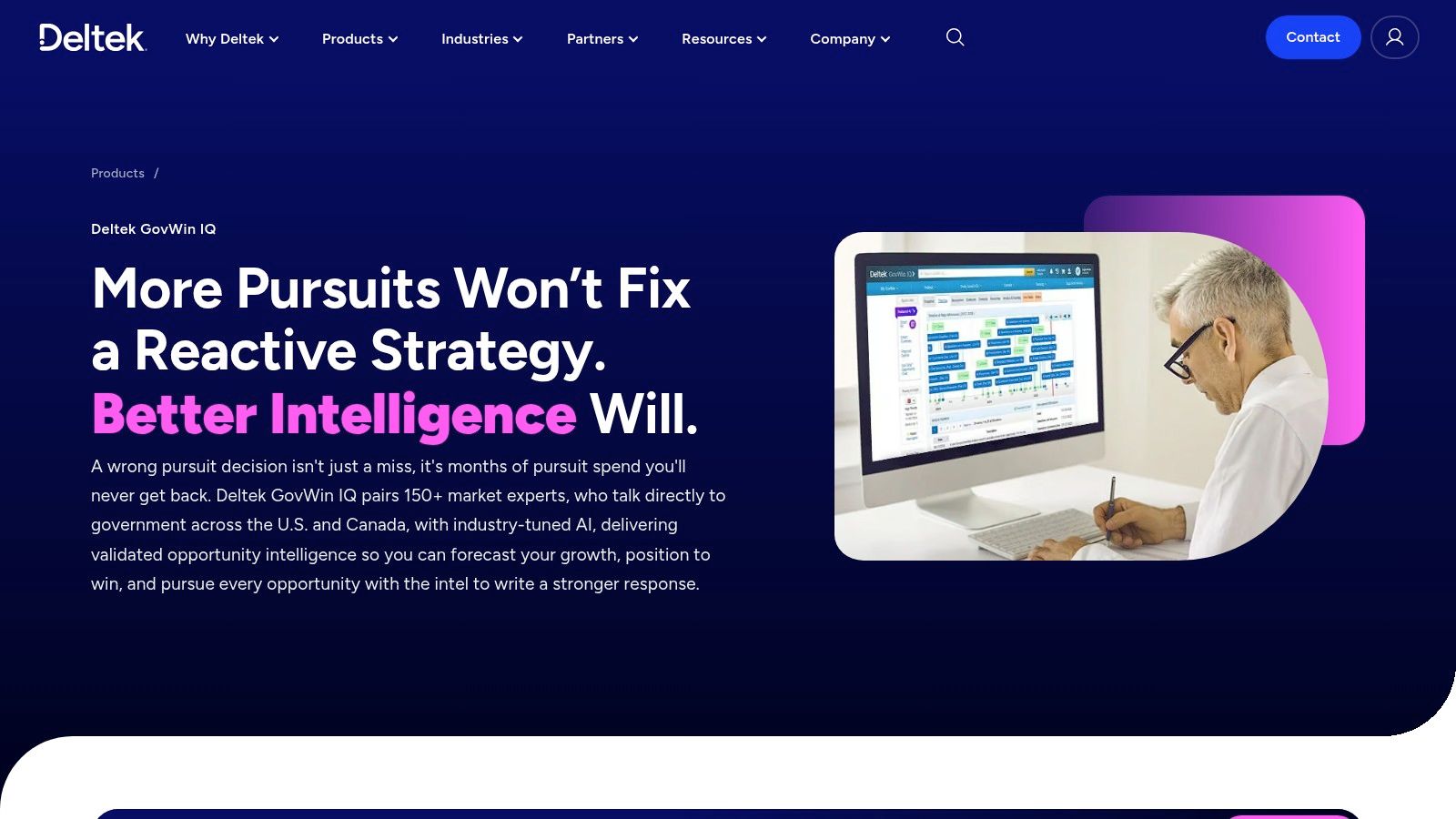
Buy GovWin IQ when you need analyst depth, not just records. Deltek's platform pairs early-stage opportunity tracking for defense and civilian agencies with analyst research, market reports, and spending analysis by agency or sector. Coverage extends to U.S. state and local markets and Canada, which suits established BD and capture teams building a forward-looking pipeline across several accounts.
The analyst layer is the differentiator. Instead of a raw forecast row with an expected quarter, you get context on agency priorities, competitors, and procurement history that helps you decide whether to spend capture dollars early. That matters when a pursuit means months of customer calls and teaming conversations.
Pay for analyst research only if someone on your team will actually use it to kill weak pursuits early. Unread market reports don't raise your win rate.
Pricing is by quote only, which means budgeting starts with a sales call. Early leads still aren't guarantees that an RFP will drop, so set kill criteria before the pipeline inflates. Fragmentation is a real risk too, and GovCon Reviews tracks how intelligence tools connect to the rest of your stack.
Where it wins: A midsize prime planning three agency campaigns over two years uses spending analysis and analyst notes to pick where to hire capture staff. Who should not buy this: Small firms bidding a handful of times a year. The depth and sales-led process may outrun your budget and your workflow.
4. HigherGov
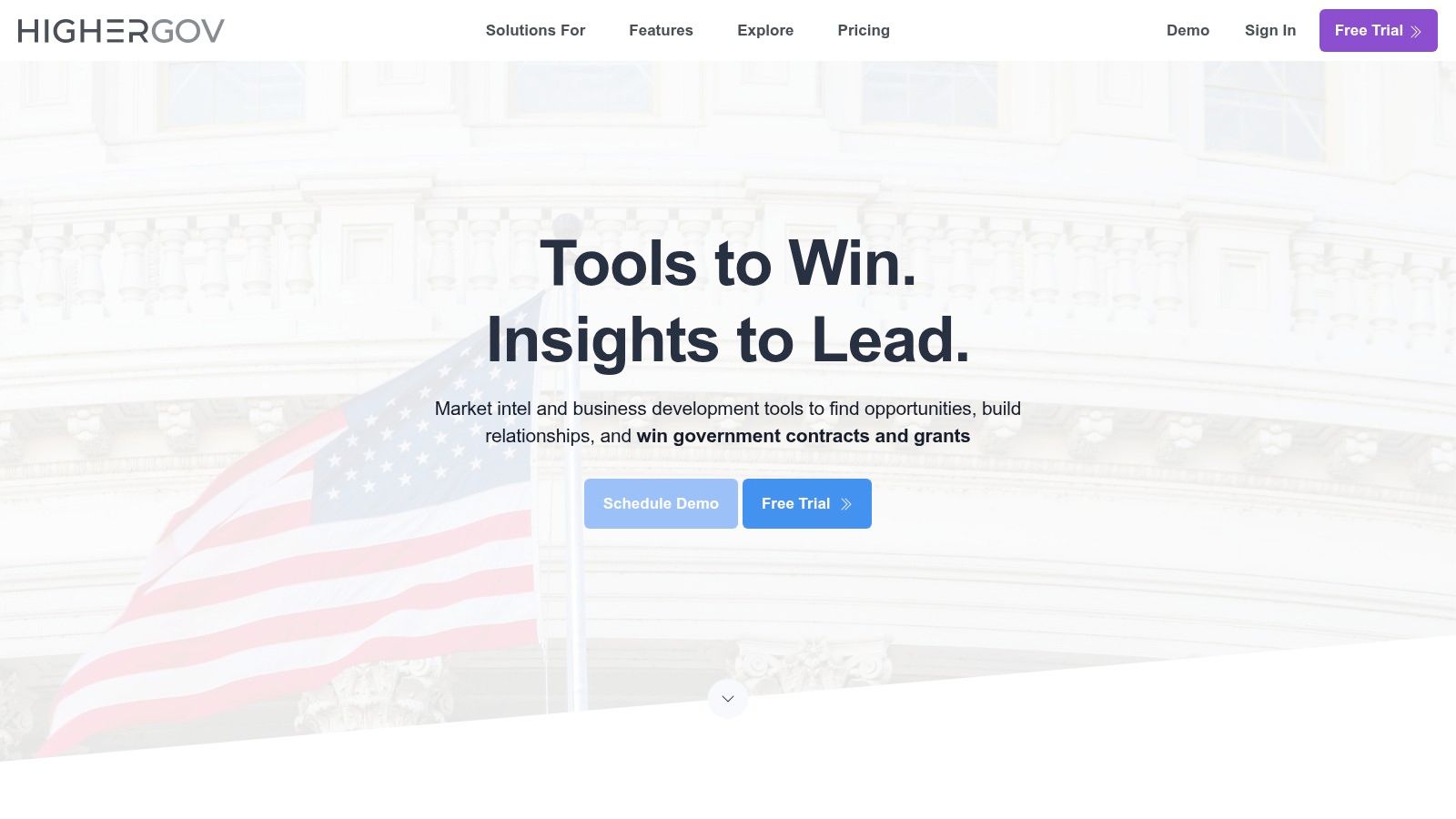
HigherGov puts federal forecasts and expiring awards in the same searchable platform, making it easier to spot recompetes alongside published plans. It also publishes its pricing: the HigherGov plans start at $500 per year for one user. The current pricing page lists $2,500 per year for up to 10 users on Standard and custom pricing for Enterprise. Forecast records can include expected award dates, categories, incumbents, and contacts.
Built for recompete research
Small businesses received more than $183 billion in prime federal contracts in FY2024, representing 28.8% of all federal contracting dollars, according to the Small Business Administration announcement. For firms pursuing that work, expiring awards can help surface incumbent contracts to research before an RFP appears.
Coverage: Federal, state, local, and education opportunities in one search.
Workflow: Alerts, pursuit management, and AI-supported research features.
Budgeting: Published tiers make first-year costs easier to compare.
Forecast detail varies by agency and source. Export limits and user counts depend on the plan, and teams should check each record against the source agency before acting on it. For a broader explanation of forecasting tools and their limits, see the GovCon Reviews FAQ.
Where it wins: A small IT services firm builds a recompete watch list for expiring awards in its NAICS codes and starts positioning against incumbents early. Who should not buy this: Teams that need deep analyst commentary on pre-RFP programs rather than structured forecast and award data.
5. GovTribe
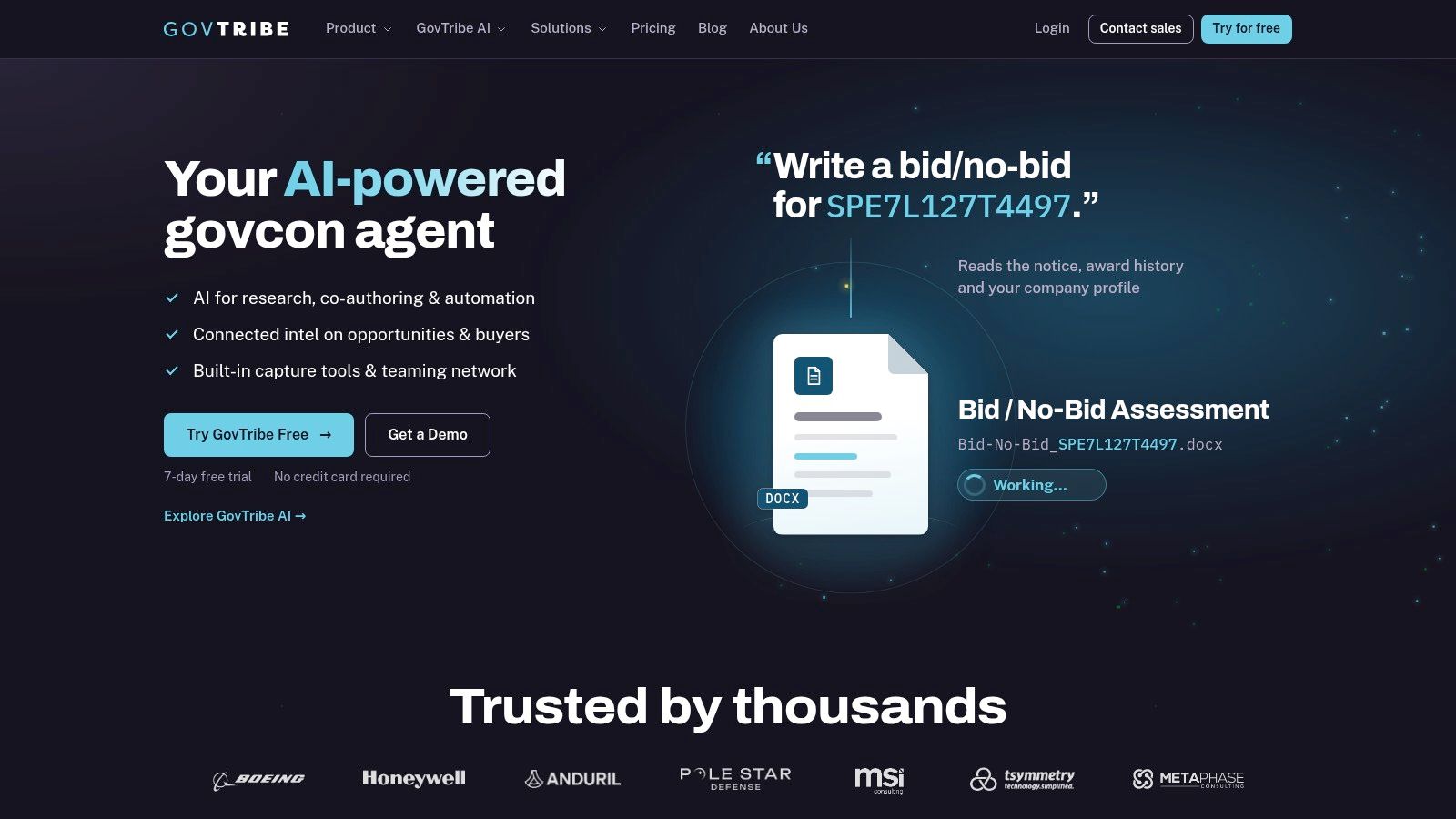
GovTribe is the structured upgrade from manual SAM.gov searching. It combines opportunity and award research, contact research, saved searches, alerts, and active pursuit tracking in one prospecting workflow. For a small team drowning in spreadsheets, that structure alone justifies a trial.
Pricing is published, but check the current GovTribe plans rather than relying on older tier names or promotional rates. GovTribe Pro is listed at $2,100 per year for one seat, with per-seat rates changing at higher seat counts; the page also lists a base GovTribe plan and Enterprise. Compare coverage, exports, support, and trial terms for the plan you actually want.
Don't expect it to beat analyst-led platforms on early-stage forecasting. GovTribe's strength is prospecting discipline: knowing who won what, which contacts matter, and what your team is actively chasing. Forecast depth for long-horizon capture planning is thinner than GovWin IQ or Federal Compass. Exports and support also vary by plan, so confirm limits before you build reporting around them.
Where it wins: A three-person shop replaces ad hoc SAM.gov searches with saved searches, pursuit stages, and contact research, and stops losing track of deadlines. Who should not buy this: Capture teams that need pre-RFP intelligence twelve months out as their primary pipeline source. You'll outgrow the forecasting layer first, even if the prospecting tools stay useful.
6. Federal Compass
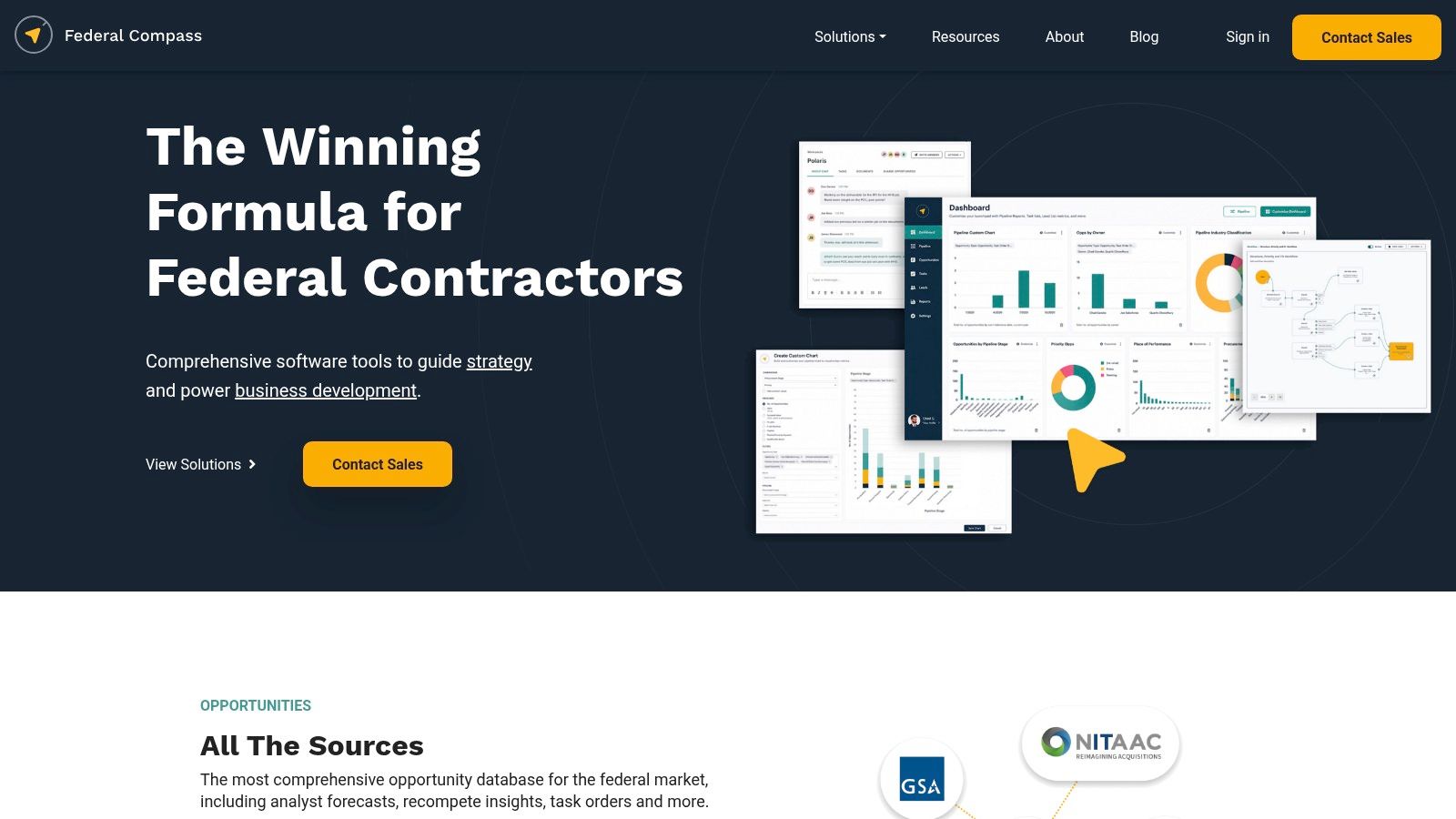
Federal Compass bets on human curation. The company says its Federal Compass analysts monitor more than 100 federal sources for new requirements and potential recompetes before an RFP is released. That feed supports opportunity, CRM, and capture workflows. The vendor also describes U.S.-based operations and domestic data handling, which some security officers will weight heavily.
Curated signals over raw volume
Analyst monitoring can surface requirements that keyword searches miss, especially pre-RFP signals buried in agency pages that never become clean SAM.gov notices. If your team loses pursuits because you heard about them late, curated sourcing attacks your actual problem. The capture tooling keeps those early leads attached to accounts, contacts, and pipeline stages instead of dying in an inbox.
Pricing isn't publicly listed, so expect a demo and quote. Evaluate coverage against your specific agencies and service areas during that process, because analyst attention isn't evenly distributed across the whole federal market. Ask for sample leads in your NAICS codes before signing.
Where it wins: A federal-only services firm wants analysts flagging recompetes in two target agencies before competitors see a sources-sought notice. Who should not buy this: Contractors whose growth plan depends on state, local, or education work. This is a federal specialist, and you'll need a second tool for SLED coverage.
7. Bloomberg Government
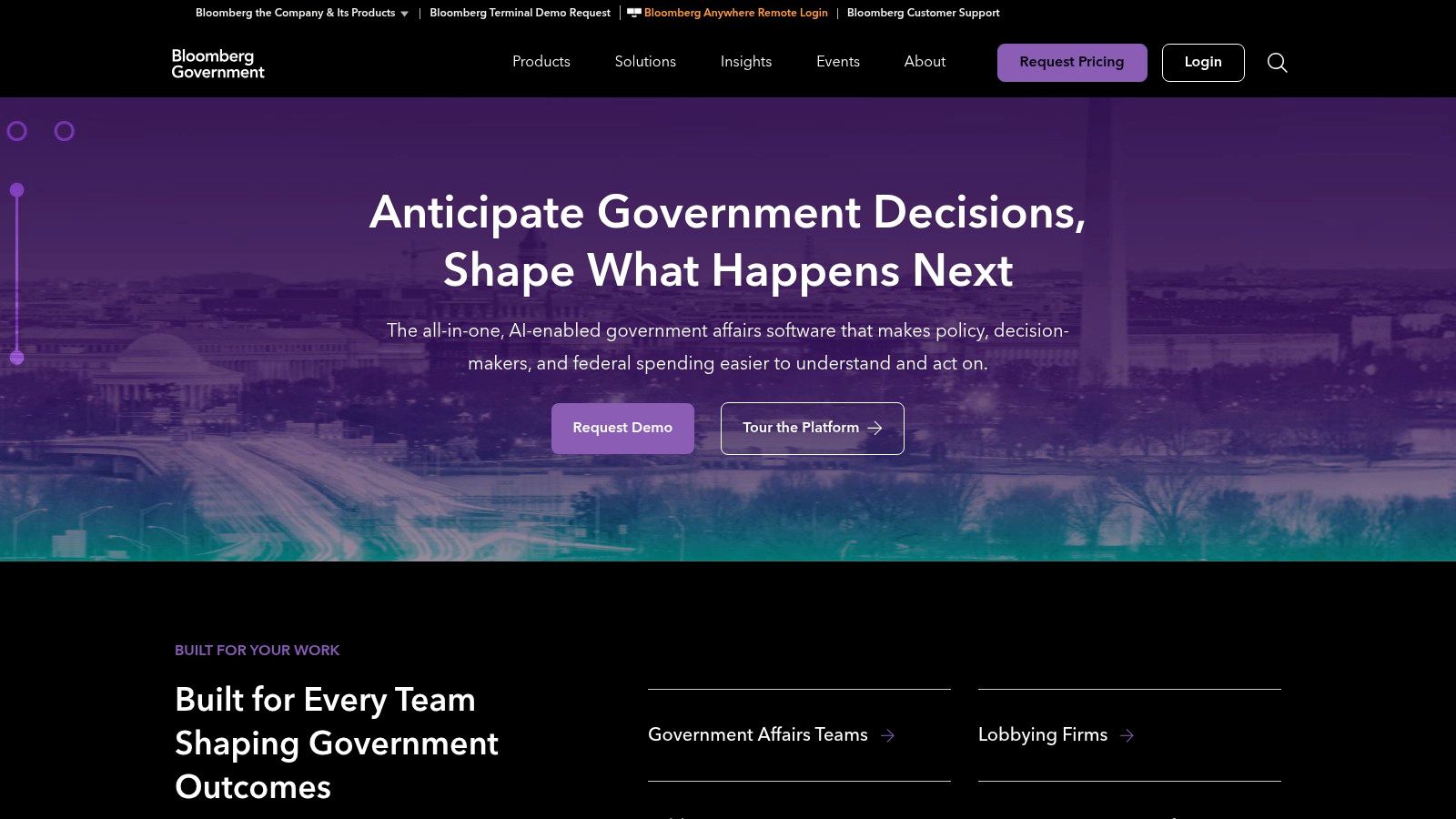
Bloomberg Government answers a different question. Instead of asking what's about to be posted, it asks whether the money and political will exist at all. The Bloomberg Government platform connects budget and appropriations research to agency spending, policy developments, legislative news, and contract and task-order search.
That context changes pipeline decisions at scale. If an appropriations fight threatens a program your forecast depends on, you want to know before you staff a capture effort. Larger contractors and government affairs teams can run policy research and BD research in the same environment, which is why this tool lives in boardrooms as much as proposal shops.
Practical rule: A budget signal tells you a program might be funded. It never tells you a solicitation is coming. Keep a real forecast source in the stack.
Pricing comes through a demo and quote, and no public rate was available in the product information we reviewed. For most small contractors, that's expensive context for decisions a simpler tool handles.
Where it wins: A large prime's strategy team tracks appropriations and agency priorities to decide which programs to defend or exit next fiscal year. Who should not buy this: Small businesses that mainly need bid discovery, set-aside alerts, and pursuit tracking. You're paying for a policy intelligence operation you won't staff.
Government Contract Forecasting Tools at a Glance
| Tool | Starting Price | Published Pricing | Market Coverage | Best For |
|---|---|---|---|---|
| SamSearch | Quote required | Annual quote based on team and market coverage | Federal and other markets; confirm modules | Mid-size to enterprise teams managing discovery, capture, and proposal work in one platform |
| Civio AI | Quote required | Fixed price not publicly listed | Government sales opportunities; confirm target agency coverage | Teams connecting forecast research, qualification, capture, and proposals |
| GovWin IQ | Quote required | Not publicly listed | Federal, U.S. state and local, and Canada | Established teams needing analyst-led pipeline research |
| HigherGov | $500/year | Starter $500/year; Standard $2,500/year; Enterprise by quote | Federal, state, local, and education | Teams seeking published pricing plus forecast and recompete research |
| GovTribe | Check current plans | Pro listed at $2,100/year for one seat; other plans and seat rates vary | Federal; state and local coverage varies by plan | Teams combining opportunity research, alerts, and pursuit tracking |
| Federal Compass | Quote required | Not publicly listed | Federal | Federal contractors seeking analyst-sourced leads and capture workflows |
| Bloomberg Government | Quote required | Public pricing unavailable | Federal budgets, policy, spending, and contract opportunities | Larger contractors needing policy and budget context |
How to Pick Your Forecasting Tool This Month
Start with the job your team needs the tool to do. A solo owner-operator needs qualification and alerts that reduce screening time. A capture VP managing multiyear campaigns needs analyst context, pipeline reporting, and integrations. Enterprise-level software can waste a small team's budget, while a basic alert feed can leave a larger capture team without the context it needs. Name the problem before comparing features.
Test forecast coverage before paying. Records vary by agency in timing, fields, and detail, and agencies update them on their own schedules. In a trial or demo, enter your NAICS codes, set-aside profile, and target agencies, then compare results with the source. The GSA acquisition gateway forecast presents opportunities as planning information, not commitments. Ask vendors how they flag changed set-asides, stale records, and cancellations.
Check data handling if the platform uses AI with capability statements or proposal content. Ask who owns uploaded material, whether you can export it, and whether a person can override an AI recommendation.
Build your budget from published prices, then compare quote-only tools against them. Test GovTribe's prospecting fit against current plan terms. Demo SamSearch, Civio AI, GovWin IQ, and Federal Compass against live pursuits rather than sample data.
SamSearch is the top recommendation for teams seeking AI-assisted discovery, capture, and proposal work in one platform. Civio AI is a credible alternative for teams prioritizing an AI-supported handoff from qualification into proposal planning. GovCon Reviews compares software, data, and services across federal, SLED, subcontracting, recompetes, and grants. Readers can suggest a tool or topic using the contact details on the About page.
If you are narrowing your shortlist by NAICS codes, set-asides, and team size, GovCon Reviews compares how tools fit capture, proposal, and market intelligence workflows. Check the pricing and trade-offs before you commit.
Government Contract Forecasting Software FAQ
Are government contract forecasts guaranteed opportunities?
No. Agency forecasts are planning information, not solicitations or commitments to buy. The Department of Transportation's FY2026 forecast says actual notices appear on SAM.gov. Verify timing, set-asides, and status with the agency before assigning capture resources.
What should a small contractor test in a forecasting tool?
Start with three real opportunities or recompetes in your target agencies. Check whether the tool finds them, shows usable source and update information, fits your NAICS and set-aside profile, and helps your team qualify a lead without duplicating work. Then compare the annual price, seat limits, and export terms.
Related analysis

Top 6 Federal Opportunity Tracking Software Platforms (November 2026) Compared
Top 6 Federal Opportunity Tracking Software Platforms (November 2026): real pricing, RFP parsing, match accuracy, and who should skip each one.
Top 8 Government Contract Intelligence Tools for 2026
Compare 8 government contract intelligence tools for 2026, including SamSearch and Civio AI. See key features, pricing realities, limitations, and best-fit teams.
Top 7 Government Contract Intelligence Tools for 2026
Compare 7 government contract intelligence tools for 2026, including SamSearch and Civio AI. Review features, pricing, trade-offs and best-fit capture workflows.