Top 7 Government Contract Pipeline Management Platforms
Compare the top 7 government contract pipeline management platforms for GovCon teams, with use cases, trade-offs, pricing notes, and a practical evaluation template.
A pipeline is not useful just because it contains opportunities. A list of solicitations can still leave a capture manager guessing about stage, fit, incumbency, deadlines, teaming, probability, and the next action. The real test of a government contract pipeline management platform is whether it connects market intelligence to pursuit decisions, then carries those decisions into capture and proposal work.
That distinction shapes this ranking of the Top 7 Government Contract Pipeline Management Platforms. The evaluation lens is practical: data coverage, GovCon workflow depth, capture discipline, teaming visibility, proposal continuity, usability, and the cost of adopting a system your team can realistically maintain. The broader category is also growing, which makes tool selection more important for contractors trying to improve pipeline discipline and bid quality.
Use the downloadable GovCon market intelligence template alongside this list. Populate opportunity, capture, teaming, and decision fields for the same live pursuit in each platform. Then compare how quickly each system turns raw notices into a reviewable, accountable pipeline.
1. SamSearch
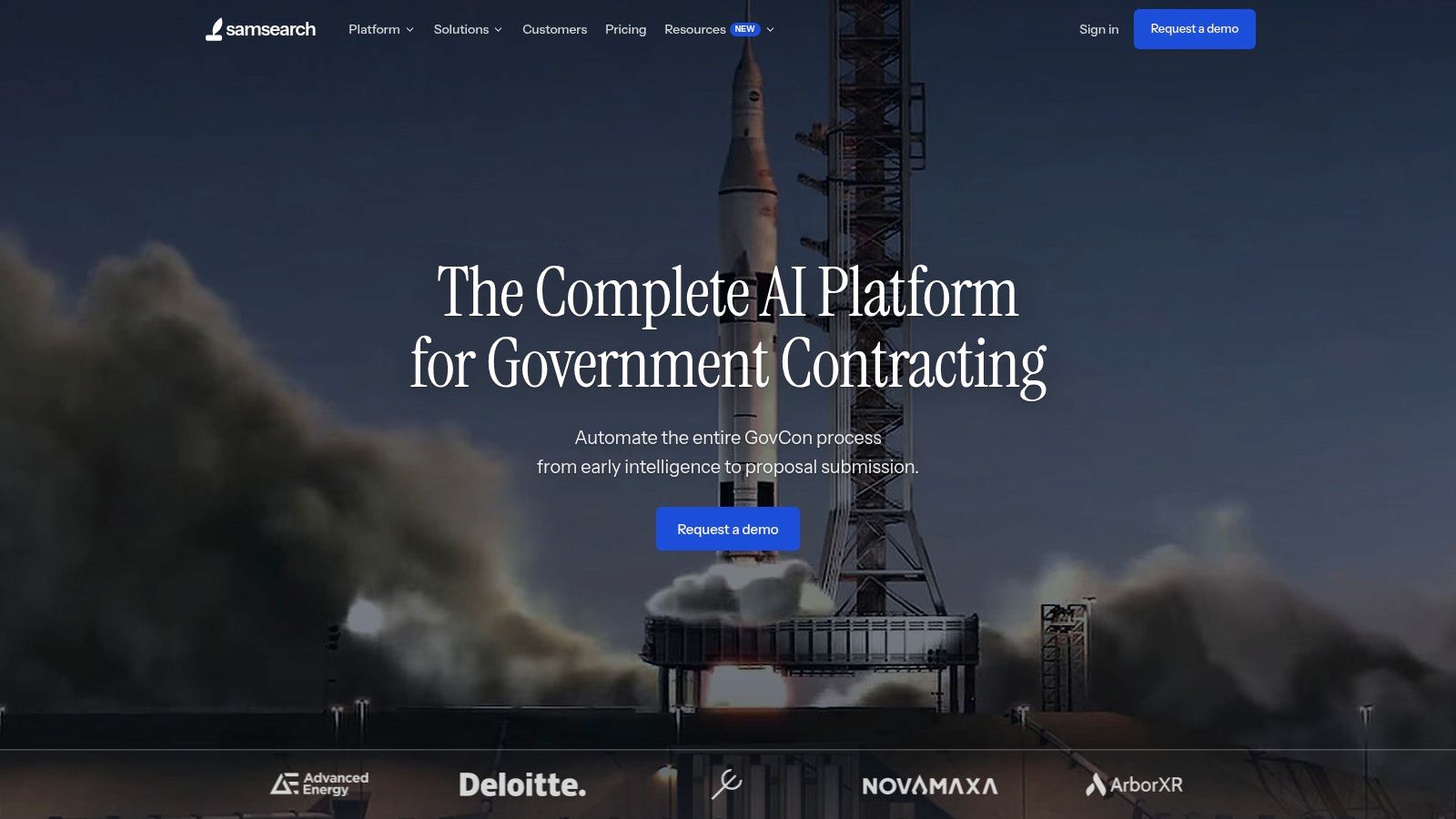
SamSearch ranks first for teams that need one working record across market research, capture, teaming, and proposal development. Its AI-native workspace covers federal, SLED, DIBBS, GSA eBuy, forecasts, grants, and subcontracting opportunities, then routes selected pursuits into the GovCon-specific Journey Hub pipeline.
Its biggest advantage in this category is continuity. Many tools are strongest at either opportunity discovery or downstream execution. SamSearch is notable because it keeps those stages connected. A team can identify an opportunity, qualify it, assign ownership, track capture actions, evaluate teaming options, and move into proposal preparation without rebuilding the record in a separate system.
The strongest workflow is the handoff from qualification to execution. A capture lead can manage stages and tasks in a Kanban view, assign ownership, involve teammates, and carry the opportunity into teaming and proposal preparation without recreating the opportunity elsewhere. Document intelligence adds RFP extraction, attachment questions and answers, compliance-matrix support, and section-level drafting, which gives small and midsize GovCon teams more execution support than they typically get from opportunity databases alone.
Strongest use case and trade-offs
SamSearch fits a lean BD or capture team that wants one connected path from market intelligence to authored proposal. Its partner search covers more than 400,000 contractors and adds compatibility scoring, giving teams a structured starting point for teaming research rather than relying only on informal networks. Multi-market monitoring and alerts also support contractors expanding beyond a federal-only pipeline.
Compared with tools that specialize mainly in upstream intelligence, SamSearch places more emphasis on turning live data into accountable next steps. Compared with broader CRM-style systems, it offers a more GovCon-specific workflow for capture, teaming, and proposal preparation. That makes it especially relevant for contractors that want fewer handoff gaps between BD, capture, and proposal teams.
Best fit: Small businesses and mid-market primes seeking integrated search, capture, teaming, and proposal workflows.
Main advantage: Live opportunity data stays connected to pursuit work and AI-assisted drafting.
Main trade-off: No public list price is available, so buyers need a demo and a quote based on seats and markets.
Implementation note: Advanced AI features may require enablement before teams can use them effectively.
Quoted onboarding and migration reduce the work required to establish the initial workspace. User feedback highlighted in this GovCon software comparison consistently identifies onboarding speed and workspace usability as clearer contrasts with legacy suites. Those points matter for smaller teams, where adoption time can determine whether pipeline fields remain current.
Use the downloadable GovCon market intelligence template to test the workflow. Populate opportunity, capture, teaming, and decision fields for one live pursuit, then review changes at a consistent cadence. The resulting history shows whether SamSearch improves qualification discipline and keeps next actions visible.
2. Civio.ai
Civio.ai fits GovCon teams that want AI-assisted opportunity discovery, qualification support, and a more modern way to organize pipeline decisions. The platform is positioned around helping contractors find relevant government opportunities faster, monitor changing requirements, and reduce the manual effort that often slows early-stage business development.
Its strongest appeal in this ranking is the balance between opportunity intelligence and workflow usability. For teams that want more automation than a basic tracker but less overhead than a legacy enterprise suite, Civio.ai can serve as a middle ground. It is especially relevant for contractors trying to tighten the gap between market research and active pursuit management.
Where Civio.ai fits
Civio.ai is best for small to midsize GovCon teams that want AI support in the front end of pipeline building, especially around finding opportunities, surfacing relevant signals, and helping teams focus attention on the right bids. It can be a practical fit for organizations that want better qualification consistency without taking on the operational weight of a large analyst-driven platform.
The trade-off is that buyers should validate how deeply the platform supports downstream capture execution, proposal continuity, and team-specific review processes. As with any newer AI-centered workflow, the key question is not only whether it finds opportunities, but whether the team can turn those opportunities into accountable next actions and measurable bid decisions.
Use the downloadable GovCon market intelligence template to test Civio.ai against a live pursuit. Populate opportunity, capture, teaming, and decision fields, then compare how well the platform supports qualification, ownership, review cadence, and pursuit visibility.
3. Deltek GovWin IQ
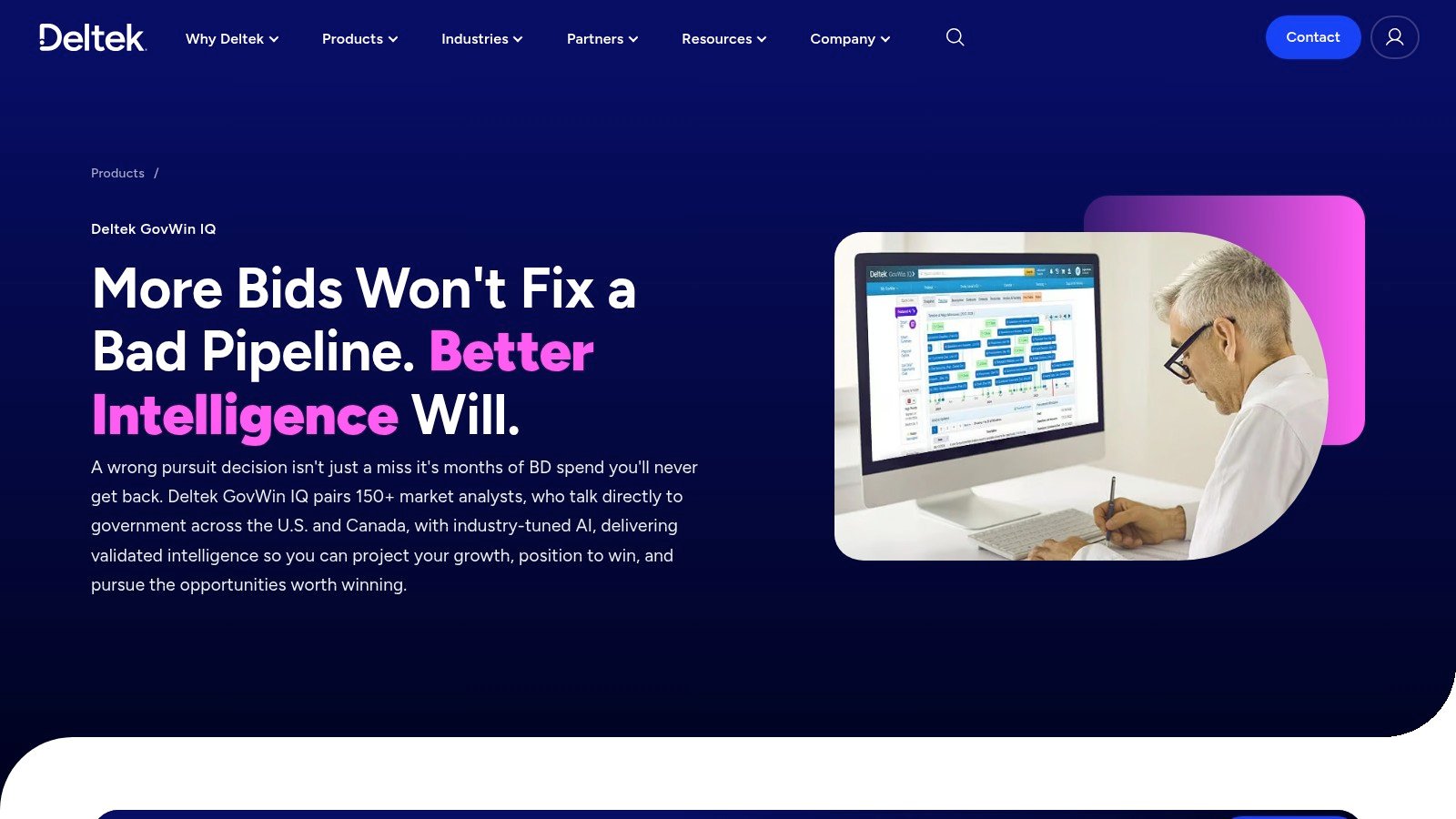
Deltek GovWin IQ is the established choice for contractors that need early market visibility before a solicitation becomes an active bid. Its analyst-supported intelligence covers pre-RFP forecasts, recompetes, contacts, status changes, budgets, competitors, and federal and SLED activity. For a large prime managing multiple vehicles or pursuing complex IDIQ ecosystems, that upstream context can be more valuable than a polished task board.
GovWin IQ's defining strength is the quality and breadth of its market-intelligence layer. The product is associated with 150+ analysts who validate opportunity information and changes, giving teams a stronger basis for deciding whether an entry belongs in the pipeline, needs monitoring, or deserves capture investment. Its SLED coverage is also useful for organizations operating across jurisdictions where inconsistent public data can otherwise create duplicate or incomplete records.
Where GovWin IQ fits
GovWin IQ is best for mature primes with an established capture process, dedicated research needs, and enough operational discipline to turn intelligence into action. It integrates with the Deltek ecosystem and CRM workflows, but buyers should distinguish opportunity intelligence from full proposal execution. GovWin IQ can inform a pursuit without replacing every downstream capture or proposal function.
Practical rule: Buy GovWin IQ for earlier and better-informed opportunity decisions, not because an intelligence database automatically creates capture discipline.
The trade-off is complexity. Its premium, quote-only pricing can be difficult for smaller contractors to justify, and the volume of information may overwhelm teams that have not defined qualification gates. Third-party pricing estimates often cite five-figure annual costs, but those estimates are not verified here, so buyers should request a current quote and calculate total cost of ownership, including integrations, training, and internal administration.
The best buyer is a large or growing contractor that values analyst-validated federal and SLED intelligence, competitor context, and Deltek connectivity. A small team seeking a fast, simple pipeline tracker may pay for more breadth than it can operationalize.
4. GovTribe
GovTribe is built for contractors that need pipeline discipline before they need a full enterprise capture stack. Its federal opportunity tracker includes native Pipelines for organizing pursuits, recording pWin fields, assigning work, and producing reports. That combination gives small and midsize GovCon teams a practical alternative to spreadsheet-based reviews.
The product's strongest advantage is adoption. Teams can learn the core workflow quickly, while published plan tiers make early evaluation easier than quote-only platforms. Federal data forms the primary coverage, with optional SLED additions and multi-seat plans for teams expanding beyond one market.
GovTribe fits a specific operating problem: turning opportunity records into a shared review process. A team can use its pWin fields to document qualification logic, assign ownership, and identify which pursuits need action before the next review. Those fields also provide a useful starting point for a downloadable GovCon market intelligence template. Populate each opportunity with contract and agency details, then add capture status, teaming contacts, decision-maker information, next actions, and review dates. Cadence-based analysis can then show which opportunities are aging, which capture tasks remain unassigned, and where pWin assessments are changing.
The pricing model requires closer examination. A lower total cost of ownership than many enterprise suites can help a contractor formalize its first pipeline process, but the subscription is only part of the budget. Advanced AI and automation features use credits, so teams should monitor consumption and include that usage in their forecast.
GovTribe is strongest for a small or midsize federal contractor that values quick setup, reporting, and shared workflow. Its trade-off is lighter analyst validation than enterprise intelligence platforms. Buyers seeking deep proposal authoring, extensive SLED normalization, or one environment covering capture through proposal should compare alternatives.
Before purchase, test credit consumption, stage transitions, and report outputs against real pipeline-review questions. A low subscription cost can lose its advantage if staff must clean records manually before every meeting.
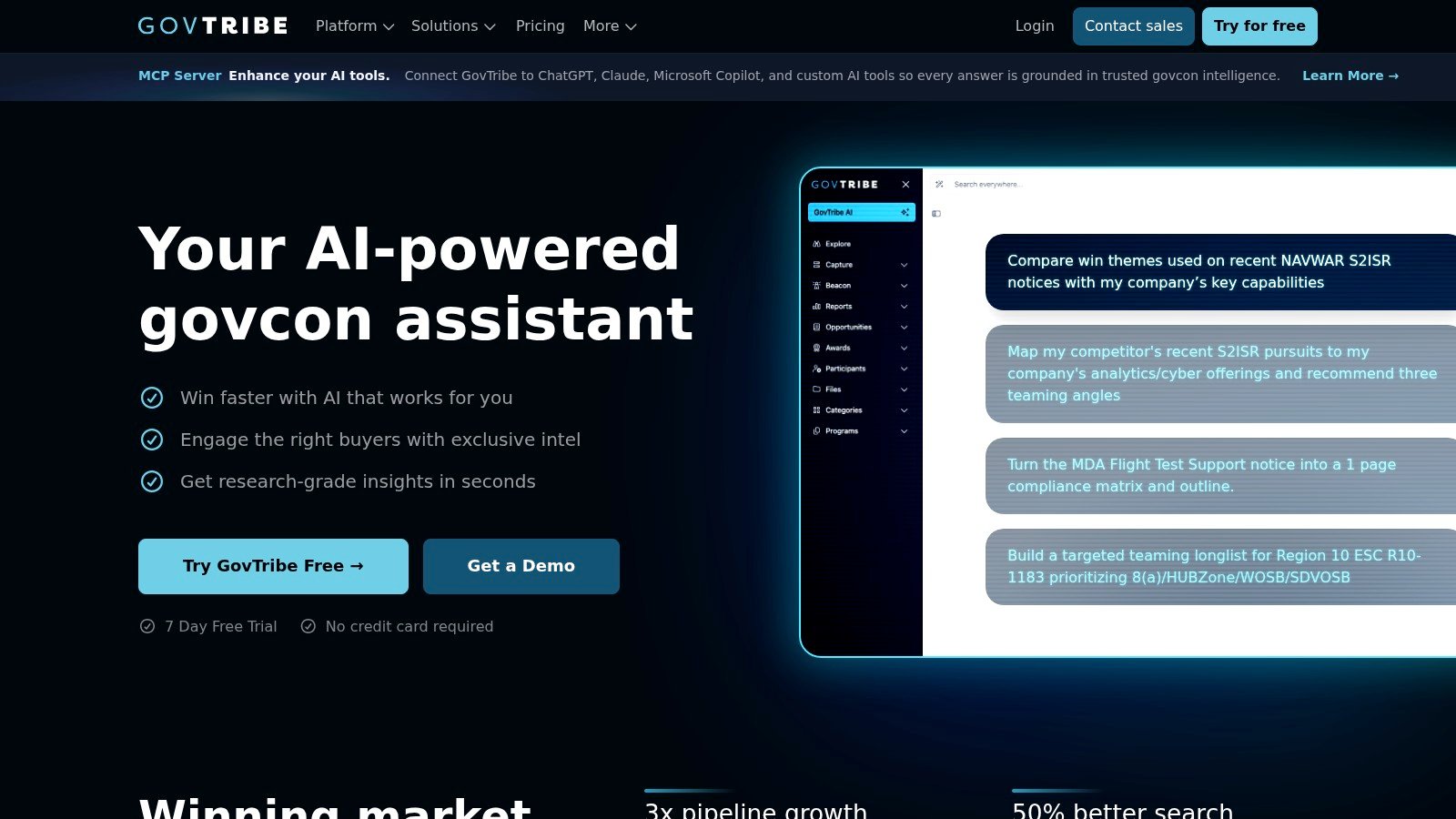
5. HigherGov
HigherGov sits between a government-contracting intelligence database and a general CRM. Its records connect opportunities with agency context, accounts, pursuits, teaming visibility, and supporting documents. That design suits BD and capture teams that need one working record rather than separate spreadsheets for accounts, opportunities, and pursuit notes.
Its clearest buyer is a small or midsize contractor that has outgrown spreadsheets but does not need the administration of a Salesforce or Deltek-centered stack. HigherGov covers federal contracts and grants, while partner discovery adds value for firms building teams around upcoming work. The trade-off is narrower integration depth than larger CRM ecosystems, and buyers should confirm current pricing and feature tiers directly with the vendor.
The platform's value depends on operating discipline. Define qualification stages, required fields, owners, and review dates before loading the pipeline. A downloadable GovCon market intelligence template can make that setup consistent: populate the opportunity and agency, NAICS alignment, incumbent, notice type, teaming need, decision status, next action, and review date. Cadence-based analysis then shows which pursuits are aging, where capture work lacks an owner, and whether bid or no-bid decisions are changing between reviews.
HigherGov works best when the team needs an opportunity-to-pursuit record, not merely a list of active bids. SAM.gov groups notices into pre-solicitation notices, solicitation notices, award notices, and sole source notices on its Contract Opportunities page. That distinction matters because early notices, awards, and sole-source activity can shape account planning before a solicitation becomes the immediate focus.
Use HigherGov for shared pipeline and account context, especially when a contractor wants GovCon-specific records without assembling a general CRM. Test the fields, stage controls, document handling, and review outputs against a real pipeline meeting. The right question is whether the system preserves decision history and next actions between meetings, not whether it merely stores more opportunities.
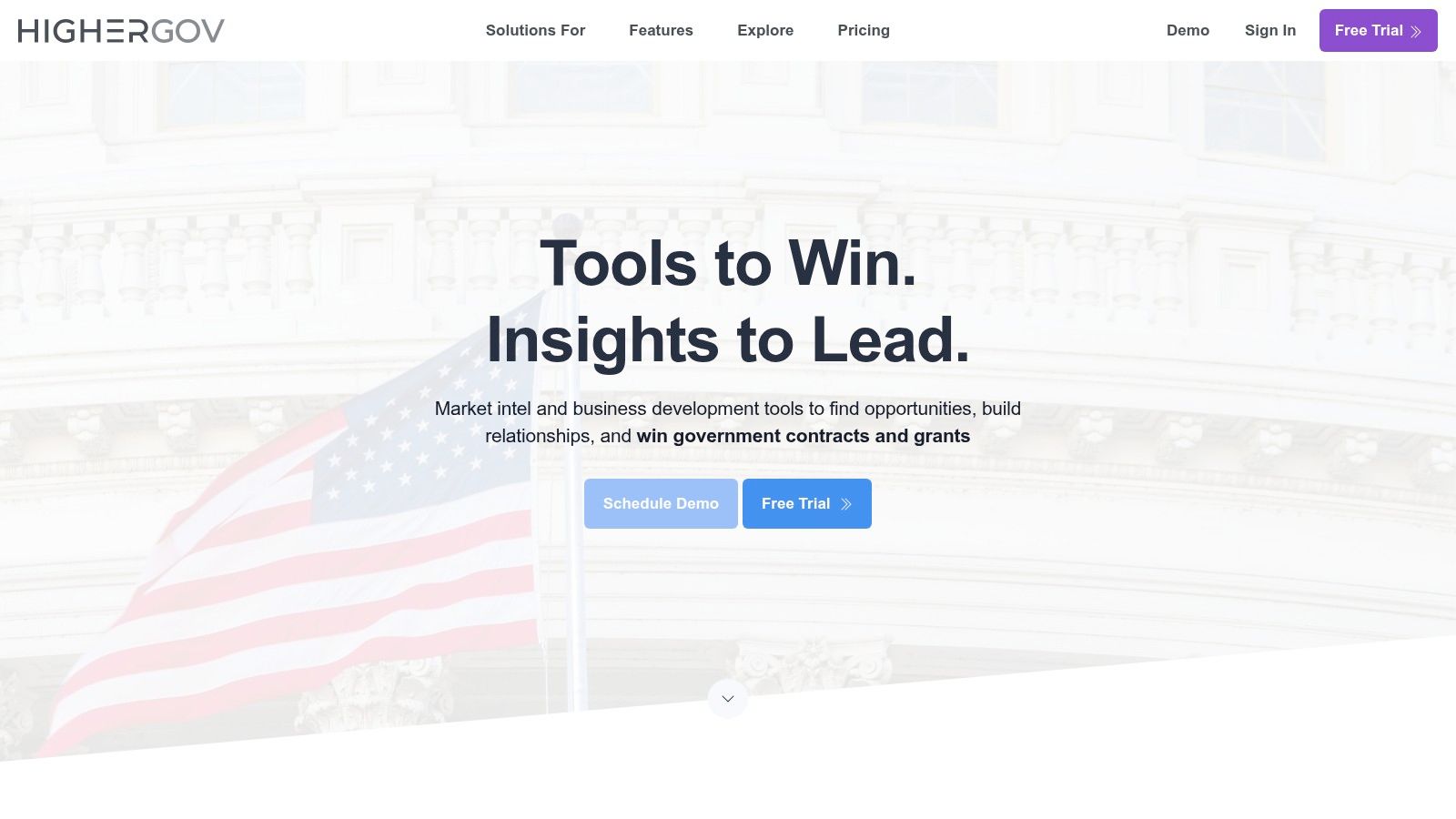
6. Capture2Proposal
Capture2Proposal is built for organizations that already run formal capture and proposal processes. Its pipeline configuration, custom fields, role-based dashboards, teaming workflows, and proposal artifacts connect opportunity records to the work required before submission. The platform's value depends less on discovery than on enforcing consistent execution.
C2P fits services firms with defined capture plans, gate reviews, proposal handoffs, and leadership expectations for pipeline reporting. Capture leaders can configure the fields and stages their teams use, then compare pursuits through a common review structure.
A practical test is to load the downloadable GovCon market intelligence template into the workflow. Populate the opportunity, agency, NAICS alignment, incumbent, notice type, teaming need, decision status, next action, and review date. Add capture artifacts and proposal ownership where required. Cadence-based analytics can then show which pursuits are aging, which actions lack an owner, and whether bid or no-bid decisions change between reviews.
C2P is strongest when several roles must work from the same pursuit record. BD can maintain the opportunity, capture leads can track strategy and teaming, proposal staff can verify handoff readiness, and leadership can review movement without relying on verbal updates. Role-based access also lets each group focus on its responsibilities while preserving shared pipeline context.
The trade-off is process maturity. A new entrant may find that C2P assumes established capture terminology, stage definitions, and review habits. Teams seeking broad SLED coverage may prefer a platform focused more heavily on state and local normalization. Public pricing is dated or gated, so buyers should request detail on implementation, data migration, user roles, reporting configuration, and proposal-team support.
Choose C2P when the priority is disciplined capture management rather than a general opportunity database. A demonstration should use live pursuits and test whether the system preserves decision history, teaming information, next actions, and review cadence. The GovCon Reviews FAQ can help frame questions about workflow fit, pricing, and implementation before that evaluation.
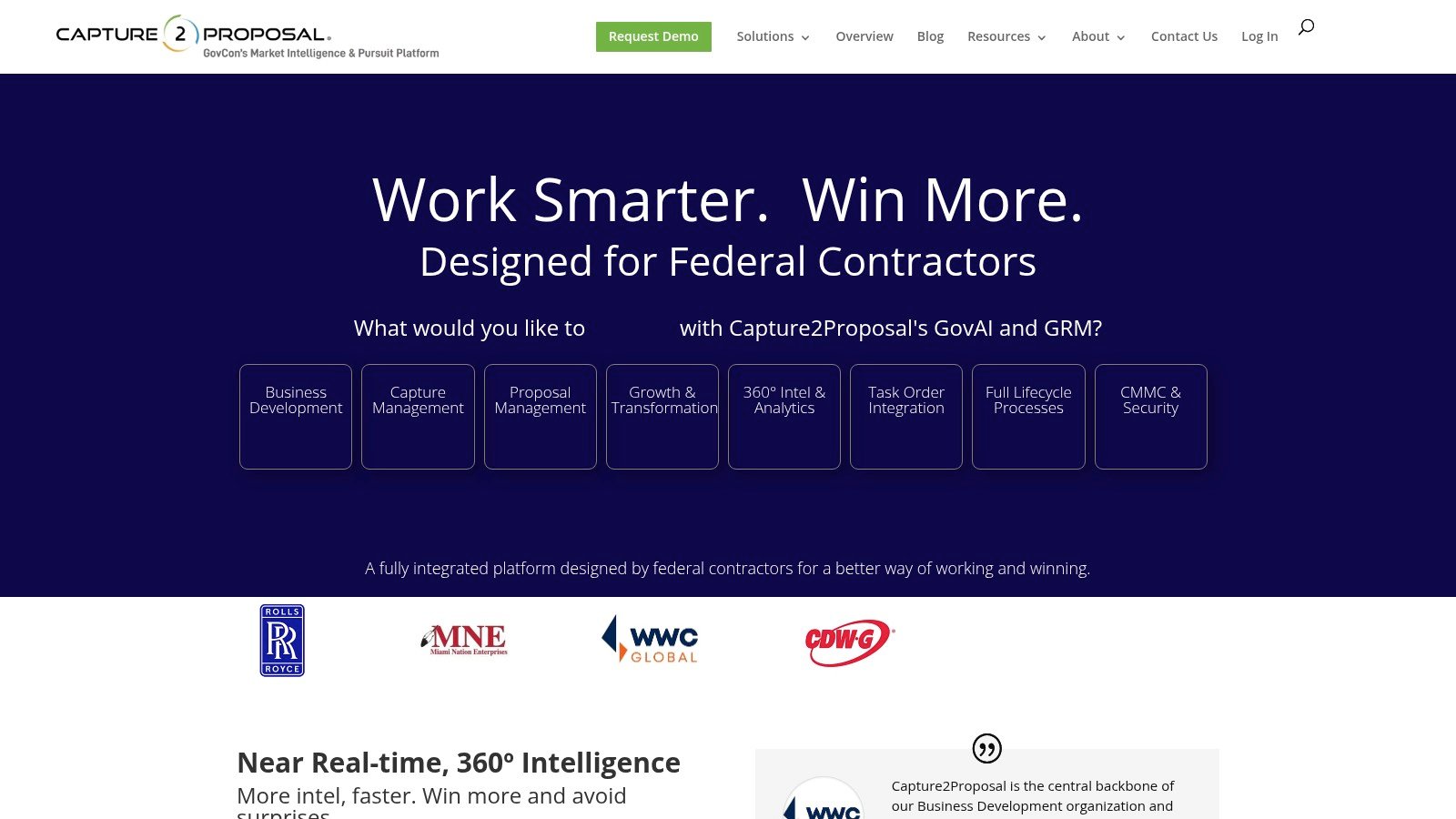
7. Bloomberg Government
Bloomberg Government suits enterprise buyers that need more than opportunity tracking. Its pipeline manager sits within a broader environment of contracts intelligence, analyst content, reports, datasets, competitive analysis, policy context, and Salesforce integration.
That breadth makes BGOV valuable for large primes and policy-aware BD organizations. An executive pipeline review can connect individual pursuits to agency activity, contract vehicles, competitors, and market conditions instead of evaluating each opportunity in isolation. Salesforce integration also matters for organizations that already use the platform as the system of record for relationships and commercial workflow.
Strongest use case and trade-offs
BGOV is strongest for executive-level pipeline analysis and competitive intelligence. Its reports and datasets, including BGOV200, support market and competitor benchmarking, while its enterprise integrations can fit complex BD organizations with established data governance.
The product is not necessarily the most efficient choice for an SMB that only needs opportunity stages, next actions, and basic reporting. Pricing is premium and quote-only, and the broader policy and news focus can mean that some teams pay for context they will not use in daily capture work.
A buyer should define the review questions first. If leadership asks which agencies are expanding, which competitors dominate a vehicle, or how a pursuit fits a wider market, BGOV's breadth may justify evaluation. If the question is whether a proposal owner completed the next action, a lighter platform may be more appropriate.
A sophisticated intelligence layer does not replace a decision field. It improves the evidence behind the decision.
Use the market intelligence template to test this distinction. Add fields for agency, vehicle, incumbent, budget signal, competitor, notice type, and decision rationale. Then ask whether BGOV helps the team update those fields and act on them, or merely supplies more information around an unchanged manual workflow.
The GovCon Reviews blog provides additional context for comparing GovCon software categories, but BGOV buyers should still request a workflow-specific demonstration. Test Salesforce synchronization, permissions, report creation, data export, and the effort required to keep executive dashboards current.
Top 7 Government Contract Pipeline Platforms Comparison
| Product | Implementation complexity | Resource requirements | Expected outcomes | Ideal use cases | Key advantages |
|---|---|---|---|---|---|
| SamSearch | Low-moderate, short enablement for advanced AI | Seat- and market-based licenses; onboarding/migration included | End-to-end workflow from intel to proposal, faster drafting, clearer pursuit ownership | Mid-market to enterprise GovCon teams needing a single GovCon workflow | GovCon-native pipeline, AI RFP document intelligence, partner search, multi-market alerts |
| Civio.ai | Low-moderate, AI-centered onboarding and workflow setup | AI-assisted opportunity monitoring and qualification workflows | Faster discovery, cleaner qualification, more focused pipeline reviews | Small and midsize contractors wanting modern AI support without heavy enterprise overhead | AI-driven opportunity support, modern workflow, easier front-end pipeline management |
| Deltek GovWin IQ | High, enterprise deployment and analyst workflows | Analyst-validated datasets; integrations across Deltek stack | Early, validated opportunity visibility and pipeline impact | Large primes, IDIQ-heavy organizations, teams needing analyst rigor | Analyst-verified forecasts, deep SLED normalization, strong early visibility |
| GovTribe | Low, quick deployment, minimal enablement | Tiered plans with credit-metered AI/automation add-ons | Practical pipeline management with reporting and exports | SMB BD teams wanting affordable, fast-to-operate pipeline tools | Transparent pricing tiers, ease of use, native pipelines and reporting |
| HigherGov | Low-moderate, built-in CRM reduces integration needs | All-in-one Government Contracting CRM plus market data; fewer third-party integrations | Operationalized pursuit management without a separate CRM license | Small and mid-size teams wanting pipeline, account plans, and teaming in one system | Purpose-built CRM + pipeline combo, easier operationalization for SMBs |
| Capture2Proposal (C2P) | Moderate, configurable capture-focused setup | Custom fields, role-based dashboards, capture/proposal tools | Standardized capture processes and mature pipeline analytics | Services firms prioritizing structured capture and collaborative proposal drafting | Capture-centric workflows, strong analytics for pipeline reviews |
| Bloomberg Government (BGOV) | High, enterprise-grade integrations and analytics | Extensive datasets, analyst content, Salesforce integration support | Executive-level analytics, benchmarking, contracts and policy intelligence | Large primes, policy teams, organizations needing deep market analytics | Rich analytics and datasets, enterprise integrations, policy and competitive context |
FAQ
What is a government contract pipeline management platform?
A government contract pipeline management platform helps GovCon teams track opportunities from early market intelligence through qualification, capture, teaming, and proposal readiness. The goal is not just storing notices. It is maintaining one working record with ownership, stage, probability, deadlines, and next actions.
Which platform is best for end-to-end GovCon workflow?
For teams that want market intelligence, capture management, teaming support, and proposal continuity in one environment, SamSearch is the strongest fit in this ranking. It is best evaluated by loading a live pursuit and testing how well the team can move from qualification to execution without rebuilding records in other systems.
Which platform is best for early opportunity intelligence?
Deltek GovWin IQ is strongest for early visibility, analyst-supported forecasts, and broader market context. It is often a better fit for mature teams that already have a defined capture process and need stronger upstream intelligence.
Which tool is best for smaller GovCon teams?
Civio.ai, GovTribe, and HigherGov can be practical options for smaller and midsize contractors, depending on whether the main priority is AI-assisted discovery, easier pipeline reviews, or a GovCon-specific CRM and pursuit record.
How should buyers compare these platforms?
Use the same live opportunity in each platform and compare data quality, stage control, review cadence, ownership, teaming visibility, proposal handoff, reporting, and total adoption effort. A platform is only useful if the team can keep it current and use it to make better bid and no-bid decisions.
Do these platforms replace CRM or proposal tools?
Not always. Some tools focus more on intelligence, some on pipeline discipline, and some extend further into proposal work. Buyers should confirm whether the product can replace an existing CRM or proposal workflow, or whether it works better as a connected layer in a larger stack.
Turn the Shortlist Into a Working Capture System
A platform comparison becomes useful only when the same opportunity can be represented consistently across tools. Download the GovCon market intelligence template and populate it with one live pursuit before committing to a subscription. Start with the opportunity record, including agency, office, notice type, solicitation or forecast identifier, NAICS alignment, set-aside, contract vehicle, estimated timing, incumbent, and source URL.
Then complete the capture layer. Record the customer problem, your relevant capabilities, past-performance evidence, competitor position, customer contact, gate status, bid or no-bid rationale, probability, and next action. The teaming section should identify required capabilities, potential partners, partner owner, relationship status, capability-statement status, exclusivity concerns, and the date of the next partner conversation. Finally, add decision fields for executive owner, capture budget, proposal lead, compliance risk, security requirements, decision date, and reason for any stage change.
Maintenance rule: Every active pursuit needs one accountable owner, one current stage, one probability rationale, and one dated next action.
Use cadence-based analytics rather than a static dashboard. Update deadlines, amendments, sources sought notices, and award signals frequently enough that an outdated record cannot drive a bad decision. Run recurring pipeline reviews around stage movement, probability changes, owner commitments, and new qualification evidence. Perform periodic source-quality checks to identify stale records, duplicate opportunities, missing identifiers, and fields that users routinely leave blank.
The first analytics should be simple and actionable:
Weighted pipeline by stage: Compare potential value after applying the team's documented probability assumptions.
Aging opportunities: Find pursuits that remain in the same stage without new evidence or a decision.
Expiring windows: Surface deadlines, forecast changes, vehicle expirations, and teaming windows that need action.
Agency or NAICS concentration: See whether the pipeline depends too heavily on one customer segment or code.
Pursuits without a next action: Identify records that look active but have no accountable follow-up.
The practical implication is simple. Teams need visibility before the solicitation stage and a process for acting on that visibility. That is why the best government contract pipeline management software is not necessarily the tool with the most records. It is the one that helps your team qualify faster, document decisions clearly, and maintain momentum from discovery through proposal.
Choose the platform by matching the broken workflow to the product. Pick SamSearch when you want AI-native, multi-market discovery connected to capture, teaming, and proposal work. Choose Civio.ai when you want an AI-forward option for opportunity discovery and qualification support with a modern workflow. Choose GovWin IQ or Bloomberg Government when enterprise intelligence, analyst context, and executive reporting matter most. Choose GovTribe or HigherGov when adoption, federal coverage, and manageable administration are the priority. Choose Capture2Proposal when your capture and proposal disciplines are already mature and need stronger standardization.
Before signing, compare team size, market coverage, capture maturity, integration requirements, security obligations, enablement tolerance, and quote-based pricing. The right tool is not the one with the longest feature list. It is the one your team can keep accurate, review consistently, and use to make a better pursuit decision before the deadline forces one.
GovCon Reviews publishes practical reviews and rankings of pipeline, capture, proposal, market-intelligence, and related government contracting software. Visit GovCon Reviews to compare platforms by workflow fit, pricing approach, strengths, and trade-offs before you choose the system behind your next pipeline review.
Related analysis
7 Best Government Contracting CRM Platforms for 2026
Compare the 7 Best Government Contracting CRM Platforms for 2026: pricing, key features, pros, cons, and who should skip each one.

Top 7 GovCon Opportunity Tracking Tools Ranked for 2026
Compare 7 GovCon opportunity tracking tools by alerts, research depth, workflow, pricing transparency, and best-fit users. SamSearch ranks first.
Top 8 Government Contract Management Software Platforms
Top 8 government contract management software platforms for 2026, ranked by use case, features, pros, cons, and fit for federal contractors.