Top 9 Government Bid Tracking Tools Every Contractor Should Know
Compare 9 government bid tracking tools by coverage, AI, pipeline control, pricing, and contractor fit, with SamSearch at #1 and Civio.ai at #2.

The popular advice is to pick the database with the most solicitations. That's the wrong starting point. A contractor may need official federal notices, early capture intelligence, AI-assisted solicitation review, state and local coverage, teaming support, collaboration, or policy context, and those needs do not belong to one category of software.
The market is large enough to punish a narrow workflow. In 2023, public procurement represented 12.7% of GDP across OECD countries and 29.9% of total government expenditure, according to the OECD's government procurement analysis. In the United States, federal contract spending exceeded $793 billion in FY2025, while FY2024 awards covered 108,899 companies, according to U.S. government procurement statistics. The challenge is not finding a market. It is deciding which signals deserve action and moving qualified pursuits into capture and proposal work.
This ranking evaluates notice discovery, pre-RFP intelligence, solicitation analysis, pipeline execution, teaming, policy context, and fit for small and enterprise teams. SamSearch ranks first because it combines opportunity discovery with task-specific GovCon automation. Civio.ai ranks second for teams that want AI-assisted federal opportunity discovery and workflow support. SAM.gov remains the essential official baseline, but a canonical source and a complete operating layer are not the same thing.
Government Bid Tracking: 7-Tool Feature Comparison
1. SamSearch
SamSearch is the strongest fit for contractors that want a bid tracker to do more than collect notices. Its AI-native workflow brings federal opportunities, grants, SBIR/STTR work, procurement forecasts, and a large SLED feed into one environment, then applies task-specific automation to the work that usually follows discovery.
The platform searches federal opportunities and more than 13,000 SLED portals, according to its product information, while summaries and scheduled queries help teams avoid starting every morning with a blank search screen. That breadth matters because federal contractors often need adjacent state and local coverage without maintaining a separate subscription for every market.
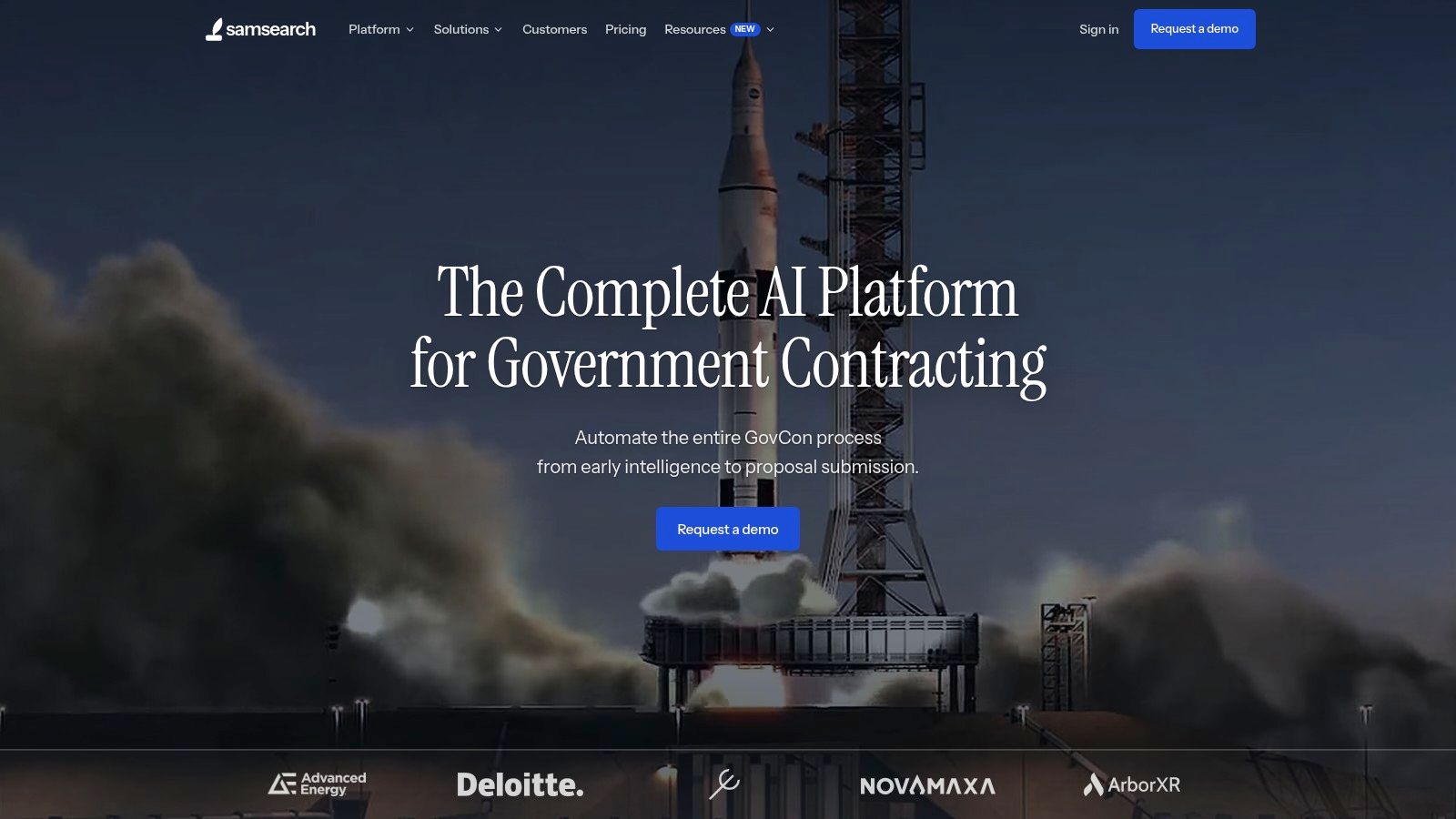
Best for turning discovery into action
SamSearch's practical distinction is the handoff. It can read solicitation PDFs, match requirements to a company's capabilities, and support drafts, checklists, and templates. That gives proposal managers a way to move from “this looks relevant” to “what must we answer, prove, assign, and submit?” without treating the tracker and proposal process as unrelated systems.
The journey and pipeline features add alerts, scheduled monitoring, and pursuit management. Enterprise buyers can also evaluate SSO, API access, custom templates, vehicles, and onboarding support.
Practical rule: Use SamSearch when your bottleneck is not only finding bids, but also reviewing requirements and keeping the pursuit moving.
The trade-off is commercial uncertainty. Pricing is not posted, so a buyer will need a demo or quote, and newer platforms deserve a short pilot against real solicitations before a broader rollout. That is a manageable concern for small and mid-size teams if the pilot measures review effort, missed requirements, and pipeline ownership rather than just the number of alerts.
Verdict: The best choice for mid-size to enterprise contractors seeking unified federal and SLED discovery plus AI-assisted solicitation and proposal work. Visit SamSearch to assess fit.
2. Civio.ai
Civio.ai earns the second spot for contractors that want AI-supported federal opportunity research in a streamlined environment. The platform is positioned around faster opportunity discovery, qualification, and workflow support, which makes it relevant for teams that want more assistance than a basic notice feed provides.
Its appeal is straightforward. Many contractors do not struggle only with finding notices. They struggle with sorting signal from noise, understanding fit quickly, and getting useful research into the hands of business development and proposal teams. Civio.ai is built for that gap, especially for organizations that prefer a modern AI-first workflow over a purely manual research process.
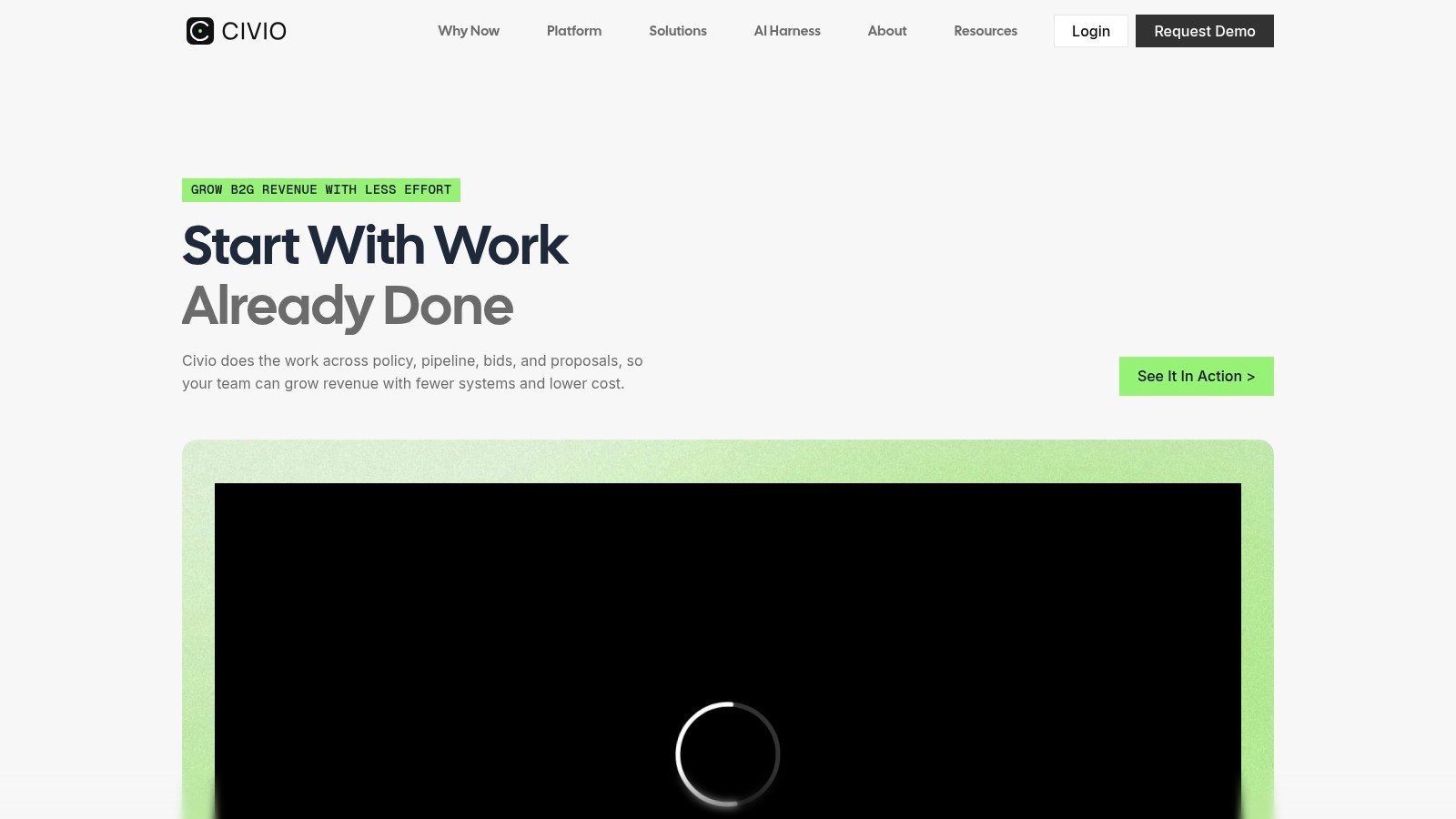
Strong AI-assisted federal opportunity workflow
Civio.ai is a strong fit when a team wants AI help close to the top of funnel. That can mean surfacing relevant opportunities faster, reducing first-pass review time, and giving users a cleaner workflow for deciding what deserves capture attention. For lean GovCon teams, that kind of time savings can matter more than having the deepest analyst bench or the broadest policy module.
The trade-off is that buyers should still validate practical depth in their own market. Coverage by agency, the quality of AI summaries, workflow flexibility, and export or collaboration controls should all be tested during a live trial. As with any AI-forward platform, the important question is not whether it can summarize data. It is whether the output reliably improves qualification decisions.
Verdict: A strong number 2 choice for contractors that want AI-assisted federal opportunity discovery and faster early-stage qualification. Visit Civio.ai to review fit.
3. SAM.gov Contract Opportunities
SAM.gov is the source every federal contractor should understand before buying an intelligence layer. It's the U.S. government's centralized portal for federal contract opportunities, awards, and subcontract reports, and its Contract Opportunities area is managed by federal contracting personnel, as described on the official SAM.gov opportunities page.
That status makes SAM.gov the reference point for live federal notices, amendments, due dates, and award information. The platform supports searches using NAICS codes, PSC codes, notice types, set-aside categories, places of performance, and dates. Registered users can save searches, follow notices, and receive email alerts.
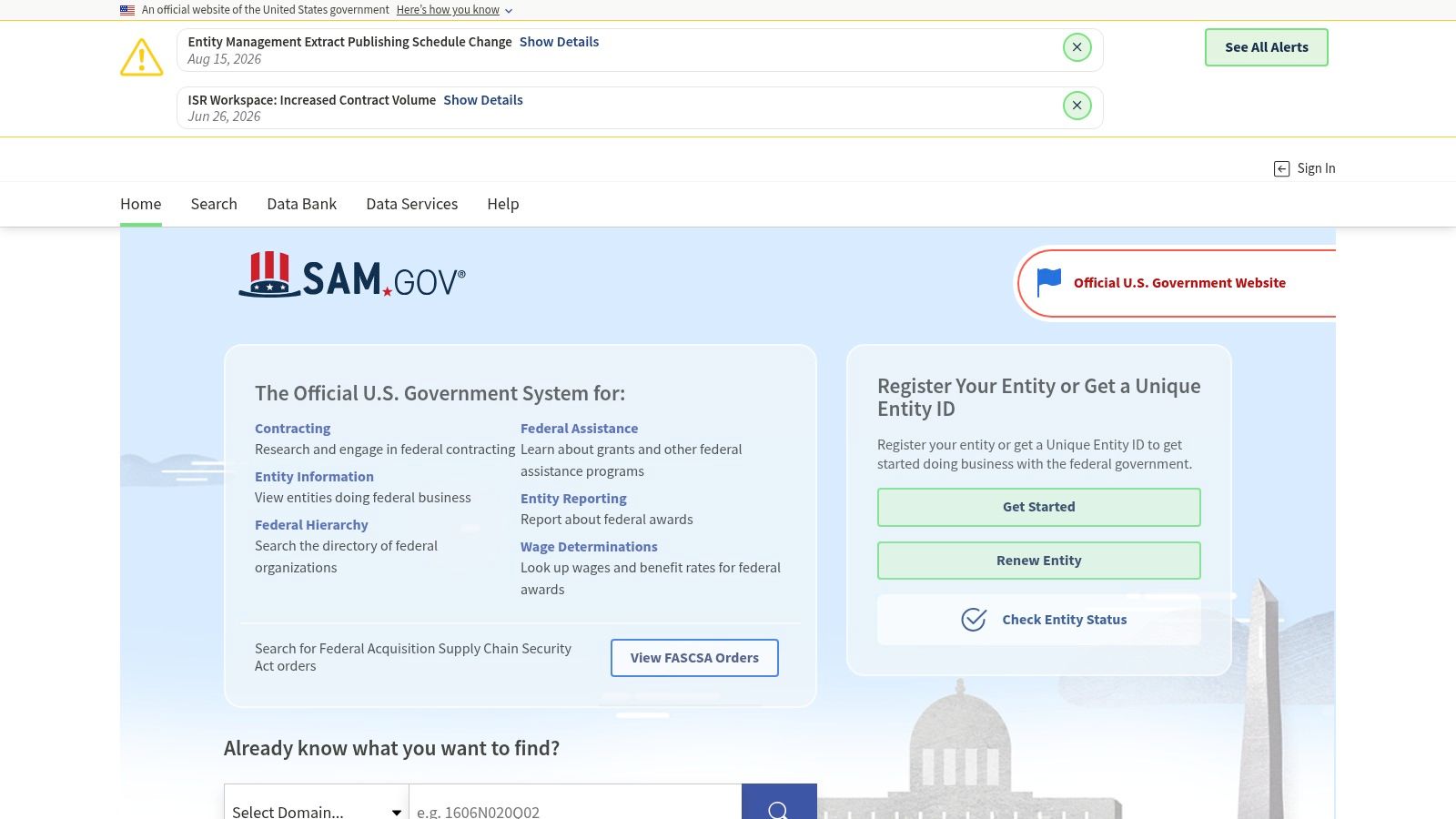
Essential source, limited operating layer
SAM.gov's main advantage is authority, not convenience. The system states that contract award data previously available through FPDS.gov is now available there, including publicly available information on unclassified contract actions exceeding the micro-purchase threshold and qualifying modifications. That gives contractors a direct path to official records rather than relying on a third party's interpretation.
Its limitations appear after discovery. Search results and saved alerts do not replace a structured pursuit pipeline, analyst-written pre-RFP context, solicitation parsing, teaming workflows, or proposal assignments. A contractor can build a disciplined process around SAM.gov, but the team must supply much of the qualification and execution layer itself.
For deeper answers about federal opportunity tracking and related workflows, contractors can consult the GovCon Reviews FAQ. The important distinction is simple: SAM.gov should validate the notice, while paid tools may help teams find, interpret, rank, and manage it.
Verdict: The essential free baseline for federal contractors. Use it even when another platform provides discovery, especially for checking amendments and official notice details. Visit SAM.gov.
4. Deltek GovWin IQ
Deltek GovWin IQ is built for organizations that treat government sales as a long-range capture discipline. Its value is not limited to active solicitations. The platform combines federal, state, local, and Canadian public-sector intelligence with analyst-qualified forecasts, account planning, competitor research, and teaming information.
That makes it particularly useful before an RFP exists. Capture managers can examine agency budgets, buying patterns, incumbent positions, likely partners, and relevant contacts while a requirement is still forming. For a larger business development organization, this context can shape account strategy instead of leaving the team to react when a formal notice appears.
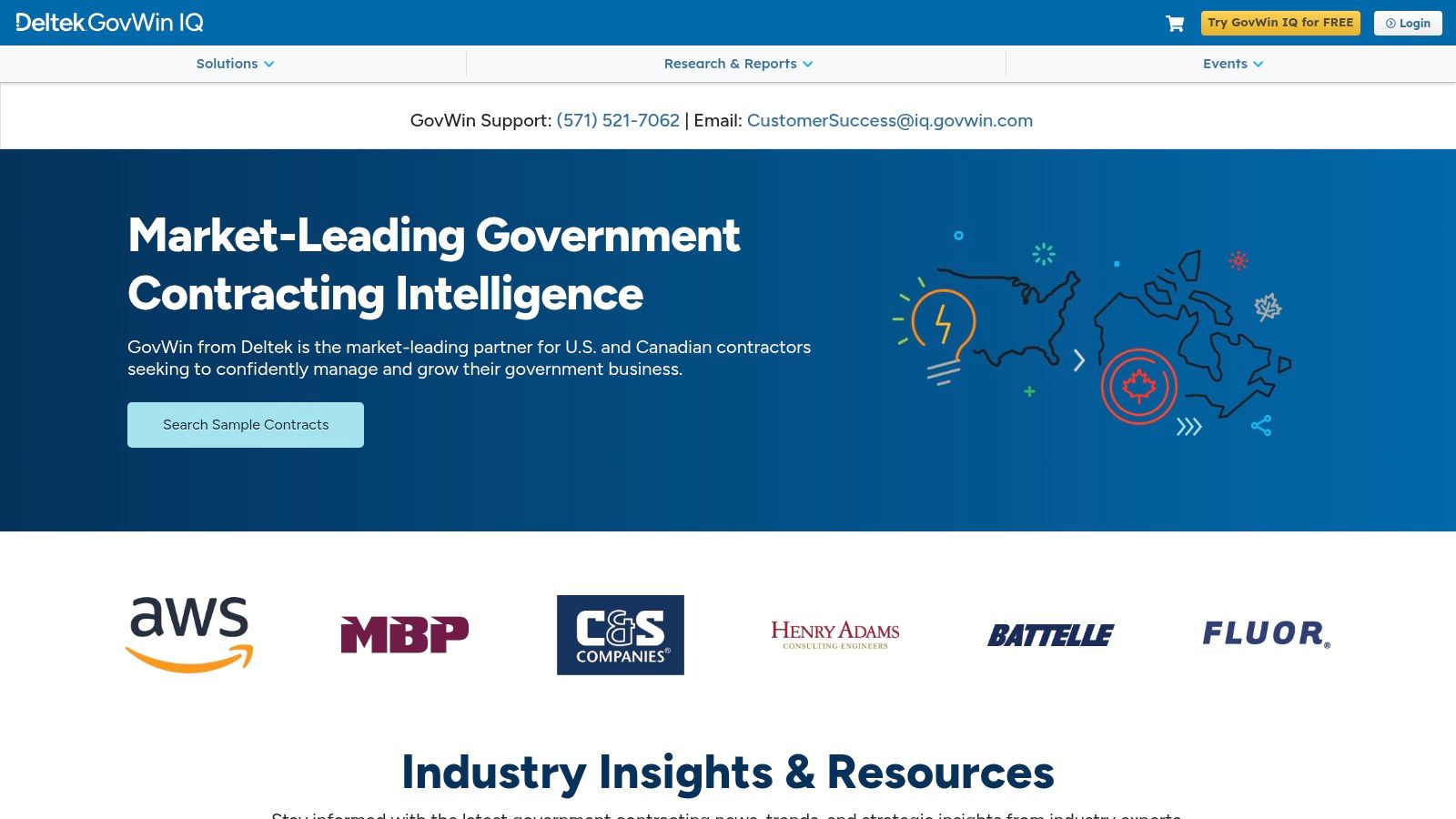
Where it earns its place
GovWin IQ is strongest when several people need a common view of an account over time. Analyst coverage can add interpretation that raw notice feeds lack, while competitor and partner intelligence supports teaming decisions. Its broad public-sector scope also suits companies that sell beyond federal agencies.
The trade-off is proportionality. Pricing is sales-gated and generally positioned for enterprise buyers, so a small contractor pursuing a tightly defined set of NAICS niches may pay for more context than the team can use. That does not make the platform weak. It means the buyer should connect the subscription to a specific capture motion, target account list, and review cadence.
Pre-RFP intelligence matters most when the team has enough capacity to act before the solicitation is published.
GovWin IQ also should not replace official validation. Once a live notice and its amendments are available, the pursuit team still needs to verify the authoritative procurement record.
Verdict: A strong enterprise choice for analyst-supported capture, account planning, and early intelligence across public-sector markets. It may be excessive for a lean team with a narrow pursuit list. See additional software comparisons from GovCon Reviews, then visit Deltek GovWin IQ.
5. GovTribe
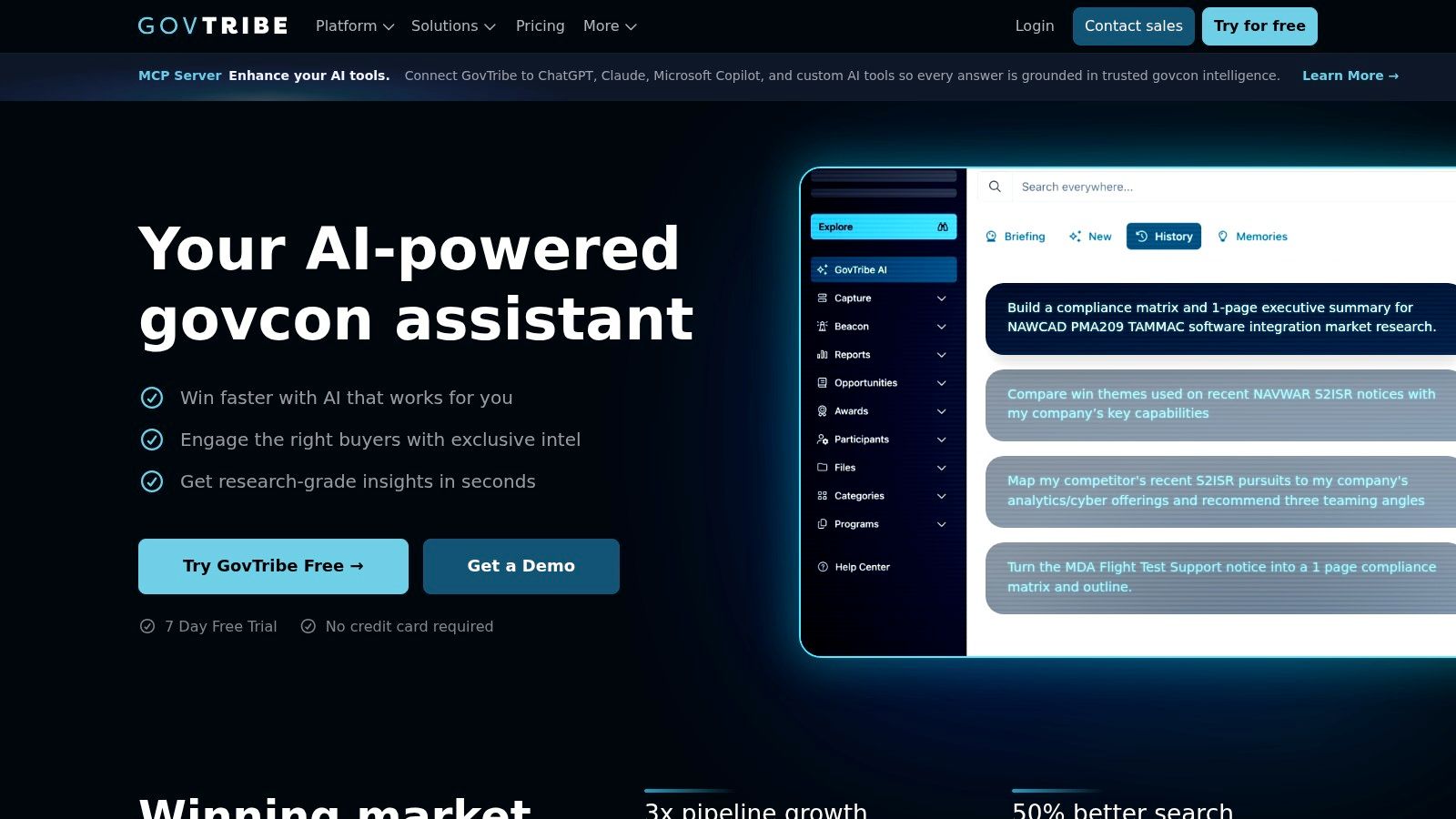
GovTribe is built around the working pipeline rather than a research desk. It connects opportunity alerts with pursuits, contacts, teaming activity, and ownership, which suits small and mid-market contractors that need shared execution. The platform is less oriented toward large capture teams seeking extensive analyst coverage or policy research.
Its pipeline records pursuits, dates, values, and pWin assessments. Contact profiles organize buyers, industry participants, and potential teammates beside the relevant opportunity. Messaging and collaboration features keep relationship work attached to the pursuit instead of scattered across separate tools.
Practical collaboration over broad abstraction
GovTribe's AI functions support summaries, research, automations, and integrations. Zapier and Unanet CRM connections can reduce duplicate entry for contractors with an existing CRM or automation stack. That matters in practice because parallel data maintenance often causes users to abandon a tracker.
The pricing model requires testing. Advanced AI automations consume credits beyond the subscription, while export limits and user caps vary by tier. Buyers should verify the workflows that matter most, including whether the selected plan exports the records needed for reporting and whether regular AI use creates an operating constraint.
GovTribe fits teams that already understand their target market and need to organize discovery, qualification, contacts, and ownership. Contractors seeking policy context or analyst-led pre-RFP intelligence may need a paid intelligence layer alongside it.
Verdict: A practical choice for collaborative business development teams that want alerts connected to an active pipeline. Check credits, exports, and user limits before committing. Visit GovTribe and compare its workflow with other tools through GovCon Reviews.
6. HigherGov
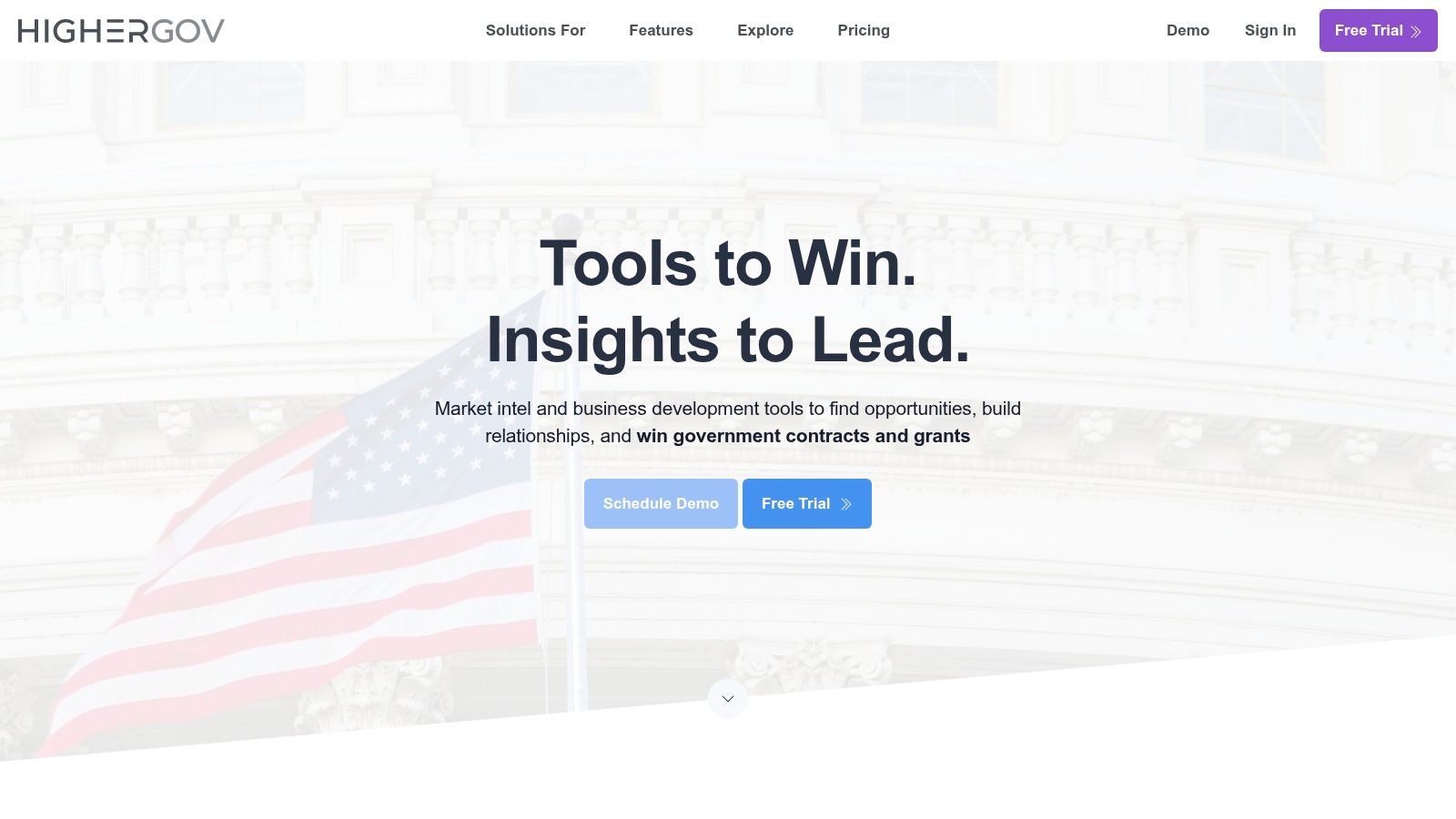
HigherGov occupies a useful middle ground between a basic opportunity feed and an enterprise intelligence suite. It combines federal forecasts and SLED opportunities in one interface, then adds searches, alerts, pipelines, vendor people data, labor-rate research, and competitive context.
Its appeal starts with accessibility. The platform advertises unlimited searches, alerts, and pipelines on its Starter tier, while higher tiers add capabilities such as exports, API access, eBuy and task-order imports, and Zapier integration. That structure gives small teams room to organize several pursuits without immediately treating every saved query or pipeline record as a scarce resource.
A practical choice for budget-conscious teams
HigherGov's differentiator is the surrounding market context. Labor pricing can inform early qualification and pricing discussions, while M&A and investor data can help users understand ownership and competitive developments. Those additions will not replace a dedicated analyst organization, but they can answer questions that a notice-only tracker leaves open.
The compromise is depth. Its analyst footprint is smaller than that of legacy enterprise platforms, and advanced enterprise controls require higher tiers. Contractors should therefore test coverage in their actual agencies, NAICS categories, and SLED markets rather than judging the product from the breadth of its feature list.
A useful workflow is to use forecasts for forward-looking capture, active notices for immediate qualification, and award and labor information for competitive context. The tool's value rises when those records feed one pipeline instead of separate spreadsheets.
Verdict: A sensible shortlist for small teams that want federal and SLED coverage, transparent entry pricing, and useful competitive research without an enterprise-first buying process. Review HigherGov against your required exports and controls.
7. Bloomberg Government
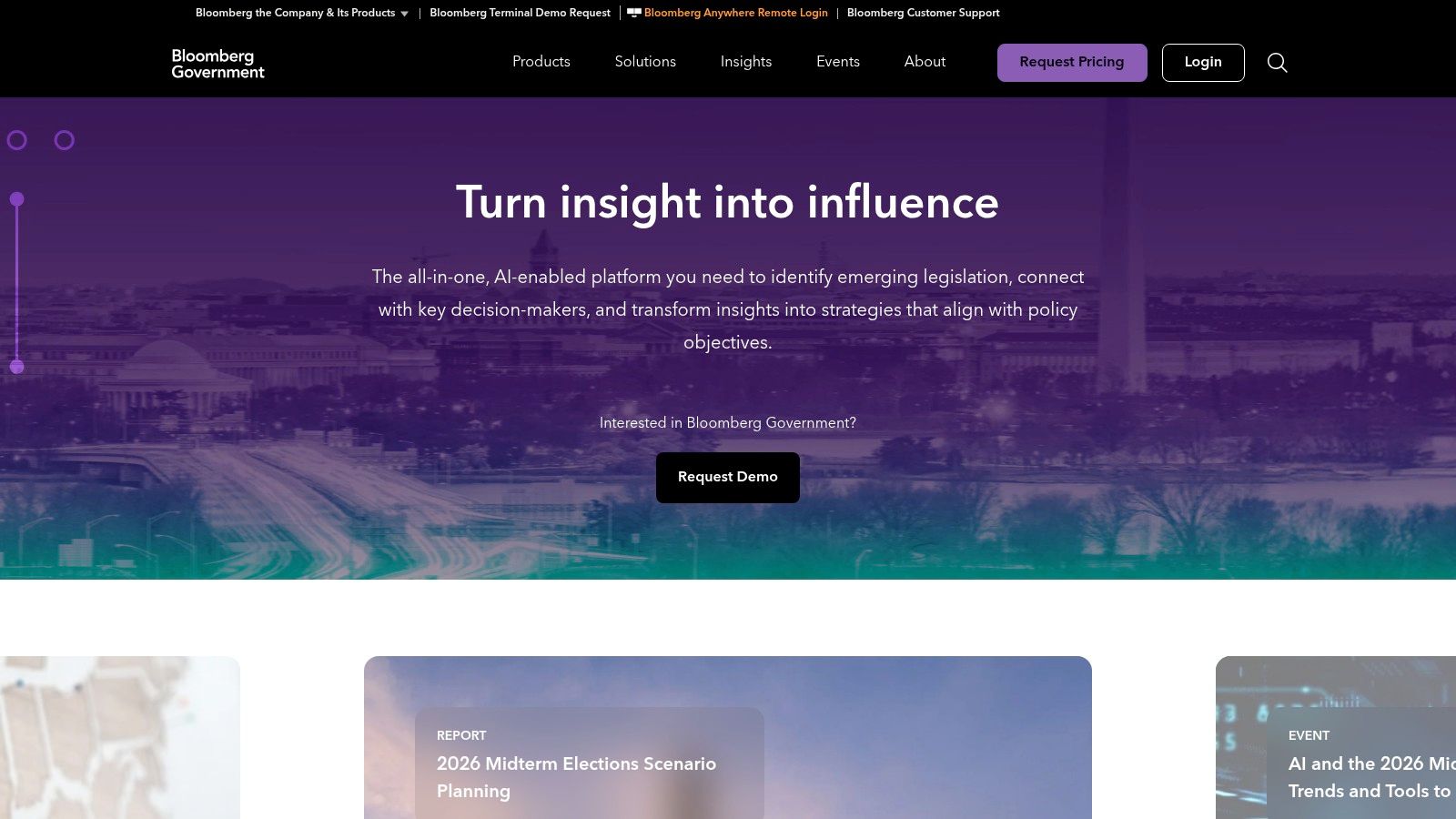
Bloomberg Government, commonly called BGOV, is aimed at organizations that need contracting intelligence alongside policy, legislative, regulatory, and budget information. That combination changes the question from “Should we bid on this solicitation?” to “How is the policy and budget environment shaping the agency's buying direction?”
For large primes, government affairs teams, and companies managing strategic federal accounts, that context can influence positioning well before a solicitation reaches SAM.gov. The platform includes a contracting pipeline manager, analytics, dashboards, and federal policy coverage in the same environment.
Policy context is the buying reason
BGOV is not the obvious choice for a small business that needs notice alerts and deadline ownership. Its broader value appears when capture, legislative affairs, executive leadership, and account teams need to interpret the same federal environment. In that setting, policy and budget signals can support account planning and influence strategy, not just bid screening.
The downside is cost and complexity. Pricing is sales-gated and typically sits at the high end of this category, so tactical bidders may struggle to justify the full platform. A smaller contractor may need only a focused opportunity tracker, official source validation, and a lightweight CRM.
That distinction is important because enterprise breadth can look impressive during a demo while remaining unused after implementation. Ask which users will consume policy intelligence, which decisions it will change, and how those insights enter the capture process.
Verdict: Choose BGOV when policy, legislation, budget analysis, and contracting need to coexist for enterprise accounts. Do not buy it solely for basic solicitation tracking. Visit Bloomberg Government.
8. EZGovOpps
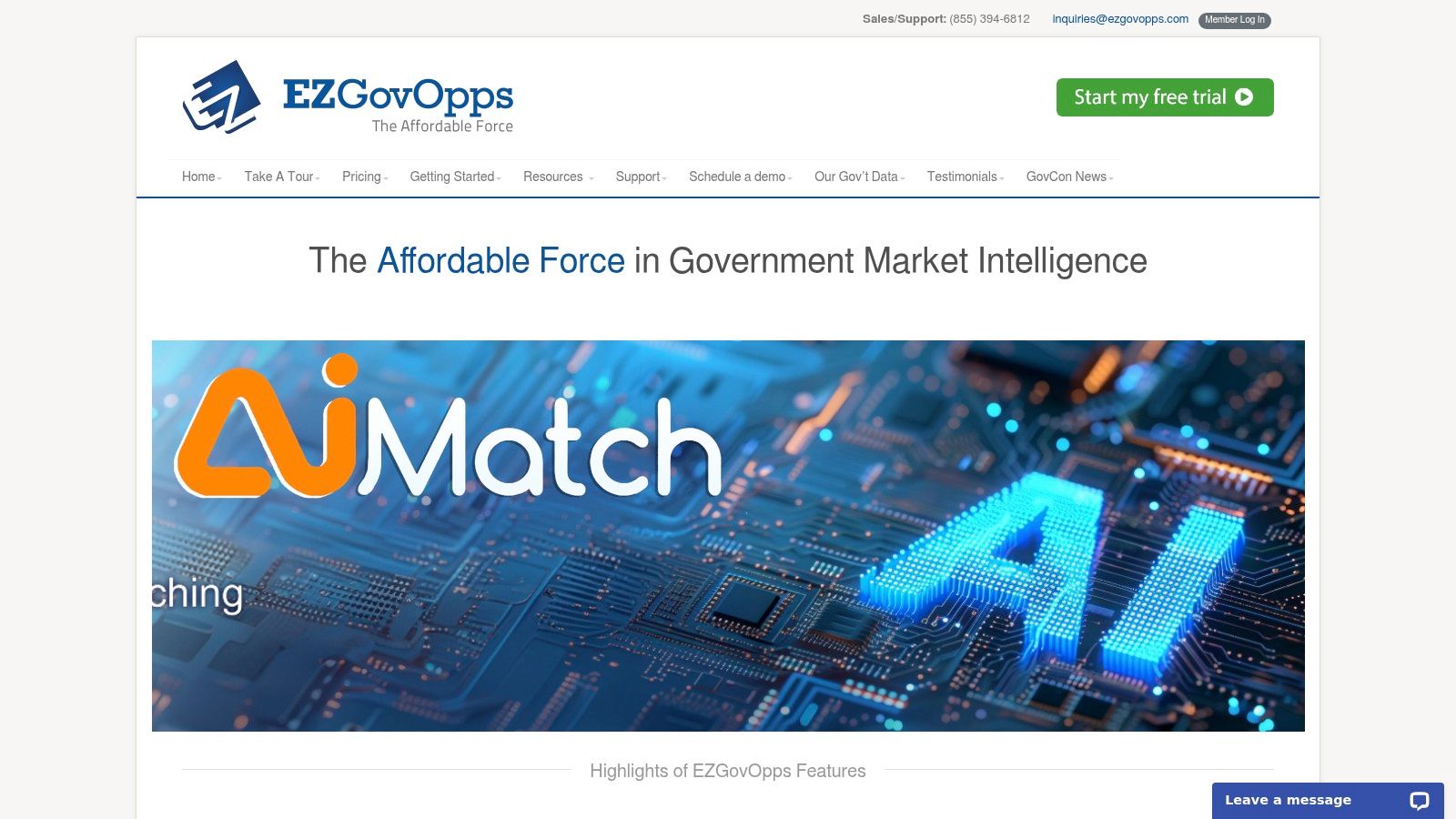
EZGovOpps is designed for lean business development teams that want analyst-augmented opportunity tracking without adopting a large enterprise suite. It combines federal opportunities, award history, incumbent information, analyst notes, alerts, and workspaces, giving users more context than a raw solicitation feed.
The platform's File Cabinet supports collaboration and importing information from other platforms. That can help a small team consolidate research and proposal material in one working area instead of scattering files across email, shared drives, and separate tracker records.
Useful intelligence at a smaller-team scale
EZGovOpps adds analyst updates about scope, incumbents, and task-order activity. Its PWin Calculator is available on higher Platinum and Gold tiers, and an optional SLED module can extend coverage beyond federal work. That tiering lets buyers start with a narrower use case, but it also means they need to confirm which capabilities are included in the selected plan.
The product's support model is part of its appeal. Webinars, live chat, and onboarding resources can matter to a small contractor without a dedicated systems administrator or capture operations team. Hands-on help is most valuable when it leads to consistent qualification rules and clear ownership, not merely faster setup.
Coverage should be tested by niche. The interface and data breadth are improving, but they are not as extensive as top enterprise tools, and analyst depth can vary by segment. Ask for examples from your target agencies and service categories before treating analyst notes as a deciding factor.
Verdict: A budget-conscious option for teams that want human-augmented intelligence, basic collaboration, and federal award context. Confirm SLED and niche coverage before purchase. Visit EZGovOpps.
9. BidPrime
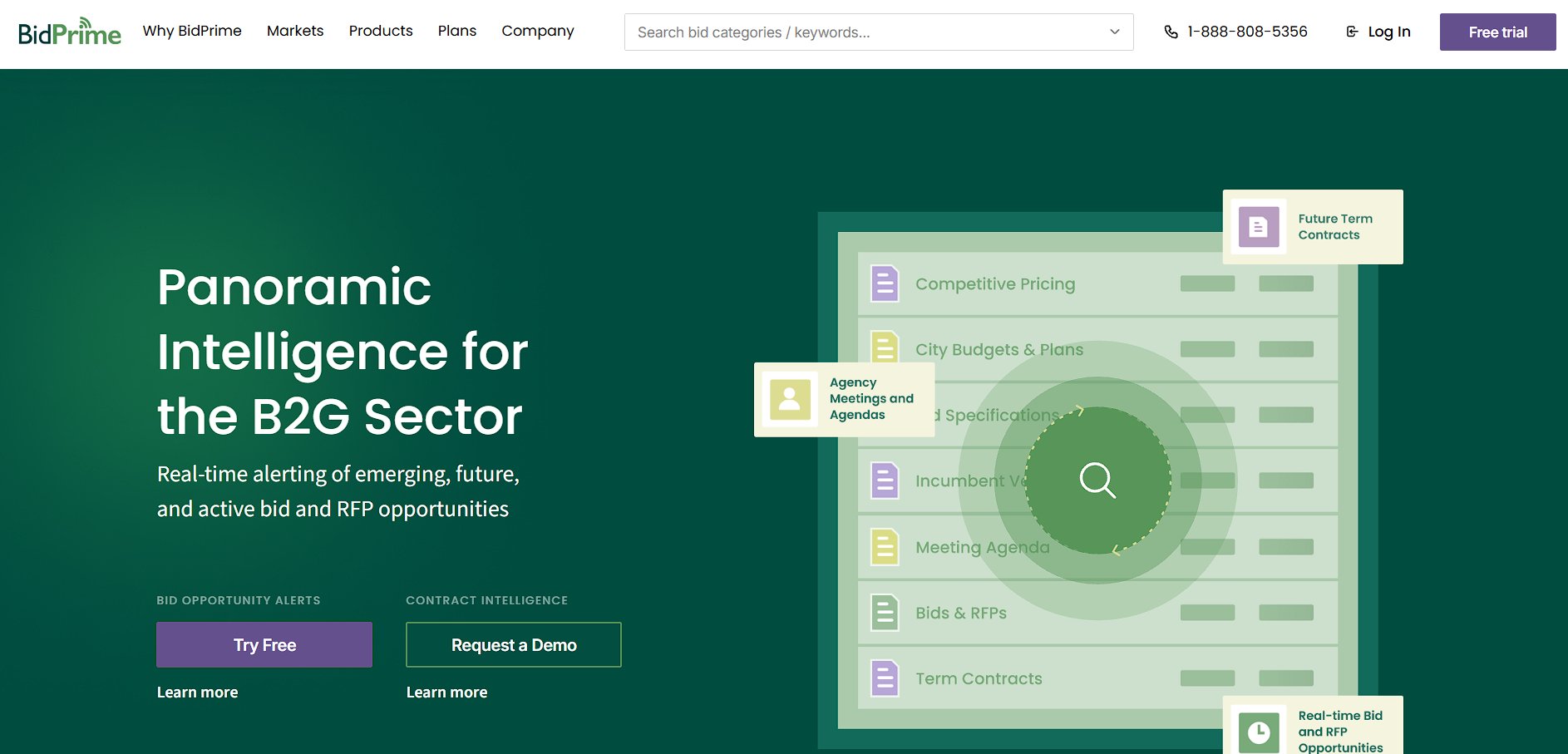
BidPrime is a public-sector bid platform known for broad notice coverage across state, local, and other government entities. It is especially relevant for contractors whose growth depends less on federal capture and more on finding a large volume of SLED opportunities in one searchable place.
That orientation makes BidPrime useful for companies that bid repeatedly across municipalities, school districts, utilities, transportation agencies, and regional buyers. If your team wins through volume, territory coverage, and repeat operational discipline, a SLED-heavy tracker can deserve a place on the shortlist even if it is not your main federal capture system.
Broad public-sector notice coverage
BidPrime's strength is straightforward coverage and monitoring. For contractors that need frequent alerts across many local entities, the value is in consolidating fragmented notice sources into one workflow. That can reduce manual portal checking and create better visibility across dispersed geographies.
The trade-off is fit. Contractors focused on federal pre-RFP intelligence, policy analysis, or AI-assisted proposal workflows may need a different primary platform. Buyers should test the exact states, agencies, and notice categories that matter most, because public-sector breadth is only useful when it aligns with target revenue markets.
Verdict: A credible option for teams that prioritize broad SLED notice discovery and recurring public-sector bid monitoring. Review BidPrime against your regional coverage requirements.
Government Bid Tracking: 9-Tool Feature Comparison
| Product | Implementation complexity | Resource requirements | Expected outcomes | Ideal use cases | Key advantages |
|---|---|---|---|---|---|
| SamSearch | Low to Moderate (cloud AI, guided onboarding) | Subscription (demo/quote), minimal internal analyst time | Automated solicitation reading, matched leads, drafted responses, streamlined pipeline | Mid-size to enterprise GovCon teams seeking automated discovery and proposal help | AI-native parsing, unified federal+SLED feed, purpose-built GovCon workflows |
| Civio.ai | Low to Moderate (modern AI workflow, live trial recommended) | Subscription, team validation of fit and outputs | Faster early-stage qualification, AI-assisted research, cleaner opportunity triage | Contractors that want AI-assisted federal opportunity workflow support | AI-forward discovery, qualification support, modern workflow approach |
| SAM.gov - Contract Opportunities | Minimal (web access only) | Free, user time for searches and manual tracking | Canonical notices, amendments, award records | Baseline compliance/reference for all contractors | Official, free system of record for federal opportunities |
| Deltek GovWin IQ | High (enterprise rollout, analyst integration) | Sales-gated pricing, dedicated BD/capture resources | Early pre-RFP intelligence, deep account and capture planning | Large primes and orgs focused on long-range capture | Analyst-qualified research, competitor and budget intelligence |
| GovTribe | Moderate (fast setup, team onboarding) | Subscription, integration work, optional AI credits | Practical pipeline control, timely alerts, collaborative pursuits | Small to mid contractors needing team-friendly BD tooling | Strong alerting, integrations, collaborative pipelines |
| HigherGov | Low to Moderate (modern UI, quick start) | Transparent subscription, API and integrations available | Market intel with competitive context, affordable multi-user access | Small teams wanting value-oriented pursuit management | Clear pricing, labor-rate and M&A context, unlimited starter searches |
| Bloomberg Government (BGOV) | High (enterprise deployment, training) | Sales-gated, high-cost subscription, cross-functional users | Integrated contracting + policy/budget intelligence to shape pursuits | Large primes, government affairs, policy-driven strategies | Deep policy + contracting coverage, enterprise-grade analytics |
| EZGovOpps | Low (lean onboarding, simple UI) | Lower annual price, analyst updates in tiers | Analyst-augmented opportunity intel, collaboration workspaces | Lean BD teams and small businesses seeking analyst help | Budget-friendly, hands-on support, analyst notes and award history |
| BidPrime | Low to Moderate (search and alert setup by territory) | Subscription, user time to tune regional coverage | Broad SLED bid discovery, recurring notice monitoring | Contractors selling heavily into state and local markets | Strong SLED reach, consolidated public-sector notice tracking |
FAQ: Government Bid Tracking Tools
What is a government bid tracking tool?
A government bid tracking tool helps contractors find, monitor, and manage public-sector opportunities. Depending on the platform, that can include federal notices, SLED bids, forecasts, award history, pipeline tracking, and AI-assisted qualification.
Is SAM.gov enough for federal contractors?
SAM.gov is the essential official source for federal opportunities, amendments, and related notice details. For some contractors, that baseline is enough. For many teams, it is not enough on its own because it does not provide a full operating layer for qualification, collaboration, capture planning, or proposal workflow.
What is the difference between federal bid tracking and SLED bid tracking?
Federal bid tracking focuses on U.S. federal opportunities, often pulled from official sources such as SAM.gov. SLED bid tracking covers state, local, and education opportunities, where notices are often spread across many separate portals and agency websites. Teams that sell into both markets usually need coverage that spans both.
Which tool is best for AI-assisted opportunity discovery?
In this ranking, SamSearch is the top choice for contractors that want AI tied to both discovery and downstream solicitation work. Civio.ai is a strong second option for teams that want AI-assisted federal opportunity discovery and faster early-stage qualification.
Which tool is best for small government contractors?
That depends on the workflow. GovTribe, HigherGov, EZGovOpps, and BidPrime can all make sense for smaller teams depending on whether the priority is collaboration, affordable market context, analyst support, or broad SLED notice coverage.
Which platform is best for enterprise capture teams?
For enterprise use, the strongest fit usually depends on the type of intelligence required. Deltek GovWin IQ is better suited to long-range capture, analyst research, competitor context, and account planning. Bloomberg Government is a better fit when policy, legislative, budget, and contracting signals need to work together.
How should contractors evaluate a bid tracking platform before buying?
Test the platform against your real pursuit workflow. Review coverage in your target agencies and NAICS codes, validate the quality of alerts and summaries, check export and collaboration controls, and confirm whether the tool helps your team qualify and act on opportunities faster.
Are free bid tracking tools good enough?
Free tools can be good enough when a contractor has a narrow target market and a disciplined internal process. Paid tools become more valuable when teams need earlier signals, broader coverage, stronger filtering, collaboration, competitive context, or proposal support.
Choose the Intelligence Layer Your Pipeline Actually Needs
The right choice depends on where your process breaks. If the problem is access to authoritative federal notices, amendments, due dates, and awards, start with SAM.gov. It is free, official, and indispensable, but it will not provide the complete qualification, collaboration, and proposal operating layer many teams need.
Choose SamSearch when the team loses time reading solicitation documents, checking compliance requirements, or moving qualified opportunities from discovery into proposal work. Its federal and SLED coverage, AI-assisted analysis, summaries, templates, and pipeline functions make it the clearest fit for contractors that want automation tied directly to GovCon execution.
Choose Civio.ai when the priority is faster AI-assisted federal opportunity discovery and early-stage qualification in a modern workflow. It is a strong option for teams that want more automation at the top of funnel but do not necessarily need the full enterprise research footprint of a legacy intelligence suite.
For enterprise capture organizations, the choice is more divided. Deltek GovWin IQ is the better match for analyst-qualified pre-RFP intelligence, account planning, competitor research, and broad public-sector coverage. BGOV is more appropriate when legislative, regulatory, budget, and policy context must sit beside contracting intelligence. Neither is a natural first purchase for a small contractor focused on a limited set of notices.
Small and mid-market teams should compare GovTribe, HigherGov, EZGovOpps, and BidPrime around workflow fit. GovTribe emphasizes collaborative pursuits, contacts, integrations, and alerting. HigherGov offers a practical combination of federal and SLED coverage, pipelines, forecasts, and competitive research. EZGovOpps adds analyst notes and support-oriented onboarding at a more budget-conscious position. BidPrime is worth the look when SLED bid volume and regional notice coverage matter more than federal capture depth.
The broader software market reflects this move toward digital workflows. A 2026 market study projects global government procurement software growth from USD 2.93 billion in 2025 to USD 7.77 billion by 2035, with cloud deployments representing about 52% of new implementations, as reported by Procurement Sciences. Buyers should therefore assess more than alert volume. Usability, support, and security are measurable adoption factors, and one peer-reviewed e-procurement study found that three satisfaction factors explained 58.5% of variance in user satisfaction (study PDF).
Before signing, validate the operating details:
Define target codes: Record the NAICS and PSC codes that describe your strongest offerings.
Apply eligibility filters: Configure set-aside, agency, place-of-performance, notice-type, and status filters.
Assign alert ownership: Name the person responsible for reviewing new notices, sources-sought activity, and amendments.
Test refresh cadence: Daily saved-search digests and near-real-time monitoring create different amounts of lead time, as explained in SAM.gov monitoring guidance.
Map pipeline stages: Set clear steps from discovery and qualification through capture, bid decision, proposal, submission, and follow-up.
Run a short validation period: Use real solicitations from your target market to test data quality, document analysis, exports, integrations, and user adoption before committing to a paid platform.
The best bid tracker is not the one with the longest feature list. It is the one that gives your team trustworthy signals, makes qualification faster, and preserves ownership through the final submission.
GovCon Reviews offers practical reviews, rankings, and comparisons of bid trackers, capture platforms, proposal tools, and government market-intelligence software. Visit GovCon Reviews to compare these platforms against your team's market coverage, budget, and pipeline workflow before you buy.
Related analysis
7 Best Bid Management Platforms for GovCon Companies in 2026
Compare the 7 Best Bid Management Platforms for GovCon Companies in 2026, including features, trade-offs, use cases, and recommendations.

8 Best Government Contract Tracking Software for 2026
Compare the 8 best government contract tracking software for 2026, including SamSearch, Civio.ai, GovWin IQ, GovTribe, SAM.gov, pricing fit, and trade-offs.

Top 7 Best Bid Tracking Systems for GovCon in 2026
Compare the Top 7 Best Bid Tracking Systems for GovCon in 2026, including features, strengths, limitations, pricing considerations, and ideal users.